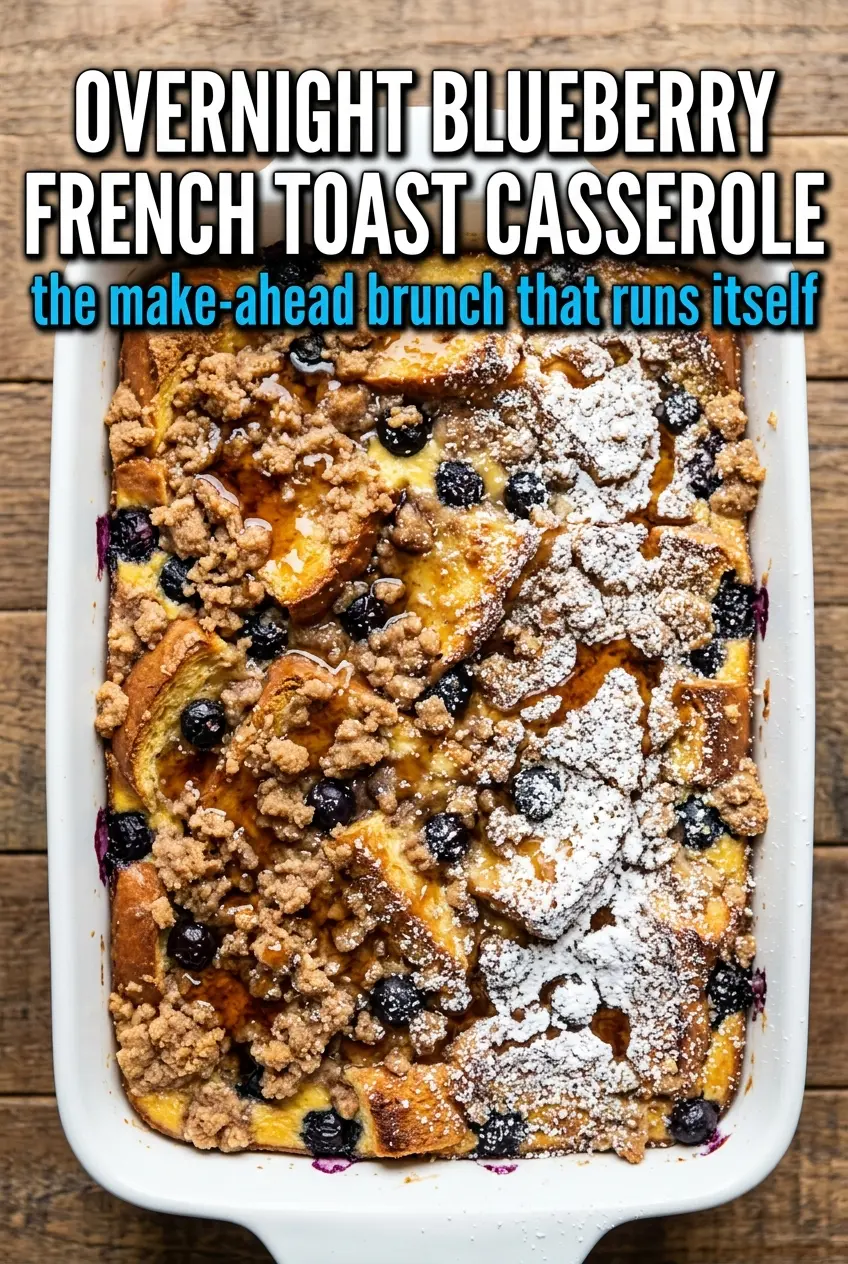
Custardy bread, juicy blueberries, and a crisp cinnamon streusel make this overnight blueberry French toast casserole the kind of breakfast people remember. The bread soaks up the vanilla-scented custard all night, then bakes into something that slices cleanly but still melts on the fork. The top turns golden and a little crunchy, while the berries burst into pockets of jammy sweetness underneath.
What makes this version work is the balance. Whole milk gives the custard enough body without making it heavy, and the honey softens the egg mixture in a way that keeps the finished casserole tender instead of eggy. The blueberries go in before baking, so they sink just enough to spread through the dish without turning the whole pan purple. The streusel goes on right before it bakes, which keeps the topping crisp instead of dissolving into the custard.
Below, you’ll find the texture cue I watch for so the center sets without drying out, plus a few ways to adapt this for the fruit you have on hand. The blueberry maple syrup is worth the extra minute, too — it ties the whole dish together.
The bread stayed custardy all the way through, and the streusel baked up with just enough crunch on top. I loved that the blueberries didn’t all sink to the bottom.
Save this overnight blueberry French toast casserole for a make-ahead brunch with custardy bread and a crisp cinnamon streusel.
The Part That Keeps the Casserole Custardy Instead of Soggy
The biggest mistake with French toast casserole is rushing the soak. If the bread doesn’t have time to absorb the custard, the top bakes before the middle catches up, and you end up with dry chunks on top and wet bread underneath. Overnight rest fixes that. The bread has time to drink in the milk and eggs all the way through, which is what gives you that soft, spoonable center.
Using a sturdy loaf matters here. French bread holds its shape better than sandwich bread, so the cubes stay distinct after soaking instead of collapsing into mush. The casserole still bakes up soft, but you get structure. That’s what lets you cut neat squares and still get a custardy bite.
- Overnight rest — This is what gives the custard time to move into the bread evenly. Eight hours is the sweet spot.
- French bread — A crusty loaf is sturdier than soft bread and keeps the finished casserole from turning dense.
- Even bread layers — Spread the cubes in a loose, even layer so the custard reaches every piece instead of pooling in one corner.
What Each Ingredient Is Actually Doing in This Dish
Each part of the ingredient list has a job, and the casserole falls apart when one of them is treated like decoration. The milk and eggs build the custard, honey rounds out the sweetness, and vanilla and spices keep the flavor warm instead of flat. The blueberries do more than add color. They release juice as they bake, which creates little pockets of fruit throughout the pan.
The streusel is just as important as the filling. Brown sugar adds a deeper sweetness than white sugar, oats give the topping a little chew, and cold butter is what keeps it crumbly instead of paste-like. If you don’t have fresh blueberries, frozen ones work, but add them straight from the freezer so they don’t bleed too much before baking.
- Whole milk — It makes the custard rich without turning it heavy. Lower-fat milk works, but the finished texture is less plush.
- Eggs — They set the custard in the oven. That’s what turns the soaked bread into a sliceable casserole.
- Honey — It sweetens the custard and gives the edges a softer, more rounded finish than granulated sugar.
- Fresh blueberries — They stay plump and hold their shape better than thawed frozen berries. Frozen is fine in a pinch, but don’t thaw them first.
- Cold butter for the streusel — Cold butter is what creates crumbs. If it softens too much, the topping melts into a sandy layer instead of staying crisp.
Building the Layers So the Top Bakes Crisp and the Middle Stays Soft
Getting the Bread Ready
Grease the baking dish well, then spread the bread cubes in an even layer. You want enough gaps for the custard to move through, but not so much space that the top dries out. If your bread is very fresh, let the cubes sit out for a little while first so they dry slightly and hold up better in the custard.
Whisking the Custard
Whisk the milk, eggs, honey, vanilla, cinnamon, and nutmeg until the mixture looks smooth and fully blended. You shouldn’t see streaks of egg white. Pour it slowly and evenly over the bread, then press the top layer down gently so the liquid reaches the pieces underneath. If you dump it in one spot, the center will soak too hard while the edges stay dry.
Adding the Blueberries and Overnight Soak
Scatter the blueberries over the top after the custard goes in. They’ll settle as the bread softens, which is exactly what you want. Cover the dish and refrigerate it overnight so the bread fully absorbs the liquid. If you try to bake it too soon, the middle won’t set with the same tender, pudding-like texture.
Making and Baking the Streusel
Mix the brown sugar, flour, oats, and cinnamon, then cut in the cold butter until the mixture looks like coarse crumbs with some pea-sized bits. That uneven texture is what gives you crunch after baking. Sprinkle it over the casserole just before it goes into the oven so it stays dry and crisp instead of getting soaked while it chills. Bake until the top is deep golden and the center no longer looks loose when you nudge the pan.
Three Ways to Adapt the Blueberry Casserole Without Losing the Good Parts
Make it dairy-free
Swap the whole milk for an unsweetened dairy-free milk with some body, like oat milk. The custard will still set, but it won’t taste quite as rich, so the vanilla and cinnamon matter even more. Use a plant-based butter for the streusel if you want to keep the whole dish dairy-free.
Use mixed berries instead of all blueberries
Raspberries, blackberries, or chopped strawberries work well here, but keep the total amount about the same. Softer berries will break down a little more and give you a juicier casserole, which is great if you like a more jammy center. Just avoid overloading the dish or the custard won’t set cleanly.
Make it ahead for a bigger brunch crowd
You can assemble the casserole the night before, then mix the streusel separately and keep it covered in the fridge. Add the topping right before baking so it stays crumbly. If you’re scaling up, use two pans instead of one oversized dish so the casserole bakes through evenly.
Storage and Reheating
- Refrigerator: Store leftovers covered for up to 3 days. The topping softens a bit, but the custard stays pleasant.
- Freezer: Freeze baked squares tightly wrapped for up to 2 months. The texture softens after thawing, so this works best if you reheat it in the oven.
- Reheating: Warm portions in a 325°F oven until heated through. The microwave works in a pinch, but it softens the streusel fast and can make the bread rubbery if you overdo it.
Answers to the Questions Worth Asking
Overnight Blueberry French Toast Casserole
Ingredients
Equipment
Method
- Grease a 9x13 baking dish, then spread the French bread cubes evenly in the dish so they form an even layer.
- Whisk together whole milk, eggs, honey, vanilla extract, cinnamon, and nutmeg until smooth, then pour evenly over the bread.
- Scatter fresh blueberries over the top so they’re visible throughout the casserole.
- Cover and refrigerate overnight (or at least 8 hours) until the bread is soaked and looks custardy.
- Preheat the oven to 350°F.
- For the streusel, mix brown sugar, flour, oats, and cinnamon, then cut in cold butter until the mixture resembles coarse crumbs with no big butter lumps.
- Sprinkle the streusel over the chilled casserole for a crumbly, cinnamon-speckled top.
- Bake at 350°F for 40-45 minutes until the center is set and the top is golden-brown.
- Warm maple syrup, then stir in blueberries until glossy and heated through.
- Serve the casserole warm with blueberry maple syrup, making sure each portion has both custardy bread and blueberries.