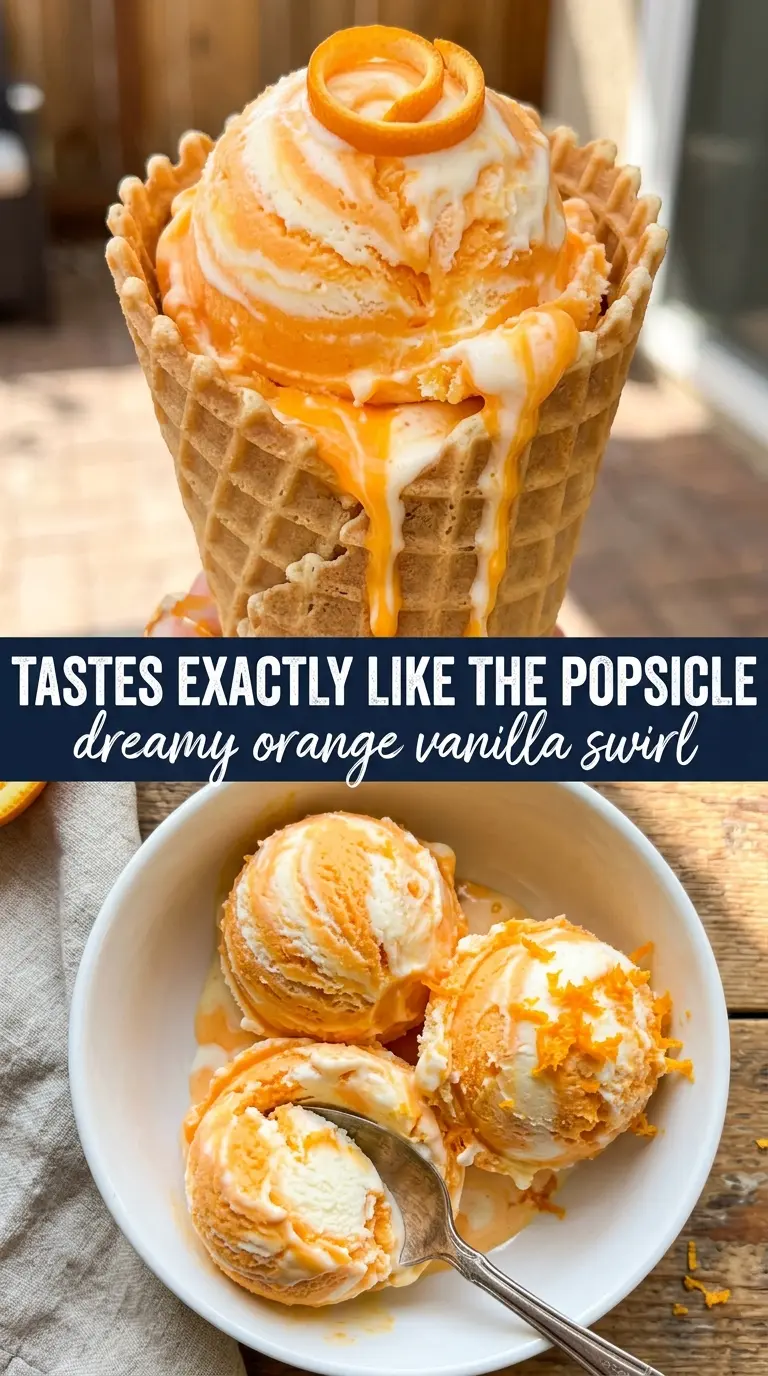
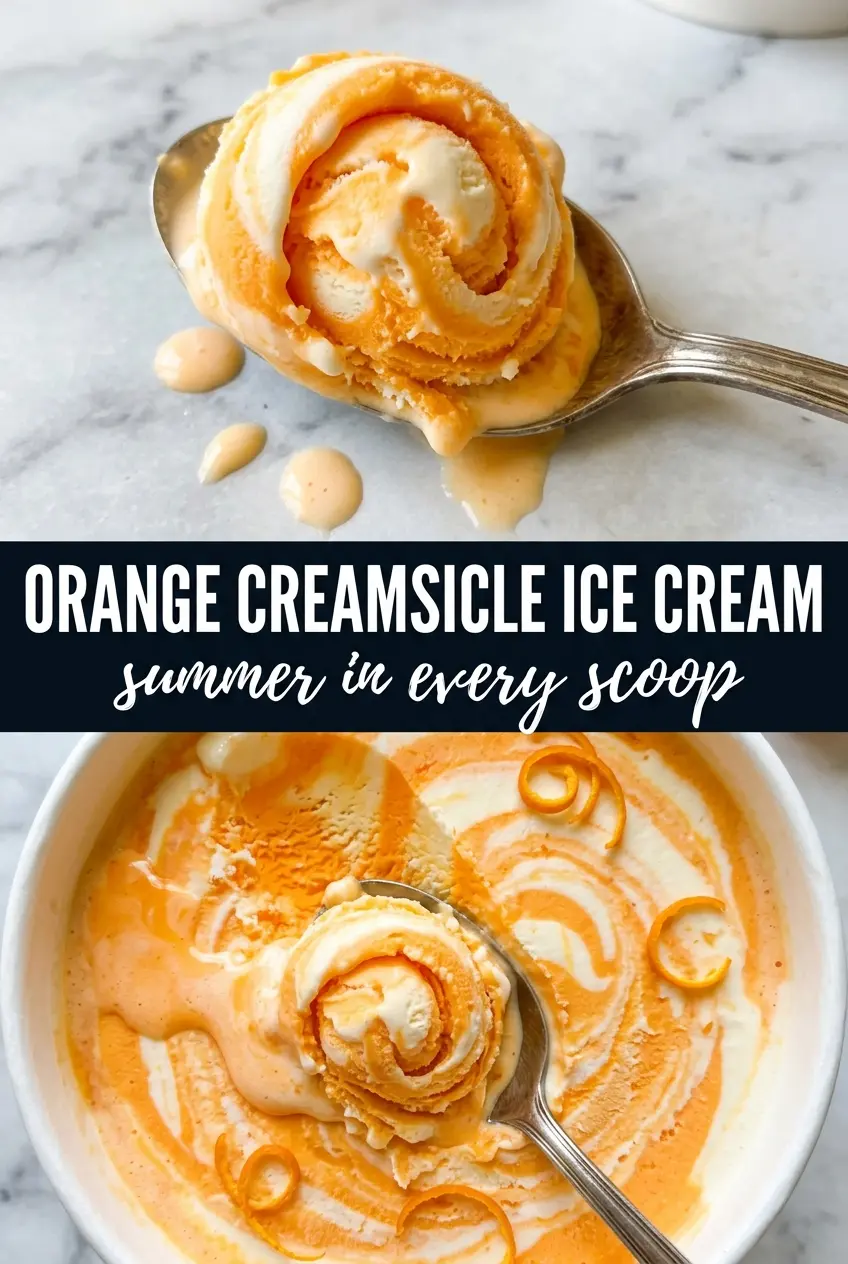
Orange Creamsicle Ice Cream lands with that first spoonful of cold vanilla custard and bright citrus swirl that tastes exactly like the frozen treat from the corner store, only richer and cleaner. The texture is what makes it memorable: creamy, scoopable ice cream with ribbons of orange that stay distinct instead of turning the whole batch one flat shade of orange.
The vanilla base is cooked like a custard, which gives it body and keeps the finished ice cream from freezing icy. The orange layer gets simmered with a little sugar until it turns slightly syrupy, so it stays flavorful and swirls through the churned base instead of disappearing. That contrast is what makes this version worth the extra bowl and saucepan.
Below, you’ll find the trick for getting a true swirl instead of an orange-flavored base, plus the small details that keep the custard smooth and the final texture creamy after freezing.
The orange syrup swirled through perfectly and stayed separate after freezing. It tasted just like a creamsicle, and the custard base was smooth right out of the machine.
Love the creamy orange swirl? Save this Orange Creamsicle Ice Cream recipe for the next time you want a nostalgic dessert with a real custard base.
The Custard Base Is What Keeps the Orange from Freezing Hard
The biggest mistake with homemade citrus ice cream is treating it like a simple mix-and-churn dessert. Orange juice brings brightness, but it also brings water, and water is what makes ice cream icy if the base doesn’t have enough body to carry it. That’s why this recipe starts with a cooked custard: the egg yolks, cream, and milk create a base that freezes creamy instead of stiff.
Cooking the custard to 175°F matters more than people think. Below that, the yolks haven’t thickened enough; above that, they can scramble and leave you with tiny bits in the finished ice cream. If the custard coats the back of a spoon and you can drag a finger through it cleanly, you’re in the right zone. Straining it at the end catches any little curds before they get a chance to ruin the texture.
What Each Ingredient Is Actually Doing in This Ice Cream
- Heavy cream — This is where the lush, scoopable texture comes from. You need the fat here; swapping in more milk makes the ice cream lean and more prone to ice crystals.
- Whole milk — It lightens the base without thinning it out too far. Lower-fat milk will work in a pinch, but the finished ice cream won’t have the same soft bite.
- Egg yolks — They thicken the custard and give it that classic old-fashioned ice cream feel. Temper them slowly and keep the heat moderate so they thicken instead of scrambling.
- Fresh orange juice and zest — The zest carries the bold orange perfume; the juice brings the sharp citrus note. Bottled juice tastes flatter here, and the zest is not optional if you want a true creamsicle flavor.
- Vanilla extract — This is the bridge between the dairy and the orange. It softens the citrus and makes the whole dessert taste like a creamsicle instead of plain orange ice cream.
- Granulated sugar — Dividing it lets you sweeten both components without making either one cloying. The orange syrup needs enough sugar to turn glossy and swirlable.
- Orange food coloring — Optional, but useful if you want that unmistakable creamsicle look. Skip it if you care more about a natural pale orange swirl than a brighter color.
The Part Where the Swirl Stays Swirled
Cooking the Vanilla Custard
Heat the cream and milk until steaming, not boiling. Whisk the yolks with the first measure of sugar until they look thicker and a little paler, then stream in the hot dairy slowly so the eggs warm up without curdling. Return everything to the pan and cook over medium-low heat, stirring constantly, until it reaches 175°F and lightly coats a spoon. If you push this stage too fast, you’ll get scrambled bits or a grainy base that no amount of churning can fix.
Making the Orange Syrup
Combine the orange juice, zest, and remaining sugar in a small saucepan and simmer until the mixture looks slightly reduced and glossy. You want a syrup that’s still pourable but no longer watery, because thin orange juice will vanish into the ice cream instead of leaving those bright streaks. Cool it completely before you swirl it in. Warm syrup softens the churned base and can knock out the texture you just worked for.
Churning and Swirling at the End
Churn the chilled custard until it reaches the texture of very thick soft serve. Add the orange syrup only in the last 2 minutes, and stop the machine before it blends fully. If you keep churning too long, the orange turns into a uniformly flavored base instead of a real swirl. Transfer it to the container in spoonfuls and layer lightly so the ribbons stay visible instead of getting mashed flat.
Freezing Without Losing the Creamy Texture
Press parchment or plastic wrap directly against the surface if your container has extra headspace, then freeze for at least 4 hours. That top layer protection helps keep freezer ice from forming on the surface. If the ice cream seems hard straight from the freezer, let it sit at room temperature for 5 to 10 minutes before scooping. That short rest makes a bigger difference than trying to dig into it immediately.
How to Adapt This for Different Kitchens and Different Cravings
Dairy-Free Orange Creamsicle Ice Cream
Use full-fat coconut milk in place of the cream and milk, and skip the custard method. The texture will be a little less rich and a little more coconut-forward, but it still gives you a creamy frozen dessert with a strong orange swirl.
Stronger Vanilla, Softer Citrus
If you want the creamsicle side to lean more vanilla than orange, reduce the juice slightly and keep the zest. You’ll lose a little brightness, but the flavor becomes closer to the classic frozen bar: creamy, mellow, and balanced.
More Color Without More Flavor
A drop or two of orange food coloring makes the swirl look brighter without changing the taste. That’s useful if your oranges are pale or you want the visual contrast to pop after freezing.
Storage and Reheating
- Refrigerator: Not recommended; this is best kept frozen. The custard base should be chilled before churning, but once it’s churned, it belongs in the freezer.
- Freezer: Keeps well for about 2 weeks with the best texture in the first several days. After that, the swirl may still taste good, but the surface can pick up ice crystals.
- Reheating: Not applicable. For serving, let the container sit at room temperature for 5 to 10 minutes so the scoop releases cleanly instead of cracking and melting at the edges.
Questions I Get Asked About This Recipe
Orange Creamsicle Ice Cream
Ingredients
Equipment
Method
- Heat the heavy cream and whole milk in a saucepan over medium heat until steaming. Visual cue: small bubbles form around the edges but it doesn’t boil.
- Whisk the egg yolks with 1/2 cup granulated sugar until smooth and slightly thick. Visual cue: the mixture looks pale and glossy.
- Slowly whisk the steaming cream mixture into the egg yolks, then return everything to the saucepan. Keep whisking so the custard stays smooth.
- Cook the custard until it reaches 175F, then immediately remove from heat. Visual cue: it coats the back of a spoon.
- Strain the custard into a clean bowl to remove any bits of cooked egg. Visual cue: the strained custard looks silky.
- Stir in the vanilla extract and salt, then cool the custard completely. Visual cue: it comes down to room temperature with no steam rising.
- In a small saucepan, combine the fresh orange juice, orange zest, and the remaining 1/4 cup granulated sugar. Visual cue: the sugar looks dissolved around the edges.
- Simmer for 5 minutes until slightly syrupy, stirring as needed. Visual cue: it thickens enough to lightly coat a spoon.
- Cool the orange syrup completely before churning. Visual cue: it is no longer warm to the touch.
- Churn the vanilla custard in an ice cream maker until thick. Visual cue: it looks like soft-serve and holds shape.
- In the last 2 minutes, drizzle in the orange syrup to create swirls—do not fully mix. Visual cue: distinct orange ribbons remain through the pale base.
- Transfer the churned ice cream to a container, layering spoonfuls to maintain the swirl. Visual cue: orange and cream streaks stay visible on the surface.
- Freeze at least 4 hours until firm. Visual cue: the surface looks set and scoops cleanly.