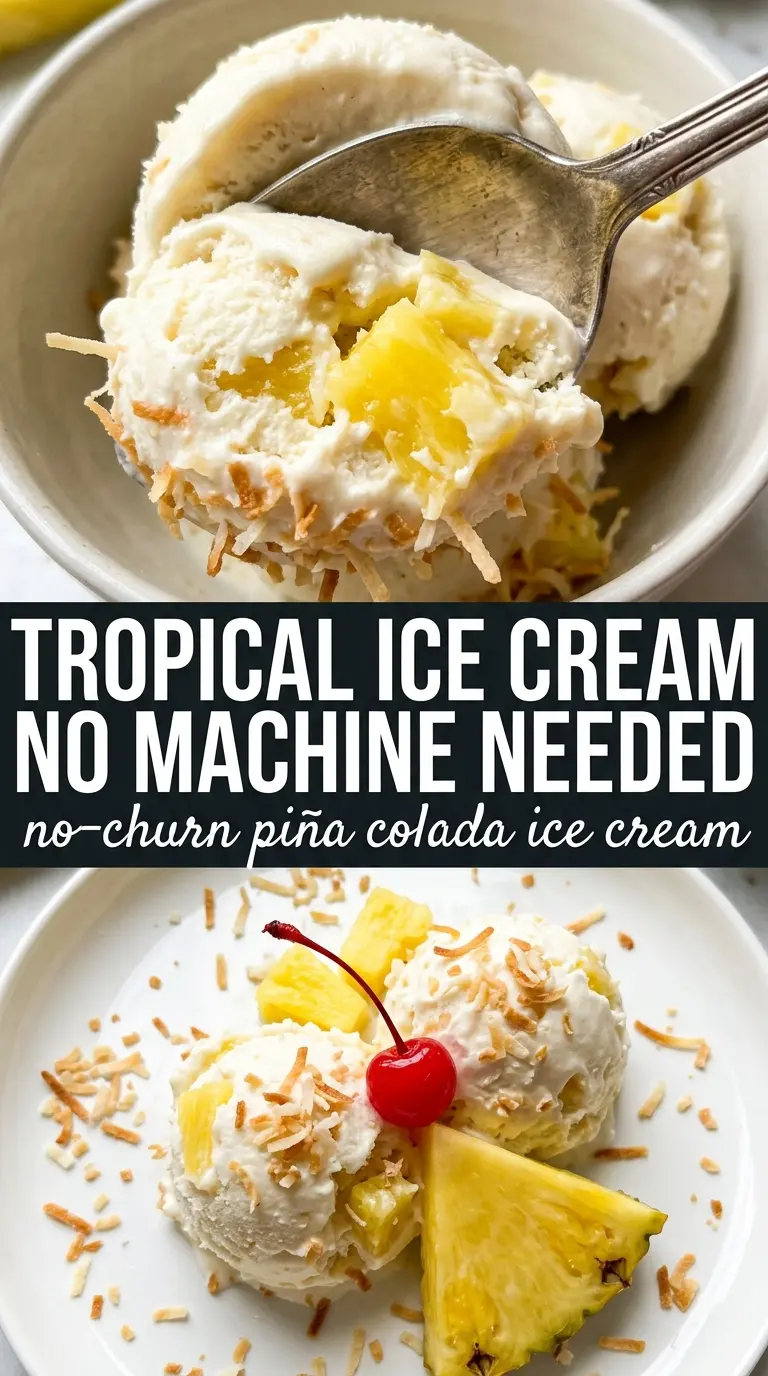
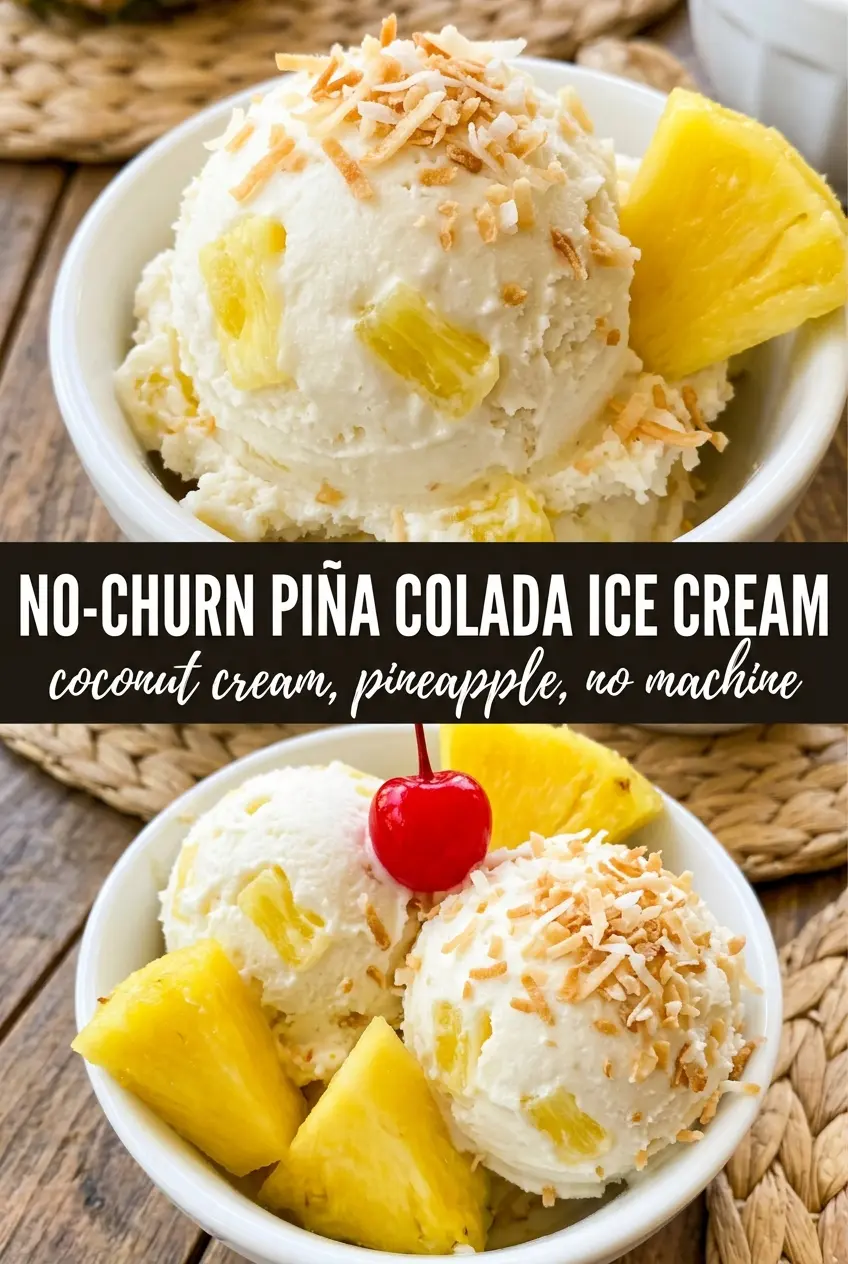
No-churn pina colada ice cream gives you that creamy, coconut-forward frozen dessert with bright pineapple pieces in every scoop, and it does it without an ice cream maker. The texture lands somewhere between soft-scoop ice cream and a frozen mousse, which is exactly why it disappears fast. The toasted coconut adds a little chew and nuttiness, while the pineapple keeps the whole thing from tasting flat or overly sweet.
The trick is keeping the base light before it hits the freezer. Whipping the cream to stiff peaks gives the ice cream its body, and folding in the condensed milk mixture gently keeps all that air in place. Coconut cream brings the tropical richness, but the real balance comes from using just enough extract and rum to echo a piña colada without overpowering the pineapple.
Below, I’ll show you how to keep the pineapple from watering down the mixture, what kind of coconut actually gives the best texture, and a few ways to adapt this if you want it boozier, dairy-free, or a little more dessert-like.
The pineapple stayed in little bites instead of turning icy, and the coconut flavor came through without tasting fake. I froze it overnight and it scooped beautifully the next day.
Save this no-churn pina colada ice cream for the days when you want coconut, pineapple, and a boozy frozen scoop without pulling out the machine.
The Part That Keeps It Creamy Instead of Icy
No-churn ice cream lives or dies on the balance between air and moisture. Whipped cream gives you the lift, but the fruit can wreck the texture if it’s too wet. Fresh pineapple works best here because it stays bright and keeps some bite; frozen pineapple tends to leak more juice as it thaws, which can turn the finished dessert slushy around the edges.
The other thing that matters is how gently you fold everything together. If you knock the air out of the whipped cream, the base gets dense. If you stir too aggressively after adding the pineapple and coconut, you’ll break the structure and end up with a harder, icier freeze. Keep the folds deliberate and light, and stop as soon as the streaks disappear.
- Fresh pineapple — Dice it small so it distributes evenly and doesn’t freeze into big icy chunks. If yours is extra juicy, pat it dry with paper towels before folding it in.
- Coconut cream — This is what gives the base that thick, plush coconut body. Regular coconut milk won’t give the same richness or set.
- Sweetened condensed milk — This keeps the ice cream scoopable without churning and brings the sweetness that a no-churn base needs. Don’t swap in evaporated milk; it won’t thicken the same way.
- Toasted shredded coconut — Toasting matters. Untoasted coconut tastes flat and can turn chewy in the wrong way, while toasted coconut adds a nutty crunch that holds up in the freezer.
What Each Ingredient Is Actually Doing in This Ice Cream
- Base ingredient (cream, milk, or custard) — This provides the foundation and richness. Quality matters.
- Sweetener (sugar, honey, or condensed milk) — This sweetens and prevents ice crystals. The ratio is critical.
- Flavor element (vanilla, fruit, chocolate, or other) — This defines the ice cream personality. Use quality ingredients.
- Egg yolks (if making custard base) — These create richness and silky texture. Optional but elevates ice cream.
- Churning (if using ice cream maker) — This incorporates air and prevents ice crystals. Critical for smooth texture.
- Freezing temperature and time — Proper freezing prevents rock-hard texture. Store at 0°F or below.
- Mix-ins (chocolate, cookies, fruit, or swirls) — These add texture and prevent one-dimensional flavor. Add near end of churning.
- Serving temperature (slightly soft, not rock hard) — This provides creamy mouthfeel. Remove from freezer 5 minutes before serving.
Folding the Base So It Freezes Smoothly
Whipping the Cream to the Right Point
Start with very cold heavy cream and whip it until the peaks stand straight up when you lift the whisk. Soft peaks won’t hold enough structure, and overwhipped cream starts to look grainy before you even add the other ingredients. That grainy texture will show up again after freezing, so stop as soon as the cream is firm and billowy.
Building the Coconut-Pineapple Mixture
Whisk the condensed milk, coconut cream, rum, coconut extract, and vanilla together until the mixture looks smooth and uniform. This is the moment to taste for balance, because once it’s folded in, you won’t want to overmix. If you’re using rum, keep it to two tablespoons; too much alcohol softens the freeze and makes the ice cream hard to scoop cleanly.
Keeping the Air in the Final Fold
Add the condensed milk mixture to the whipped cream in two or three additions and fold with a spatula from the bottom of the bowl. The goal is a thick, fluffy base with no white streaks left, not a fully stirred mixture. Fold in the pineapple and toasted coconut last so they stay evenly suspended instead of sinking to the bottom of the pan.
The Freezer Set
Spread the mixture into a 9×5 loaf pan and smooth the top before freezing. Press a piece of parchment or plastic wrap directly onto the surface if you want to avoid ice crystals on top. Six hours is the minimum, but overnight gives you the best slice of time between firm and scoopable.
How to Adapt This for Different Crowds and Diets
Make It Boozier
Increase the rum to 3 tablespoons if you want a stronger cocktail note, but don’t go much further or the ice cream won’t firm up as well. The flavor gets warmer and more grown-up, while the texture stays best when the alcohol stays modest.
Dairy-Free Version
Use chilled coconut cream in place of the heavy cream and a dairy-free sweetened condensed milk alternative. The result will be a little softer and more coconut-forward, but it still freezes into a scoopable dessert if you give it enough time.
No-Rum Family Version
Skip the rum and bump the vanilla up to 1/2 teaspoon for a rounder, more dessert-like finish. You lose the cocktail edge, but the pineapple and coconut still carry the whole recipe.
Extra Pineapple Texture
Fold in a few small pineapple pieces at the very end and keep the rest diced fine. Bigger bits give you a more obvious fruit bite, but too many large pieces can freeze into hard chunks.
Storage and Reheating
- Refrigerator: Don’t store this in the fridge; it melts fast and won’t reset with the same texture.
- Freezer: It keeps for about 2 weeks wrapped well, though the texture is best in the first 4 to 5 days before ice crystals start to creep in.
- Reheating: Not applicable, but let it sit at room temperature for 5 to 10 minutes before scooping. If you try to dig in straight from the freezer, the dairy base stays too hard and the scoop turns ragged.
Questions I Get Asked About This Recipe
No-Churn Pina Colada Ice Cream
Ingredients
Equipment
Method
- Whip the heavy cream to stiff peaks, making sure it holds a clear peak when you lift the whisk, then stop before it looks grainy.
- Whisk the sweetened condensed milk, coconut cream, rum if using, coconut extract, and vanilla extract together until smooth and glossy, with no streaks of coconut cream.
- Fold the condensed milk mixture into the whipped heavy cream gently using slow, turning motions so the volume stays light.
- Fold in the finely diced fresh pineapple and toasted shredded coconut just until evenly distributed so the ice cream stays scoopable.
- Transfer the mixture to a 9x5 loaf pan and cover, then freeze for at least 6 hours or overnight until firm.
- Garnish with extra toasted coconut and pineapple when serving for visible texture and a fresh tropical finish.