Silky pumpkin, tender chickpeas, and a spiced tomato broth give this stew the kind of depth that tastes like it simmered all afternoon, even though it comes together in under an hour. The pumpkin softens just enough to thicken the broth without collapsing into puree, and the chickpeas hold their shape so every spoonful has a little bite.
What makes this version work is the layering. The onion gets a head start in olive oil, then the spices bloom in the pan before the liquid goes in, which wakes up the cumin, coriander, turmeric, cinnamon, ginger, and cayenne instead of leaving them flat. A spoonful of honey rounds out the tomatoes and a little preserved lemon at the end keeps the whole pot bright instead of heavy.
Below, I’ve included the timing cue that keeps the pumpkin from going mushy, plus a few smart swaps if you only have squash on hand or want to make the stew a little more or less fiery.
The pumpkin held its shape, the broth turned rich and fragrant, and the preserved lemon at the end made the whole pot taste brighter. I served it with rice and my husband went back for seconds before I’d even sat down.
Save this Moroccan Pumpkin and Chickpea Stew for the nights when you want a deeply spiced one-pot dinner with bright lemon and creamy chickpeas.
The Trick to Keeping the Pumpkin Tender Instead of Mushy
Most stews with squash fail in the same place: the heat stays too high for too long, and the pumpkin breaks down before the broth has a chance to taste like anything. Here, the simmer is gentle enough to soften the cubes while leaving them intact, so the stew feels hearty instead of pûreed. The tomatoes and broth do the work of building body; the pumpkin should contribute texture as much as flavor.
The other important detail is when the spices go in. Blooming them with the onion and garlic for a minute or two pulls their oils into the olive oil, which gives the finished stew a deeper, rounder taste. If you dump everything into the pot at once, the spices taste dusty and the broth never quite comes together.
What Each Ingredient Is Doing in the Pot

- Pumpkin or butternut squash — This is the body of the stew. Butternut is the easiest and most reliable swap if your pumpkin is stringy or watery, and it holds its shape well after simmering.
- Chickpeas — They add protein and a creamy, nutty bite that balances the soft squash. Canned chickpeas are perfect here because they stay pleasantly firm; if you cook them from dry, keep them on the slightly firm side so they don’t turn mealy in the broth.
- Diced tomatoes — They bring acidity and help the broth taste full, not flat. Use a good canned tomato if you can, since this is one of the few ingredients you actually taste in the final spoonful.
- Preserved lemon or lemon juice — This is the bright finish that keeps the stew from tasting heavy. Preserved lemon gives a deeper, salty-citrusy edge, but lemon juice still works if that’s what you have; add it at the end so the flavor stays fresh.
- Harissa and cilantro — Harissa adds heat and a little smoky depth, while cilantro gives the bowl a clean, herbal lift. Neither is mandatory, but both make the stew taste finished.
Building the Broth Before the Squash Breaks Down
Softening the Onion Base
Start with the onion and olive oil over medium heat and let the onion turn translucent with a little edge of gold. You want it soft and fragrant, not browned hard, because a dark onion can make the broth taste bitter. If the pan looks dry before the onion is ready, add a splash of water rather than more oil.
Blooming the Spices
Add the garlic and spices and stir for about 2 minutes, just until the pan smells warm and layered. The mixture should look glossy and cling to the onion instead of drying out. If the garlic starts to brown, lower the heat right away; burnt garlic will show up in the final broth fast.
Simmering Until the Pumpkin Is Just Tender
Once the pumpkin, chickpeas, tomatoes, broth, and honey go in, bring the pot to a boil only long enough to get things moving, then drop it to a steady simmer. You’re looking for the occasional bubble, not a hard boil. After about 25 minutes, the pumpkin should be easily pierced with a fork but still hold its edges; if it falls apart when you stir, it has gone a little too far.
Finishing With Lemon and Heat
Stir in the preserved lemon at the end, then taste and adjust with salt and pepper. This last step matters because the lemon changes how the spices read in the bowl; without it, the stew can taste heavier than it should. Spoon it into bowls and finish with cilantro and harissa so each person can dial in their own level of brightness and heat.
How to Adapt This Stew Without Losing the Balance
Use butternut squash instead of pumpkin
Butternut squash is the cleanest swap and often the easiest to find. It cooks at the same pace, stays a little silkier, and gives the stew a slightly sweeter finish that plays nicely with the cinnamon and honey.
Make it vegan-friendly without changing the flavor
This stew is already naturally vegan as written, so no changes are needed. The honey is the only ingredient some cooks swap; maple syrup works in the same amount if you want to keep it fully plant-based.
Turn up the heat for a sharper finish
Add a little more cayenne with the spices or finish each bowl with extra harissa. Harissa at the table gives you better control because it lets the stew stay balanced in the pot while still giving heat lovers a bigger kick.
Storage and Reheating
- Refrigerator: Keeps well for 4 days. The broth thickens as it sits, and the spices taste even deeper the next day.
- Freezer: Freezes well for up to 3 months. Cool it completely first, then portion it into airtight containers; the squash softens a little after thawing, but the flavor holds up nicely.
- Reheating: Warm it gently on the stove over medium-low heat with a splash of broth or water. A hard boil can break down the pumpkin too much, so go slow and stir often.
Answers to the Questions Worth Asking
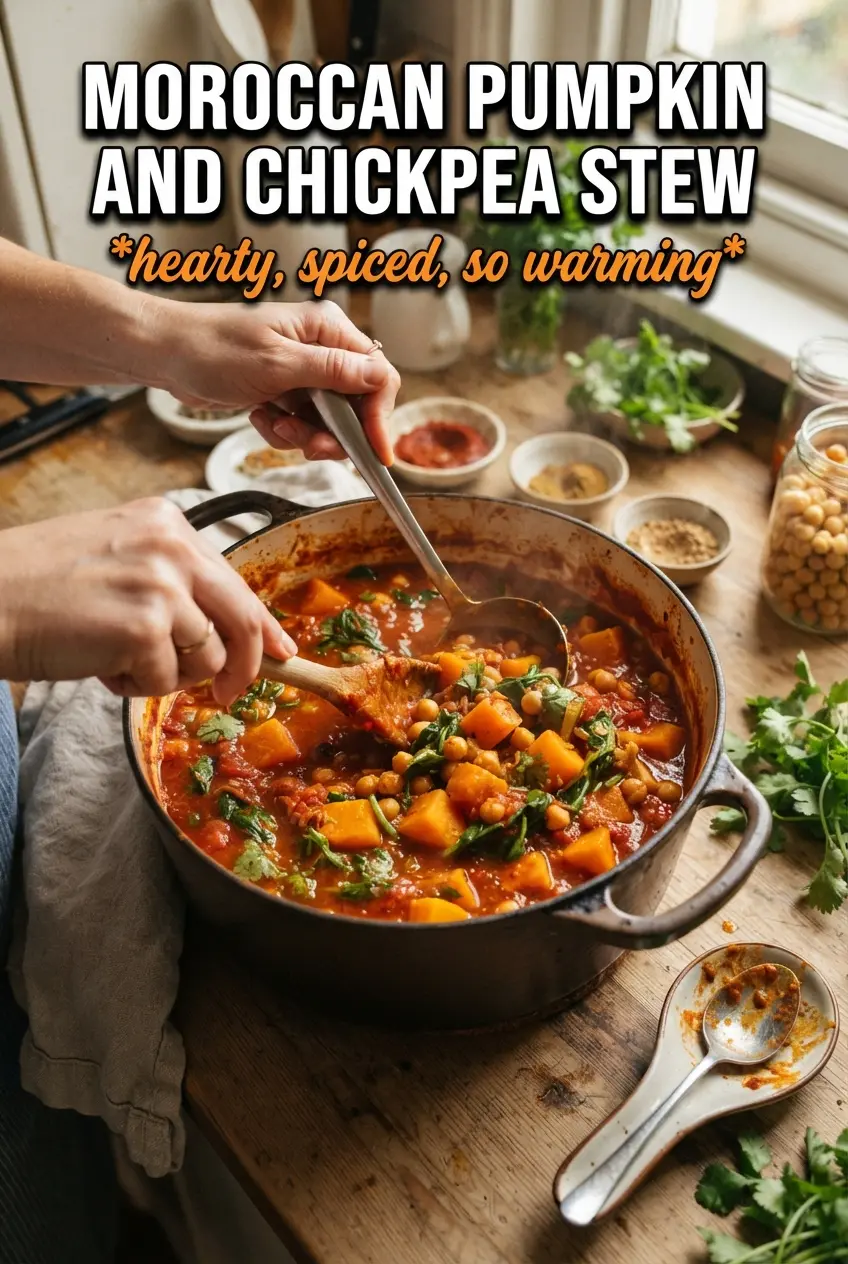
Moroccan Pumpkin And Chickpea Stew
Ingredients
Equipment
Method
- Heat the olive oil in a Dutch oven over medium heat, then sauté the onion for about 5 minutes until softened and fragrant.
- Add the garlic along with cumin, coriander, turmeric, cinnamon, ginger, and cayenne, then cook for 2 minutes, stirring, until the spices darken slightly and smell toasty.
- Add the pumpkin (or butternut squash), chickpeas, diced tomatoes, vegetable broth, and honey, then stir to combine.
- Bring the mixture to a boil, reduce heat to maintain a gentle simmer, and cook for 25 minutes until the pumpkin is tender and the broth is richly spiced.
- Stir in the preserved lemon (or lemon juice), then season with salt and pepper to taste.
- Serve hot with fresh cilantro and a dollop of harissa on top.