Mocha almond fudge ice cream is the kind of homemade dessert that tastes like you spent all afternoon on it, even though the hardest part is waiting for it to chill. The base is deep and espresso-forward, the fudge ribbon stays thick instead of disappearing into the cream, and the toasted almonds bring the crunch that keeps each bite from turning one-note. When it’s done right, you get cold, smooth coffee ice cream with little pockets of chocolate and a toasted nut finish that makes the whole bowl feel balanced.
The key is treating the custard gently. Espresso powder blooms fast in the warm dairy, which gives you a stronger coffee flavor without grit, and the egg yolks thicken the base enough to hold that fudge swirl without becoming icy. Toasting the almonds before they go in matters too. Raw almonds taste flat here; toasted almonds bring a deeper, almost buttery note that plays better with the coffee and chocolate.
Below, I’ve included the small details that keep the custard silky, the fudge ribbon visible, and the almonds crunchy after freezing. Those are the parts that separate a good homemade ice cream from one that tastes crowded or dull.
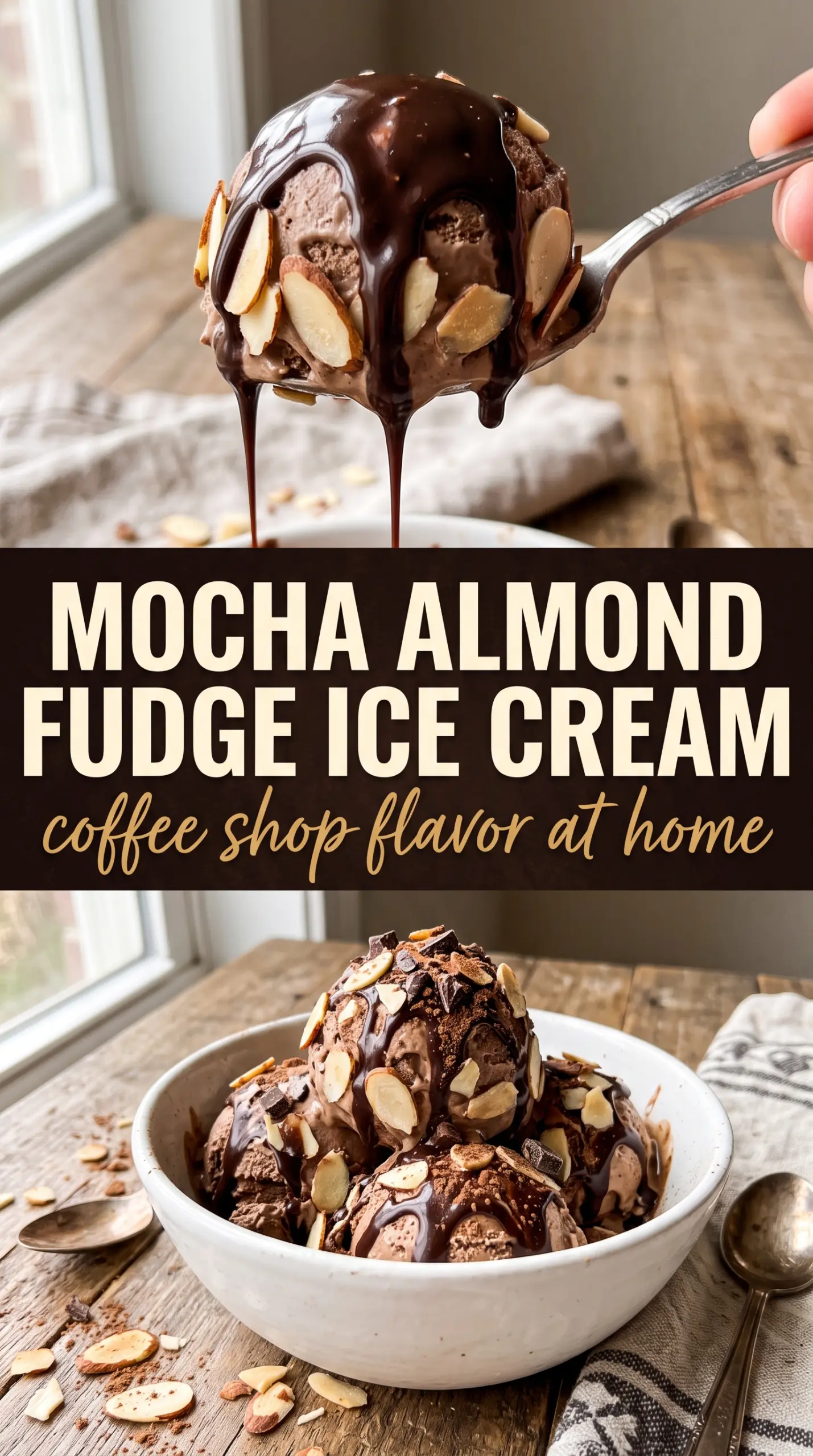
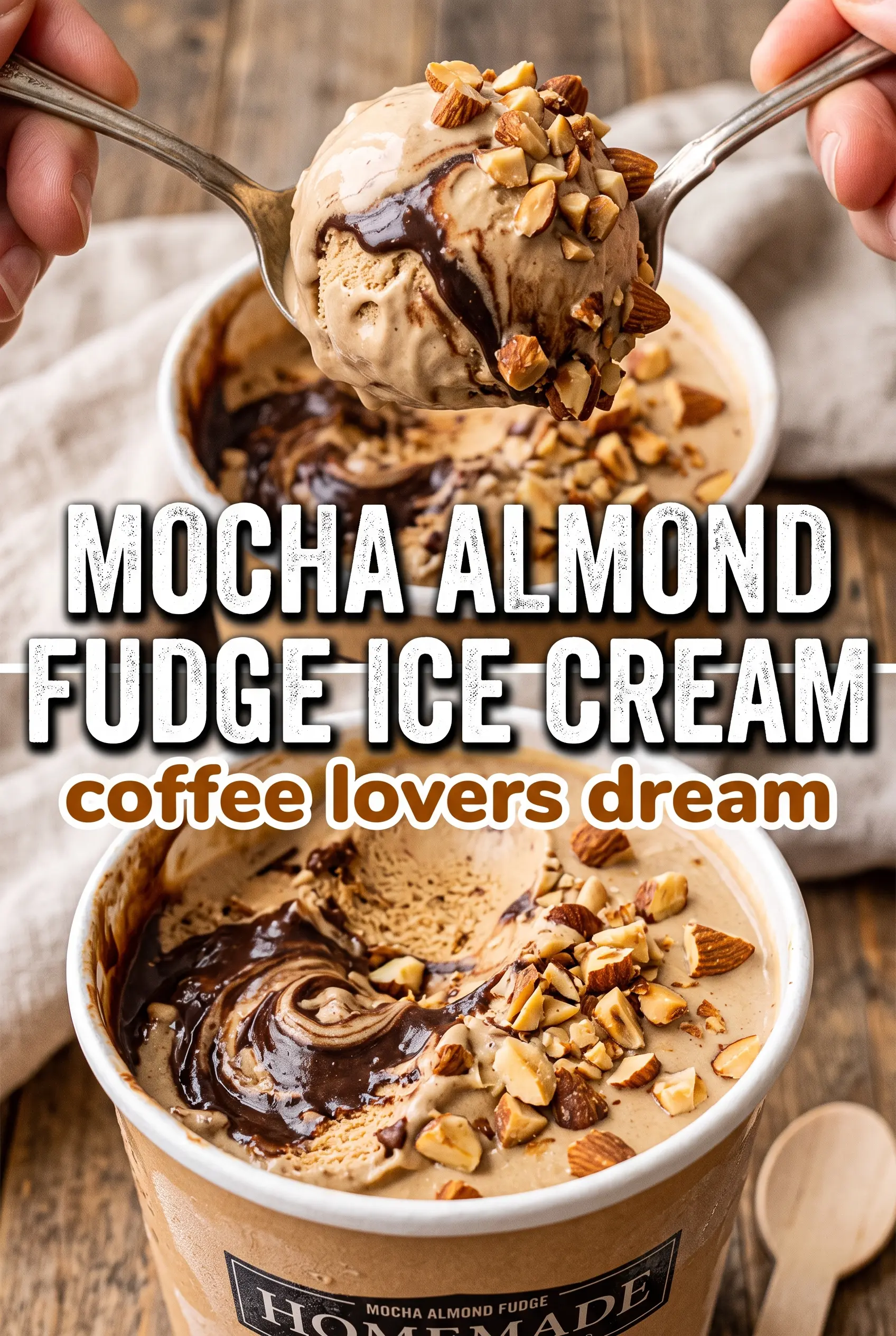
The fudge stayed in those pretty ribbons after freezing, and the toasted almonds gave each bite a crunch that kept the coffee base from feeling too rich. I served it after dinner and everyone went back for seconds.
Creamy mocha almond fudge ice cream with thick chocolate ribbons and toasted almond crunch
The Custard Needs Gentle Heat, Not More Time
Ice cream base is where most homemade batches go wrong. If you rush the custard over high heat, the yolks tighten too fast and you get little bits of scrambled egg or a grainy texture that never smooths out. For this recipe, the target is 175°F, where the custard is thick enough to coat a spoon but still pours in a clean ribbon. That temperature gives you body without pushing the eggs past the point of silkiness.
The other thing that matters here is the order. The hot dairy goes into the yolks slowly, not all at once, so the eggs warm up without breaking. Once the custard returns to the saucepan, stir constantly and keep the heat steady and moderate. The mixture should look glossy and lightly thickened, not bubbling hard. If it starts to steam aggressively or foam at the edges, pull it back immediately.
- Egg yolks — These build the custard and keep the finished ice cream creamy. Whole eggs won’t give the same lush texture.
- Instant espresso powder — This dissolves into the dairy and gives the base a deep coffee taste without adding liquid. Freshly brewed coffee won’t work the same way because it waters the custard down.
- Heavy cream and whole milk — Cream brings richness, while whole milk keeps the base from feeling heavy. Using all cream makes the ice cream denser and duller after freezing.
- Toasted almonds — Toasting wakes up the nut flavor and helps the almonds stay bold against the cold base. Skip the toast and they taste flat.
What Each Ingredient Is Actually Doing in This Ice Cream
- Base ingredient (cream, milk, or custard) — This provides the foundation and richness. Quality matters.
- Sweetener (sugar, honey, or condensed milk) — This sweetens and prevents ice crystals. The ratio is critical.
- Flavor element (vanilla, fruit, chocolate, or other) — This defines the ice cream personality. Use quality ingredients.
- Egg yolks (if making custard base) — These create richness and silky texture. Optional but elevates ice cream.
- Churning (if using ice cream maker) — This incorporates air and prevents ice crystals. Critical for smooth texture.
- Freezing temperature and time — Proper freezing prevents rock-hard texture. Store at 0°F or below.
- Mix-ins (chocolate, cookies, fruit, or swirls) — These add texture and prevent one-dimensional flavor. Add near end of churning.
- Serving temperature (slightly soft, not rock hard) — This provides creamy mouthfeel. Remove from freezer 5 minutes before serving.
Churn First, Then Layer the Fudge While the Base Is Still Soft
Dissolving the Coffee Cleanly
Warm the cream and milk just enough to dissolve the espresso powder fully. You want the liquid hot and steamy, not boiling, so the coffee granules disappear without cooking the eggs too fast when you combine everything. If any powder is still floating, whisk a little longer before moving on. That step keeps the final texture smooth instead of sandy.
Cooking the Custard to the Right Point
After tempering the yolks, return everything to the saucepan and cook, stirring constantly, until the custard reaches 175°F. Coat a spoon and draw a line through it; the line should hold. If the custard gets much hotter, it can curdle or turn eggy, and straining won’t fix that. Add the vanilla and salt off the heat so they stay fresh and bright.
Chilling Before Churning
Cool the custard completely, then refrigerate it for four hours. Cold base churns faster and freezes smoother, which matters here because a warm base can leave the almonds unevenly suspended and make the fudge ribbon melt in too much. If the mixture is even slightly warm when it goes into the machine, the texture ends up looser and icier.
Building the Swirl
Churn until the ice cream is thick and softly mounded, then add the toasted almonds in the last five minutes. Layer the churned ice cream into your container and drizzle in warmed fudge sauce as you go. Use a knife to make just a few lazy swirls. If you overmix, the ribbon disappears into the base and you lose the contrast that makes this ice cream worth making.
Dairy-Free Mocha Almond Fudge Ice Cream
Use full-fat coconut milk in place of the dairy and swap in a dairy-free fudge sauce. The texture turns a little softer and the coconut flavor shows up, but the espresso and chocolate still carry the dessert well.
No-Churn Shortcut
Skip the custard and fold cooled espresso concentrate into whipped sweetened cream, then layer in fudge and almonds. You lose some of the dense, custardy body, but the finished ice cream freezes faster and still gives you the same coffee-chocolate-almond combination.
Gluten-Free as Written
This recipe is naturally gluten-free if your fudge sauce is gluten-free too. Check the label, since some store-bought chocolate sauces use thickeners or additives that sneak in gluten.
Less Sweet, More Coffee
Drop the sugar by 2 tablespoons and add an extra 1/2 teaspoon espresso powder if you want the coffee to lead more clearly. The ice cream will freeze a touch firmer, but the mocha flavor reads sharper and less candy-like.
Storage and Reheating
- Refrigerator: Not applicable once frozen, but the custard base can be chilled up to 24 hours before churning.
- Freezer: Freeze in a tightly covered container for up to 2 weeks. The fudge ribbon stays best in the first week before it starts to blend into the base.
- Reheating: Not needed for the ice cream itself. If the fudge sauce has thickened too much, warm it just until pourable before layering; hot sauce will melt the churned ice cream and erase the swirl.
Answers to the Questions Worth Asking
Mocha Almond Fudge Ice Cream
Ingredients
Equipment
Method
- Heat the heavy cream and whole milk in a saucepan over medium heat until steaming. Whisk in the instant espresso powder until fully dissolved.
- In a separate bowl, whisk the egg yolks and granulated sugar until smooth. Slowly whisk the hot cream mixture into the yolks to temper them.
- Return the mixture to the saucepan and cook, stirring constantly, until it reaches 175F. Scrape the bottom and sides as it thickens.
- Strain the custard into a clean container to remove any bits. Stir in the vanilla extract and salt, then cool completely.
- Refrigerate the custard for 4 hours, until very cold. Cover to prevent a skin from forming.
- Churn the chilled custard in an ice cream maker according to the manufacturer’s instructions until thick, soft-serve consistency. Add the toasted whole almonds in the last 5 minutes of churning.
- Layer the churned ice cream into a freezer-safe container. Drizzle warmed hot fudge sauce between layers and swirl with a knife to create ribbons.
- Freeze the container until firm, about 4 hours or as needed for scoopable texture. Let sit 5 minutes at room temperature for easier serving.