Mexican chorizo rice lands in that sweet spot between side dish and full meal. The rice comes out fluffy and tinted brick-red from tomato, cumin, and chorizo drippings, with little pockets of smoky, spicy pork scattered through every scoop. It’s the kind of skillet rice that disappears fast because it tastes like the pan did most of the work for you, which, in this case, it did.
The key is building flavor in layers instead of dumping everything in at once. Browning the chorizo first leaves behind seasoned fat that coats the onion and toasts the rice, and that step matters more than the spice mix alone. Long-grain white rice holds its shape here, so you get distinct grains instead of a soft, sticky pot.
Below, I’ve included the timing that keeps the rice tender without turning soggy, plus the small finish that wakes up the whole dish right before serving. The lime and cilantro go in at the end for a reason, and it’s not just garnish.
The rice soaked up all the chorizo drippings and stayed fluffy instead of gummy. I loved how the lime at the end brightened it up after the smoky spices.
Save this Mexican chorizo rice for the nights when you want one pot, bold flavor, and fluffy grains with crispy-edged chorizo.
Why the Rice Needs the Chorizo Drippings First
The biggest mistake with skillet rice is treating the rice and the seasoning as separate things. If you add broth and tomatoes before the rice has a chance to toast in the fat, the grains cook up soft but flat, and the dish tastes more like seasoned rice than chorizo rice. That first coating of oil and drippings is what gives every grain a savory edge.
Chorizo also brings a built-in advantage: it seasons the whole pan as it browns. You want those browned bits at the bottom. They dissolve into the broth and deepen the color, which is why this rice tastes richer than a simple tomato rice even though the ingredient list stays short.
- Chorizo drippings — These are the backbone of the dish. Remove the cooked chorizo, but leave enough fat in the pot to coat the onion and toast the rice.
- Long-grain white rice — This is the right rice for a fluffy result. Short-grain rice turns softer and stickier, which works against the loose, spoonable texture here.
- Diced tomatoes with juice — The juice helps build the cooking liquid, and the tomatoes add acidity that keeps the rice from tasting heavy. Drain them and the dish loses some of its body.
- Chicken broth — Use a broth you’d actually drink. A weak broth makes the rice taste thin no matter how well you brown the chorizo.
What Each Ingredient Is Actually Doing in This Pot
- Chorizo — This is the main flavor driver. Mexican chorizo needs to be cooked and crumbled; it’s raw and fatty, not the firm Spanish style, so don’t treat it like a slice-and-serve sausage.
- Onion and garlic — They build the aromatic base after the chorizo comes out. If the garlic goes in too early, it can scorch in the fat and turn bitter before the rice even starts.
- Cumin and chili powder — These round out the chorizo’s spice without overpowering it. If your chorizo is especially smoky or hot, pull the cumin back slightly so the bowl doesn’t turn muddy.
- Cilantro and lime — These are the finish, not an afterthought. Stir them in at the end so they stay bright and fresh instead of cooking off into the background.
Toast the Rice, Then Let the Pot Do the Work
Brown the chorizo and keep the drippings
Cook the chorizo over medium heat until it’s deeply browned and a little crisp at the edges, not just gray and crumbly. That takes about five minutes in most pots. Lift it out with a slotted spoon and leave the fat behind; if the pan looks dry, add the olive oil before moving on. The browned bits stuck to the bottom are a gift, not a problem.
Wake up the onion and toast the rice
Cook the onion until it softens and turns glossy, then stir in the garlic just long enough for it to smell fragrant. Once the rice goes in, keep it moving for two to three minutes so the grains turn opaque and pick up the chorizo fat. If the rice stays pale and dry, it won’t absorb flavor as well and can taste bland even after simmering.
Simmer without stirring
Add the broth, tomatoes, cumin, chili powder, and salt, then bring everything to a steady simmer before covering the pot. Once it’s covered, lower the heat and leave it alone for about 15 minutes. Stirring during this stage can break the grains and release starch, which is how you end up with a heavy, pasty pot instead of separate grains.
Finish with the fresh ingredients
When the rice is tender and the liquid is absorbed, fluff it with a fork before folding in the cooked chorizo, cilantro, and lime juice. Let it rest off the heat for five minutes so the steam settles and the flavors marry. If it looks a little wet at first, that rest time fixes it; if it looks dry, a splash of hot broth can bring it back without making it mushy.
How to Adapt This for a Lighter Pot or a Bigger One
Make it dairy-free and naturally gluten-free
This recipe is already dairy-free and gluten-free as written, which is one of the reasons it works so well for a crowd. Just double-check that your chorizo and broth are labeled gluten-free, since some brands use fillers or seasoning blends that sneak wheat in.
Use brown rice for a heartier version
Brown rice works, but it needs more liquid and a much longer simmer, so the quick 25-minute timing won’t hold. Expect a nuttier flavor and a firmer bite; the tradeoff is that the chorizo flavor reads a little less immediate because the rice takes longer to soften.
Swap in vegetable broth for a meatless side
If you want the rice to sit beside vegetarian mains, replace the broth with a good vegetable broth and skip the chorizo entirely. You’ll lose the smoky pork flavor, so add a little smoked paprika to the tomato mixture to keep the pot from tasting flat.
Stretch it for a fuller meal
Stir in black beans or corn at the end if you want more volume and a little sweetness against the spice. Add them after the rice is done so they warm through without overcooking, and expect a softer, more spoonable bowl rather than a pure side dish.
Storage and Reheating
- Refrigerator: Store in an airtight container for up to 4 days. The rice firms up a bit as it chills, but the flavor gets even better overnight.
- Freezer: It freezes well. Cool it completely, pack it in flat portions, and freeze for up to 2 months.
- Reheating: Reheat covered with a splash of broth or water over low heat on the stove, or in the microwave in short bursts. The common mistake is blasting it dry, which turns the grains hard on the outside before the center warms through.
Answers to the Questions Worth Asking
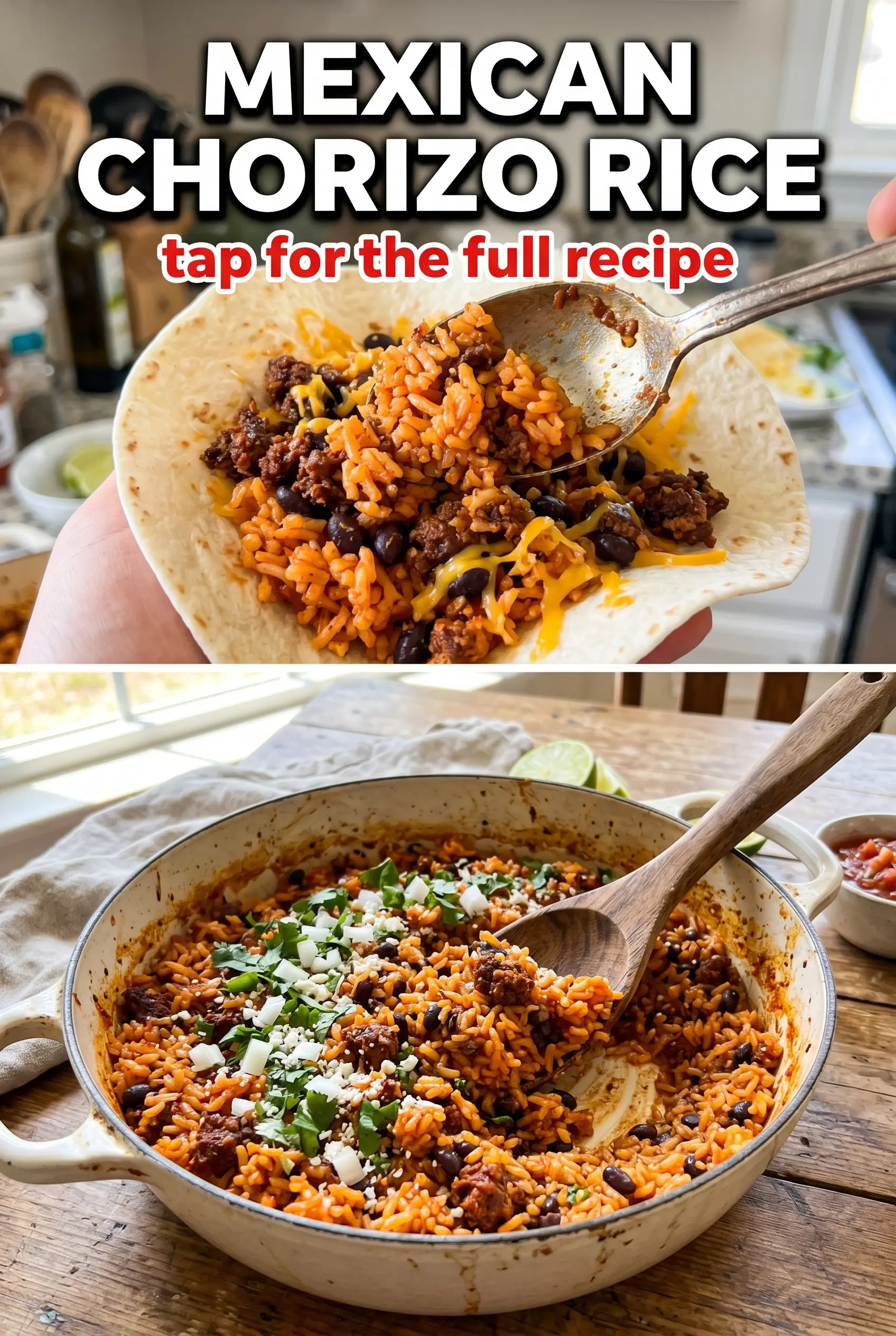
Mexican Chorizo Rice
Ingredients
Equipment
Method
- Crumble the chorizo into a large pot and cook over medium heat until browned, about 5 minutes. Stir occasionally until the fat renders and you see golden drippings in the pot.
- Add the olive oil and sauté the diced onion until softened, about 3 minutes. Then add the minced garlic and cook for 1 minute, stirring so it becomes fragrant but not browned.
- Stir in the rice and toast for 2-3 minutes, stirring frequently. Keep going until the grains look slightly translucent and feel warmer to the touch.
- Add the chicken broth, diced tomatoes with their juice, cumin, chili powder, and salt. Bring to a simmer, cover, and cook for 15 minutes until the liquid is absorbed and the rice is tender.
- Fluff the rice with a fork, then stir in the cooked chorizo, cilantro, and lime juice. Fold gently so the grains stay fluffy and the garnish is evenly distributed.
- Let the rice rest for 5 minutes before serving. Cover during rest to keep steam in, which helps the final texture set.