Golden, crisp tortillas and a molten center of feta, mozzarella, spinach, and sun-dried tomatoes make these Mediterranean quesadillas the kind of dinner that disappears fast. The edges shatter a little when you cut in, but the filling stays creamy and savory, with briny olives and basil keeping every bite bright.
What makes this version work is the balance. Mozzarella gives you the stretch, feta brings the salty tang, and the spinach cooks down just enough to blend into the cheese without turning the tortillas soggy. The sun-dried tomatoes add concentrated sweetness, which matters because feta and olives can lean sharp if nothing rounds them out. Brushing the outside with olive oil instead of butter helps the tortillas crisp evenly and keeps the flavor in the Mediterranean lane.
You’ll find a few practical notes below on how to keep the quesadillas crisp, what to swap if you’re missing an ingredient, and how to avoid the most common problem with any stuffed quesadilla: a filling that leaks before the cheese has time to melt.
The feta got creamy instead of grainy, and the tortillas crisped up before the spinach could make them soggy. I added extra tzatziki on the side and my husband asked for them again the next night.
These Mediterranean quesadillas get their crisp edges, melty feta, and briny-tangy filling just right every time.
The Mistake That Makes Quesadillas Soggy Before the Cheese Melts
The biggest problem with stuffed quesadillas is heat control. If the skillet is too hot, the tortillas brown before the feta and mozzarella soften, and you end up with a crisp shell around an under-melted center. If the pan is too cool, the vegetables steam and the tortillas pick up moisture instead of color. Medium heat is the sweet spot here because it gives the cheese time to relax while the tortilla turns evenly crisp.
The other trap is overfilling. Spinach shrinks fast, but the olives and sun-dried tomatoes hold their shape, and it only takes a little too much filling to make folding awkward and sealing impossible. Keep the layer even and light, and you’ll get a quesadilla that slices cleanly instead of collapsing on the plate.
What the Mozzarella, Feta, and Sun-Dried Tomatoes Each Bring to the Pan
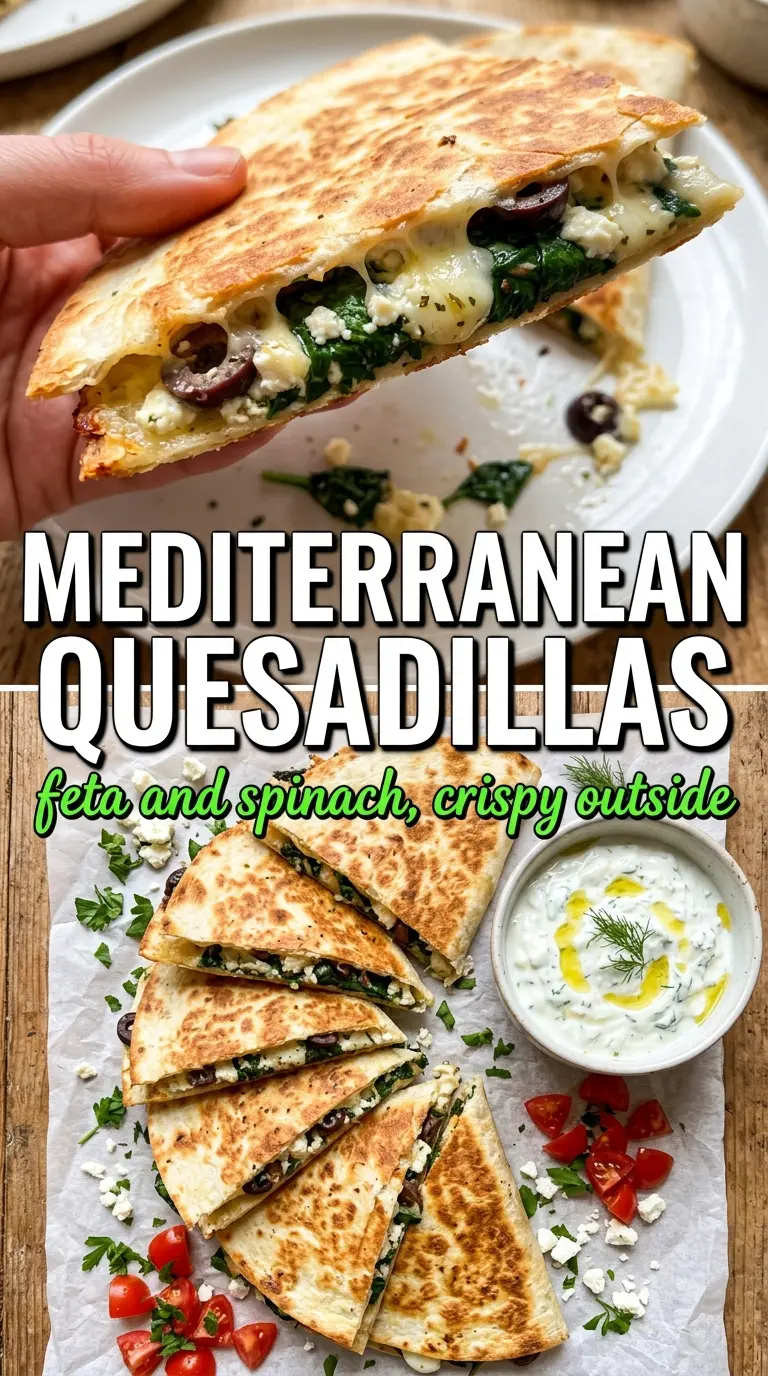
- Mozzarella — This is the cheese that gives you the pull when you cut the quesadilla. A low-moisture shredded mozzarella works best because fresh mozzarella can leak too much water and make the tortilla soft.
- Feta — Feta brings the salty, tangy backbone of the filling. Block feta crumbled by hand usually tastes fuller and less chalky than the pre-crumbled kind, but either works if that’s what you have.
- Sun-dried tomatoes in oil — These add depth and a sweet-savory chew that balances the briny olives. Drain them well before chopping so the tortillas crisp instead of frying in the oil from the jar.
- Baby spinach — Fresh baby spinach is best here because it wilts quickly and blends into the cheese without needing pre-cooking. If you use mature spinach, chop it first and strip out the tough stems so the filling doesn’t feel stringy.
- Tzatziki — The cool, garlicky dip matters more than it sounds like it should. It cuts through the richness and turns the quesadilla from a snack into a full meal.
Building the Filling So It Melts Before the Tortilla Overbrowns
Warm the Pan First
Set the skillet over medium heat and give it a minute to come up to temperature before the quesadilla goes in. A properly warmed pan starts the browning right away, which keeps the tortilla from soaking up oil while it waits to color. If the pan is cold, the cheese leaks before the wrapper firms up.
Layer the Cheese Under the Vegetables
Spread the mozzarella and feta over half of each tortilla first, then scatter the spinach, tomatoes, olives, onion, basil, and oregano on top. Putting the cheese against the tortilla helps it act like glue as it melts, which holds the filling together and makes folding easier. Keep the pile thin and even so the center heats through before the outside gets too dark.
Brush, Fold, and Press Lightly
Brush the outside with olive oil and fold the tortilla in half. The oil is there for even browning, not for frying, so use a light hand; too much just makes the crust greasy. Press the top gently with a spatula once it hits the pan so the tortilla makes full contact with the surface.
Flip Only After the First Side Sets
Cook for 3 to 4 minutes on the first side, until the bottom is deep golden and the edges look sealed. If it slides around too much when you try to flip, it needs another 30 seconds to firm up. Turn it once, then cook the second side until the cheese is fully melted and the tortilla feels crisp all the way across.
Ways to Bend This Quesadilla Without Losing the Crunch
Make it dairy-free
Use a dairy-free shredded mozzarella style cheese and skip the feta, then add a pinch of extra salt and a squeeze of lemon to bring back some of the sharpness feta normally gives. The texture will still be crisp, but the filling won’t have quite the same creamy-salty bite.
Use whole wheat or gluten-free tortillas
Whole wheat tortillas add a nuttier edge and hold up well, though they brown a little faster. Gluten-free tortillas work too, but they’re usually more fragile, so let the first side set fully before you flip and handle them with a wide spatula.
Swap the olives for artichokes
Chopped marinated artichoke hearts give you a softer, less briny filling with a more delicate bite. Drain them well and chop them small, since larger pieces can poke through the tortilla and make folding harder.
Turn it into a heartier meal
Add a thin layer of shredded rotisserie chicken or chickpeas for more protein. Chicken keeps the flavor clean and familiar, while chickpeas make it vegetarian and add a little more texture without turning the quesadilla heavy.
Storage and Reheating
- Refrigerator: Store leftovers in an airtight container for up to 3 days. The tortilla softens a bit, but the flavor holds up well.
- Freezer: These can be frozen, but the spinach and tomatoes lose some texture after thawing. Wrap individual wedges tightly and freeze for up to 1 month for the best shot at decent results.
- Reheating: Reheat in a dry skillet over medium-low heat until the outside crisps again and the cheese loosens. The microwave works in a pinch, but it makes the tortilla chewy instead of crisp.
Questions I Get Asked About This Recipe
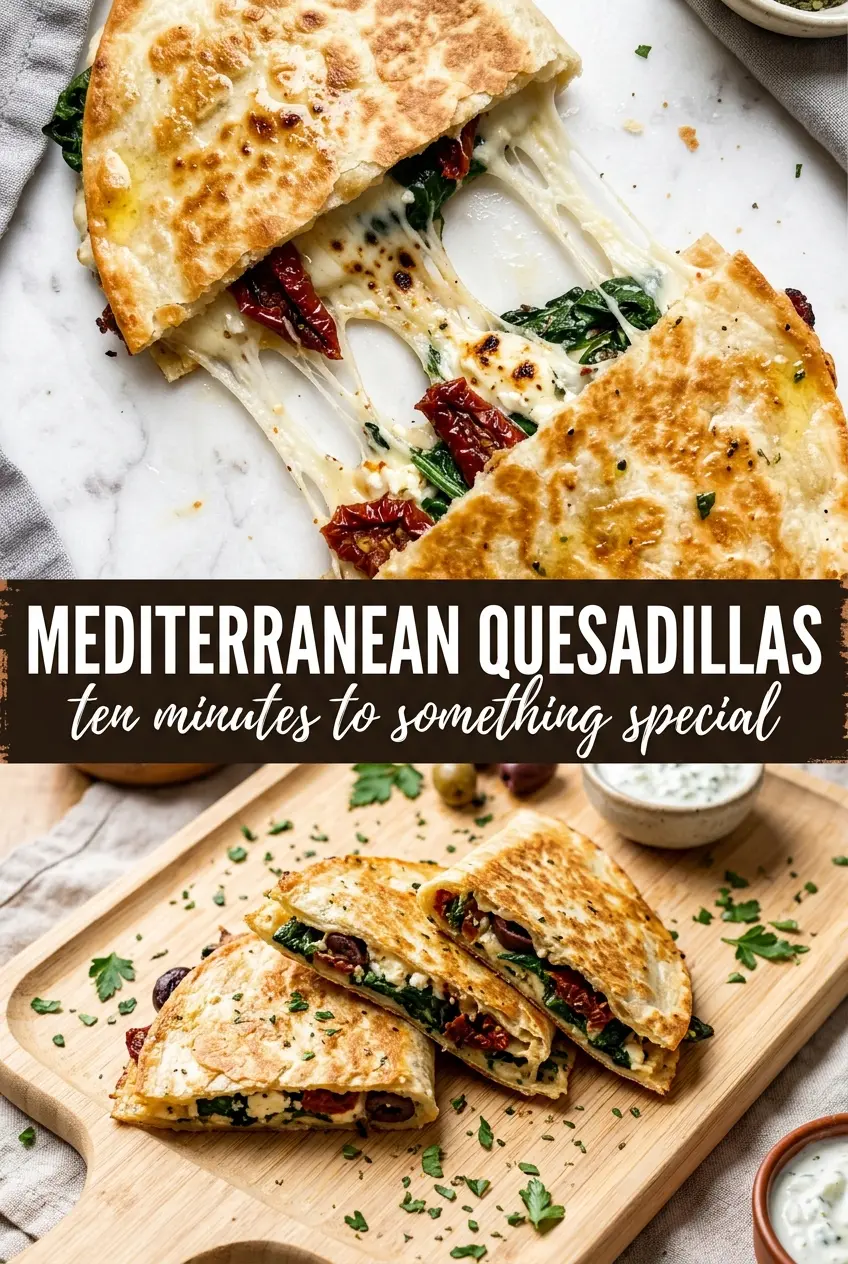
Mediterranean Quesadillas
Ingredients
Equipment
Method
- Heat a large skillet over medium heat until hot, about 1–2 minutes. You should see the surface shimmer when you tilt the pan.
- Spread mozzarella and feta over half of each tortilla. Aim for an even layer so the cheese melts through the center.
- Layer spinach, sun-dried tomatoes, olives, red onion, and basil over the cheese. Sprinkle dried oregano over the filling so every bite has seasoning.
- Fold the tortilla in half and brush the outside lightly with olive oil. Coat just enough to help browning and crisp edges.
- Cook quesadillas one at a time in the skillet for 3–4 minutes per side until golden and crispy. Press gently with a spatula and cook until the cheese fully melts, with bubbling at the seams.
- Slice each quesadilla into wedges. Cut through the melted cheese and serve immediately while the filling is hot.
- Serve with tzatziki for dipping. Add tzatziki alongside the wedges so it stays cool against the hot crisp.