Vivid mango sorbet is one of those desserts that tastes like it took far more effort than it did. The texture lands right between silky and icy in the best way, with a bright tropical flavor that stays clean on the palate instead of turning heavy or overly sweet. When mango is ripe and fragrant, it doesn’t need much help to turn into a dessert that feels polished and refreshing.
The key is balancing the fruit with just enough simple syrup and lime. Too much sugar flattens the mango; too little leaves the sorbet hard and dull. The lime zest matters more than people expect, because it lifts the fruit and keeps the whole bowl from tasting one-note. A shallow container helps the mixture freeze faster and more evenly, which keeps the texture smoother whether you churn it or freeze it by hand.
Below you’ll find the small details that make this sorbet worth repeating, including how to get a smoother scoop, when straining actually helps, and the easiest way to adapt it if your mangoes are sweeter or more fibrous than expected.
The lime kept the mango from tasting flat, and the sorbet froze up smooth enough to scoop after a few minutes on the counter. My kids asked for seconds before I’d even put the mint on top.
Save this mango sorbet for the days when you want a bright, icy dessert with clean mango flavor and no dairy in sight.
Why the Mango Needs the Right Balance of Sweetness and Acidity
Mango sorbet fails when it tastes like frozen fruit purée instead of a proper dessert. Mango has a lot of natural sugar, but it also varies wildly in intensity depending on ripeness. The simple syrup softens the freeze and keeps the sorbet scoopable, while the lime juice sharpens the mango so the flavor stays lively after freezing.
If your mangoes are extremely sweet, the lime can do more work and you may not need every bit of sugar. If they’re pale or a little flat, don’t lean on extra sugar first; that just makes the sorbet sweeter, not more mango-forward. The goal is a clean, vivid flavor with enough structure to scoop without turning hard as a brick.
What Each Ingredient Is Actually Doing in This Sorbet
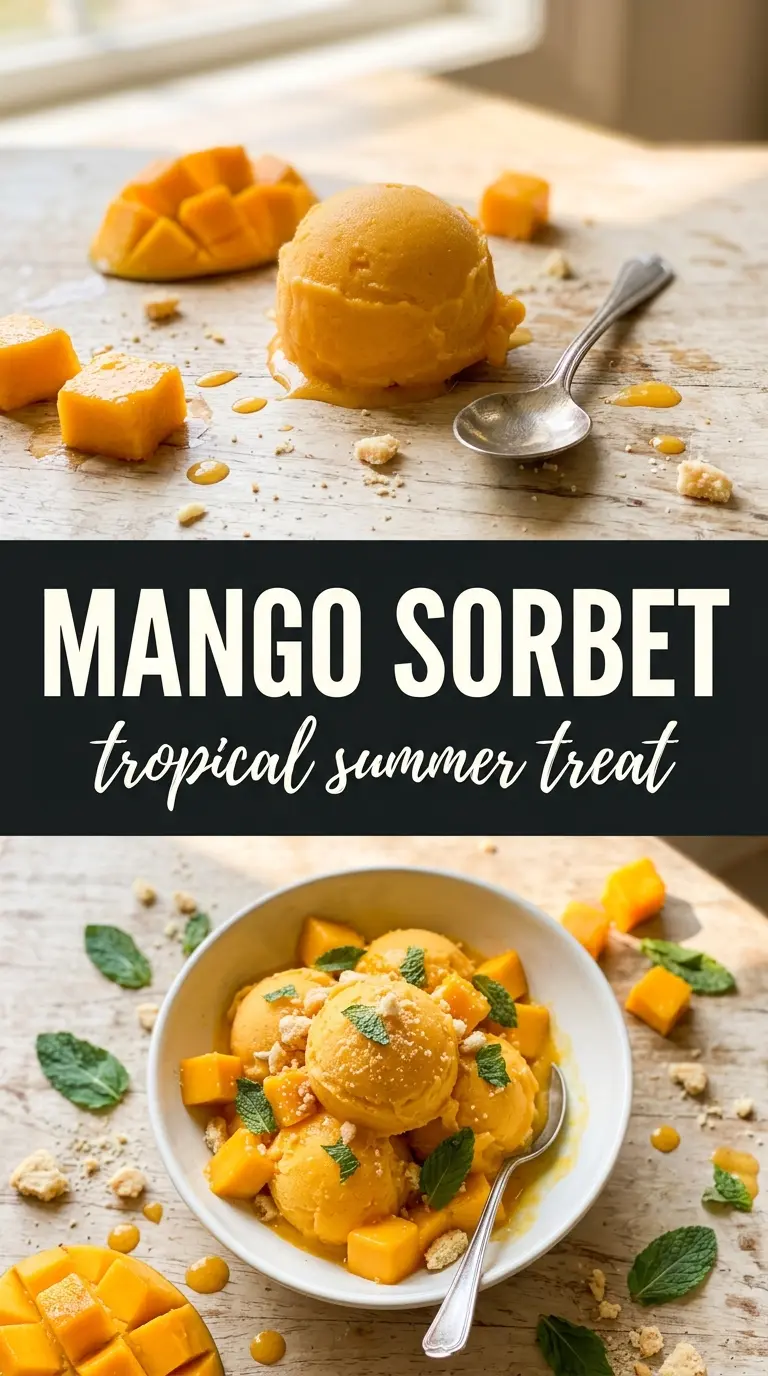
- Fresh or frozen mango chunks — This is the whole personality of the dessert, so use fruit that tastes good on its own. Frozen mango works beautifully and often gives you more consistent flavor than mango that’s been sitting around too long. If you use fresh mango, pick fruit that smells fragrant at the stem end and feels soft with a little give.
- Granulated sugar — Sugar doesn’t just sweeten here; it lowers the freezing point so the sorbet stays scoopable. Cutting it too far makes the finished texture icy and dense. If your mango is very sweet, reduce the sugar a little, but don’t remove it entirely.
- Lime juice and lime zest — Juice brightens the flavor, and zest adds the floral citrus note that makes the sorbet taste fresher. The zest matters more than it seems because it gives the mango a sharper top note without thinning the mixture. Use a fine grater and only take the green part.
- Water — This is just for the simple syrup. You need enough liquid to dissolve the sugar fully, and that syrup blends in smoothly once cooled. Don’t add it hot or it can warm the mango mixture and slow freezing later.
- Pinch of salt — It won’t make the sorbet taste salty. It makes the mango taste rounder and less flat, especially if the fruit is a little underwhelming.
Building the Smoothest Mango Base Without Losing the Fruit Flavor
Making the Simple Syrup
Warm the sugar and water over medium heat just until the sugar disappears and the liquid looks clear. You don’t need a boil, and you don’t want to reduce it into anything thicker than syrup. Let it cool completely before blending, because even warm syrup can make the mango taste dull and can create a loose base that takes longer to freeze.
Blending Until Completely Silky
Add the mango, cooled syrup, lime juice, lime zest, and salt to a blender and run it until the mixture looks smooth and glossy. If you see little mango threads or fibrous bits, keep blending a little longer before you decide whether to strain. The smoother the base now, the nicer the finished sorbet will scoop later.
Straining for a Cleaner Scoop
If your mango is fibrous, pour the mixture through a fine mesh sieve and press it through with a spatula. This step is worth it when the fruit has a stringy texture, because those fibers freeze into a slightly chewy finish. If your mango purée is already silky, you can skip straining and keep the fuller fruit body.
Freezing for the Right Texture
Pour the base into a shallow container so the mixture freezes evenly from edge to center. If you’re freezing by hand, stir it every hour to break up ice crystals before they get too large. In an ice cream maker, churn until it looks like soft serve, then move it to the freezer to firm up. The sorbet should be cold and firm but still give slightly when a spoon hits it.
Three Ways to Adjust This Mango Sorbet for Your Kitchen
Use frozen mango for a stronger cold, clean finish
Frozen mango gives you a reliable base and usually a smoother blend because the fruit is picked and frozen at peak ripeness. It can make the mixture feel a little thicker right away, which is helpful if you’re freezing it by hand. Let the syrup cool first so you don’t thaw the fruit too much during blending.
Make it lower sugar without wrecking the scoop
You can reduce the sugar a little if your mango is very ripe and naturally sweet, but don’t cut it aggressively. The sugar keeps the sorbet from freezing into a hard block, so too little will give you a brittle texture. If you want a firmer, less sweet dessert, reduce the sugar by a couple of tablespoons at most.
Skip the dairy and keep it fully vegan
This sorbet is already dairy-free and vegan as written, which is part of why it tastes so clean. The only thing to watch is your sugar source if that matters for your kitchen, but the standard ingredients fit a plant-based dessert without any changes. Serve it with mint or a squeeze of lime for a sharper finish.
How to store it for better scooping later
- Refrigerator: Not recommended. Sorbet melts fast and turns slushy before it ever becomes useful in the fridge.
- Freezer: Store in an airtight container for up to 2 weeks. Press a piece of parchment or plastic wrap directly onto the surface to reduce ice crystals.
- Reheating: Not applicable, but the best way to serve it is to let it sit at room temperature for 5 to 10 minutes so it softens enough to scoop without shredding.
Questions I Get Asked About This Mango Sorbet
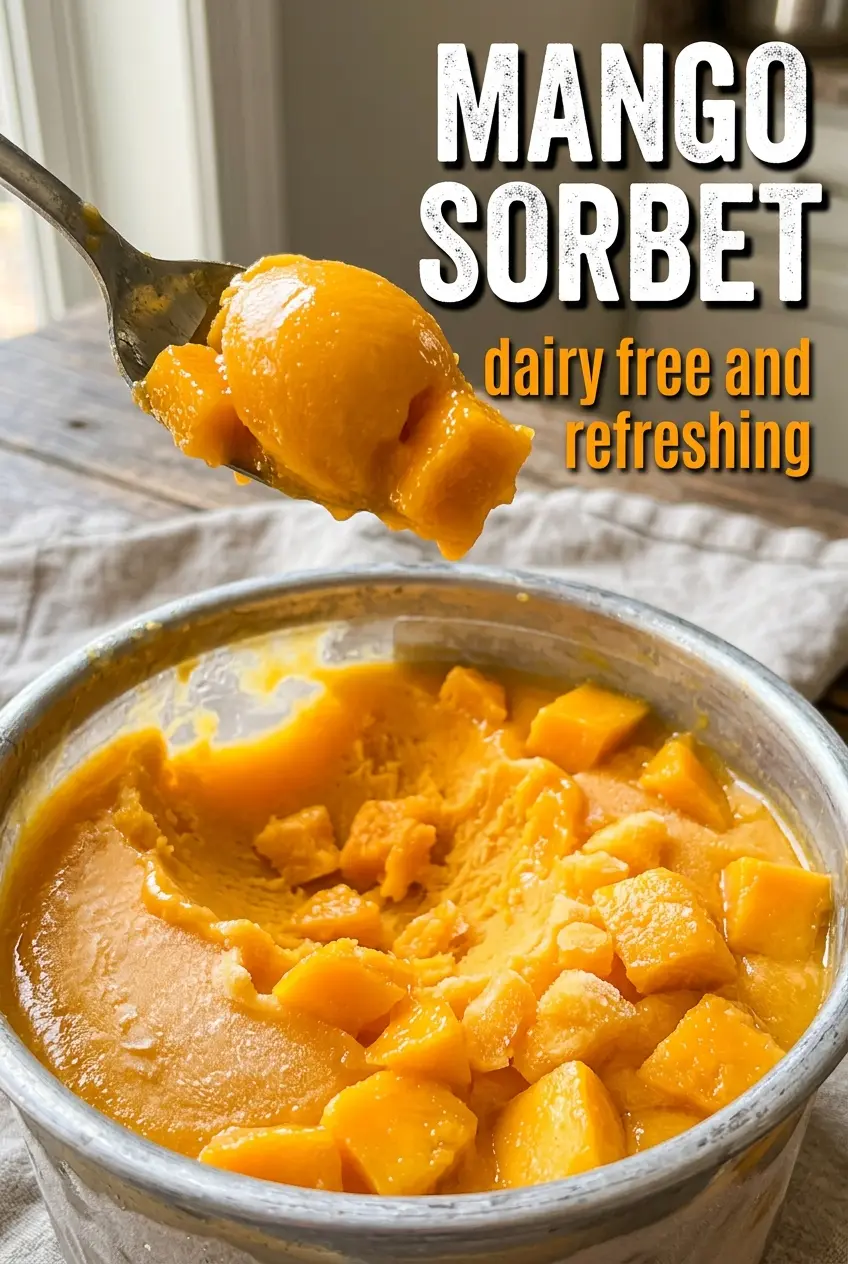
Mango Sorbet
Ingredients
Equipment
Method
- Combine granulated sugar and water in a saucepan over medium heat, stirring until the sugar fully dissolves. Visual cue: the liquid should look clear with no grainy sugar spots.
- Cool the simple syrup completely before using. Visual cue: it should return to a cool, room-temperature state.
- Blend fresh or frozen mango chunks with the cooled simple syrup, lime juice, lime zest, and salt until completely smooth. Visual cue: the mixture should be uniform and bright golden-orange with no mango bits.
- Strain the blended mixture through a fine mesh sieve for a very smooth sorbet if desired. Visual cue: a silky texture should remain after straining.
- Pour the mixture into a shallow freezer container and freeze for 4 hours, stirring every hour. Visual cue: it should thicken and develop a glistening icy texture as it freezes.
- Alternatively, churn the mixture in an ice cream maker for 20-25 minutes. Visual cue: it should look like thick, sorbet-style soft serve right after churning.
- Serve the mango sorbet with fresh mint. Visual cue: garnish the top right before serving for a fresh green accent.