Bright, sharp lemon sorbet is the kind of dessert that wakes up your whole palate. It freezes into a clean, icy scoop with enough sweetness to round the citrus, but not so much that it loses that taut, mouth-puckering finish that makes lemon sorbet worth making at home.
The trick is balancing concentration and temperature. Fresh juice gives you the punch, lemon zest adds the perfume that keeps the flavor from tasting flat, and chilling the base until it’s truly cold helps the ice cream maker turn it into a fine, scoopable texture instead of a gritty block. If you’re using the optional egg white, it softens the freeze just enough to make the sorbet feel a little smoother without turning it creamy.
Below, I’ve included the one step people rush most often, plus a few practical swaps and storage notes so the sorbet keeps its clean texture all the way to serving.
The lemon flavor was incredibly clean and tart, and chilling the base overnight made the texture turn out smooth instead of icy. I also whisked in the egg white, and it scooped beautifully straight from the freezer.
Save this lemon sorbet for the moment you want a pale, icy dessert with pure citrus snap and a smooth scoop.
The Part Most Lemon Sorbet Gets Wrong: Flavor Without Enough Chill
Lemon sorbet can taste sharp and hollow if the base isn’t cold enough before it goes into the machine. When the mixture starts warm, the churning takes longer, the ice crystals get larger, and the finished sorbet loses that fine, clean texture that should make every spoonful feel brisk and smooth. The other common miss is underestimating the zest; the juice brings acidity, but the zest carries the aroma that makes the lemon flavor linger.
This recipe avoids both problems by dissolving the sugar first, then fully cooling the syrup before mixing in the juice. That matters because hot syrup can dull fresh lemon flavor and make the whole base taste cooked. A long chill after combining everything isn’t optional here — it’s what gives the churned sorbet its tight, glossy structure instead of a slushy freeze.
What Each Ingredient Is Actually Doing in This Sorbet
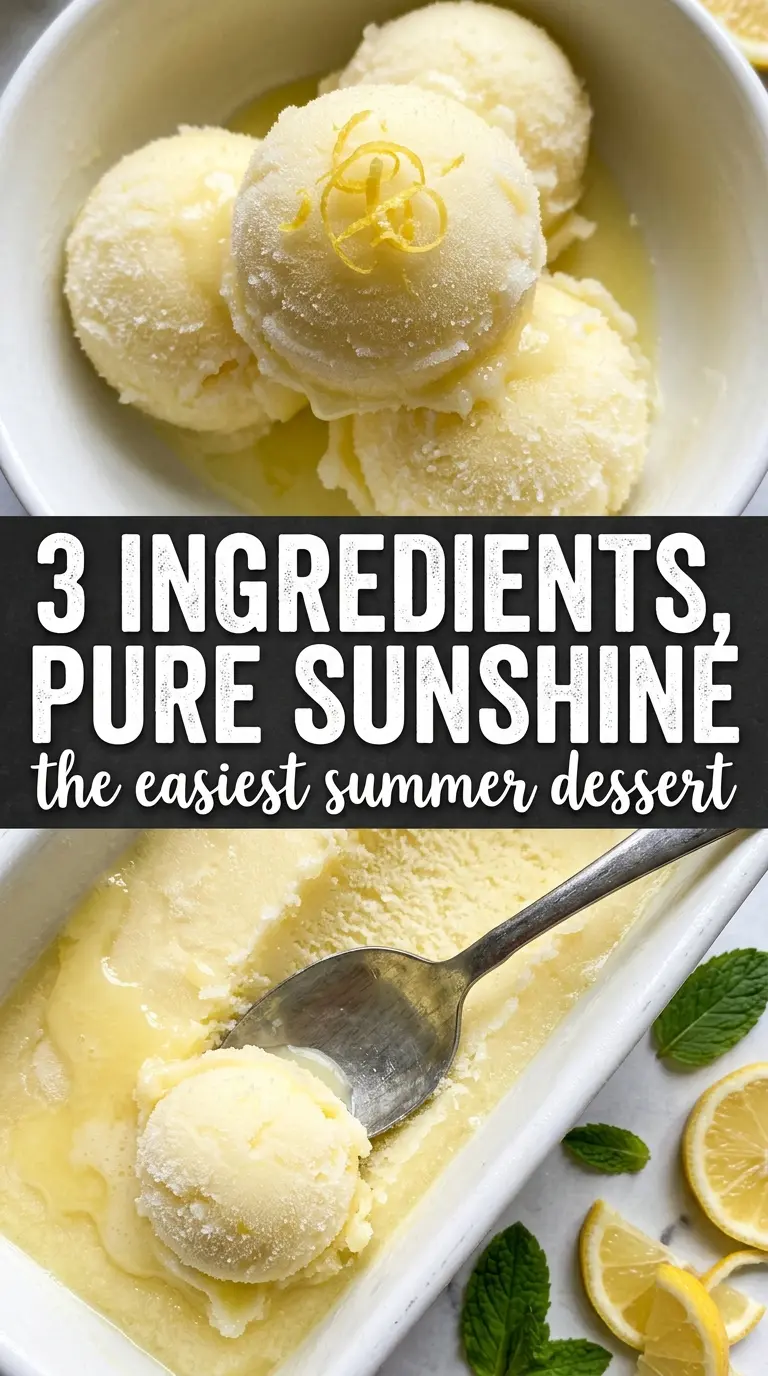
The ingredients are simple, but each one changes the final texture or flavor in a real way.
- Fresh lemon juice — Bottled juice tastes flatter and can bring a harsh, one-note acidity. Freshly squeezed lemons give the sorbet its clean, vivid flavor, and the better the lemons smell when you zest them, the better the sorbet will taste.
- Lemon zest — This is where the aroma lives. Don’t skip it if you want the sorbet to taste like lemon, not just sour sugar water. Use a fine grater and avoid the white pith, which tastes bitter.
- Granulated sugar — Sugar isn’t just for sweetness; it lowers the freezing point so the sorbet stays scoopable instead of turning into a lemon ice brick. Cutting it much further usually makes the texture harder and the tartness sharper than it should be.
- Water — This dissolves the sugar into a smooth syrup and keeps the flavor balanced. There’s no substitute that works better here than plain water.
- Egg white — Optional, but useful if you want a softer, slightly creamier finish. Whip it to soft peaks and fold it into a fully cold base; if you add it before chilling, it can get foamy in the wrong way and won’t help the texture as much.
- Salt — Just a pinch wakes up the citrus and keeps the sorbet from tasting one-dimensional. It shouldn’t read as salty, only brighter.
Building the Base So It Churns Cleanly
Make the syrup first
Combine the sugar and water in a saucepan and heat over medium, stirring until the sugar disappears completely. You’re looking for a clear syrup, not a simmering reduction. Once the sugar is dissolved, take it off the heat and cool it all the way down before you add the lemon juice. If you rush this step, the juice can taste dull and the mixture will take much longer to chill.
Mix in the citrus while the syrup is cold
Stir the lemon juice, zest, and salt into the cooled syrup, then refrigerate the base until it’s very cold. The mixture should feel cold all the way through, not just cool at the edges. That’s what helps the ice cream maker freeze it quickly and keep the crystals small. If you’re adding the egg white, fold it in only after the base has chilled, when the mixture is thickened slightly from the cold.
Churn until it looks like soft snow
Pour the cold mixture into your ice cream maker and churn until it’s thick, slushy, and aerated, usually 20 to 25 minutes. It should hold soft ridges and mound on itself instead of running like liquid. If it still looks soupy, give it a few more minutes, but don’t chase a hard freeze in the machine. Sorbet finishes in the freezer, not in the churn.
Freeze until firm enough to scoop
Transfer the churned sorbet to a container and freeze for at least 2 hours. It will firm up from soft serve to scoopable sorbet as it sets. Press a piece of parchment or plastic wrap directly on the surface if you want to keep ice crystals from forming at the top. Serve it in chilled bowls or lemon halves for the cleanest look and the best texture.
How to Adjust This Sorbet When You Want It a Little Different
Dairy-Free as Written
This recipe is naturally dairy-free, which is part of why the lemon stays so bright and clean. Keep it that way if you want the sharpest finish; adding cream or milk would turn it into a different dessert entirely.
No Ice Cream Maker
Pour the cold base into a shallow metal pan and freeze it, stirring with a fork every 30 to 40 minutes until it breaks up into fine icy flakes. The texture won’t be as smooth as churned sorbet, but it still delivers the same tart lemon flavor. This method works best if the mixture is fully chilled before freezing.
Less Sweet, Sharper Finish
You can reduce the sugar slightly if your lemons are especially sweet or you prefer a more bracing sorbet, but don’t cut it too far. Sugar is part of the texture here, and reducing it too much makes the sorbet icy and hard. Start with just 2 to 3 tablespoons less, then taste the base before it chills.
Storage and Reheating
- Refrigerator: The base can be held in the fridge for up to 24 hours before churning, and the lemon flavor actually benefits from that extra chill.
- Freezer: Finished sorbet keeps for about 1 week before the texture starts to get icy. Press parchment or plastic wrap directly on the surface and store it in an airtight container.
- Reheating: There’s no reheating here. Let the sorbet sit at room temperature for 5 to 10 minutes before scooping if it freezes very hard; warming it too much melts the edges and ruins the clean scoop.
Questions I Get Asked About This Recipe
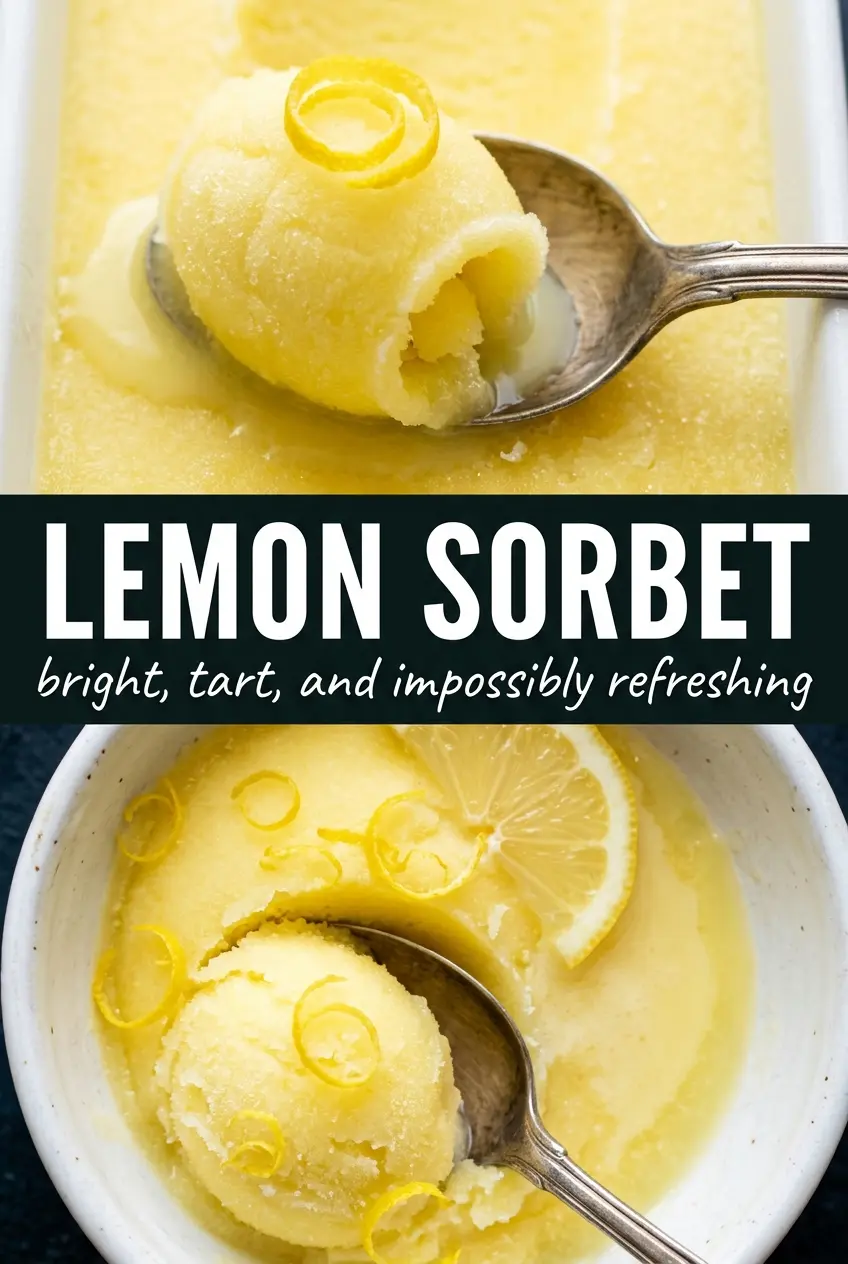
Lemon Sorbet
Ingredients
Equipment
Method
- Combine granulated sugar and water in a saucepan and heat over medium, stirring, until fully dissolved (about 5 minutes). Visual cue: the liquid should look clear with no grainy sugar at the bottom.
- Cool the simple syrup completely, then prepare a separate mixing step by having the syrup ready to chill. Visual cue: the syrup no longer feels warm when touched to the outside of the pan.
- Stir the cooled simple syrup with fresh lemon juice, lemon zest, and salt until well combined. Visual cue: the mixture turns a pale, bright yellow and looks evenly blended.
- Refrigerate the lemon mixture until very cold for at least 4 hours. Visual cue: it should feel chilled all the way through when you stir the bowl.
- If using egg white, whip to soft peaks, then fold it into the cold lemon mixture. Visual cue: it should lighten the base without leaving streaks.
- Churn the cold lemon mixture in an ice cream maker until thick and slushy, about 20-25 minutes. Visual cue: it should look like pale sorbet with a smooth, scoopable texture.
- Transfer the churned sorbet to a container and freeze at least 2 hours until firm. Visual cue: the surface becomes matte and the center holds its shape.
- Serve lemon sorbet in chilled bowls or scoop it into hollowed lemon halves. Visual cue: the scoop should be dense yet glossy with clean edges.