Lemon pistachio cake lands in that sweet spot between bright and rich: a tender crumb with real pistachio flavor, enough lemon to cut through the butter and cream cheese, and a frosting that settles into the layers instead of sliding off the sides. The cake stays pale green and delicate, with a nutty aroma that comes through before the first bite.
Ground pistachios do more than add flavor here. They replace part of the flour, which gives the crumb a softer, almost plush texture and keeps the cake from tasting like plain vanilla cake with nuts tossed in. The lemon juice and sour cream work together too, adding tang and moisture without making the batter thin or greasy. That balance matters in a layer cake, especially one finished with cream cheese frosting, because you want structure and softness in the same slice.
Below, I’ve included the small details that make this cake come out cleanly and taste balanced, plus a few ways to adapt it if you need a gluten-free version or want to change the finish without losing that pistachio-lemon contrast.
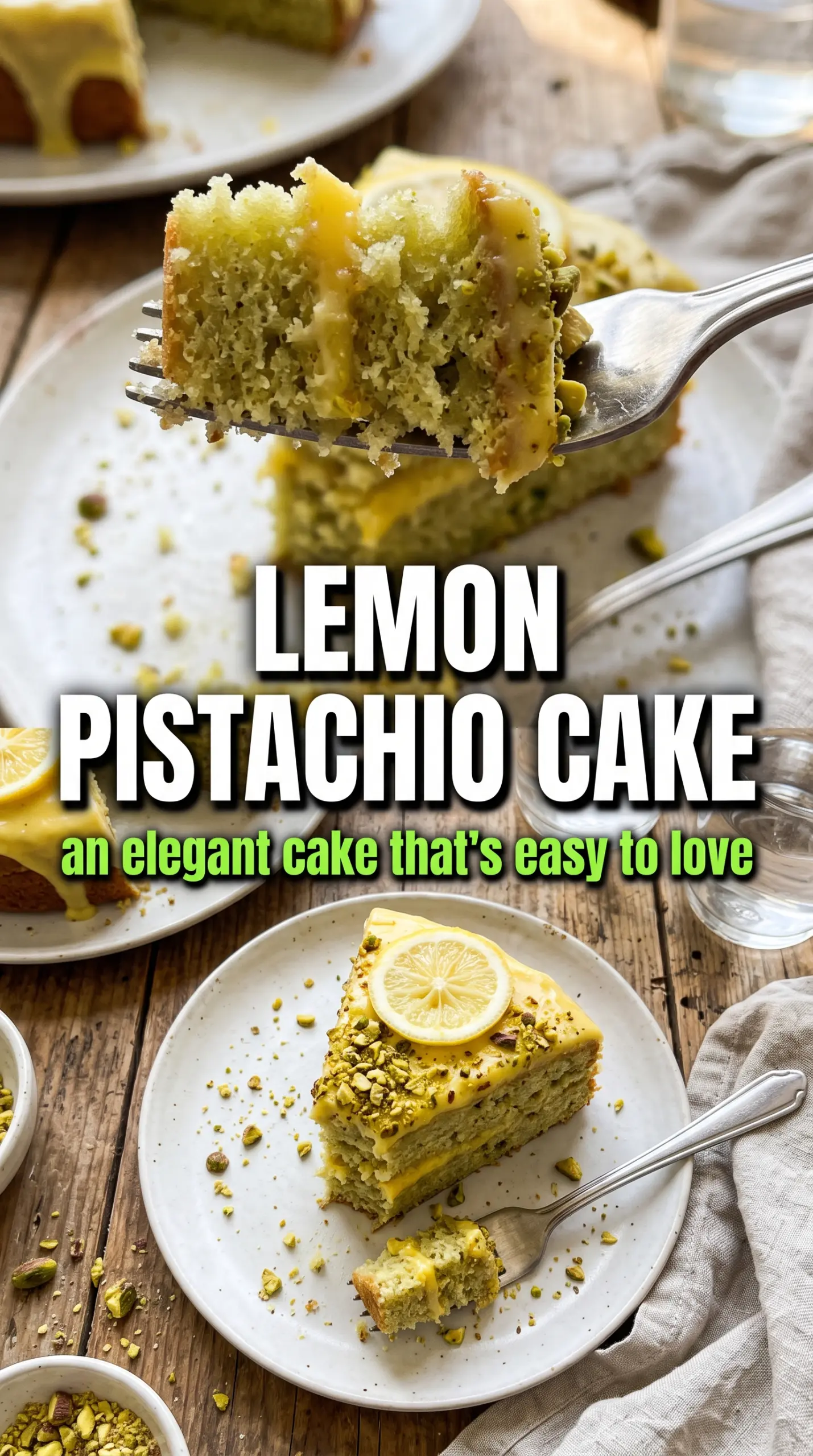
The cake layers baked up even and stayed incredibly moist, and the pistachio flavor came through without tasting heavy. I loved how the lemon frosting cut the sweetness and the crushed nuts on the outside gave every slice a little crunch.
Save this lemon pistachio cake for the next time you want a citrus layer cake with a soft nutty crumb and thick lemon cream cheese frosting.
The Mistake That Makes Pistachio Cake Taste Flat
Most pistachio cakes miss the point because they treat pistachios like a decoration instead of the main flavor. Grinding the nuts finely lets them melt into the batter and perfume the crumb all the way through, but the texture still needs help from flour and butter to keep the layers light. If the pistachios are too coarse, the cake bakes up unevenly and the slices can feel crumbly in the wrong way.
The other place this cake can go sideways is the lemon. Too much juice and the batter gets loose before it hits the oven; too little and the frosting makes the whole dessert taste heavy. This version keeps the lemon bright but controlled, so the pistachio still reads as a flavor, not just a background note.
- Finely ground pistachios — These carry the flavor of the cake. A food processor works best because you want a meal that looks sandy, not a paste. Stop before it turns oily, or the cake can bake up dense.
- Sour cream — This is what keeps the crumb moist and tender without thinning the batter. Plain Greek yogurt can work in a pinch, but it brings a little more tang and a slightly firmer texture.
- Lemon zest and juice — Zest does the real aromatic work here. Juice sharpens the flavor, but the zest is what makes the cake taste like lemon instead of lemon-flavored sweetness.
- Cream cheese frosting — The frosting needs both fat and tang to balance the nutty cake. Full-fat cream cheese gives you the thickest, smoothest finish; low-fat versions can turn loose and grainy.
Building the Layers Without a Heavy Crumb
Starting with the pistachio flour
Whisk the ground pistachios with the flour, baking powder, and salt before you touch the wet ingredients. That keeps the leavening distributed evenly, which matters in a cake this delicate. If the pistachios clump in one spot, you’ll get a patchy crumb and uneven rise.
Whipping the butter and sugar properly
Beat the butter and sugar until the mixture looks pale and fluffy, not just combined. That step traps air, and that air helps the cakes rise before the baking powder finishes the job. If the butter is too cold, the mixture stays grainy and the finished cake feels tighter than it should.
Adding the eggs and citrus without breaking the batter
Add the eggs one at a time, letting each one disappear before the next goes in. Then stir in the lemon zest, lemon juice, and sour cream. The batter may look slightly curdled after the lemon juice, but that’s normal once the dry ingredients go in; don’t keep beating it or you’ll toughen the cake.
Watching for the bake to finish
Divide the batter evenly between the pans and bake until the tops spring back and a toothpick comes out clean with only a few moist crumbs. Don’t wait for deep browning; pistachio cake should stay a little pale. Overbaking is the fastest way to lose the soft, almost velvety texture that makes this cake worth making.
What Each Ingredient Is Actually Doing in This Cake
- Butter — Butter gives the cake its rich structure and helps the crumb stay tender. Softened butter is essential here; melted butter won’t trap air, and the layers won’t rise the same way.
- Granulated sugar — Sugar sweetens, but it also helps aerate the butter when you beat them together. That’s part of what gives the cake its lift and fine crumb.
- Eggs — Eggs bind the pistachio mixture to the flour and add stability. Room-temperature eggs blend more smoothly, which helps keep the batter emulsified.
- Cream cheese — In the frosting, cream cheese brings the tang that keeps the dessert from tasting one-note. It also thickens as it sits, which is why this frosting pipes or spreads better after a short chill if the kitchen is warm.
- Powdered sugar — This is what turns the frosting into a spreadable, stable layer. Add it gradually so the frosting stays smooth instead of dusty.
Dairy-Free Version That Still Tastes Rich
Use a plant-based butter for the cake and swap the sour cream for unsweetened dairy-free yogurt. For the frosting, use a dairy-free cream cheese that holds its shape well; the flavor will be a little less tangy, but the cake still keeps its bright lemon-pistachio balance.
Gluten-Free Adaptation
Replace the all-purpose flour with a good 1:1 gluten-free baking blend that includes xanthan gum. The pistachios already bring body, so the cake stays tender, but gluten-free cakes can brown a little faster, so start checking a few minutes early.
Make It a Nicer, Taller Celebration Cake
Bake the layers as written, then chill them before frosting for cleaner edges and fewer crumbs in the finish. If you want extra height, add a third thin layer rather than overfilling the pans; that keeps the crumb even and prevents the center from sinking.
Storage and Reheating
- Refrigerator: Store covered for up to 4 days. The frosting firms up in the fridge, but the cake stays moist.
- Freezer: Freeze unfrosted layers wrapped tightly in plastic and foil for up to 2 months. Frosted slices can be frozen, but the cream cheese frosting softens a bit after thawing.
- Reheating: Let chilled slices sit at room temperature for 30 to 45 minutes before serving. Don’t microwave the frosted cake; it melts the frosting and blunts the lemon flavor.
Questions I Get Asked About This Cake
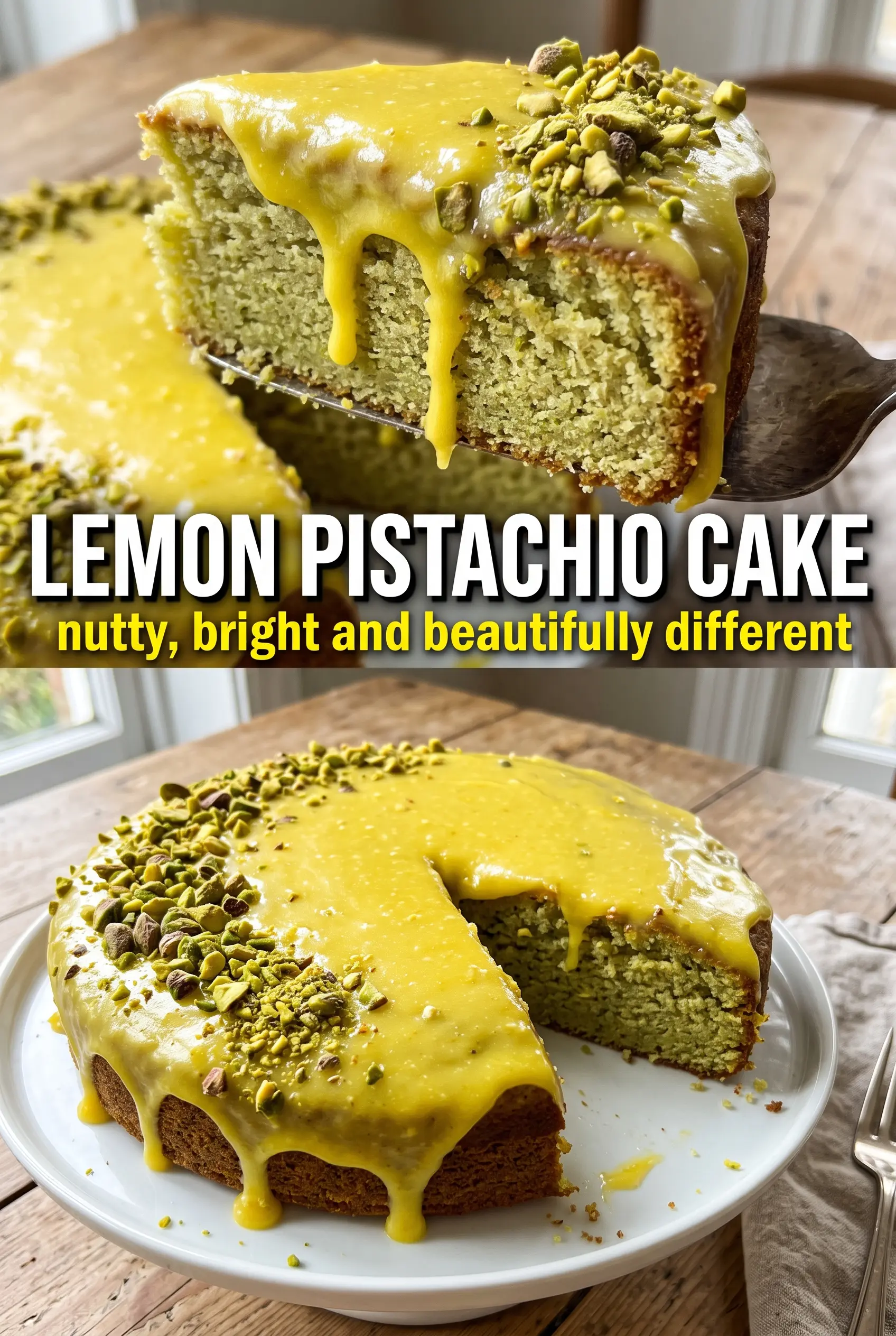
Lemon Pistachio Cake
Ingredients
Equipment
Method
- Preheat oven to 350°F, then grease two 9-inch round pans and line with parchment so the layers release cleanly.
- Whisk ground pistachios, all-purpose flour, baking powder, and salt together until evenly combined.
- Beat softened butter and granulated sugar until fluffy, with the mixture looking lighter in color.
- Add eggs one at a time, beating after each addition until smooth.
- Stir in lemon zest, fresh lemon juice, and sour cream until the batter turns bright and creamy.
- Fold the pistachio-flour mixture into the wet ingredients just until no dry streaks remain, keeping the batter thick and speckled.
- Divide batter between the pans and spread evenly.
- Bake for 30-35 minutes at 350°F until a toothpick inserted in the center comes out clean.
- Cool completely before frosting, so the layers are firm and won’t slip.
- Beat softened cream cheese and butter until smooth and glossy.
- Add powdered sugar, lemon juice, and lemon zest, then beat until fluffy and thick enough to spread.
- Fill and frost the cake with the lemon cream cheese frosting, keeping the top level.
- Press crushed pistachios around the sides so the coating adheres and shows off the pistachio flecks.
- Arrange lemon zest curls on top for a bright, curled garnish.