Orzo salad earns its spot because it stays bright, tidy, and satisfying long after it’s made. The little pasta soaks up the lemon vinaigrette without turning heavy, and the tomatoes, cucumber, mint, and parsley keep every bite fresh instead of muddy. It tastes like the kind of side dish people hover over at the table, going back for “just one more spoonful.”
The trick is giving the dressing enough punch before it hits the pasta. Orzo cools down fast and dulls flavor as it sits, so the lemon, garlic, and olive oil need to be seasoned a little boldly from the start. Rinsing the pasta under cold water stops the cooking and keeps the grains separate, which is what keeps this salad from turning sticky or dense.
Below, I’ll walk through the small details that matter most: how to keep the herbs bright, when to add feta, and what to do if your salad tastes flat after chilling. Those are the spots that usually decide whether an orzo salad feels forgettable or worth making again.
I made this for a cookout and the orzo stayed fluffy after chilling, not clumpy like some pasta salads. The lemon dressing soaked in just enough, and the mint made it taste extra fresh.
Save this lemon orzo salad for the next time you need a fresh make-ahead side with herbs, crunch, and a bright dressing.
The Reason Lemon Orzo Salad Stays Bright Instead of Bland
Most pasta salads go flat because the dressing is treated like a garnish instead of part of the dish. Orzo is small enough to absorb a lot of flavor, which is a blessing and a trap: if the vinaigrette is timid, the salad tastes watered down after chilling. This version starts with a punchy lemon dressing, then gets another chance to wake up before serving.
Rinsing the orzo after cooking matters here. You want to stop the carryover heat and wash off surface starch so the pasta stays loose and doesn’t turn into a gummy clump when the vinaigrette goes in. The chopped herbs and vegetables also need that clean pasta texture to stay distinct.
- Orzo — This is the structure of the salad, and its tiny shape is why it catches dressing in every bite. Regular pasta works in a pinch, but the texture shifts and the salad feels less polished.
- Lemon juice and zest — Juice brings acidity, but the zest gives the salad the lemon aroma that makes it taste fresh instead of sharp. Bottled lemon juice won’t give you the same lift.
- Olive oil — Use a decent one here because the dressing is simple and you’ll taste it. It rounds out the lemon and keeps the salad from tasting aggressively tart after chilling.
- Fresh mint and parsley — These are not optional decoration; they’re what make the salad taste Mediterranean and bright. Dried herbs won’t give the same clean finish.
- Feta — Optional, but it adds salt and creaminess if you want the salad to feel a little fuller. Add it at the end so it doesn’t get smashed into the pasta.
How to Keep the Orzo Separate, Not Sticky
Cooking the Pasta Past Al Dente by a Hair
Cook the orzo until it’s just tender with a little bite left in the center, then drain it right away. Because the pasta gets rinsed, chilled, and tossed with dressing, it will continue to soften slightly as it sits. If you cook it all the way to soft in the pot, the salad goes mushy after an hour in the fridge.
Cooling and Rinsing at the Right Moment
Rinse the cooked orzo under cold water until it’s no longer steaming. That stops the cooking and removes excess starch, which is what keeps the grains from sticking together in one heavy mass. Drain it well, though; extra water on the pasta dilutes the dressing and leaves the salad tasting thin.
Building the Salad So Every Bite Gets Balanced
Whisk the dressing first, then toss it with the cooled pasta before adding the vegetables and herbs. The warm-seasoned dressing coats the orzo better than a cold, underseasoned one, and the acid starts pulling the whole bowl together. Add the feta last so it stays in visible crumbles instead of disappearing into the mix.
What the Lemons, Herbs, and Cheese Are Doing Here
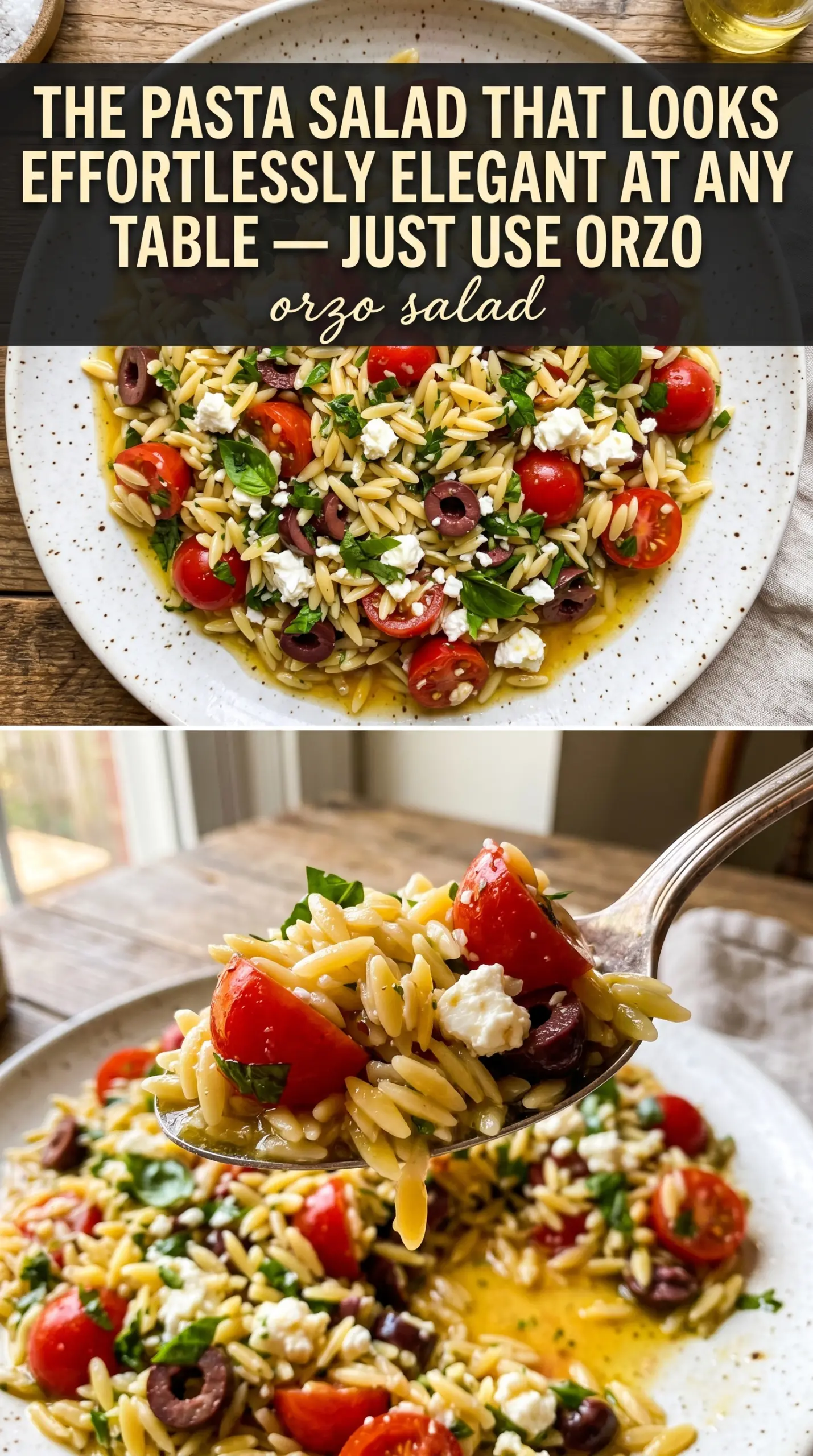
- Cherry tomatoes — They bring sweetness and juice, which keeps the salad from feeling dry. Halve them so their juices mingle with the dressing instead of bursting only when someone takes a bite.
- Cucumber — The cucumber adds crunch and a cool finish that plays well with the lemon. Dice it small enough to stay evenly mixed with the orzo.
- Red onion — Use it sparingly and chop it fine. You want a sharp little bite here, not raw onion dominating the bowl.
- Fresh parsley and mint — Parsley gives body and freshness, while mint makes the salad taste lighter and cleaner. If you skip the mint, the salad still works, but it loses part of what makes it stand out.
- Feta cheese — Crumble it over the finished salad if you want extra salt and a creamy contrast. It’s best as a topping because mixing it in too early makes the texture muddy.
How to Adapt It for a Bigger Crowd or a Dairy-Free Table
Dairy-Free Version
Leave out the feta and add a little extra salt plus a handful of chopped olives or diced avocado right before serving. You lose the salty creaminess, but the salad still tastes complete because the lemon, herbs, and olive oil carry the flavor.
Make It Heartier
Add chickpeas or diced grilled chicken if you want this to act more like a main dish. Chickpeas keep the Mediterranean feel and hold up well in the fridge, while chicken makes the salad more filling but needs a little extra dressing so it doesn’t taste dry.
Using Different Herbs
If mint isn’t your thing, swap it for dill or more parsley. Dill gives a sharper, more herbal edge, while extra parsley keeps the salad milder and cleaner. Don’t replace both herbs with dried versions; the salad needs the fresh finish.
Storage and Reheating
- Refrigerator: Store covered for up to 3 days. The herbs soften a bit, but the flavor stays good.
- Freezer: I don’t recommend freezing this salad. The cucumber and tomatoes lose their texture and turn watery when thawed.
- Reheating: Serve it chilled or let it sit at room temperature for 15 to 20 minutes. Don’t heat it, or the vegetables will lose their crunch and the olive oil will taste greasy.
Questions I Get Asked About This Recipe
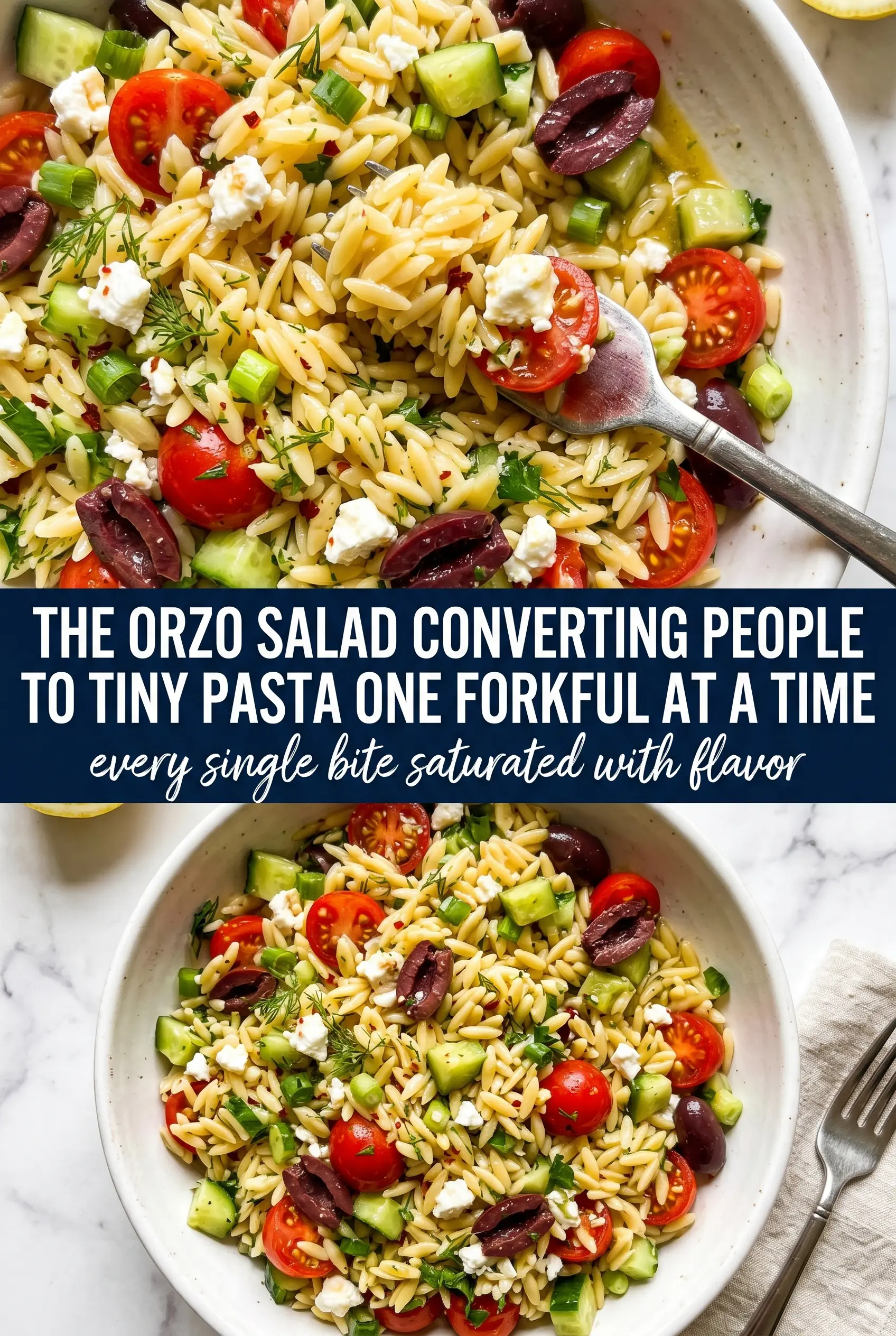
Orzo Salad
Ingredients
Method
- Cook orzo pasta according to package directions, then drain and rinse with cold water to stop the cooking and keep it tender with a rice-like bite.
- Whisk olive oil, lemon juice, lemon zest, garlic, salt, and pepper until the dressing looks evenly combined and slightly glossy.
- Combine orzo, cherry tomatoes, cucumber, red onion, parsley, and mint in a large bowl so the herbs are evenly distributed.
- Pour the lemon vinaigrette over the salad and toss until every piece of orzo is lightly coated.
- Refrigerate for at least 1 hour to let flavors meld and for the pasta salad to be served cold.
- Top with crumbled feta if desired and serve chilled for a salty, creamy contrast to the bright lemon dressing.