Tender orzo, crunchy cucumber, juicy tomatoes, and briny feta make this Mediterranean-style salad the kind of side dish that disappears fast at cookouts and weeknight dinners alike. The best part is how the small pasta catches the lemon herb vinaigrette in every bite, so nothing tastes bland or left behind at the bottom of the bowl.
What makes this version work is balance. The dressing leans bright and sharp at first, then mellows as it chills and the orzo drinks it in. A little Dijon helps the vinaigrette stay together, and the honey softens the lemon just enough to keep the salad from tasting too acidic. Using cooled orzo matters too — warm pasta steams the vegetables and washes out their texture.
Below, I’ll show you how to keep the salad lively instead of soggy, when to add the feta, and the small adjustment I use when I want it to taste even better after sitting in the fridge for a while.
The dressing soaked into the orzo after chilling, and the cucumber stayed crisp instead of going watery. I served it with grilled chicken and everyone went back for seconds.
Save this Mediterranean Orzo Salad for the kind of side dish that stays bright, lemony, and crisp after chilling.
The Trick to Keeping Orzo Salad Fresh Instead of Mushy
The mistake with orzo salad is treating it like plain pasta salad and drowning it in dressing while the noodles are still hot. Orzo has a smaller surface area than bigger pasta shapes, so it softens fast and can go past tender before you notice. Cook it just to al dente, drain it well, and cool it before it meets the vegetables.
The other thing that matters is restraint with the mix-ins. Tomatoes, cucumber, and onion bring enough moisture of their own, which means the salad only needs enough dressing to coat, not pool. Chill time helps the flavors settle, but if you start with overcooked orzo or a wet bowl of vegetables, no amount of lemon will pull it back.
What Each Ingredient Is Actually Doing in This Salad
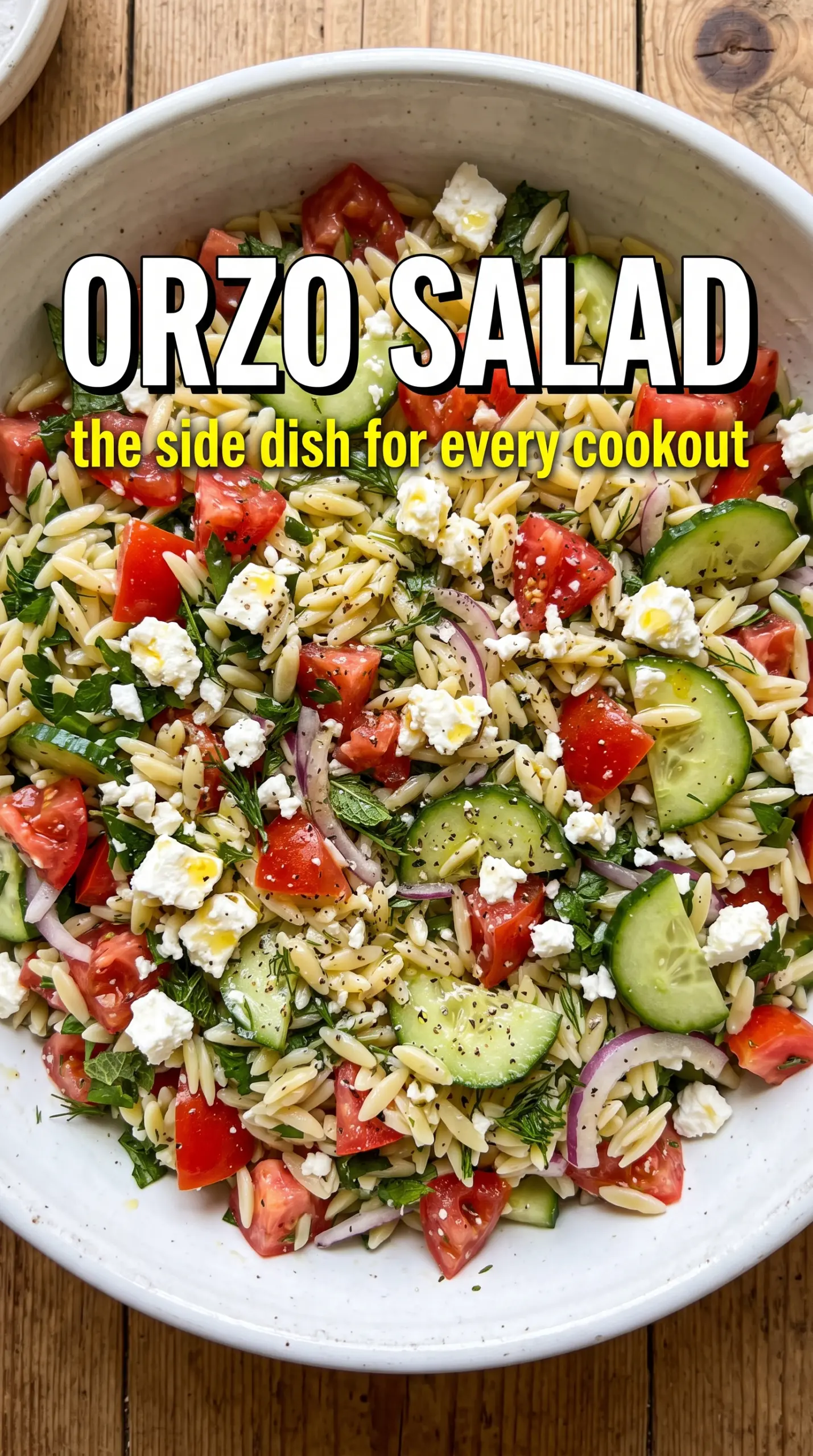
- Orzo — This is the base that carries the dressing. Cook it just until tender with a slight bite, then cool it fully so it doesn’t soak up the vinaigrette unevenly or turn sticky in the bowl.
- Fresh lemon juice and zest — Juice gives the sharpness, zest gives the aroma. You need both here or the salad tastes flat after chilling.
- Dijon mustard — It helps the dressing emulsify so the oil and lemon cling to the pasta instead of separating. If you skip it, whisk longer and expect a thinner dressing.
- Feta — Feta brings salt and creaminess. A block of feta crumbled by hand tastes better than pre-crumbled, which is often drier and less tangy.
- Cucumber, tomatoes, red onion, herbs — These give crunch, juiciness, and freshness. Dice the cucumber small enough that it blends with the orzo instead of falling out of the forkful.
- Kalamata olives — They add the briny hit that keeps the salad from tasting one-note. If you need a swap, use another olive with good flavor, not plain green olives with no depth.
Building the Dressing Before the Pasta Goes In
Whisk the Vinaigrette Until It Looks Smooth
Start with the oil, lemon juice, zest, vinegar, Dijon, honey, oregano, salt, and pepper in a bowl large enough to whisk comfortably. Keep going until the mixture looks slightly thickened and the oil is broken up into tiny droplets. If it looks separated, it won’t coat the orzo evenly and you’ll end up with pockets of sharp lemon and bland pasta.
Toss the Vegetables and Orzo While Everything Is Cool
Add the cooled orzo, tomatoes, cucumber, olives, red onion, parsley, and basil to a big bowl. Toss gently so the herbs stay leafy and the tomatoes don’t collapse. If the pasta is even a little warm, the cucumber softens and the salad loses its crisp edge.
Fold in the Feta at the End
Add most of the feta after the dressing has coated the pasta and vegetables. That keeps the cheese from disappearing into the salad and gives you better little salty pockets in each bite. Save a handful for the top so the finished bowl looks fresh instead of mixed into one pale color.
Chill, Then Adjust Right Before Serving
Let the salad rest in the fridge for at least 30 minutes. The orzo will absorb some of the dressing, which is what makes the flavor settle in. Before serving, taste again and add a splash of lemon juice or a pinch of salt if it needs brightness.
How to Adapt This Orzo Salad for Different Tables
Make It Dairy-Free
Leave out the feta and add a handful of chopped parsley and extra olives for more punch. You’ll lose the creamy-salty finish, so the salad benefits from a little extra salt and a touch more lemon.
Make It Gluten-Free
Use a gluten-free orzo or a small rice-shaped pasta. Cook it one minute shy of the package directions, since gluten-free pasta can go from tender to soft faster than wheat pasta once it sits in dressing.
Turn It Into a Main Dish
Add chickpeas, grilled chicken, or flaked tuna. Chickpeas keep it vegetarian and make the salad more filling without changing the texture, while chicken or tuna turns it into a lunch that holds up well in the fridge.
Storage and Reheating
- Refrigerator: Store covered for up to 4 days. The orzo absorbs more dressing as it sits, so it may need a fresh squeeze of lemon before serving.
- Freezer: I don’t recommend freezing this salad. The cucumber and tomatoes lose their texture and turn watery after thawing.
- Reheating: Serve it cold or let it sit at room temperature for 15 minutes. Warming it up softens the vegetables and dulls the herbs, which is the fastest way to lose what makes the salad work.
Answers to the Questions Worth Asking
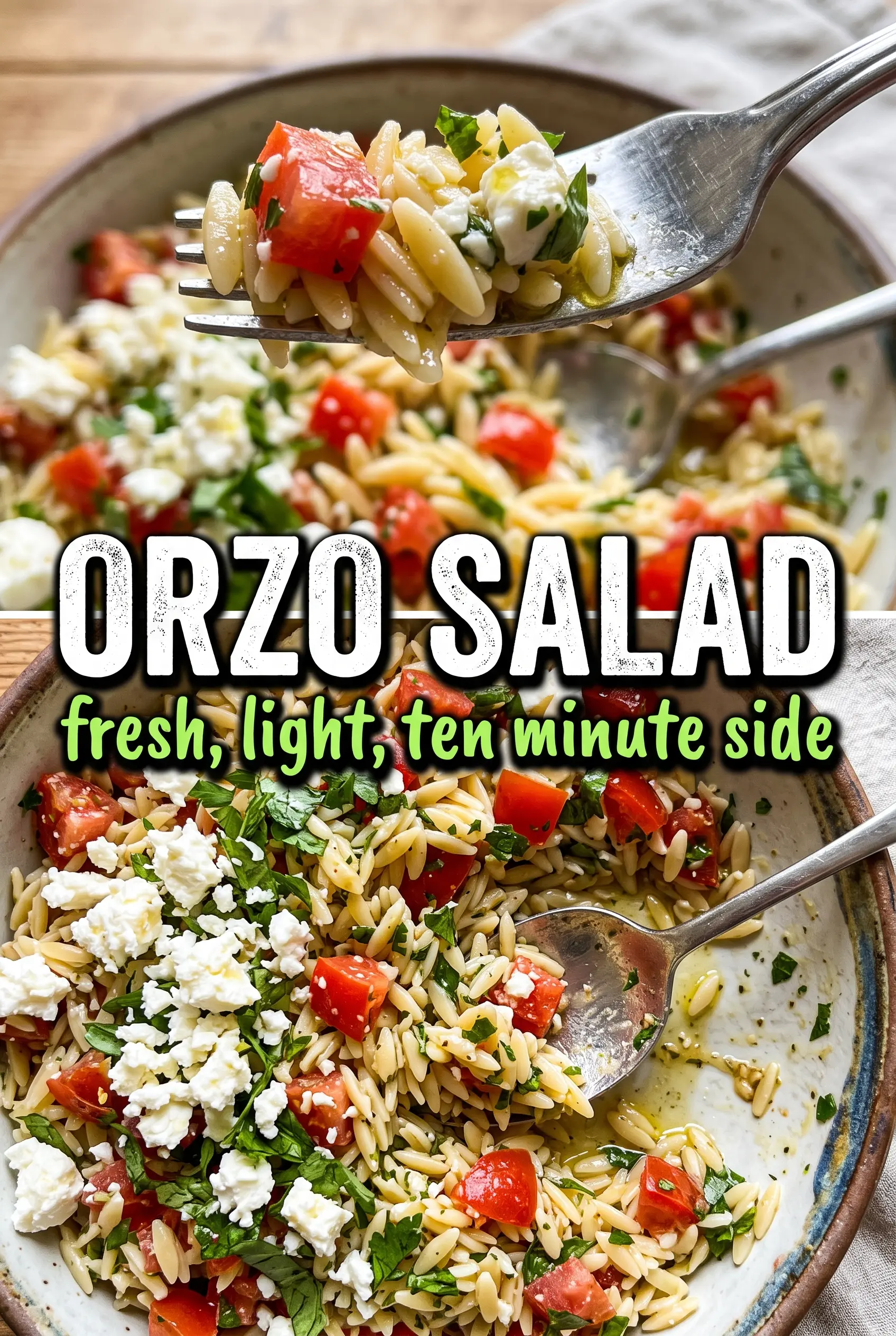
Orzo Salad
Ingredients
Equipment
Method
- Whisk together olive oil, lemon juice, lemon zest, red wine vinegar, Dijon mustard, honey, dried oregano, salt, and pepper until emulsified. Visual cue: the mixture should look glossy and uniform, not separated.
- Combine cooled orzo, cherry tomatoes, cucumber, Kalamata olives, red onion, parsley, and basil in a large bowl. Visual cue: colorful ingredients should be evenly distributed through the orzo.
- Pour the lemon herb dressing over the salad and toss until everything is evenly coated. Visual cue: each small grain of orzo should look lightly glazed with dressing.
- Fold in most of the crumbled feta. Visual cue: white crumbles should be dotted throughout without covering the whole surface.
- Refrigerate for at least 30 minutes; taste and adjust lemon or salt. Visual cue: the salad looks slightly more cohesive as the grains absorb dressing.
- Top with remaining feta and extra fresh herbs before serving. Visual cue: fresh herbs and feta on top should look bright and freshly scattered.