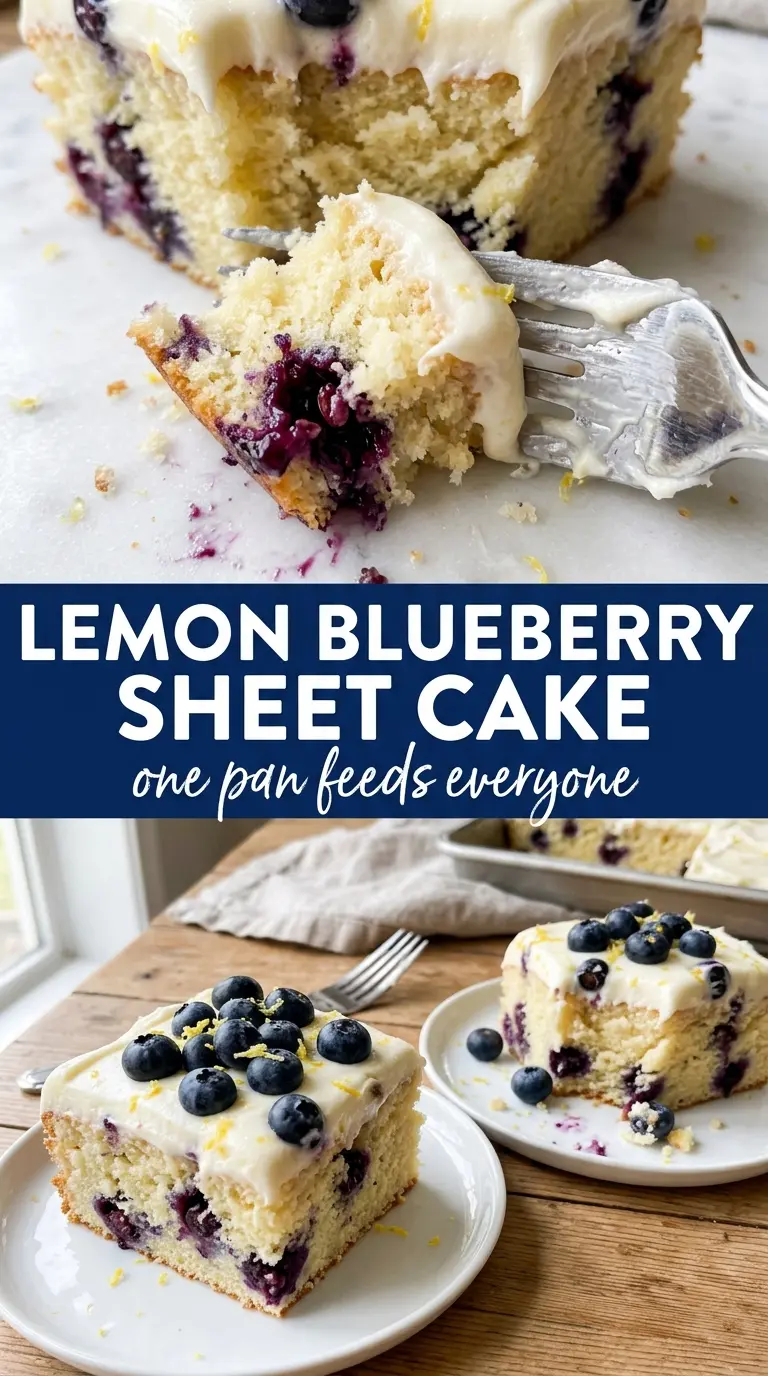
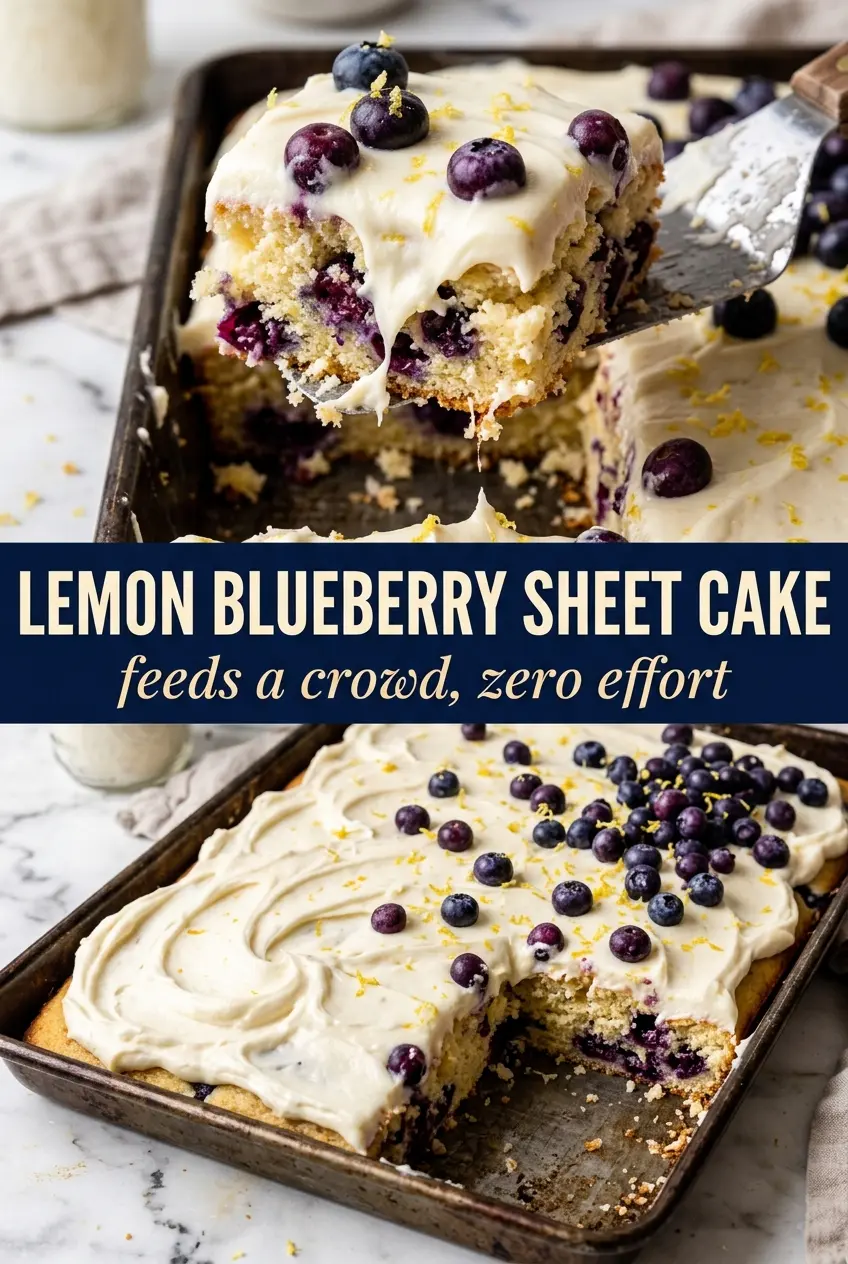
Lemon blueberry sheet cake is the kind of dessert that disappears fast because it gets the balance right: bright lemon in the cake, juicy berries in every slice, and a thick layer of cream cheese frosting that holds its shape instead of sliding off the top. The crumb stays soft and tender, but it still slices cleanly, which matters when you’re serving a crowd.
What makes this version work is the way the lemon shows up in three places — zest, juice, and frosting — without tasting sharp or thin. The blueberries are tossed with a little flour before they go into the batter, which helps keep them suspended instead of sinking to the bottom. That small step makes a big difference in a sheet cake, where you want berries in every bite, not just in one dense layer.
Below, I’m walking through the part that keeps the crumb light, the frosting smooth enough to spread without tearing the cake, and the best way to store leftovers without drying out the edges. If you’ve had berry cakes turn heavy or gum up around the fruit, this one handles those problems cleanly.
The cake stayed incredibly soft and the blueberries didn’t all sink, which has happened to me with other recipes. The lemon cream cheese frosting was thick enough to spread neatly, and it tasted even better after chilling for a bit.
Save this lemon blueberry sheet cake for the kind of dessert that brings together tender crumb, thick lemon cream cheese frosting, and fresh berries in one pan.
The Reason the Berries Stay Evenly Suspended Instead of Sinking
Sheet cakes expose every small mistake. If the batter is too loose, the berries drop straight through. If the butter and sugar aren’t beaten enough, the crumb turns dense and the fruit feels like an afterthought instead of part of the cake. This version avoids both problems by keeping the batter rich enough to hold the blueberries, but not so stiff that it bakes up heavy.
The flour on the berries is the detail most people skip, and it matters here. It helps the fruit grip the batter instead of sliding to the bottom, especially in a large pan where the cake bakes in a fairly thin layer. The other thing working in your favor is the buttermilk, which keeps the crumb soft and gives the lemon a little tang instead of making the cake taste flat.
- Butter and sugar — Beat them until pale and fluffy. That trapped air is part of what keeps this sheet cake light.
- Buttermilk — Don’t swap in plain milk unless you have to. Buttermilk gives the cake a softer crumb and makes the lemon taste brighter.
- Flour-coated blueberries — Toss them gently so you don’t crush them. A light dusting is enough; you don’t want a dry coating, just enough to help them stay put.
- Lemon zest — Zest carries the strongest lemon flavor here. The juice adds tang, but the zest is what makes the cake taste like lemon from the first bite.
Building the Batter and Frosting Without Losing the Cake’s Texture
- All-purpose flour — This gives the cake enough structure to support the berries and frosting without turning dry. Cake flour makes a softer crumb, but it can be a little too delicate for a sheet cake like this.
- Fresh lemon juice and zest — Fresh juice is worth it. Bottled lemon juice tastes dull here, and the frosting especially needs fresh zest to taste alive.
- Cream cheese and butter — Both need to be softened for the frosting to turn smooth. If either one is cold, the frosting will look lumpy and you’ll be tempted to beat it longer, which can make it too loose.
- Powdered sugar — This is what gives the frosting body. Add it gradually so it stays fluffy instead of clouding up the bowl and turning gritty.
Getting the Batter Mixed, Baked, and Frosted at the Right Moment
Whipping the Base
Beat the butter and sugar until the mixture looks pale and fluffy, not just combined. That usually takes a few minutes, and it’s worth it because this is where the cake gets its lift. Add the eggs one at a time, then mix in the lemon zest, lemon juice, and vanilla. If the mixture looks slightly curdled after the lemon juice goes in, don’t panic; it smooths out once the dry ingredients and buttermilk are added.
Bringing the Batter Together
Alternate the flour mixture and the buttermilk, starting and ending with the flour. This keeps the batter from splitting and helps it stay smooth. Once the batter is almost combined, fold in the blueberries gently with a spatula. Overmixing at this point will streak the batter purple and can make the crumb tougher than it should be.
Baking Until the Center Springs Back
Spread the batter evenly into the prepared pan so it bakes at the same rate across the whole sheet. The cake is done when the top is set, the edges are lightly golden, and a toothpick comes out clean or with just a few moist crumbs. If the center still looks wet, give it a few more minutes; pulling it too early makes the middle sink as it cools. Let it cool completely before frosting, or the cream cheese layer will melt and slide.
Frosting and Finishing
Beat the cream cheese and butter until smooth before adding the sugar. If you start with cold dairy, the frosting will fight you the whole way. Spread it generously over the cooled cake, then finish with fresh blueberries and lemon zest curls. The topping adds a fresh, bright finish that balances the rich frosting.
How to Adapt Lemon Blueberry Sheet Cake for Different Needs
Make it dairy-free
Use a plant-based butter and a thick dairy-free cream cheese for the frosting, then replace the buttermilk with unsweetened plant milk mixed with 1 tablespoon lemon juice. The cake will still bake up soft, though the frosting will be a little less tangy and slightly softer at room temperature.
Use frozen blueberries
Frozen blueberries work if that’s what you have, but use them straight from the freezer and toss them in flour while they’re still frozen. Thawing first makes them bleed into the batter and can tint the cake gray-blue instead of leaving clean berry pockets.
Bake it in two 9×13 pans
Two pans give you thinner cakes that bake a little faster and are easier to serve at a party. Check them a few minutes early, since thinner layers dry out faster than a deep sheet pan if they stay in the oven too long.
Storage and Reheating
- Refrigerator: Store covered for up to 5 days. The frosting stays smooth, and the crumb holds up well, though the cake gets a little denser after chilling.
- Freezer: Freeze unfrosted cake layers tightly wrapped for up to 2 months. The frosted cake can be frozen, but the berries on top won’t look as fresh after thawing.
- Reheating: Let slices come to room temperature before serving. Warming a frosted slice in the microwave will soften the frosting too much and can make the cake greasy.
Questions I Get Asked About This Recipe
Lemon Blueberry Sheet Cake
Ingredients
Equipment
Method
- Preheat the oven to 350°F and grease a 12x18 sheet pan or two 9x13 pans, then line with parchment so the cake releases cleanly.
- Beat the softened butter and granulated sugar until fluffy, about 2–3 minutes, to aerate the batter for a tender crumb.
- Add the eggs and beat until incorporated, then mix in lemon zest, lemon juice, and vanilla until smooth and bright.
- Whisk the flour, baking powder, and salt together, then alternately mix in the flour mixture and buttermilk until just combined with no dry streaks.
- Fold the flour-tossed blueberries into the batter gently so they don’t burst and streak the batter.
- Spread the batter evenly in the prepared pan and bake 25–30 minutes, until a toothpick comes out clean.
- Cool the cake completely in the pan before frosting so the frosting stays thick and spreadable.
- Beat the softened cream cheese and butter until smooth, then add powdered sugar, lemon juice, and lemon zest.
- Beat until fluffy, scraping the bowl as needed so the frosting is uniform and easy to spread.
- Spread frosting generously over the cooled cake in an even layer, smoothing the top edge-to-edge.
- Scatter fresh blueberries and lemon zest curls over the frosted top before serving for a fresh, bright finish.