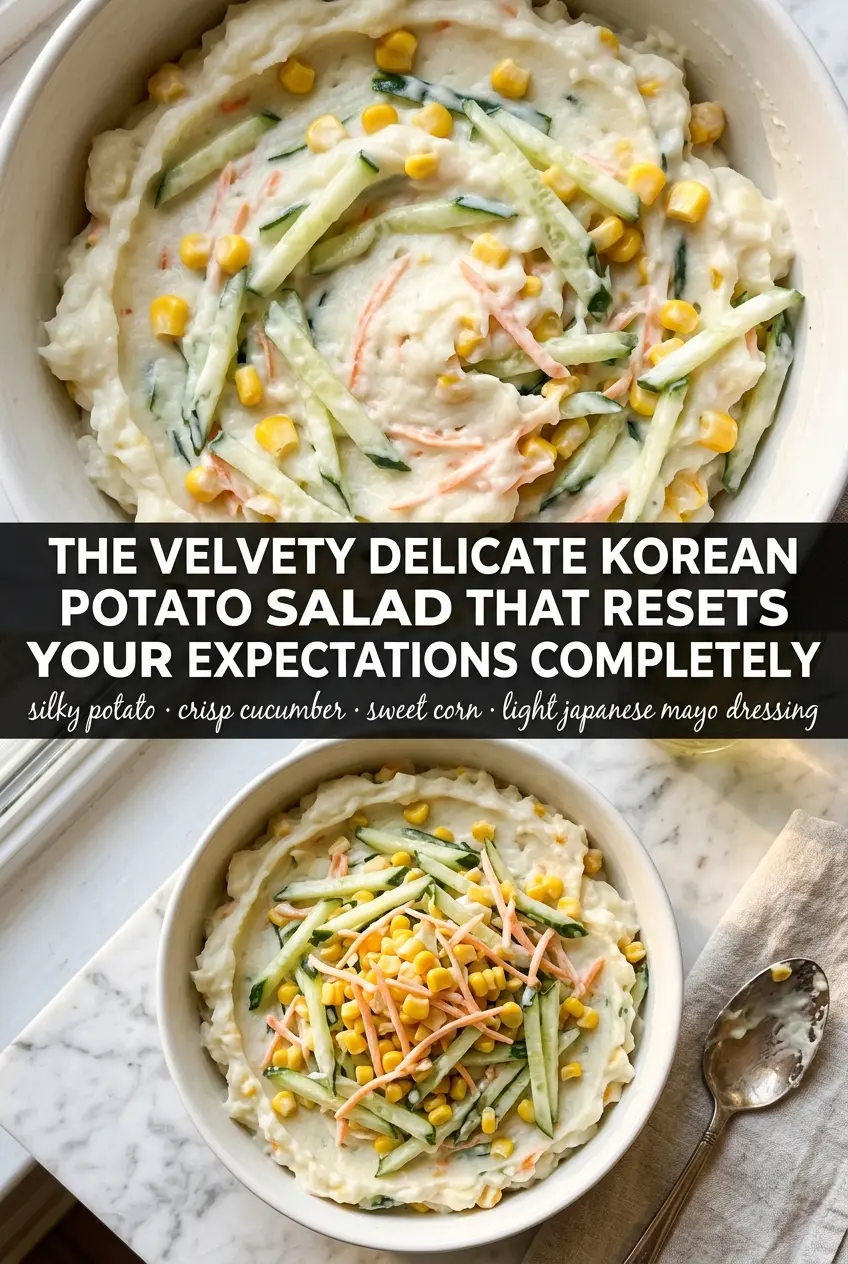
Creamy Korean potato salad has a soft, spoonable texture that lands somewhere between a classic picnic salad and a fluffy mash. The potatoes stay a little rustic, the dressing leans lightly sweet instead of heavy, and the cucumber, carrot, and egg give each bite enough contrast to keep it interesting. It’s the kind of side dish that disappears fast because it’s cold, comforting, and somehow works next to grilled meat, fried chicken, or a simple rice bowl.
What makes this version work is the balance. Russet potatoes break down beautifully, which gives the salad its signature softness, but they still need to be only roughly mashed so the whole bowl doesn’t turn gluey. The rice vinegar sharpens the sweetness just enough, and chilling the salad for a couple of hours lets the flavors settle into each other instead of tasting separate and flat.
Below, I’ll walk through the small details that keep the texture light, how to keep the cucumber from watering down the bowl, and a few practical variations if you want to adjust the sweetness or make it ahead.
The potatoes turned out fluffy instead of pasty, and the sweet-tangy dressing soaked in after chilling without making the salad watery. My husband kept sneaking spoonfuls straight from the fridge.
Save this creamy Korean potato salad for the days when you want a sweet, tangy side with soft potatoes, crunchy vegetables, and plenty of eggs.
The Trick to Keeping Gamja Salad Fluffy Instead of Gluey
The biggest mistake with Korean potato salad is treating it like mashed potatoes. If you mash the potatoes until they’re completely smooth, the starches tighten up and the salad turns dense and sticky once the dressing goes in. A rough mash gives you the soft, creamy body you want while still leaving a little texture in the bowl.
Timing matters, too. The potatoes should be drained well and mixed while still warm enough to absorb the dressing, but not so hot that they break down into paste. The chill time isn’t optional here. That rest in the fridge lets the vinegar mellow, the sugar dissolve, and the vegetables settle into the potatoes without the whole salad tasting raw or one-note.
- Russet potatoes — These break down into a fluffy, light mash that suits this salad better than waxy potatoes. Yukon Golds work in a pinch, but the final texture will be a little creamier and less airy.
- Rice vinegar — This keeps the dressing bright and cuts through the sweetness. If you swap in white vinegar, use a little less because it hits harder and can push the salad in a sharper direction.
- Cucumber — Seed it before dicing or it will leak water into the salad while it chills. If your cucumber is large and seedy, press the diced pieces lightly in paper towels before mixing them in.
- Mayonnaise — Use a mayo you actually like eating on its own. It’s the backbone of the dressing, so a thin or overly sweet brand changes the whole bowl.
What Each Ingredient Is Actually Doing in Korean Potato Salad

- Fresh vegetables (vibrant, crisp, quality) — Start with fresh, brightly colored vegetables. Wilted vegetables make everything taste tired.
- Acid (vinegar, lemon juice, or lime) — The acid prevents oxidation and prevents flat taste. It’s essential for brightness.
- Oil (quality matters for flavor) — Good olive oil adds freshness. Cheap oil makes the salad taste flat.
- Salt (enhances all other flavors) — Proper seasoning makes vegetables taste more like themselves. Don’t undersalt.
- Fresh herbs (tender ones added last) — Fresh herbs add complexity and brightness. Add them right before serving.
- Protein or hearty elements (if using) — These should complement without overwhelming the vegetables. Keep the salad light.
- Dressing applied just before serving — Don’t dress early or the vegetables release liquid and wilt. Timing is everything.
- Taste and adjust (check for balance) — The salad should taste bright and assertive. Add more acid or salt if needed.
Building the Salad So the Vegetables Stay Crisp and the Dressing Stays Balanced
Cooking the Potatoes Until They Collapse at the Edges
Boil the potatoes until a knife slides in with no resistance and the edges start to break apart. That soft stage matters more than a firm, tidy cube because undercooked potatoes stay chalky after mixing. Drain them well, then let the steam escape for a minute or two so the salad doesn’t turn watery. If there’s a puddle in the pot, the dressing will thin out and the texture will go flat.
Blanching the Carrots and Managing the Cucumber
Give the carrots a quick blanch just until they lose their raw bite and turn brighter in color. That keeps them sweet and tender without making them mushy. The cucumber goes in raw, but it needs to be seeded first so it doesn’t bleed moisture into the bowl while the salad chills. If your cucumber seems extra juicy, pat it dry after dicing.
Mixing the Dressing Before It Touches the Potatoes
Stir the mayonnaise, sugar, rice vinegar, salt, and pepper together in a separate bowl until the sugar starts to dissolve. That prevents little pockets of sweetness or vinegar from landing unevenly in the salad. Fold the dressing in gently instead of stirring hard, since aggressive mixing can crush the potatoes into a paste. Stop as soon as everything looks coated and creamy.
Chilling Until the Flavors Settle In
Cover the bowl and chill it for at least two hours before serving. The salad tastes unfinished right after mixing, but after a proper rest the sweet, tangy dressing rounds out and the vegetables taste more integrated. Give it one more stir before serving, then taste for salt. Cold food always needs a little more seasoning than warm food.
How to Adjust the Sweetness, Texture, or Make-Ahead Plan
For a less sweet Korean potato salad
Cut the sugar back to 1 tablespoon and keep the rice vinegar the same. You’ll get a brighter, more savory salad that leans a little less like a picnic side and a little more like a balanced banchan-style dish.
For a dairy-free version that still tastes rich
This recipe is naturally dairy-free as written, so the main job is choosing a good mayonnaise. A fuller-bodied mayo makes the dressing taste creamy without needing milk, sour cream, or any other add-ins.
For extra texture and a little more crunch
Keep some of the potato chunks larger instead of mashing them down too far. The salad will feel less cloud-like and more substantial, which works well if you’re serving it alongside grilled meat or fried foods.
Storage and Reheating
- Refrigerator: Store covered for up to 3 days. The cucumbers release a little moisture over time, so the salad softens as it sits.
- Freezer: Don’t freeze it. Mayo and potatoes both change in unpleasant ways after thawing, and the texture turns grainy and watery.
- Reheating: This salad is meant to be served cold. If it’s been in the fridge a while, let it sit out for 10 to 15 minutes before serving so the dressing loosens and the flavors wake up.
Questions I Get Asked About This Recipe
Korean Potato Salad
Ingredients
Equipment
Method
- Bring a Dutch oven of water to a boil, then add the russet potatoes (peeled and cubed). Boil until very tender, about 15–20 minutes.
- Drain the potatoes thoroughly, then mash them roughly (not completely smooth) while still warm.
- Blanch the carrots in boiling water for 2 minutes, then drain well.
- Combine the mashed potatoes, drained carrots, cucumber, corn kernels, and chopped hard-boiled eggs in a large mixing space.
- In a separate bowl area, mix mayonnaise, sugar, rice vinegar, salt, and pepper until smooth and cohesive.
- Fold the dressing into the potato mixture until evenly coated, keeping some texture from the rough-mashed potatoes.
- Refrigerate the Korean potato salad for at least 2 hours before serving for the flavors to meld and the texture to set.