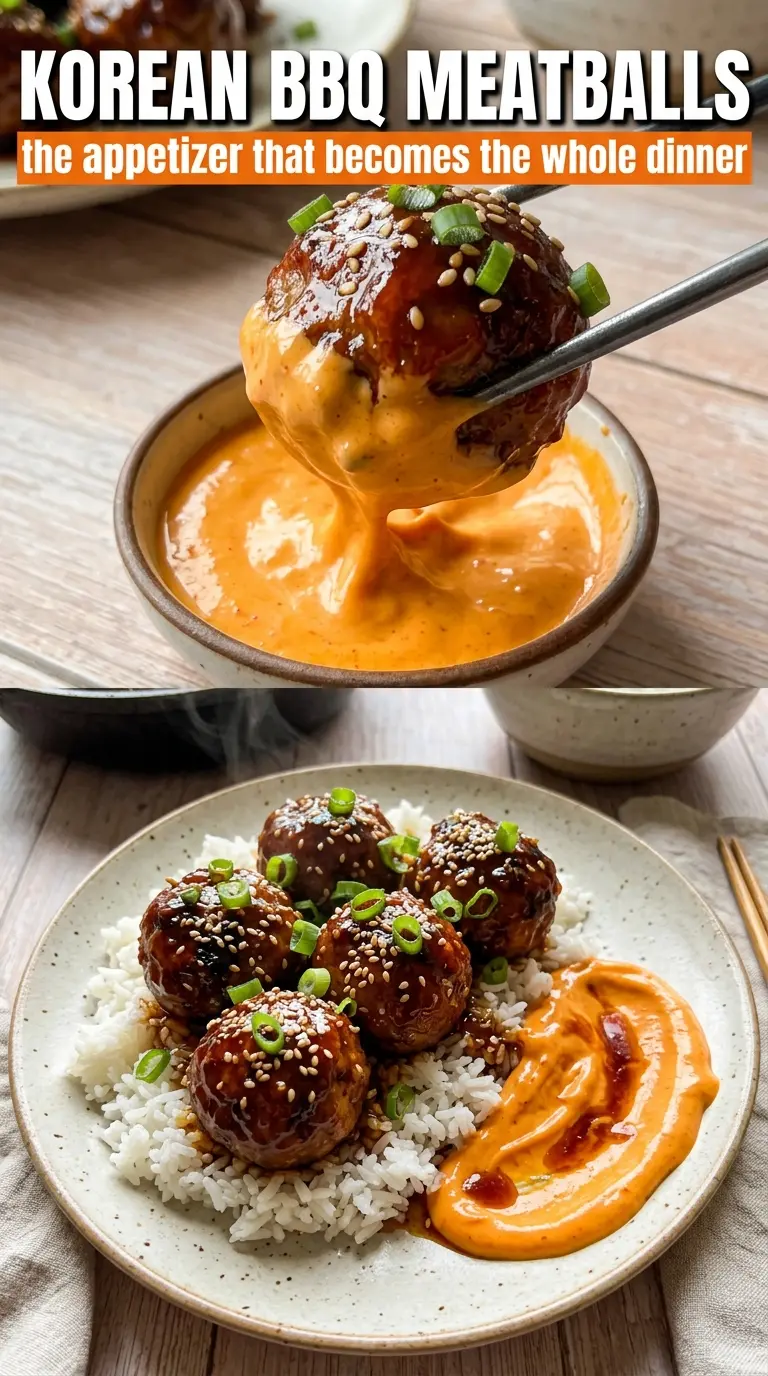
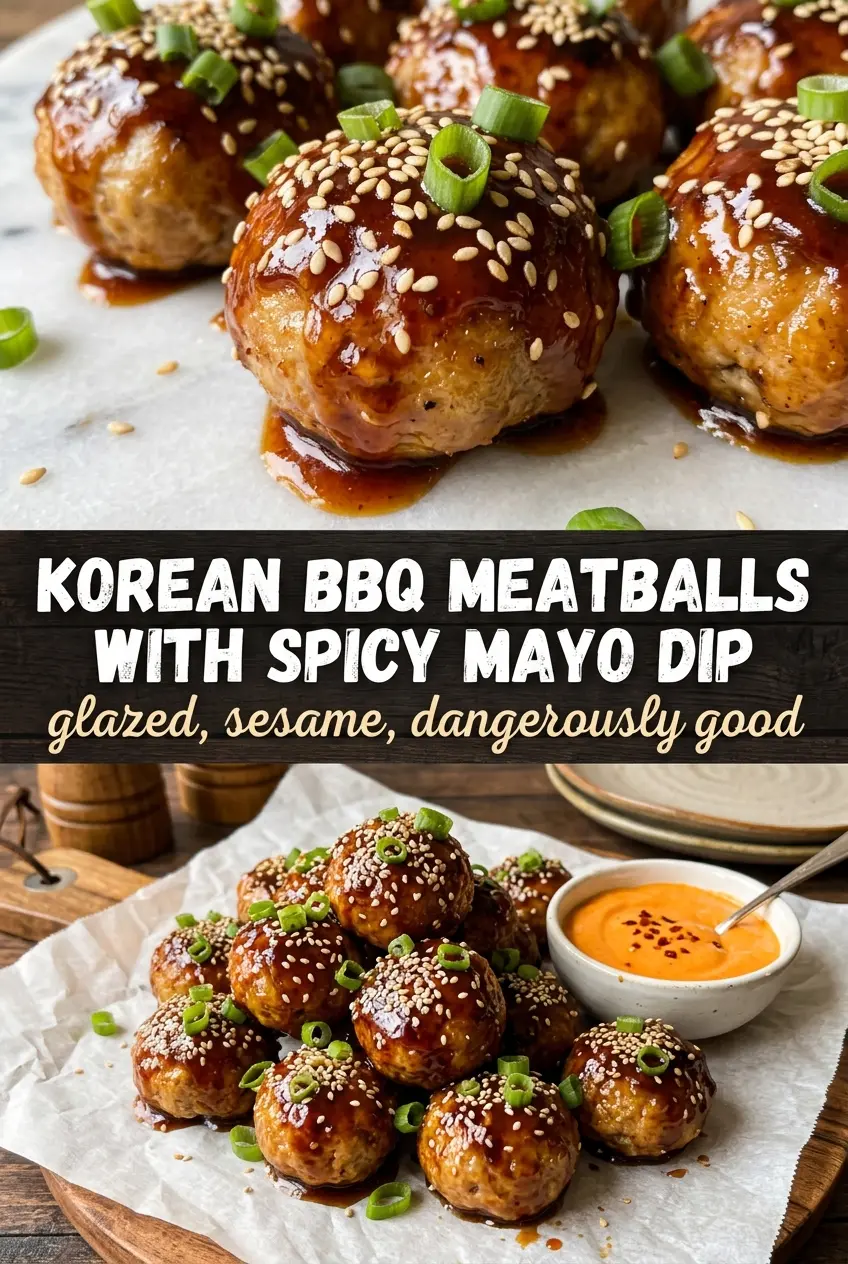
Korean BBQ meatballs hit that sweet spot between sticky, savory, and just spicy enough to keep you going back for one more. The glaze clings to each meatball instead of sliding off the plate, and the spicy mayo cools everything down without dulling the flavor. They’re the kind of appetizer that disappears fast because they taste layered and look like you spent a lot more time on them than you did.
What makes this version work is the balance: plenty of seasoning in the meat mixture, then a gochujang glaze that simmers just long enough to turn glossy and thick. Panko keeps the texture light, while the egg and the small amount of sesame oil hold everything together without making the meatballs dense. The glaze goes on hot meatballs, which helps it set into that lacquered coating instead of pooling in the bottom of the bowl.
Below, I’ve included the little details that matter most, like how to keep the meatballs tender, what to watch for when the glaze starts to thicken, and the swaps I’d actually use if I needed to adjust the recipe for what’s in the fridge.
The glaze turned out sticky and shiny, and the meatballs stayed juicy even after sitting out for the party. My husband kept sneaking them with the spicy mayo because the sweet heat was just right.
Korean BBQ meatballs with spicy mayo dip are the kind of appetizer that disappears fast, so save this one for your next game day or party spread.
The part that keeps these meatballs tender instead of dense
The most common mistake with meatballs is packing the mixture too tightly. That squeezes out the air pockets you want, and the result is a bouncy, heavy texture instead of a tender one. Mix just until the beef or pork is evenly combined with the panko, egg, aromatics, and seasonings, then stop. The panko helps lighten the texture, but only if the mixture stays loose.
Baking the meatballs on a lined sheet pan keeps things easy, but it also gives you a chance to watch for doneness without overcooking them. Pull them when they’re cooked through and still juicy; if they go too far in the oven, they’ll stay tasty but lose that soft center that makes them worth serving as an appetizer.
What each ingredient is actually doing in the glaze and dip
- Ground beef or pork — Beef gives a deeper, heartier bite, while pork brings a little more natural richness. Either works, and a 50/50 blend is excellent if you have it. Use 85/15 beef if you want enough fat for flavor without ending up with greasy puddles on the pan.
- Panko breadcrumbs — This is what keeps the meatballs from turning compact. Regular breadcrumbs will work, but panko gives a lighter texture and a cleaner bite.
- Gochujang — This is the backbone of the glaze. It brings heat, sweetness, and fermented depth all at once, and there isn’t a substitute that gives the same result. If you need a backup, use chili garlic sauce plus a little extra honey, but expect a sharper, less rounded flavor.
- Sesame oil — Use the real toasted sesame oil here; it adds the nutty aroma that makes the glaze taste finished. A little goes a long way, so don’t overdo it or the sauce can taste heavy.
- Mayonnaise — The base for the spicy dip. Full-fat mayo gives the best texture and holds the sriracha and lime juice without turning watery.
- Lime juice — This keeps the dip bright and cuts through the richness of the meatballs and glaze. Fresh lime tastes cleaner than bottled, and you’ll notice the difference in a sauce this simple.
Getting the glaze thick enough to coat, not drown
Mix the meatballs with a light hand
Combine the meat, panko, egg, garlic, ginger, soy sauce, sesame oil, and green onions just until everything looks evenly distributed. The mixture should hold together when you form it, but it shouldn’t feel paste-like. If it looks wet, add a little more panko, one tablespoon at a time. If it feels dry and crumbly, the egg may not have been enough to bind it, so work the mixture a bit longer before adding anything else.
Bake until they spring back at the center
Shape the meat into 24 even meatballs so they cook at the same rate, then bake at 400°F until they’re cooked through and just firm enough to hold their shape. The tops should look set, and a meatball pressed gently with a spoon should feel springy, not soft and raw. If you wait for them to look deeply browned in the oven, they can overshoot and dry out before the glaze even goes on.
Simmer the glaze briefly
Whisk the gochujang, soy sauce, honey, rice vinegar, sesame oil, and garlic in a small saucepan, then simmer for just 2 to 3 minutes. You’re looking for a glossy sauce that lightly coats a spoon, not a thick paste. If the heat is too high, the honey can scorch and the garlic can turn harsh, so keep it at a steady medium simmer and pull it once the sauce looks slightly sticky.
Toss while the meatballs are hot
Move the baked meatballs straight into the saucepan or a mixing bowl and coat them while they’re still hot. That heat helps the glaze cling and settle into every crease instead of sliding off. Finish with sesame seeds and sliced green onions, then serve right away with the spicy mayo so the contrast between sticky glaze and cool dip stays sharp.
Three ways to adjust these Korean BBQ meatballs without losing what makes them good
Make them dairy-free without changing the texture
This recipe is already dairy-free as written, which makes it a nice fit for mixed crowds. Keep the mayo-based dip, but check your mayonnaise brand if you’re serving someone with a stricter ingredient list. The texture stays the same, and you don’t lose any of the creamy contrast that makes the dip work.
Use ground pork for a richer, softer bite
All pork gives you a slightly juicier meatball with a softer texture and a little more sweetness under the glaze. That works especially well if you like the sauce to stand out. If you use pork, watch the oven timing closely, because the extra richness can mask the early signs of overcooking.
Turn them into an appetizer tray or a rice bowl
For a party tray, keep the meatballs on a platter with the dip in the center and add extra green onions for color. For a fuller meal, serve them over steamed rice with quick cucumber slices on the side. The glaze holds up in both settings, but the rice bowl version benefits from a little extra sauce spooned over the top.
Storage and Reheating
- Refrigerator: Store the glazed meatballs in an airtight container for up to 4 days. The sauce will thicken as it chills, but the flavor stays strong.
- Freezer: The meatballs freeze well, but freeze them without the spicy mayo. Cool completely, then freeze in a single layer before transferring to a container for up to 2 months.
- Reheating: Warm them covered in a 325°F oven or in a skillet over low heat with a splash of water to loosen the glaze. Microwaving works in a pinch, but it can make the coating sticky in the wrong way and dry the edges before the center is hot.
Answers to the questions worth asking
Korean BBQ Meatballs with Spicy Mayo Dip
Ingredients
Equipment
Method
- Whisk mayonnaise, sriracha, and lime juice together until smooth, then refrigerate so the flavors set (about 20 minutes).
- Preheat oven to 400°F and line a baking sheet with foil for easy cleanup.
- Combine ground beef or pork, panko breadcrumbs, egg, garlic, ginger, soy sauce, sesame oil, and green onions, then form into 24 meatballs.
- Bake for 18-20 minutes at 400°F until cooked through and no longer pink in the center, with the tops lightly browned (meatballs may look firm and set).
- In a small saucepan, whisk gochujang, soy sauce, honey, rice vinegar, sesame oil, and garlic, then simmer over medium heat for 2-3 minutes until slightly thickened.
- Toss hot meatballs in the gochujang BBQ glaze until fully coated and glossy, with a sticky dark finish.
- Arrange glazed meatballs on a platter, garnish with sesame seeds and green onions, and serve immediately with the spicy mayo dip.