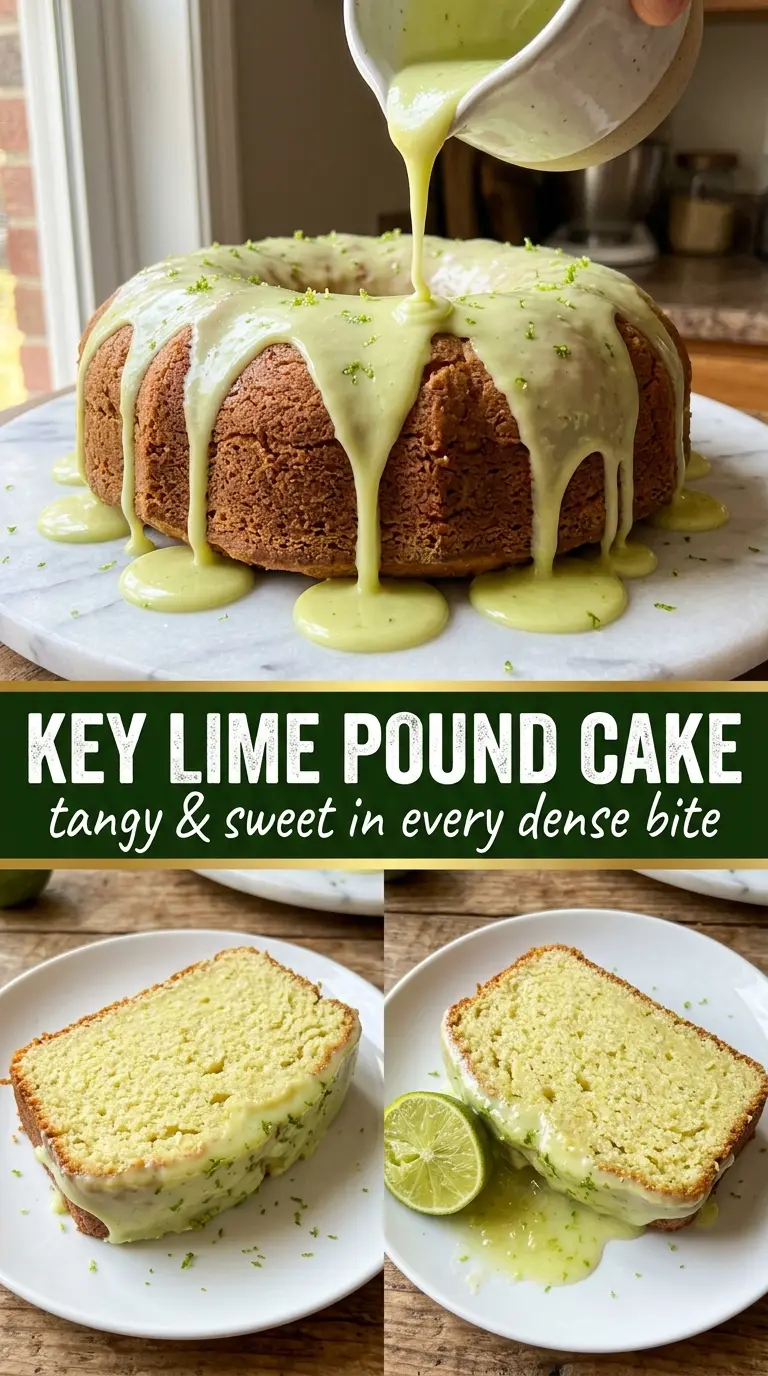
Key lime pound cake lands with that dense, buttery crumb you expect from a proper pound cake, but the bright citrus keeps each slice from feeling heavy. The glaze seeps into the ridges of a Bundt pan and leaves a tart-sweet finish that hits before the cake even reaches your plate.
This version works because the structure stays classic: plenty of butter, a long creaming time, and sour cream for tenderness without loosening the batter too much. The key lime juice goes in near the end, where it can perfume the cake without throwing off the batter texture, and the zest carries most of the citrus flavor anyway. That matters here, because pound cake should slice cleanly and hold its shape, not bake up airy or crumbly.
Below, I’ve included the part that saves this cake from a bland lime situation: how to get enough citrus flavor without making the crumb wet, plus the trick for glazing it so the finish looks polished instead of running off the sides.
The crumb came out tight and buttery, and the key lime glaze actually soaked into the little cracks instead of sliding off. I used the full zest amount and the cake had that fresh citrus smell all through the kitchen.
Save this key lime pound cake for the kind of dessert that needs no frosting, just a glossy citrus glaze and a thick, buttery slice.
The Part That Keeps This Pound Cake Dense Instead of Dry
Pound cake lives or dies on the creaming step. If the butter and sugar stay pale for the full five minutes, you’re building tiny air pockets that help the cake rise without turning it fluffy like a layer cake. Stop too early and the crumb stays tight in a heavy way; rush it and the cake can bake up coarse or uneven.
The other place people trip up is the citrus. Too much juice in the batter can loosen the structure, especially in a cake this rich. The zest carries the most flavor, and the sour cream keeps the crumb tender while the juice adds brightness without thinning the batter beyond what pound cake can handle.
- Butter — Use real butter, not a spread. This cake depends on butter for both flavor and that close, velvety crumb.
- Sour cream — This is what keeps the cake from eating dry. Full-fat sour cream gives the best texture, and plain full-fat Greek yogurt is the closest swap if that’s what you have.
- Key lime zest — Don’t skip the zest. It gives the cake its fragrance and most of its citrus punch, while the juice mainly adds brightness.
- Key lime juice — Fresh juice matters here. Bottled juice works in a pinch, but the flavor is flatter and less sharp.
- Bundt pan — A well-greased, well-floured Bundt pan matters more than people think. This cake is dense, and any missed spot can hold it back when you invert it.
What Each Ingredient Is Actually Doing in This Recipe
- Primary ingredient (the star) — Quality matters most. Choose the best you can find.
- Cooking medium (oil, butter, or broth) — This carries flavors and prevents dryness.
- Seasonings (salt, pepper, spices, herbs) — Layer flavors so nothing overpowers. Build depth gradually.
- Aromatics (garlic, onion, herbs) — Cook with fat to bloom flavors. Become the foundation.
- Supporting ingredients — Complement the main ingredient without overpowering it.
- Sauce or liquid (if applicable) — Brings flavors together. Balance richness with acid.
- Acid (lemon, vinegar, wine, or other) — Brightens and prevents flat-tasting results.
- Final finish (garnish, glaze, or sauce) — Prevents one-dimensional taste and adds visual appeal.
Building the Batter So the Cake Bakes Evenly
Creaming the Butter and Sugar
Beat the softened butter and sugar until the mixture looks almost fluffy and noticeably lighter in color. That five-minute window matters because it gives the cake lift before the flour goes in. If the butter is too cold, you’ll get streaks instead of a smooth base, and those streaks show up as uneven pockets in the finished cake.
Adding the Eggs One at a Time
Work in the eggs one at a time and let each one disappear before adding the next. If you dump them in together, the batter can look curdled and the emulsion won’t hold as well. It should look glossy and thick, not broken, before you move on.
Alternating the Dry Ingredients and Sour Cream
Add the flour mixture and sour cream in three additions, starting and ending with the dry ingredients. This keeps the batter smooth and prevents overworking the flour, which would make the cake tough. Once the key lime juice, zest, and vanilla go in, stir just until combined; overmixing after the citrus is in can deflate the batter and knock out the fine crumb you want.
Baking and Unmolding Cleanly
Bake until a toothpick comes out clean and the top springs back when lightly pressed. If the cake is pulling slightly from the edges but still feels soft in the center, it needs a little more time. Let it sit in the pan for 15 minutes, then invert it while it’s still warm enough to release but not so hot that it tears.
Ways to Adjust the Citrus Without Losing the Crumb
Make it with regular limes
If key limes are hard to find, regular Persian limes work fine. The cake will taste a little less floral and a little more sharp, but the zest still gives you plenty of citrus character. Use the same amount of juice and zest.
Dairy-free version
Swap the butter for a high-quality plant-based butter sticks and use unsweetened dairy-free yogurt in place of the sour cream. The cake will still bake up tender, though the crumb won’t be quite as rich or fragrant as the original.
Gluten-free adaptation
Use a 1:1 gluten-free baking flour that includes xanthan gum. The texture will be a touch more delicate, but the cake should still hold together well because the batter is rich and egg-heavy. Don’t overbake it or the edges will dry out before the center sets.
Storage and Reheating
- Refrigerator: Store covered for up to 5 days. The crumb stays moist, and the citrus flavor actually settles in a little more by day two.
- Freezer: This cake freezes well. Wrap slices or the whole cake tightly in plastic, then foil, and freeze for up to 2 months.
- Reheating: Thaw at room temperature and warm slices for a few seconds in the microwave if you want the butter flavor to bloom again. Don’t heat it too long or the glaze can turn sticky and the crumb loses its soft texture.
Answers to the Questions Worth Asking
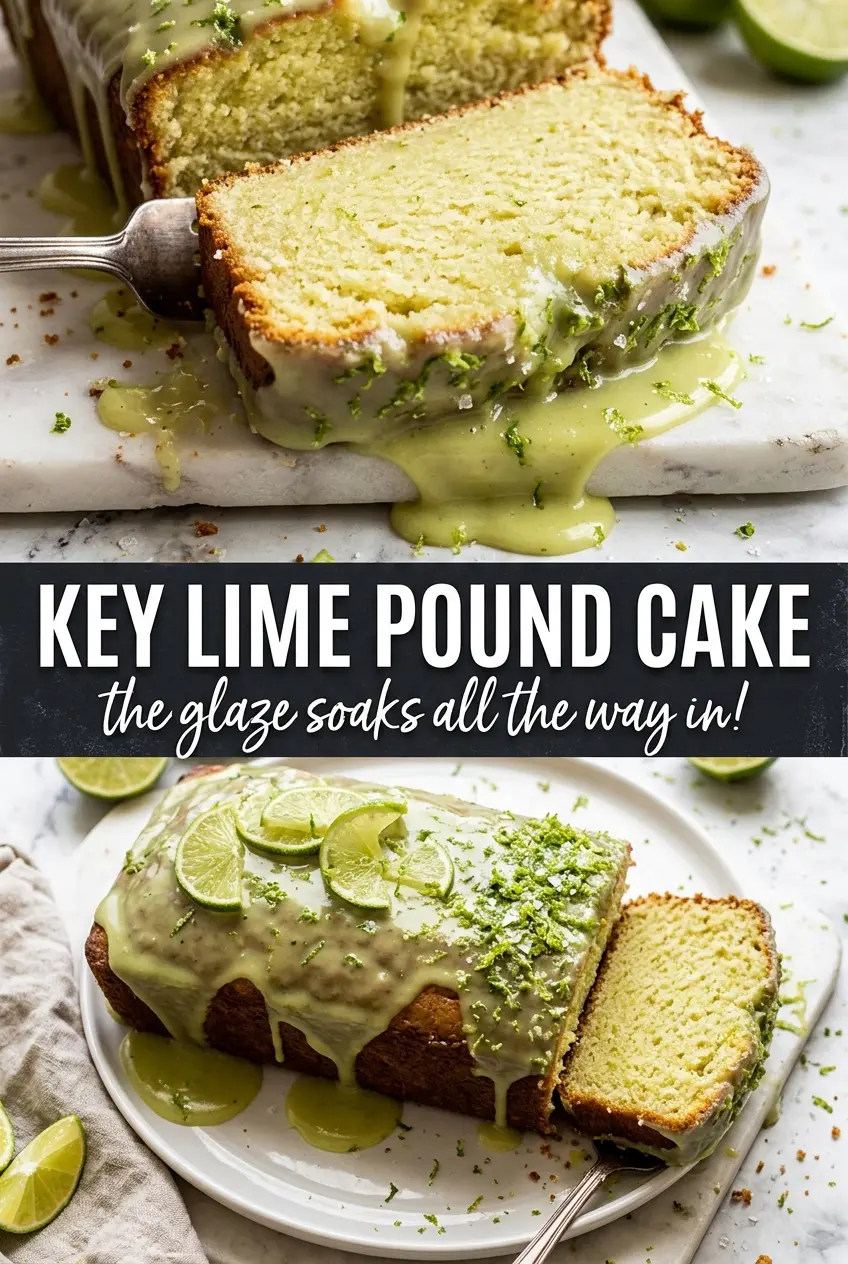
Key Lime Pound Cake
Ingredients
Equipment
Method
- Preheat the oven to 325°F, then grease and flour a Bundt pan so the dense cake releases cleanly.
- Beat butter and granulated sugar until very light and fluffy, about 5 minutes, scraping the bowl as needed for even creaming.
- Add large eggs one at a time, beating after each until the batter looks smooth and cohesive.
- In alternating additions, stir in all-purpose flour mixture (all-purpose flour, baking soda, salt) and sour cream in 3 additions, starting and ending with flour.
- Stir in fresh key lime juice, key lime zest, and vanilla extract until the batter is fragrant and evenly streaked.
- Pour the batter into the prepared Bundt pan and bake for 60-70 minutes, until a toothpick comes out clean.
- Cool the cake in the pan for 15 minutes, then invert to remove and cool completely on a rack.
- Whisk powdered sugar, fresh key lime juice, and key lime zest until smooth and pourable, then drizzle over the completely cooled cake.
- Let the key lime glaze set before slicing, so it firms into a bright drizzle that still clings to the cracks and crevices.