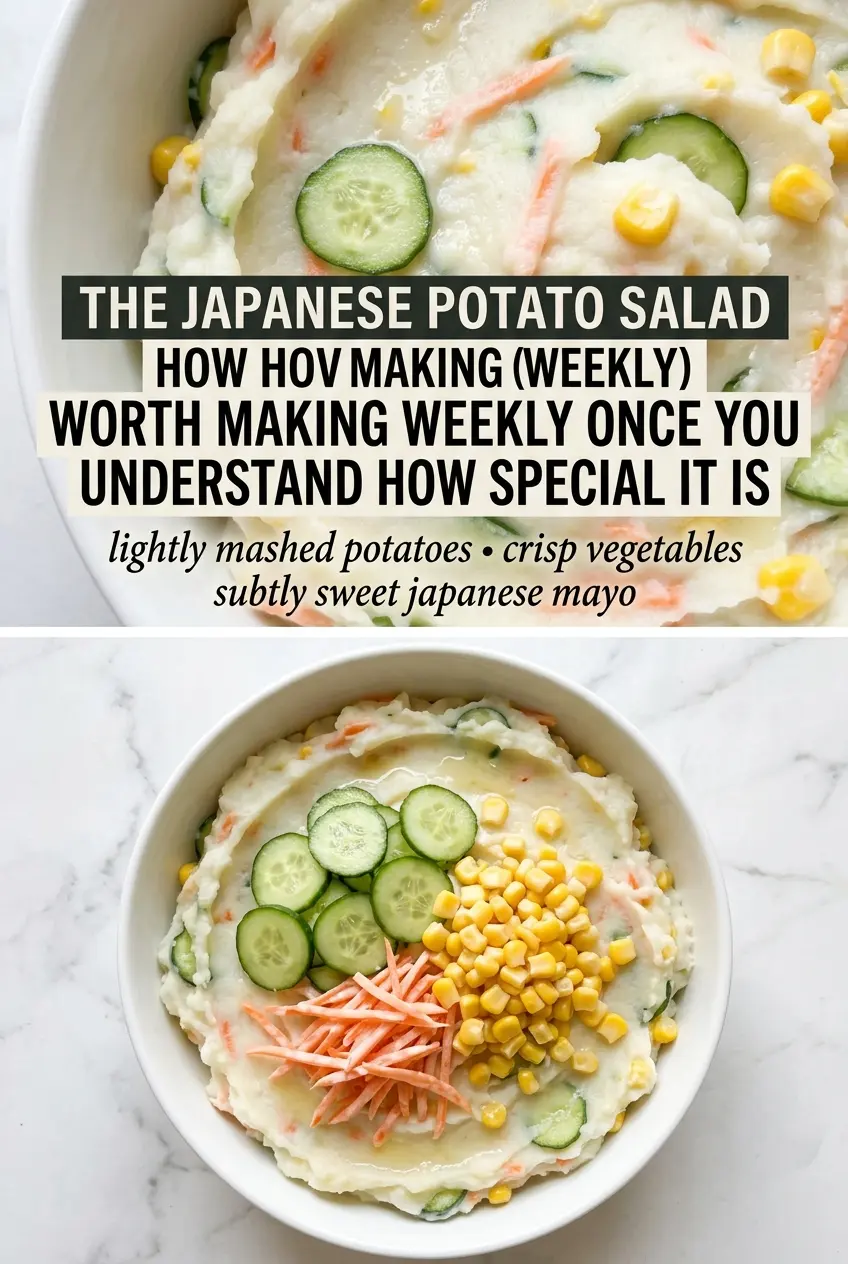
Creamy Japanese potato salad lands in that sweet spot between picnic side and comfort food: soft, lightly mashed potatoes folded with crisp cucumber, sweet carrot, pops of corn, and just enough mayo dressing to hold everything together without turning heavy. The texture is the whole point. It should eat like a salad, but with enough body to scoop up cleanly and taste balanced on its own.
The version that works best starts with russet potatoes cooked until fully tender, then mashed while still warm so they absorb the dressing instead of staying dry. Salting the cucumber and squeezing it well matters more than most people think; skip that step and the salad turns watery after chilling. A little rice vinegar keeps the mayo from tasting flat, and the sugar rounds out the sharp edges without making it sweet.
Below you’ll find the small details that keep the potatoes fluffy, the vegetables crisp, and the dressing creamy after a good chill. If you’ve made potato salad before and ended up with something gluey or soupy, this one gives you a better path.
The potatoes held their shape just enough, and after chilling the salad was creamy without getting watery. Salting the cucumber first made a bigger difference than I expected.
Save this creamy Japanese potato salad for the days when you want a chilled side dish with tender potatoes, crisp cucumber, and that signature mayo dressing.
The Reason This Salad Stays Creamy After Chilling
Most potato salads go wrong in one of two ways: the potatoes turn pasty, or the dressing thins out after a few hours in the fridge. This version avoids both by using potatoes that are cooked until fully tender, then mashed while still warm with just enough texture left behind. Warm potatoes absorb the dressing better, which means the salad tastes seasoned all the way through instead of just coated on the outside.
The other thing that matters is moisture control. Cucumbers hold a lot of water, and if they go in straight from slicing, the dressing gets diluted as the salad sits. Salting them first pulls out that excess liquid so the final bowl stays creamy and spoonable. That one move makes the difference between a salad that holds up and one that turns runny by dinner.
- Russet potatoes — Their high starch content gives you that soft, slightly fluffy base that takes on the dressing well. Waxy potatoes stay firmer, but they don’t mash into the same creamy texture.
- Japanese mayonnaise — It has a richer, tangier finish than standard mayo, which gives the salad its familiar Japanese deli-style taste. Regular mayo works fine if that’s what you have, but add a little extra rice vinegar to keep the flavor bright.
- Rice vinegar — This is what keeps the dressing from tasting flat. Other vinegars can work in a pinch, but rice vinegar gives a gentler acidity that fits the rest of the bowl.
- Cucumber — Seeded and salted cucumber is the ingredient that keeps the salad fresh. If you skip the draining step, it leaks into the potatoes and softens everything too much.
What Each Ingredient Is Actually Doing in Japanese Potato Salad

- Fresh vegetables (vibrant, crisp, quality) — Start with fresh, brightly colored vegetables. Wilted vegetables make everything taste tired.
- Acid (vinegar, lemon juice, or lime) — The acid prevents oxidation and prevents flat taste. It’s essential for brightness.
- Oil (quality matters for flavor) — Good olive oil adds freshness. Cheap oil makes the salad taste flat.
- Salt (enhances all other flavors) — Proper seasoning makes vegetables taste more like themselves. Don’t undersalt.
- Fresh herbs (tender ones added last) — Fresh herbs add complexity and brightness. Add them right before serving.
- Protein or hearty elements (if using) — These should complement without overwhelming the vegetables. Keep the salad light.
- Dressing applied just before serving — Don’t dress early or the vegetables release liquid and wilt. Timing is everything.
- Taste and adjust (check for balance) — The salad should taste bright and assertive. Add more acid or salt if needed.
How to Build the Bowl Without Ending Up With Gluey Potatoes
Cooking the Potatoes Until They Collapse Cleanly
Boil the peeled, cubed potatoes until a fork slides through without resistance and the edges start to look a little ragged. That extra tenderness matters because undercooked potatoes stay chalky after chilling. Drain them well, then let the steam escape for a minute so you don’t trap water in the bowl. If you mash them after they’ve cooled completely, they won’t absorb the dressing as evenly.
Controlling the Vegetables Before They Go In
Blanch the carrots just long enough to take off the raw bite, then stop while they still have a little snap. The cucumber needs a different treatment: salt it, wait about 10 minutes, then squeeze it firmly in your hands or a clean towel until it stops dripping. Corn and chopped egg can go straight in, but add them after the potatoes are mashed so they don’t get broken down too much. The goal is contrast in every bite, not one soft, blended texture.
Mixing the Dressing at the Right Moment
Stir the mayonnaise, rice vinegar, sugar, salt, and pepper together before folding it into the potatoes. That keeps the seasoning even, and the sugar dissolves into the vinegar instead of staying grainy. Fold gently with a spatula so you keep some potato pieces intact. If you stir hard, the salad goes from creamy to paste-like fast.
Chilling for the Texture to Set
Refrigerate the finished salad for at least 2 hours before serving. The chill time lets the potatoes finish soaking up the dressing and firms up the whole bowl so it scoops neatly. Give it one quick stir before serving and taste for salt, since cold food always tastes a little flatter than it does right after mixing.
How to Adjust This Salad for Your Pantry and Your Table
Use regular mayo instead of Japanese mayonnaise
Regular mayonnaise works well, but the salad will taste a little less rich and a little less tangy. Add an extra teaspoon of rice vinegar and taste before serving so the dressing still has enough lift.
Make it vegetarian-friendly without changing the method
This recipe is already vegetarian, which makes it an easy side for mixed menus. If you’re serving it alongside grilled meat or fish, the clean cucumber and egg give it enough substance to stand up next to richer mains.
Swap the corn for edamame or peas
Edamame gives the salad a firmer bite and a little more protein, while peas lean sweeter and softer. Either one keeps the same balance of creamy and crisp, but corn adds the most classic sweet pop.
Storage and Reheating
- Refrigerator: Keep covered for up to 3 days. The cucumber softens a little, but the flavor stays good.
- Freezer: Don’t freeze it. The potatoes turn grainy and the mayo-based dressing separates after thawing.
- Reheating: This salad is meant to be served cold. If it has been in the fridge overnight, let it sit at room temperature for 10 to 15 minutes and stir before serving so the dressing loosens up slightly.
Questions I Get Asked About This Recipe
Japanese Potato Salad
Ingredients
Equipment
Method
- Bring a pot of water to a boil and boil the russet potatoes until very tender. This should take about 15–20 minutes, then drain well so they don’t steam.
- Mash the potatoes while still warm, leaving some chunks for the slightly mashed texture. Press gently until thick and cohesive.
- Blanch the diced carrots in boiling water for 2 minutes, then drain thoroughly. Keep them crisp-tender for a better bite.
- Salt the cucumber slices and let them sit for 10 minutes, then squeeze out excess liquid. Place the squeezed cucumber aside to keep the salad from getting watery.
- In a large bowl, combine the mashed potatoes, carrots, cucumber, corn, and chopped eggs. Stir until the vegetables and eggs are evenly distributed.
- In a separate bowl, mix the Japanese mayonnaise, rice vinegar, sugar, salt, and pepper. Stir until smooth and the sugar mostly dissolves.
- Fold the dressing into the potato mixture until everything is coated and creamy. Stop when the texture looks thick with visible potato chunks.
- Refrigerate the Japanese potato salad for at least 2 hours before serving. Chill until the flavors meld and the salad is set and scoopable.