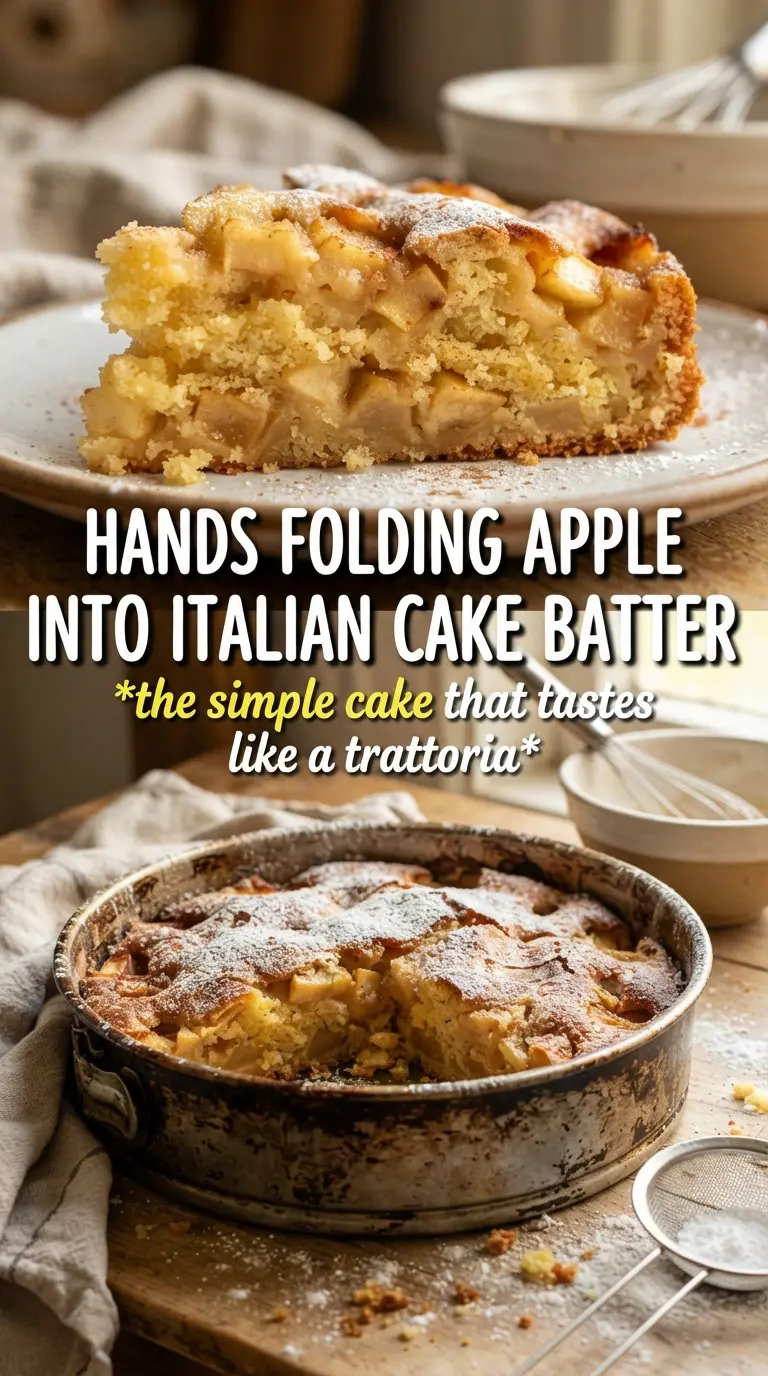
Italian apple cake bakes up with a tender, almost custardy crumb and pockets of soft apple that stay distinct instead of disappearing into the batter. The top settles into a pale golden dome, and a heavy snowfall of powdered sugar gives every slice that simple, old-world look that makes people pause before the first bite.
What sets this version apart is the method. The eggs and sugar get beaten until pale and thick, which traps air and gives the cake lift without turning it airy like a sponge cake. Then the oil goes in slowly, helping the batter stay plush and moist, while lemon zest keeps the apples from tasting flat or one-note. Diced apples fold in at the end so they soften in the oven without turning the whole cake wet.
Below you’ll find the little details that keep this cake from sinking or turning dense in the wrong way, plus a few smart variations if you want to adjust the fruit, the spice, or the dairy.
The crumb came out so moist and the apple pieces stayed tender without making the center heavy. I let it cool all the way before dusting it with powdered sugar, and the slices held together perfectly.
Like this Italian Apple Cake? Save it for the days when you want a rustic dessert with tender apples and a sugar-dusted top.
The Airy Batter That Keeps Apple Cake From Turning Heavy
Most apple cakes go wrong before they ever reach the oven. The batter gets overmixed once the flour goes in, the apples are cut too small, or the eggs and sugar never get enough volume at the start. This cake avoids that by building structure first and then stopping the moment the flour disappears.
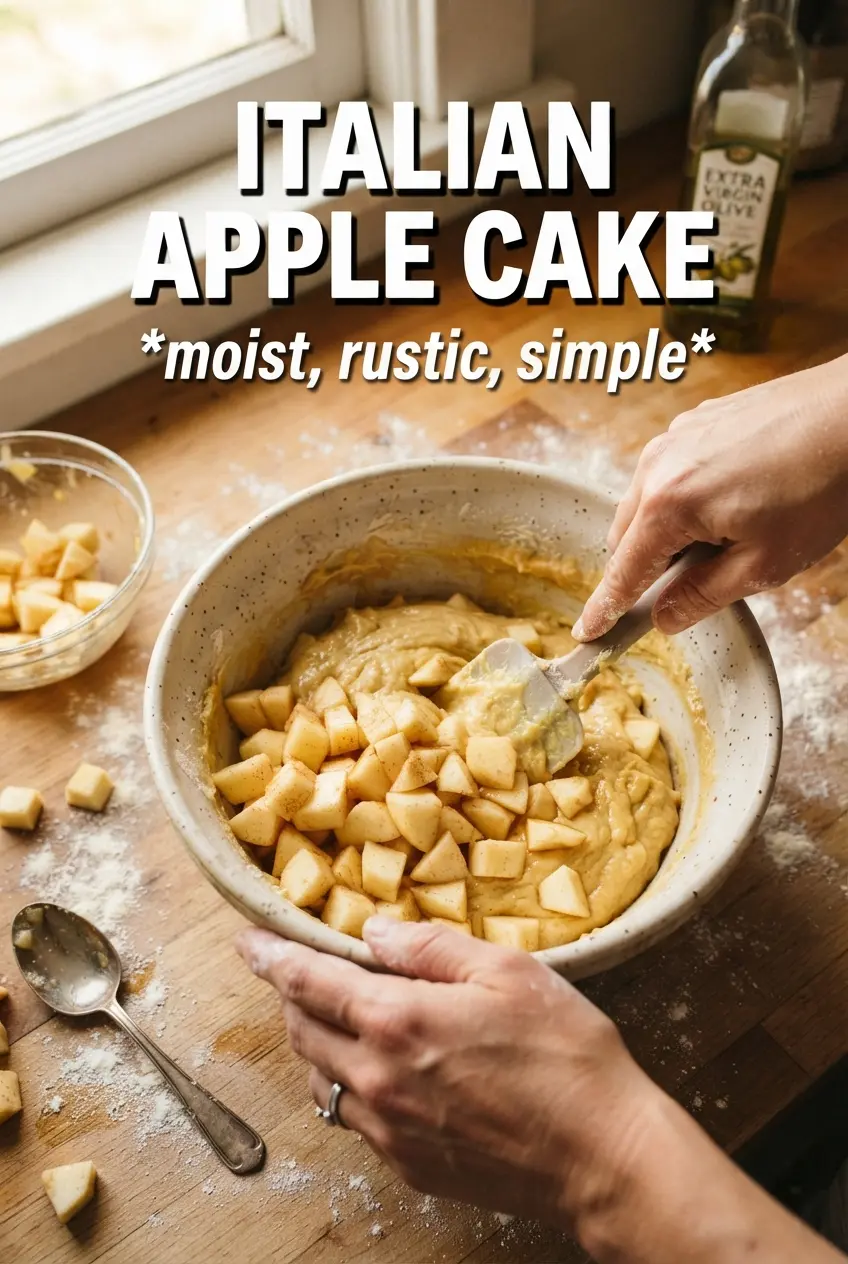
The beaten eggs and sugar should look pale, thick, and slightly ribboned when you lift the beaters. That step matters because it gives the cake enough lift to support the fruit without relying on a lot of fat. Once the apples are folded in, the batter will look chunky and full. That’s correct. The fruit should sit throughout the cake, not dissolve into it.
- Eggs — They provide the rise and the delicate crumb. Cold eggs won’t whip as well, so let them sit out long enough to lose the chill if you can.
- Oil — This is what keeps the cake moist for days. Butter can work, but the crumb will be a little firmer and less plush.
- Lemon zest — It wakes up the apples and keeps the flavor from tasting flat. If you don’t have a fresh lemon, the cake still works, but it loses some brightness.
- Apples — Dice them into small, even pieces so they soften at the same rate. Too-large chunks can sink; too-small pieces can disappear.
What Each Ingredient Is Actually Doing in This Cake
- All-purpose flour — Enough structure to hold the apples without making the cake dry. Cake flour is too soft here; the slices can collapse under the fruit.
- Baking powder — Gives the cake its lift after the whipped eggs have done their part. Fresh baking powder matters more than brand name.
- Cinnamon — A small amount adds warmth without pushing the cake into pie territory. More than that starts to hide the apple flavor.
- Milk — Loosens the batter just enough to keep it spoonable. Whole milk gives a slightly richer crumb, but any milk you keep in the fridge will work.
- Powdered sugar — This is for the finish, not sweetness alone. Dust it after the cake is fully cool or it melts into the top and disappears.
Building the Cake So the Center Bakes Through
Whipping the Eggs and Sugar
Beat the eggs and sugar until the mixture turns pale yellow and thick enough to fall from the beaters in a slow ribbon. This is where the cake gets its lift, so don’t rush it. If the mixture still looks loose and foamy, keep mixing for another minute or two. You’re aiming for volume, not just combined ingredients.
Adding the Oil Without Deflating Everything
Stream the oil in slowly while the mixer runs. Adding it too fast can deflate the batter and leave it greasy instead of light. Once the oil is in, mix just until it disappears, then add the milk, vanilla, and lemon zest. The batter should still look smooth and glossy.
Folding in Flour and Apples
Switch to a spatula as soon as the dry ingredients go in. Stir only until no streaks of flour remain, then fold in the diced apples gently. Overmixing at this stage builds toughness, and a tough batter can’t cradle the fruit properly. Pour it straight into the pan while it still looks airy and uneven.
Baking Until the Top Springs Back
Bake until the top is golden and a toothpick comes out clean from the center, usually 40 to 45 minutes. If the top browns too quickly, the oven is running hot; tent loosely with foil for the last few minutes. Let the cake cool completely before dusting, or the sugar will melt into a damp patch instead of staying snowy and fine.
How to Adapt Italian Apple Cake Without Losing Its Character
Swap the Apples for Pears
Firm pears work well if you want a softer, more floral cake. Keep the pieces small and choose fruit that still has some resistance when you press it with a knife, or the batter can turn watery as it bakes.
Make It Dairy-Free
Use any unsweetened non-dairy milk with a neutral taste. The cake already gets its richness from oil, so you won’t lose much, but avoid strongly flavored milks like coconut if you want the apple and lemon to stay in front.
Use a Different Spice Profile
A pinch of nutmeg or cardamom can replace part of the cinnamon if you want a softer, more fragrant finish. Keep the change small; too much spice pushes the cake away from its simple Italian style and buries the apples.
Storage and Reheating
- Refrigerator: Store covered for up to 4 days. The crumb stays moist, though the powdered sugar finish will dissolve into the top.
- Freezer: Freeze slices tightly wrapped for up to 2 months. Thaw at room temperature while still wrapped so condensation doesn’t make the surface sticky.
- Reheating: This cake is best served at room temperature, but a slice can be warmed for 10 to 15 seconds in the microwave. Heat only just enough to take the chill off; too much heat softens the apple pieces and makes the crumb gummy.
Questions I Get Asked About This Recipe
Italian Apple Cake
Ingredients
Equipment
Method
- Preheat the oven to 350F. Grease a 9-inch round cake pan and line with parchment.
- Whisk together flour, baking powder, cinnamon, and salt in a bowl until evenly combined.
- Beat the eggs and granulated sugar with an electric mixer until pale and thick, about 3 minutes.
- Stream in the vegetable or sunflower oil slowly while mixing. Add the milk, vanilla extract, and lemon zest and mix until smooth.
- Fold in the flour mixture until just combined. Fold in the diced apples so they’re evenly distributed.
- Pour the batter into the prepared pan. Bake for 40-45 minutes, until a toothpick comes out clean and the top is golden.
- Cool the cake completely. Dust generously with powdered sugar before serving.