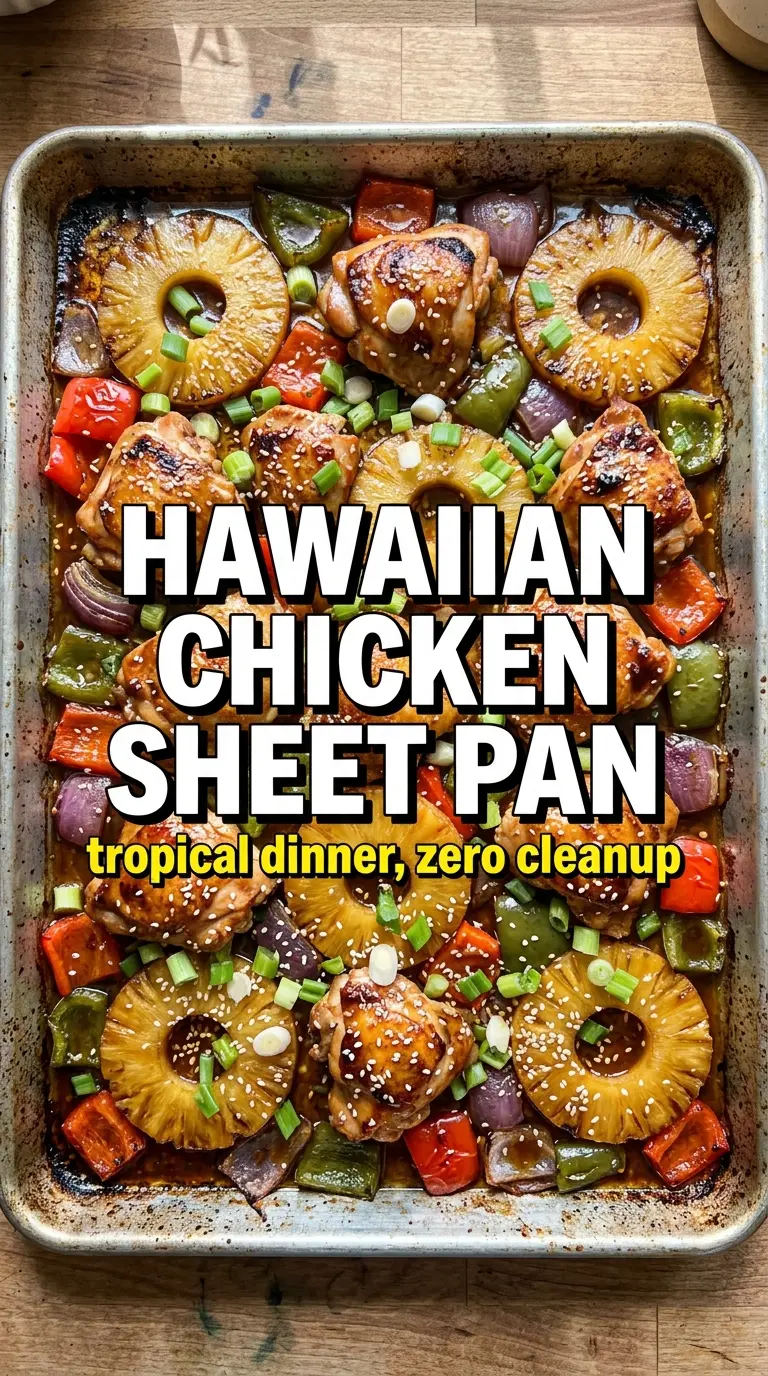
Sticky, caramelized Hawaiian chicken sheet pan dinners earn their place fast because they hit every note at once: salty soy, sweet pineapple, glossy teriyaki-style glaze, and chicken skin that turns crisp at the edges while the vegetables pick up the same sweet-savory shine. The best part is that the pan does the work for you. The chicken roasts over high heat, the pineapple softens just enough to brown, and the onion and peppers catch all the drips from the marinade.
This version works because the marinade is built to caramelize instead of just flavor the meat. Honey, brown sugar, and pineapple juice give the surface enough natural sugar to deepen in the oven, while rice vinegar keeps it from tasting flat or cloying. Bone-in, skin-on thighs also matter here. They stay juicy through the short roast time and give you a better finish than boneless chicken, which can dry out before the glaze is where you want it.
Below, I’ll walk through the one detail that keeps the chicken from steaming, the ingredient swaps that still hold onto the Hawaiian-American style, and a few ways to adapt the pan for different diets without losing that sticky, glazed finish.
The marinade turned into a sticky glaze in the oven and the chicken skin came out crisp, not soggy. I was worried the pineapple would make everything watery, but it caramelized around the edges and tasted like it had been cooking for hours.
Like this Hawaiian Chicken Sheet Pan? Save it to Pinterest for the nights when you want sticky teriyaki glaze, caramelized pineapple, and just one pan to wash.
The Trick to Keeping the Chicken Roasting, Not Steaming
The biggest mistake with a sheet pan dinner like this is crowding the pan until the chicken and vegetables sit in a puddle of their own juices. That gives you soft skin and pale peppers. A large enough sheet pan matters here, and so does keeping the chicken skin side up from the moment it hits the tray.
Another thing that helps is reserving the marinade and pouring it around the chicken instead of soaking the tops of the thighs. The skin needs direct oven heat to crisp and caramelize. The glaze still gets on everything, but it works from the bottom up and around the edges instead of washing the skin down.
- High heat — 425°F is hot enough to brown the sugar in the marinade without drying out the thighs before they finish.
- Skin-on chicken thighs — they give you built-in fat and a better texture than boneless pieces, which can go dry before the glaze darkens.
- Pineapple chunks — fresh pineapple browns better than canned and gives the pan those sticky caramelized edges.
- Foil-lined pan — it keeps the sugars from welding themselves to the pan and makes cleanup painless.
What Each Ingredient Is Doing in the Pan
- Soy sauce — this is the salty backbone of the marinade. Use regular soy sauce for the best balance; low-sodium works if that’s what you keep on hand, but the glaze will be a little lighter.
- Pineapple juice — it brings sweetness and a little acidity, which helps the chicken taste bright instead of one-note. If you only have canned pineapple juice, it works fine.
- Honey and brown sugar — these are what give you that lacquered finish in the oven. Don’t cut both at once, or the glaze won’t brown the same way.
- Rice vinegar — it keeps the marinade from turning cloying. Apple cider vinegar can stand in, but rice vinegar gives a cleaner finish.
- Fresh ginger and garlic — they sharpen the glaze and keep it from tasting like sweet sauce alone. Fresh is worth using here because the roast time is short and you want the aromatics to stay vivid.
- Sesame oil — use it sparingly. It’s there for aroma, not as the main fat, and too much will fight the pineapple.
Getting the Glaze to Cling and Caramelize
Marinating the Chicken
Whisk the marinade until the honey and brown sugar dissolve as much as they can, then toss the chicken in it and let it sit for the full 20 minutes. That short rest is enough to season the meat without turning the texture mushy. If you leave chicken in pineapple for much longer, the fruit enzymes can start to soften the surface too much. Reserve the marinade before the chicken goes onto the pan so you have enough liquid for the vegetables.
Building the Sheet Pan
Line a large sheet pan with foil and arrange the chicken skin-side up with space around each thigh. Scatter the peppers, onion, and pineapple around them, not under them, so they can roast instead of stewing. Pour the reserved marinade over the vegetables and around the chicken, then leave the tops of the thighs mostly bare. If the chicken sits in too much liquid, the skin won’t crisp.
Roasting to the Finish
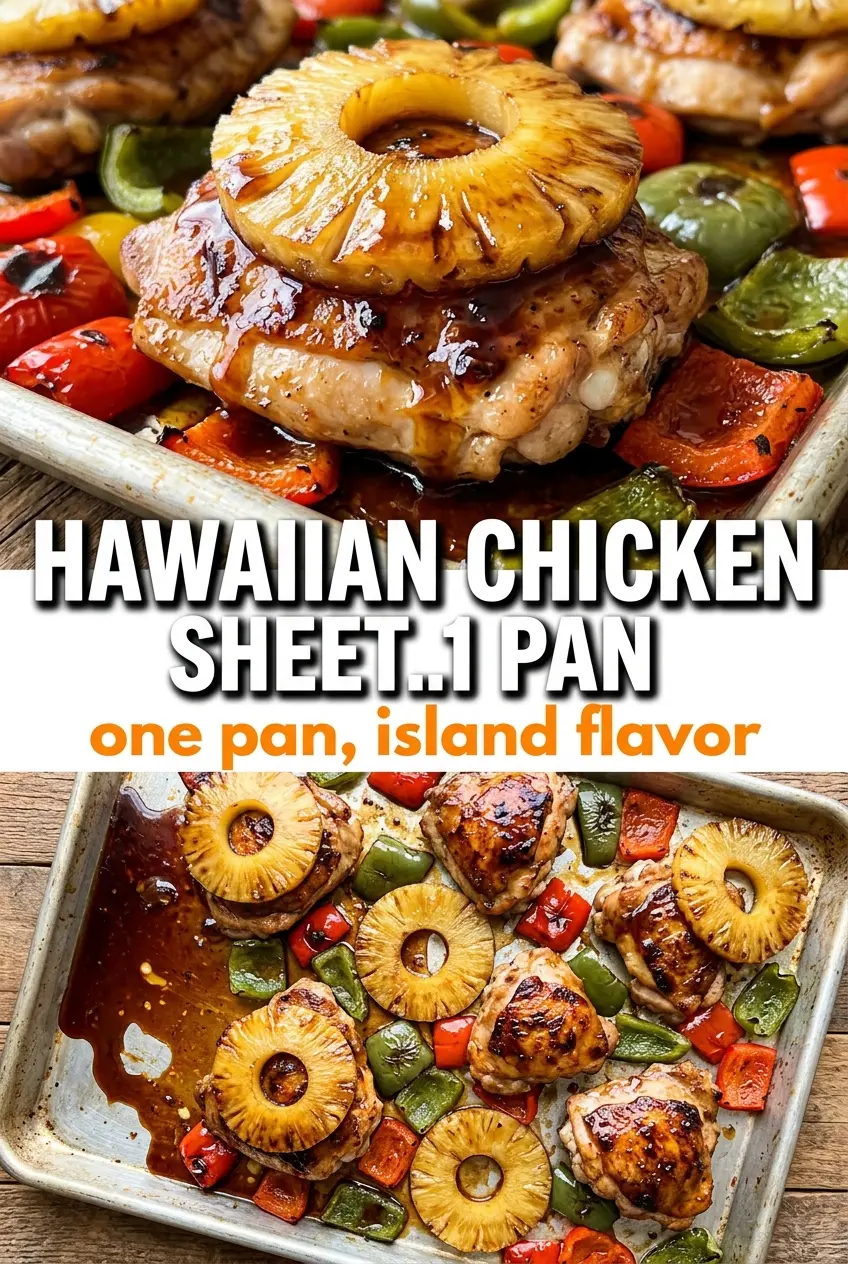
Roast until the chicken skin is deep golden and the glaze looks sticky at the edges, about 22 to 25 minutes. The safest check is an internal temperature of 165°F in the thickest part of the thigh, but the visual cues matter too: the pineapple should be browned in spots, the onion should look softened and lightly charred, and the sauce should no longer look thin. If the glaze seems loose near the end, give it another few minutes instead of pulling it too early.
Garnishing and Serving
Let the pan rest for a couple of minutes after it comes out of the oven so the glaze settles back onto the chicken instead of running off the tray. Finish with sesame seeds and sliced green onions for crunch and freshness. Serve it over steamed rice so the sauce has somewhere to go. That’s the part that turns the extra glaze at the bottom of the pan into dinner instead of cleanup waste.
Three Ways to Adapt This Hawaiian Chicken Without Losing the Glaze
Dairy-Free and Naturally Gluten-Free
This recipe is already dairy-free, and it can be gluten-free if you swap the soy sauce for tamari or a certified gluten-free soy sauce. The flavor stays the same, but the color may be slightly darker, so watch the glaze near the end of roasting. Serve it the same way over rice and you won’t miss anything.
Boneless Chicken Thighs Instead of Bone-In
Boneless thighs cook faster and are easier to eat, but they don’t hold onto moisture quite as well. Start checking them a few minutes early, since they can go from juicy to dry faster than bone-in pieces. You’ll still get good glaze and caramelization, just with a slightly softer finish.
No Fresh Pineapple on Hand
Canned pineapple chunks work in a pinch, but drain them well and pat them dry so they roast instead of steaming. The flavor will be a little softer and less bright than fresh pineapple, but the glaze still caramelizes nicely. If you use canned pineapple in juice, reduce any extra liquid so the pan doesn’t get watery.
Storage and Reheating
- Refrigerator: Store leftovers in an airtight container for up to 4 days. The skin won’t stay crisp, but the flavor deepens overnight.
- Freezer: Freeze the chicken and vegetables for up to 2 months. The pineapple softens after thawing, so expect a looser texture, but the flavor holds up well.
- Reheating: Warm in a 375°F oven, covered loosely with foil for the first few minutes, then uncover to bring back some caramelization. The biggest mistake is microwaving it straight through, which makes the chicken skin rubbery and the vegetables soggy.
Questions I Get Asked About This Recipe
Hawaiian Chicken Sheet Pan
Ingredients
Equipment
Method
- Whisk together soy sauce, pineapple juice, honey, brown sugar, rice vinegar, garlic, ginger, and sesame oil until glossy and evenly combined. Reserve the marinade for later use after marinating the chicken.
- Toss the chicken thighs in the marinade until coated, then cover and rest for 20 minutes. Letting them sit at room temperature helps the glaze cling more evenly.
- Preheat the oven to 425°F and line a large sheet pan with foil for easier cleanup. Use a hot oven so the skin caramelizes quickly.
- Arrange the marinated chicken thighs skin-side up on the sheet pan, then scatter the bell peppers, red onion, and pineapple around them. Keep the vegetables spread for better blistering.
- Pour the reserved marinade over the vegetables and around the chicken so the pan drippings turn sticky while roasting. Aim for an even pour, but don’t drown the peppers.
- Roast for 22-25 minutes at 425°F until the chicken skin is golden and caramelized and the internal temperature reaches 165°F. Look for charred edges on the peppers and caramelized pineapple around the edges.
- Garnish with sesame seeds and sliced green onions, then serve the chicken and vegetables over steamed rice. Spoon the golden teriyaki-pineapple glaze from the pan over everything.