Pasta salad gets a lot better when the dressing has the cool, garlicky punch of tzatziki instead of the usual mayo-heavy coating. This version clings to every piece of pasta with a creamy tang, then finishes with cucumber, tomatoes, dill, and feta so each bite stays bright instead of dull. It’s the kind of side dish that disappears first because it tastes fresh even after it’s been sitting on the table for a while.
The key is treating the cucumber two different ways: half gets grated and squeezed dry for the sauce, and the rest stays diced for crunch. That gives you the tzatziki flavor without watering down the bowl. Greek yogurt does the heavy lifting here, while a little sour cream smooths out the texture and keeps the dressing from tasting too sharp.
Below, I’m walking through the small details that keep the salad creamy instead of soupy, plus the easiest swaps if you want to make it a little lighter or turn it into a fuller meal.
The dressing stayed creamy after chilling, and squeezing the cucumber dry made a huge difference. I brought this to a cookout and there wasn’t a spoonful left.
Save this Greek tzatziki pasta salad for a cold, creamy side dish with cucumber crunch and plenty of dill.
The Cucumber Trick That Keeps This Pasta Salad Creamy, Not Watery
Most pasta salads with cucumber fail in the same way: the vegetable keeps releasing water after the dressing goes on, and by the next hour the whole bowl turns loose and thin. This version avoids that because the grated cucumber gets squeezed before it ever meets the yogurt. That one move protects the texture of the dressing and keeps the flavor concentrated instead of diluted.
Rinsing the pasta under cold water matters here too. It stops the cooking fast and cools the noodles down so they don’t melt the yogurt dressing or turn the feta greasy. You still want the pasta fully drained, though, because extra water trapped in the colander will thin out the tzatziki just as much as cucumber juice will.
- Grated cucumber — This is what gives the dressing its classic tzatziki feel. Squeeze it hard in a clean towel or your hands until it stops dripping; that step is non-negotiable if you want a thick dressing.
- Greek yogurt — Use full-fat if you want the creamiest result. Low-fat works, but it tastes a little sharper and can loosen up more after chilling.
- Sour cream — This rounds out the yogurt and gives the sauce a softer, silkier finish. If you skip it, the salad still works, but the dressing tastes leaner and a little less rich.
- Fresh dill — Dried dill won’t give the same bright herbal edge. If you’re in a pinch, use half the amount of dried dill, but the flavor will be flatter.
- Feta — Add it at the end and fold gently so it stays in crumbles instead of disappearing into the sauce. A block of feta crumbled by hand tastes better than pre-crumbled because it stays creamier.
What Each Ingredient Is Actually Doing in Greek Tzatziki Pasta Salad
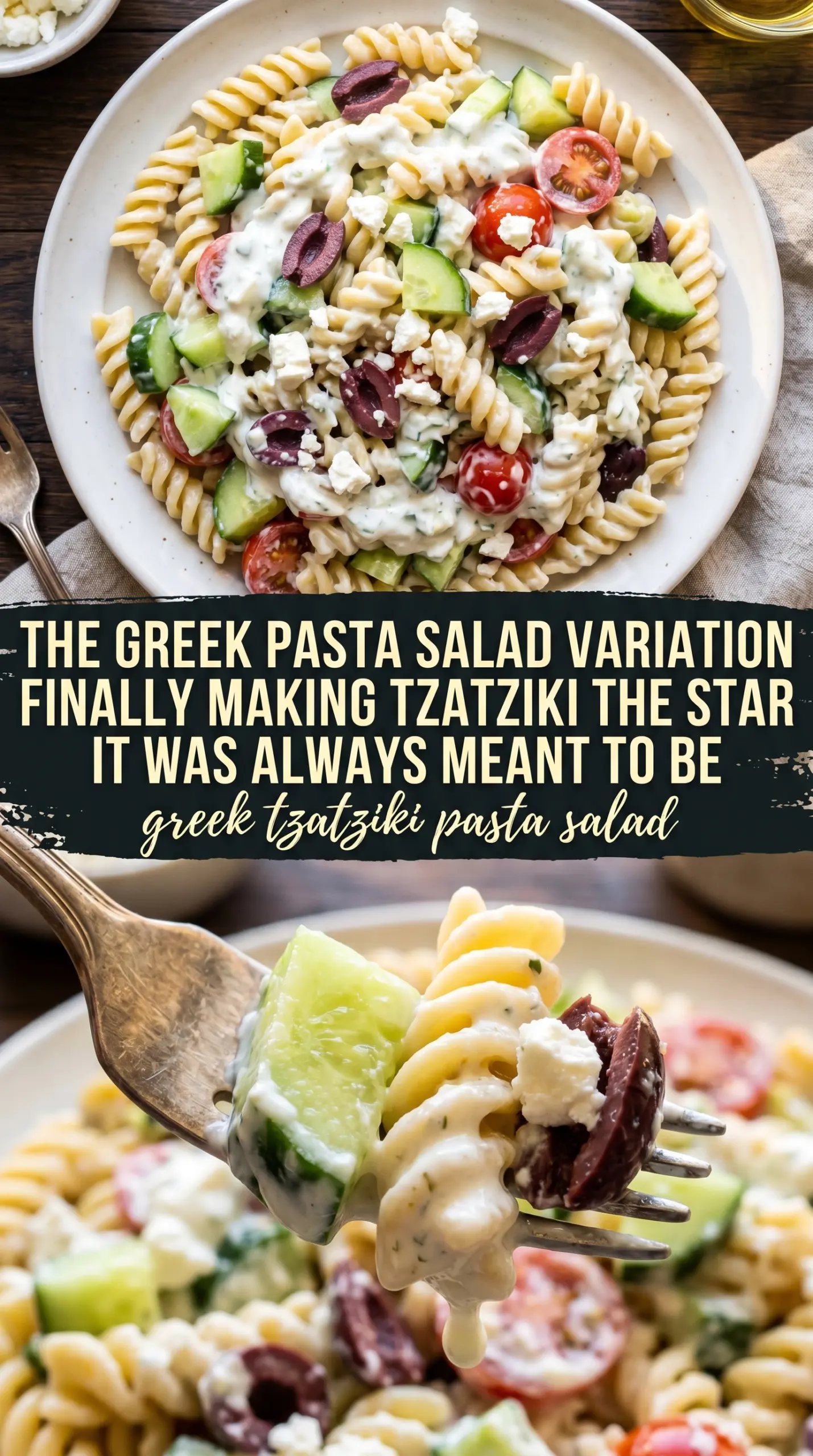
- Fresh vegetables (vibrant, crisp, quality) — Start with fresh, brightly colored vegetables. Wilted vegetables make everything taste tired.
- Acid (vinegar, lemon juice, or lime) — The acid prevents oxidation and prevents flat taste. It’s essential for brightness.
- Oil (quality matters for flavor) — Good olive oil adds freshness. Cheap oil makes the salad taste flat.
- Salt (enhances all other flavors) — Proper seasoning makes vegetables taste more like themselves. Don’t undersalt.
- Fresh herbs (tender ones added last) — Fresh herbs add complexity and brightness. Add them right before serving.
- Protein or hearty elements (if using) — These should complement without overwhelming the vegetables. Keep the salad light.
- Dressing applied just before serving — Don’t dress early or the vegetables release liquid and wilt. Timing is everything.
- Taste and adjust (check for balance) — The salad should taste bright and assertive. Add more acid or salt if needed.
Building the Tzatziki So It Coats Every Noodle
Cooking the Pasta to Hold Dressing
Boil the pasta until it’s just past al dente, then drain it and rinse it under cold water until it’s no longer steaming. You want the noodles cool enough to stop carrying heat into the dressing, but not so wet that they thin the sauce. If the pasta sits warm, the yogurt can get loose and the salad loses that creamy cling.
Mixing the Sauce Before the Bowl Comes Together
Stir the grated, squeezed cucumber into the Greek yogurt, sour cream, garlic, lemon juice, dill, salt, and pepper until the mixture looks thick and evenly speckled. Let it sit for a few minutes while you prep the rest of the ingredients; that short rest softens the raw garlic and helps the sauce taste more balanced. If the dressing seems too thick, add a small splash of lemon juice or water, not a big pour, because it will loosen more once it coats the pasta.
Folding Without Crushing the Salad
Add the pasta, diced cucumber, tomatoes, red onion, and olives to a large bowl, then pour the tzatziki over the top and toss gently until every piece is coated. Fold in the feta last so it stays intact and you get little salty pockets instead of a uniform mash. Chill the salad for at least an hour before serving; that resting time lets the pasta absorb some of the dressing and mellows the garlic just enough.
How to Adapt This Greek Pasta Salad Without Losing the Tzatziki Feel
Make It Dairy-Free
Use a thick unsweetened dairy-free yogurt and skip the sour cream, or replace it with a dairy-free sour cream alternative. The salad still gets that cool cucumber-garlic flavor, but the dressing will be a little less tangy and a touch thinner, so chill it well before serving.
Turn It Into a Gluten-Free Side
Swap in your favorite gluten-free pasta shape and cook it just until tender. Gluten-free pasta can go soft fast after chilling, so rinse it well and stop cooking a minute early if the package gives you any wiggle room.
Make It Heartier for Lunch
Add chickpeas, grilled chicken, or diced cooked shrimp. Chickpeas keep the Mediterranean feel and soak up the dressing nicely, while chicken and shrimp turn the salad into a main dish without changing the flavor balance.
Dial Back the Garlic
If raw garlic is too sharp for your table, use one clove instead of two and let the dressing rest in the fridge for the full hour. Time softens the bite, and the lemon, dill, and cucumber still keep the sauce bright.
Storage and Reheating
- Refrigerator: Store covered for up to 3 days. The pasta will keep soaking up dressing, so the salad gets thicker and a little less glossy by day two.
- Freezer: Don’t freeze this one. The yogurt dressing separates and the cucumber turns watery after thawing.
- Reheating: This salad is meant to be served cold. If it has thickened in the fridge, stir in a spoonful of yogurt or a splash of lemon juice to loosen it back up instead of warming it.
Questions I Get Asked About This Recipe
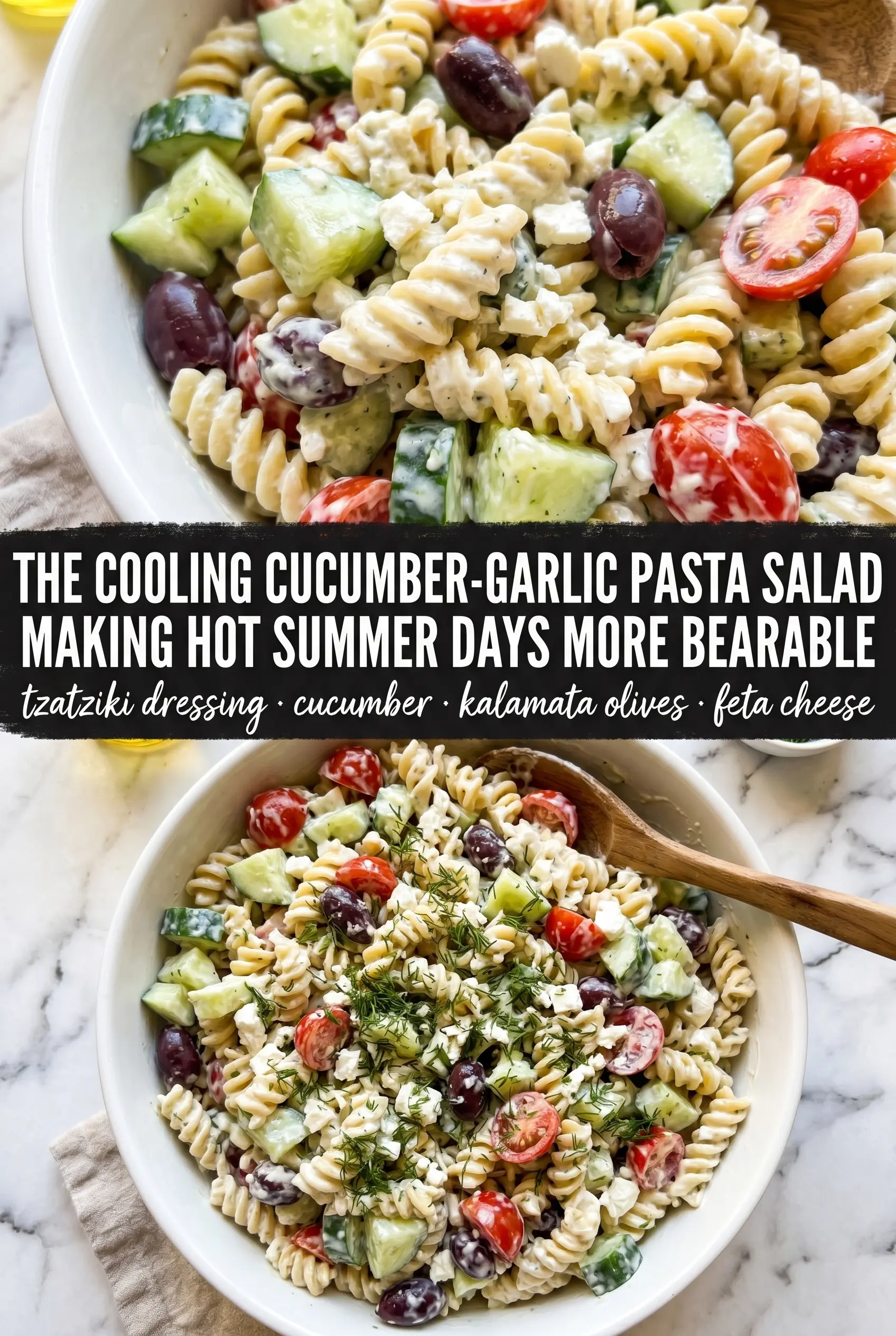
Greek Tzatziki Pasta Salad
Ingredients
Method
- Cook the penne or rotini pasta according to package directions, then drain and rinse with cold water to cool it quickly.
- Grate half the cucumber and squeeze out excess moisture, then mix it with Greek yogurt, sour cream, garlic, lemon juice, dill, salt, and pepper until smooth.
- Combine the pasta, remaining diced cucumber, cherry tomatoes, red onion, and Kalamata olives in a large bowl.
- Add the tzatziki sauce and toss until the pasta is evenly coated.
- Gently fold in feta cheese so it stays in small crumbles rather than fully melting into the dressing.
- Refrigerate the pasta salad for at least 1 hour before serving so flavors meld and the dressing thickens slightly.