Pasta salad earns its place when it tastes bright on the first bite and even better after it has had time to sit. This Greek version does that balance well: tender pasta, salty feta, briny olives, crisp cucumber, and tomatoes that loosen just enough to mingle with the lemon-oregano dressing. It feels substantial without turning heavy, which is exactly why it keeps showing up at cookouts, lunches, and make-ahead dinners.
The difference here is the dressing and the timing. A lemon-vinegar dressing with garlic and oregano needs a little rest to mellow, and the salad itself needs at least two hours in the fridge so the pasta can absorb some of that flavor instead of tasting like plain noodles coated in oil. Rinsing the pasta under cold water stops the cooking fast and keeps the vegetables from softening before you want them to.
Below you’ll find the small details that matter most: how to keep the pasta from drinking up all the dressing, when to add the feta, and which swaps still keep the salad tasting clean and Greek-inspired.
The dressing soaked into the pasta after chilling, and the feta stayed creamy instead of disappearing. I made it the night before a potluck and the bowl came back empty.
Save this Greek Pasta Salad for the next potluck or meal prep day — the lemon-oregano dressing gets better after chilling, and the feta stays perfectly tangy.
The Reason This Pasta Salad Tastes Better After It Sits
A lot of pasta salads miss the mark because they get dressed once and served immediately. That works for green salads, but pasta needs time to absorb flavor. If you skip the chill, the dressing stays on the surface and the salad tastes flat in the middle, especially after the first serving has been scooped out.
The other thing that matters is temperature. Rinsing the pasta in cold water stops the cooking and knocks off enough starch so the dressing stays loose instead of turning sticky. Then the two-hour rest gives the tomatoes, onion, and oregano a chance to season the pasta from the inside out. That’s what makes this taste like a composed salad instead of a bowl of noodles with toppings.
- Chilling time — This is not just a storage step. It’s part of the recipe, and it’s what turns the dressing from sharp and separate into something balanced.
- Cold-rinsed pasta — Warm pasta keeps cooking and can soften the cucumber and tomatoes too fast. Cold pasta holds its shape and soaks up dressing more evenly.
- Feta added in two stages — Mixing most of it in gives you salty bites throughout, while saving some for the top keeps the salad looking fresh and gives you sharper bursts of flavor.
What Each Ingredient Is Actually Doing in This Salad
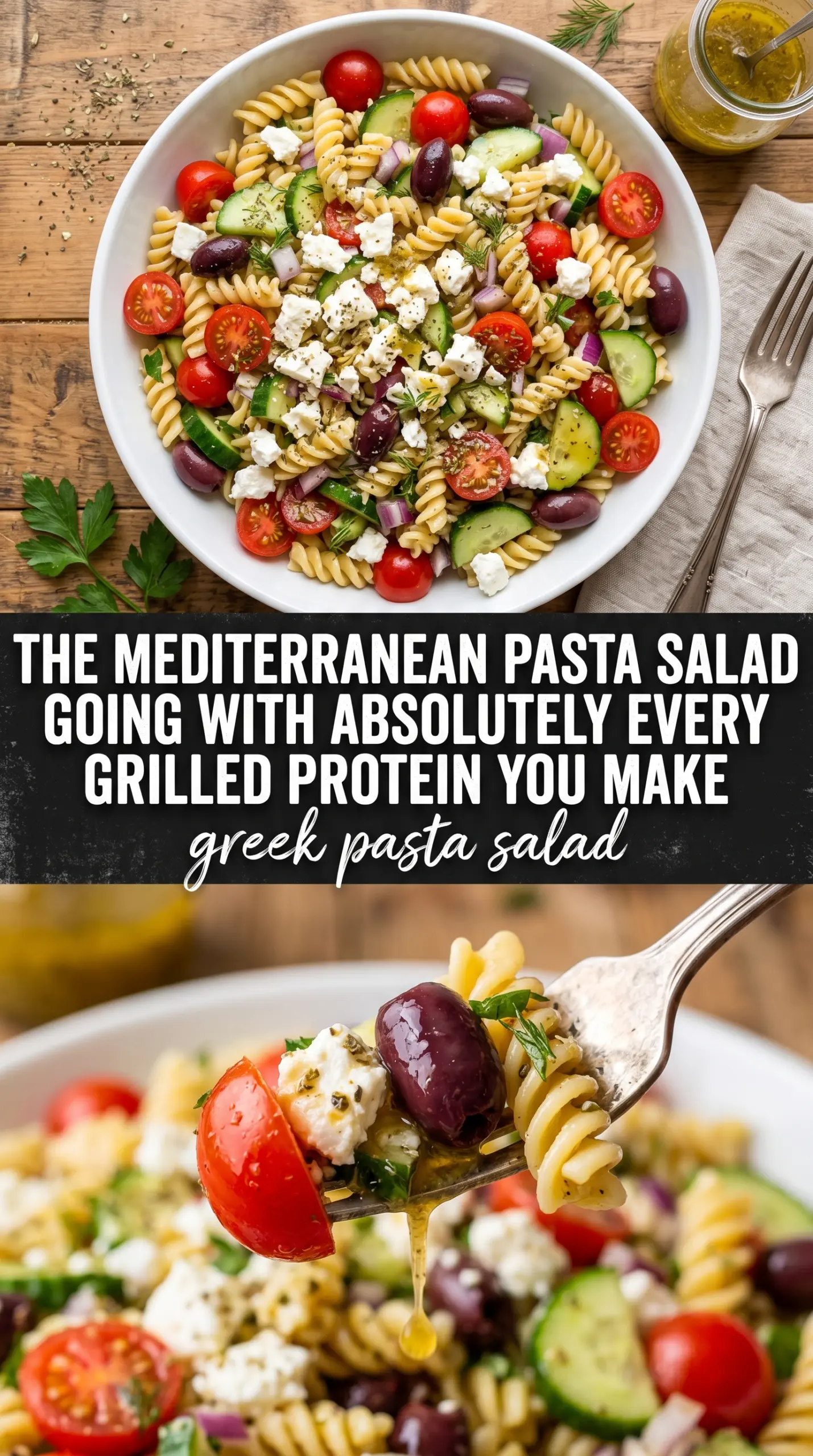
- Penne or rotini pasta — Both hold dressing well, but rotini catches little bits of feta and onion in the grooves. Use what you have; just cook it to true al dente so it stays pleasantly firm after chilling.
- Kalamata olives — These bring the briny, almost winey depth that makes the salad taste Greek instead of just Mediterranean-ish. Black olives can work in a pinch, but they’re milder and less interesting.
- Feta cheese — Buy a block and crumble it yourself if you can. Pre-crumbled feta tends to be drier, and the block has a creamier texture that melts into the salad without disappearing.
- Lemon juice and red wine vinegar — The lemon gives brightness; the vinegar gives the dressing backbone. If you only use lemon, the flavor can fade after chilling, so keep both in play.
- Fresh oregano — Fresh oregano has a cleaner, greener edge, but dried oregano works well here because the salad rests before serving and gives the herb time to bloom.
Building the Salad So the Dressing Stays Bright
Cooking the Pasta to Hold Its Shape
Boil the pasta in well-salted water until it’s just al dente, then drain it and rinse it under cold water right away. You want the noodles cool enough that they don’t wilt the vegetables or melt the feta. If the pasta feels soft before chilling, it’ll turn mushy by the time the salad hits the table.
Whisking the Dressing Until It Tastes Balanced
Combine the olive oil, lemon juice, vinegar, garlic, oregano, salt, and pepper in a bowl and whisk until it looks unified, not separated. Taste it now. It should be punchy, because pasta will soften the edges after it sits. If it tastes dull at this stage, it will taste flat later.
Tossing Without Crushing the Good Stuff
Add the pasta, tomatoes, cucumber, olives, red onion, and most of the feta to a large bowl, then pour the dressing over the top and fold everything together gently. Don’t stir like you’re mixing a casserole. You want the tomatoes and feta to stay intact so the salad has distinct bites instead of a muddy texture.
Letting the Flavors Marry in the Fridge
Cover the bowl and chill it for at least two hours. That rest is where the salad gets its character. Before serving, give it one more toss and top with the remaining feta. If it looks dry after chilling, add a small drizzle of olive oil or a squeeze of lemon rather than extra vinegar.
How to Adapt This for Different Tables and Diets
Make It Gluten-Free
Use a sturdy gluten-free pasta shape that holds its texture after chilling. Some brands soften faster than wheat pasta, so stop at true al dente and cool it promptly. The dressing and vegetables stay the same.
Dairy-Free Version
Skip the feta and add a handful of chopped pepperoncini or extra olives for that salty pop. You lose the creamy, tangy pockets that feta brings, but the salad still tastes bright and satisfying if the dressing is well seasoned.
Add Protein for a Main Dish
Grilled chicken, chickpeas, or diced salami all work here. Chickpeas keep the salad vegetarian and pick up the lemon dressing well; chicken makes it more filling without changing the flavor balance; salami pushes it in a saltier, picnic-style direction.
Storage and Reheating
- Refrigerator: Store covered for up to 4 days. The pasta will absorb more dressing as it sits, so expect the salad to soften a bit by day two.
- Freezer: I don’t recommend freezing this salad. The cucumber, tomatoes, and feta lose their texture after thawing.
- Reheating: This salad is meant to be served cold or cool. If it tightens up in the fridge, let it sit at room temperature for 15 to 20 minutes and stir in a small splash of olive oil or lemon juice.
Answers to the Questions Worth Asking
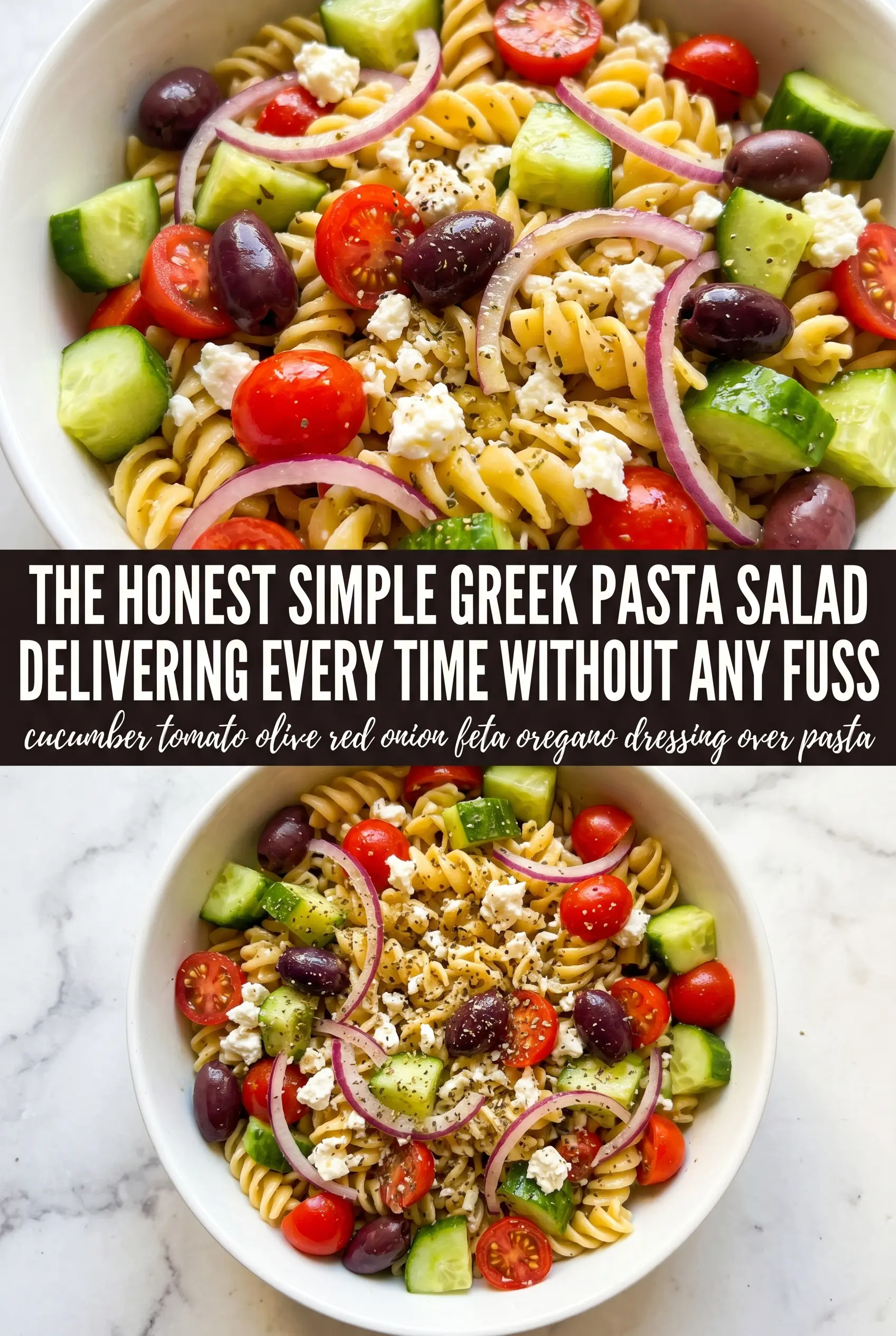
Greek Pasta Salad
Ingredients
Equipment
Method
- Cook the penne or rotini pasta according to package directions. Drain and rinse with cold water until cool to the touch.
- Whisk together the olive oil, lemon juice, red wine vinegar, garlic, oregano, salt, and pepper until evenly combined.
- Combine the cooled pasta, cherry tomatoes, cucumber, Kalamata olives, red onion, and most of the feta in a large bowl.
- Pour the dressing over the salad and toss gently until everything is coated.
- Refrigerate for at least 2 hours so the pasta absorbs the lemon dressing and the flavors meld.
- Top with the remaining feta before serving for a fresh, salty contrast.