Golden-seared Greek chicken tenders hit that sweet spot between fast and satisfying: bright lemon, oregano, garlic, and a little smoky paprika wrapped around juicy chicken with crisp edges from a hot pan. The marinade is short, but it still gives the chicken enough time to pick up real flavor, and the tzatziki underneath keeps every bite cool and creamy against the savory crust.
What makes these work is balance. Lemon juice and zest wake everything up, but there’s enough olive oil to keep the marinade from tasting sharp or drying out the chicken. A touch of cumin and smoked paprika gives the tenders a deeper, warmer edge than a basic lemon-herb chicken, and cooking them quickly over medium-high heat keeps the outside golden before the inside has a chance to toughen.
Below, I’ve included the few details that matter most: how long to marinate without turning the chicken stringy, how to get that good sear, and what to swap if you want to serve these a different way. It’s the kind of dinner that looks like you put in more effort than you did.
The lemon and oregano came through beautifully, and the chicken stayed juicy even with the quick cook time. Serving it over tzatziki made the whole dish taste restaurant-style, and the feta on top was the perfect finish.
Love the bright lemon-oregano crust and creamy tzatziki pairing? Save these Greek chicken tenders for the next night you want a fast Mediterranean-style dinner.
The Reason These Chicken Tenders Stay Juicy Instead of Drying Out
Chicken tenders cook fast, which sounds convenient until the pan gets a little too hot and the lean meat goes from juicy to chalky in a minute. The fix here is a short marinade and a hot-but-controlled skillet. The lemon adds brightness, but the olive oil and quick cook time keep the surface from seizing up before the center is done.
The other mistake people make is crowding the pan. If the tenders sit on top of one another or the skillet is overloaded, they steam instead of sear. You want each piece in direct contact with the hot surface so the oregano and paprika bloom in the oil and the outside turns golden before the chicken starts releasing too much moisture.
What Each Ingredient Is Doing in the Marinade
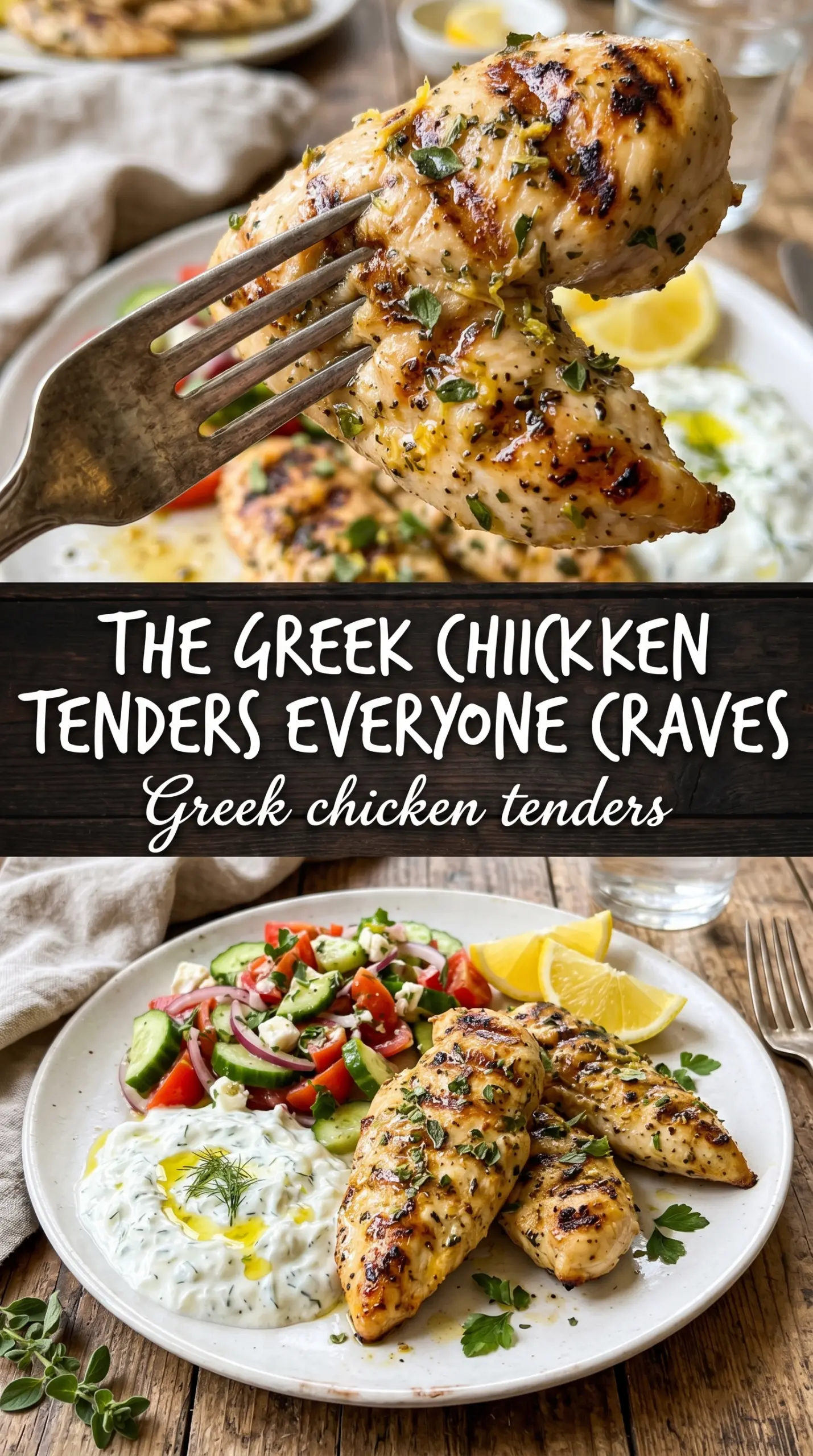
- Chicken tenders — They’re naturally quick-cooking and stay tender if you don’t overdo the heat. Chicken breast cut into strips works too, but keep the pieces even so they finish at the same time.
- Olive oil — This carries the spices and helps the chicken brown instead of sticking. A good extra-virgin oil adds flavor, but any neutral olive oil will still get the job done.
- Lemon juice and zest — Juice brings the tang; zest brings the real lemon aroma. If you skip the zest, the marinade tastes flatter, even if the chicken is seasoned well.
- Garlic, oregano, smoked paprika, and cumin — These build the Greek-Mediterranean backbone of the dish. Dried oregano matters here more than fresh because it stands up better to the hot pan, while the paprika and cumin add a deeper savory note without turning the chicken spicy.
- Tzatziki, feta, olives, cucumber, and dill — These aren’t just garnish. The cool tzatziki and salty feta balance the lemony chicken, while cucumber and dill keep the plate fresh and crisp.
How to Get the Lemon-Oregano Crust Without Burning the Garlic
Whisk the marinade until it looks emulsified
Combine the olive oil, lemon juice, zest, garlic, oregano, smoked paprika, cumin, salt, and pepper in a bowl and whisk until the mixture looks unified instead of separated. That helps the spices cling to the chicken instead of pooling at the bottom. If the garlic is clumped together, it tends to scorch in the pan, so break it up well before adding the chicken.
Let the chicken sit just long enough to season
Toss the tenders in the marinade and let them rest for 20 minutes. That’s enough time for the lemon and herbs to work without making the outside mushy, which can happen if acidic marinades sit too long on lean chicken. If you need to stretch the timing, hold it to about 30 minutes max.
Cook over medium-high heat in a single layer
Warm a large skillet or grill pan, add a drizzle of olive oil, and lay the chicken in with space between each piece. You should hear a steady sizzle the moment the chicken hits the pan. Turn the tenders after 3 to 4 minutes, when the first side has a deep golden crust and the chicken releases easily; if it sticks, it needs another minute before flipping.
Finish only until the center hits 165°F
Keep cooking the second side until the chicken reaches 165°F at the thickest point. That temperature gives you cooked-through chicken without draining all the moisture out of it. Pull the pan off the heat as soon as it’s done, because carryover heat will finish the job while the tenders rest for a minute or two.
Three Ways to Serve These When You Want a Different Dinner
Make it dairy-free
Skip the feta and use a dairy-free tzatziki or a tahini-yogurt style sauce made with plant-based yogurt. You’ll lose a little of the salty creaminess from feta, so add extra cucumber and dill for freshness.
Turn it into a grain bowl
Slice the chicken and serve it over rice, couscous, or quinoa with tomatoes and cucumbers. This turns the recipe into a fuller meal and gives the tzatziki a chance to coat everything instead of just acting as a sauce on the side.
Use chicken breast instead of tenders
Cut boneless, skinless chicken breasts into even strips and cook them the same way. The flavor stays the same, but the margin for overcooking is smaller, so watch for the color change and pull them as soon as they reach 165°F.
Serve it low-carb
Keep the chicken, tzatziki, feta, olives, and cucumber, then skip the pita and grains. The plate still feels complete because the sauce and toppings bring enough contrast to carry the meal on their own.
Storage and Reheating
- Refrigerator: Store the cooked chicken in an airtight container for up to 4 days. The crust softens a bit, but the flavor stays bright.
- Freezer: The chicken freezes well for up to 2 months. Freeze it without the tzatziki and toppings, then thaw overnight in the fridge before reheating.
- Reheating: Warm it gently in a skillet over low heat with a splash of water or broth, or use short bursts in the microwave. High heat dries out tenders fast, which is the main mistake people make with leftovers.
Questions I Get Asked About This Recipe
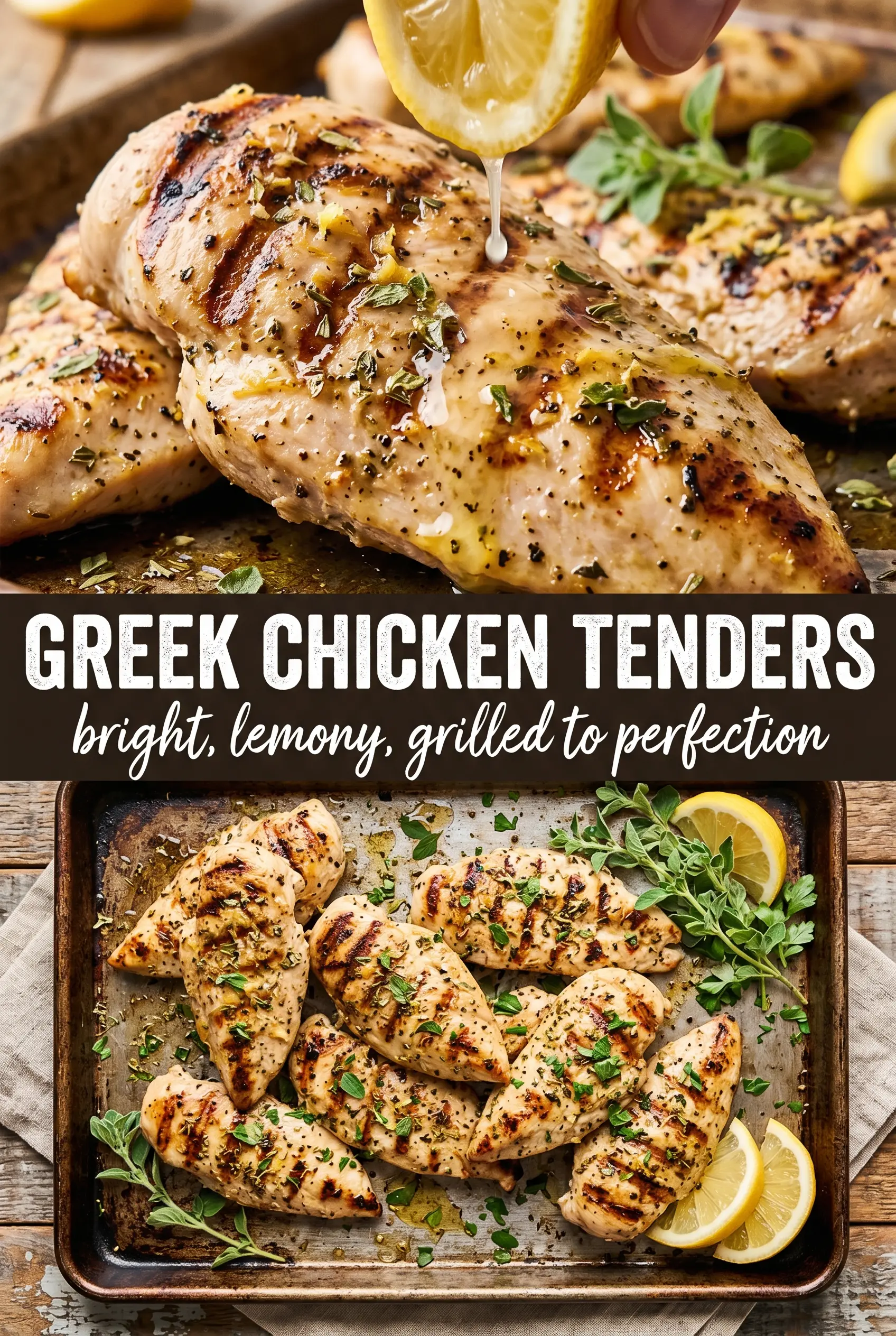
Greek Chicken Tenders
Ingredients
Equipment
Method
- Whisk together olive oil, lemon juice, lemon zest, garlic, oregano, smoked paprika, cumin, salt, and pepper in a bowl. Toss chicken tenders in the marinade until evenly coated, then rest 20 minutes.
- Heat a large skillet over medium-high heat and add a drizzle of olive oil. Cook chicken tenders for 3-4 minutes per side until golden and the internal temperature reaches 165°F, turning once to keep the crust intact.
- Spread tzatziki on a serving platter and arrange the chicken tenders over the top. Scatter crumbled feta, Kalamata olives, cucumber slices, and fresh dill around the chicken, then serve with warm pita and lemon wedges.