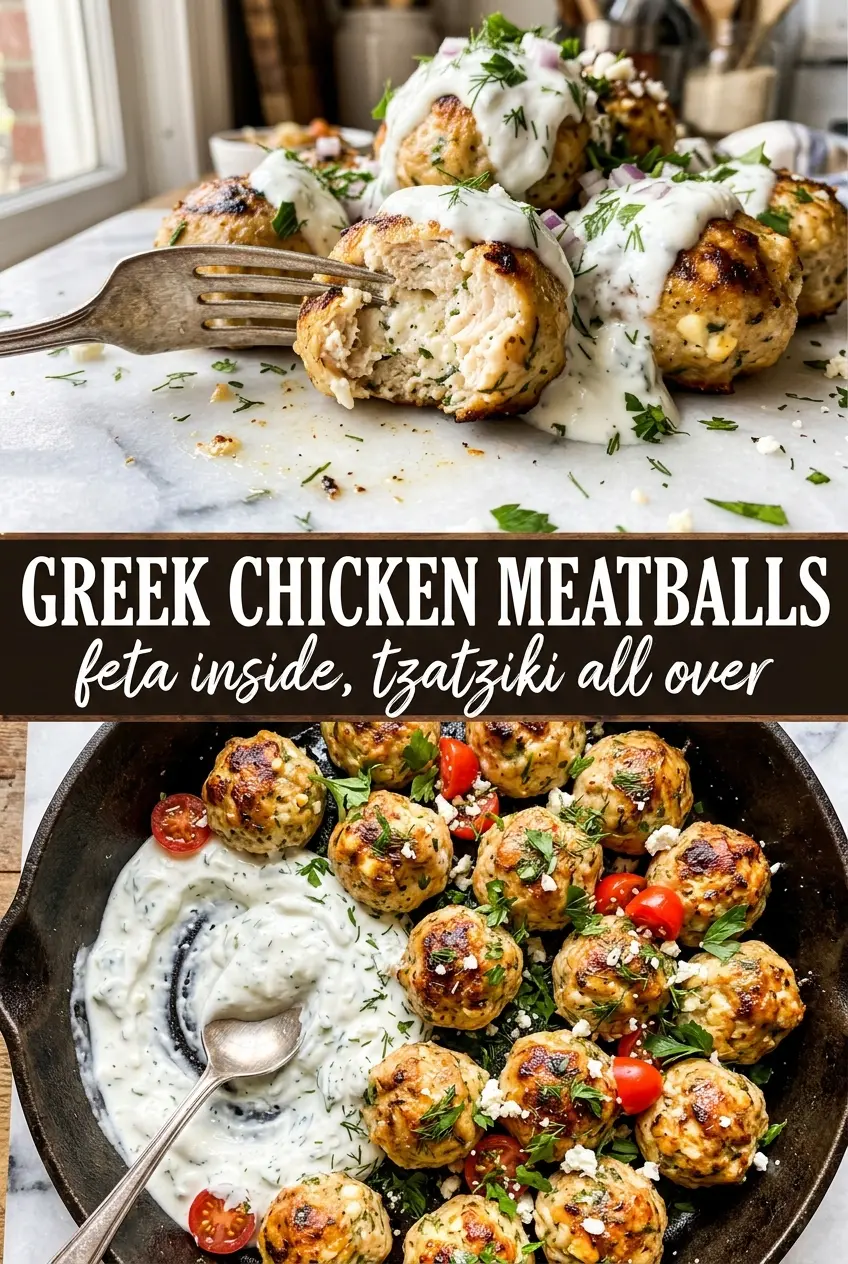
Golden, herb-scented Greek chicken meatballs are one of those dinners that disappears fast because they land on the table with a crisp, bronzed exterior and a juicy middle that stays tender instead of turning dry. The lemon, dill, garlic, and oregano do exactly what you want in a chicken meatball: they keep the flavor bright and savory without overwhelming the meat. A spoonful of cool tzatziki underneath turns the whole plate into something that feels restaurant-worthy with almost no extra work.
What makes this version hold together is the balance. Breadcrumbs and egg give the meatballs enough structure to sear cleanly, while the garlic and lemon zest season the mixture from the inside out. I keep the mix gentle and stop as soon as everything is combined, because overworking ground chicken is the fastest way to get dense, springy meatballs instead of soft ones.
Below, I’m walking through the trick that keeps the outsides deeply golden before the centers overcook, plus the small serving touches that make these taste complete. There’s also a storage note if you want to cook them ahead and a few smart swaps if you need to adjust for what’s in the fridge.
The meatballs browned up beautifully in the skillet and stayed juicy inside. I served them over tzatziki with lemon wedges, and even my picky eater went back for seconds.
Pin these Greek chicken meatballs for the night you want juicy chicken, bright lemon, and a skillet finish that turns deeply golden.
The Reason These Meatballs Stay Juicy Instead of Turning Rubbery
Ground chicken needs a lighter hand than beef or pork. If you pack it tightly, or stir it like bread dough, the proteins tighten up and the meatballs come out bouncy instead of tender. The mix here stays moist because the egg and breadcrumbs bind the meat without making it heavy, and the lemon zest adds brightness without extra liquid that would soften the structure too much.
The other place people run into trouble is the pan. Chicken meatballs need a hot skillet to develop a crust, but not such a hot one that the outside burns before the center reaches temperature. Medium-high heat and a little oil give you that deep golden color, and turning them in batches keeps the pan from cooling down and steaming the meatballs instead of searing them.
What Each Ingredient Is Actually Doing in the Bowl

- Ground chicken — This is the base, so use fresh chicken that isn’t excessively lean if you can help it. A little fat keeps the meatballs from drying out during the sear.
- Breadcrumbs — They absorb moisture and keep the texture soft. Regular plain breadcrumbs work fine; panko makes the meatballs a little lighter, but either one does the job.
- Egg — The egg binds everything so the meatballs hold their shape in the skillet. Without it, they’re much more likely to crack or fall apart when you turn them.
- Fresh dill, garlic, oregano, and lemon zest — This is the flavor backbone. Fresh dill gives the most authentic finish, but if you only have dried dill, use about one-third as much and expect a less vivid herbal note.
- Cumin — Just a little gives the meatballs warmth and depth without making them taste like a different dish. It supports the herbs instead of competing with them.
- Tzatziki and feta for serving — The cool, tangy yogurt sauce and salty feta are what make the plate taste finished. They’re not garnish here; they balance the savory chicken and brighten each bite.
The 20 Minutes That Matter in the Skillet
Mix the Meatball Base Gently
Put the chicken, breadcrumbs, egg, garlic, dill, oregano, lemon zest, cumin, salt, and pepper in a bowl and mix only until the ingredients look evenly distributed. The mixture should feel tacky, not mushy, and you should still see the herbs speckled throughout. If you squeeze it like a burger blend, the meatballs turn dense after cooking.
Form Even Meatballs Without Packing Them
Shape the mixture into 18 meatballs with lightly damp hands so the chicken doesn’t stick to your palms. Roll them just enough to hold together; don’t compress them hard. Even sizing matters here because the smaller meatballs finish at the same rate and brown evenly, which is what keeps the batch from becoming a mix of dry and underdone.
Brown Them in Batches
Heat the olive oil in a large skillet over medium-high heat until it shimmers, then add the meatballs with space between each one. They should sizzle right away. Let them sit long enough to form a crust before turning; if they stick, they’re not ready yet. Move them gently and keep rotating until all sides are deeply golden and the center hits 165°F.
Rest, Then Serve on the Cool Tzatziki
Give the meatballs a short rest after they come off the heat so the juices settle back into the meat. Spoon tzatziki onto the plate first, then set the meatballs over it so the heat softens the sauce just a little. Finish with feta, dill, and lemon wedges; that last squeeze of lemon wakes everything up.
Three Useful Ways to Adapt These Greek Chicken Meatballs
Gluten-Free Version
Swap the breadcrumbs for gluten-free breadcrumbs or finely crushed gluten-free crackers. You still need that binder, so don’t skip it entirely; without it, the meatballs are more fragile in the pan and lose some of their tender bite.
Dairy-Free Serving Style
The meatballs themselves are already dairy-free, so just skip the feta and use a dairy-free tzatziki or a cucumber-herb yogurt alternative made with unsweetened non-dairy yogurt. You’ll lose a little of the salty finish from feta, so add an extra squeeze of lemon and a pinch of salt at the table.
Bake Instead of Pan-Sear
Set the meatballs on a parchment-lined baking sheet and bake at 425°F until they reach 165°F, about 15 to 18 minutes depending on size. Baking is easier for a crowd, but you’ll miss the skillet crust, so finish them under the broiler for a minute or two if you want more color.
Make Them for Bowls or Pitas
These work just as well in a rice bowl or tucked into warm pita with cucumber and tomatoes. The meatballs carry enough seasoning to stand on their own, so the main change is how you build the rest of the plate around them.
Storage and Reheating
- Refrigerator: Store cooked meatballs in an airtight container for up to 4 days. They stay flavorful, though the crust softens a bit once chilled.
- Freezer: These freeze well. Cool completely, freeze on a tray first, then move to a bag or container for up to 3 months.
- Reheating: Warm them in a skillet over low heat with a splash of water or a little olive oil, or cover and heat in a 325°F oven until hot. High heat dries out chicken fast, so go gentle and stop as soon as they’re warmed through.
Answers to the Questions Worth Asking
Greek Chicken Meatballs
Ingredients
Equipment
Method
- Combine ground chicken, breadcrumbs, egg, garlic, dill, oregano, lemon zest, cumin, salt, and pepper in a bowl and mix gently just until evenly combined. Form the mixture into 18 even meatballs.
- Heat olive oil in a large skillet over medium-high heat until shimmering. Sear the meatballs for 4–5 minutes per side until deeply golden on all sides, working in batches if needed.
- Continue searing until the internal temperature reaches 165°F when checked in the center of a meatball, then remove to a plate. Keep the browned exterior visible and avoid overcrowding the pan.
- Let the meatballs rest for 2 minutes to help juices settle. Serve over a generous spread of tzatziki.
- Top each plate with crumbled feta and fresh dill, then finish with lemon wedges for serving. Scatter extra lemon zest if desired to match the bright Greek finish.