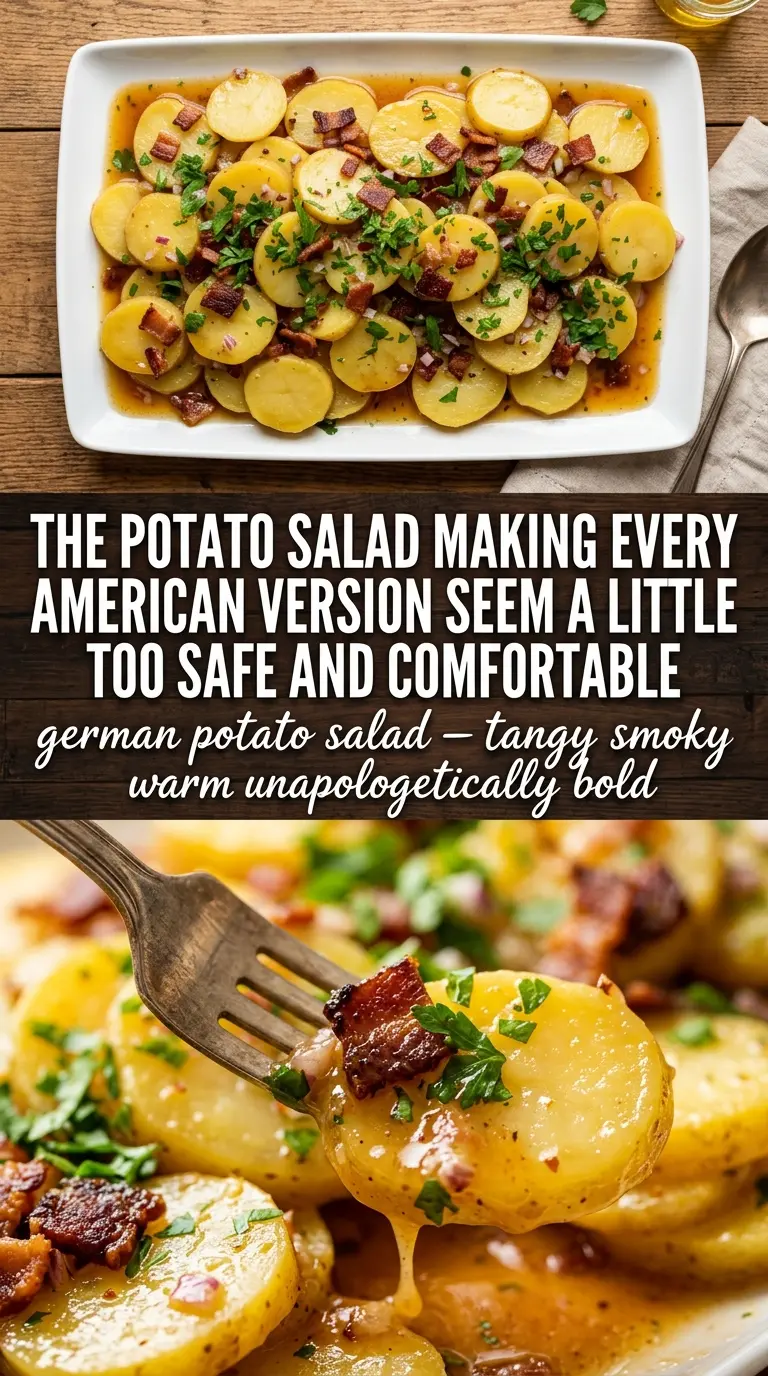
Warm German potato salad lands with the kind of contrast that keeps people going back for another spoonful: tender potatoes, crisp bacon, and a tangy dressing that clings instead of pooling at the bottom of the bowl. The best versions don’t taste heavy or muddy. They taste bright, salty, and just rich enough to make the potatoes feel like they were dressed with purpose.
What makes this version work is the timing. The potatoes go into the dressing while they’re still warm, which lets them drink in the vinegar and broth instead of just getting coated on the outside. The bacon drippings do more than add flavor; they carry the onion, soften the sharp edge of the vinegar, and help the dressing emulsify just enough to coat each slice.
Below, I’ve included the small details that keep the potatoes intact, the dressing balanced, and the finished bowl glossy instead of greasy. If you’ve ever had German potato salad turn dry, bland, or soupy, the fix is in the order of the steps.
The dressing soaked into the potatoes while they were still warm, and it came out tangy without being sharp. The bacon stayed crisp enough to add texture even after tossing.
Keep this warm German potato salad handy for cookouts, holiday spreads, and any night you want bacon-and-vinegar potatoes that stay glossy and bold.
The Trick Is Dressing the Potatoes While They’re Still Warm
Most German potato salad goes wrong in one of two ways: the potatoes are too cold when the dressing hits, or they’re stirred so hard they break apart and turn pasty. Warm potatoes absorb the vinegar, broth, and bacon fat in a way cold potatoes never will. That’s what gives you flavor all the way through the bowl instead of a slick of dressing on top and bland potatoes underneath.
The other detail that matters is slicing and handling. Yukon golds hold their shape better than russets, especially once they’re tender. Drain them well, then toss gently. If the potatoes are waterlogged or overmixed, the salad loses its clean texture and starts to look mashed at the edges.
- Yukon gold potatoes — Their buttery texture holds up to hot dressing without collapsing. Russets turn softer and more fragile, which can work in a pinch, but you’ll lose some structure.
- Bacon drippings — This is the backbone of the dressing. You need enough to carry the onion and mellow the vinegar, so don’t drain the pan completely unless you’re replacing the fat with something else.
- White vinegar — This gives the salad its sharp, clean finish. Apple cider vinegar can work, but it brings a softer, sweeter edge that changes the classic profile.
- Dijon mustard — Dijon helps the dressing cling and adds depth without tasting mustardy. Yellow mustard works in a pinch, but the flavor will be flatter.
What Each Ingredient Is Doing in the Bowl
- Potatoes — Slice them evenly so they finish at the same time. Thin slices catch more dressing, while thicker chunks stay a little firmer in the center.
- Chicken broth — It stretches the dressing without watering it down. Vegetable broth can be used, but the flavor will be less round.
- Sugar — Just enough to balance the vinegar and bacon. The salad should still taste tangy first.
- Parsley — Add it at the end for freshness and color. If it goes in too early, it softens and disappears into the warm potatoes.
Building the Dressing Before the Potatoes Go Back In
Cooking the Bacon Until the Fat Turns Useful
Cook the bacon until it’s crisp enough to crumble cleanly, then move it to a plate and keep the drippings in the pan. If the bacon stays soft, it won’t give you the right texture in the finished salad. If you pour off all the fat, the dressing loses the savory base that makes this dish taste like itself.
Softening the Onion in the Drippings
Add the diced onion to the hot bacon drippings and cook until it turns translucent and loses its raw bite. You’re not looking for browning here. You want the onion sweetened and softened so it melts into the dressing instead of popping up in sharp little pieces.
Simmering the Tangy Dressing
Pour in the broth, vinegar, sugar, mustard, salt, and pepper, then let it simmer just long enough for the sugar to dissolve and the mixture to smell balanced. If the vinegar hits the pan and tastes harsh, give it another minute. The dressing should taste bold in the pan because the potatoes will pull it back once they go in.
Tossing Without Breaking the Slices
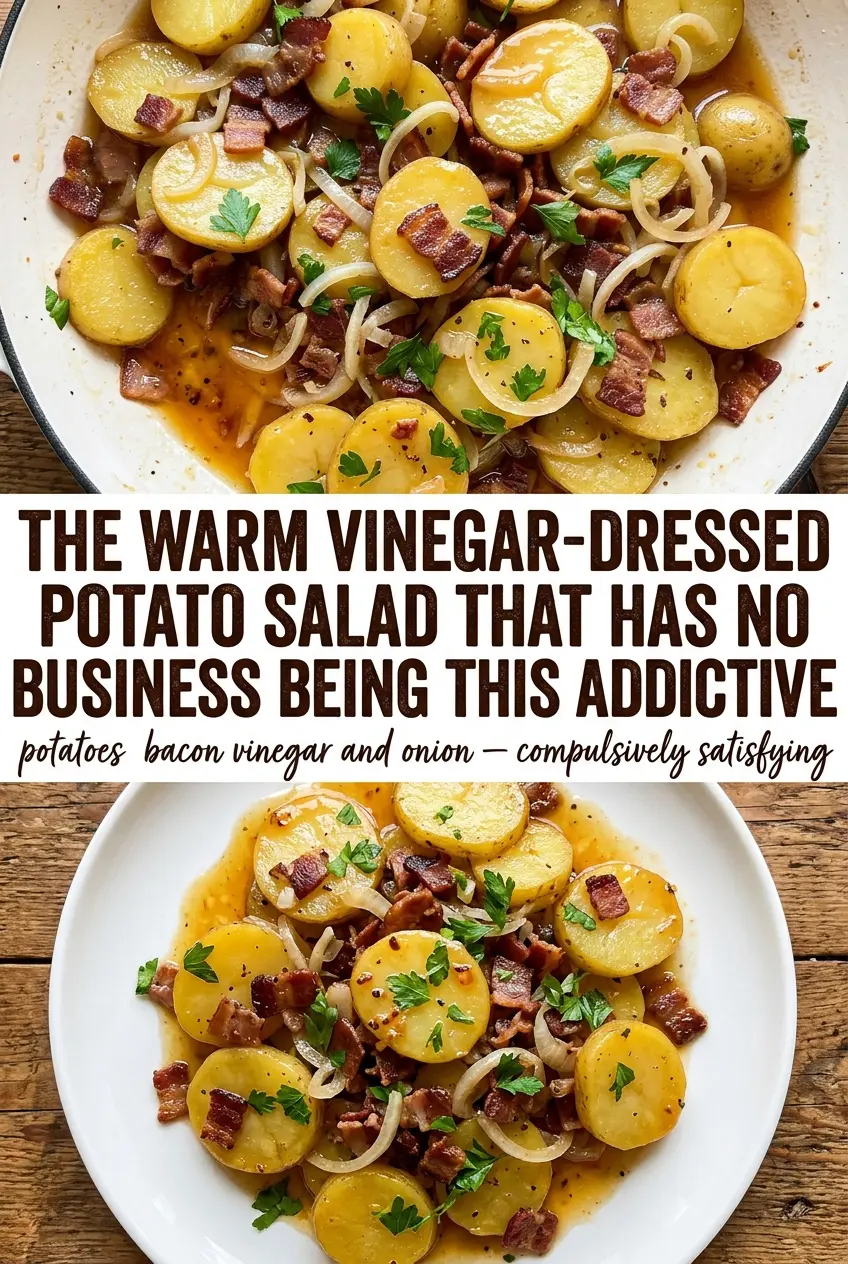
Put the warm potatoes and bacon in a large bowl, then pour the hot dressing over the top and fold everything together gently. Use a broad spoon or spatula, not a whisk or aggressive stirring motion. The potatoes should look glossy and evenly coated, with some edges softening just enough to catch the dressing.
Make It With Apple Cider Vinegar
Apple cider vinegar gives the salad a softer, slightly fruity tang. It’s a good swap if you want a less sharp finish, but the result won’t taste as classic or as clean as white vinegar.
Dairy-Free and Naturally Gluten-Free
This recipe already fits both of those needs as written, as long as your broth is gluten-free. That makes it a strong side dish for mixed menus because nobody has to be singled out at the table.
Lighter Version With Less Bacon Fat
Drain off part of the bacon fat and replace it with a little extra broth if you want a lighter salad. You’ll lose some richness, but the vinegar and mustard still keep the flavor lively.
Add Pickles or Fresh Chives
A spoonful of chopped pickles or a scatter of chives shifts the salad toward brighter, sharper flavors. Keep the amount modest so the vinegar dressing doesn’t get crowded out.
Storage and Reheating
- Refrigerator: Store covered for up to 4 days. The potatoes will tighten up a little as they chill, but the flavor deepens.
- Freezer: I don’t recommend freezing this salad. Potatoes turn grainy and waterlogged once thawed, and the dressing loses its clean texture.
- Reheating: Warm it gently in a skillet over low heat with a splash of broth or cover and microwave in short bursts. High heat can split the dressing and make the potatoes dry at the edges.
Questions I Get Asked About This Recipe
German Potato Salad
Ingredients
Equipment
Method
- Bring a pot of water to a boil and cook sliced Yukon gold potatoes until tender, about 15 minutes. You’ll know they’re ready when a knife slides in easily with minimal resistance.
- Drain the potatoes thoroughly and return them to the pot off the heat. Letting excess steam escape helps the dressing coat without turning watery.
- Cook the bacon in a cast iron skillet until crispy, then reserve the drippings. Add the diced onion to the same skillet and sauté until soft, about 5 minutes.
- Stir in chicken broth, white vinegar, sugar, Dijon mustard, salt, and black pepper, then simmer until the flavors meld, about 10 minutes. The mixture should look slightly reduced and well-seasoned.
- Crumble the crispy bacon into the drained potatoes. Toss gently so the bacon distributes evenly throughout the warm salad.
- Pour the hot bacon-vinegar dressing over the potatoes and toss gently to coat. Serve immediately while the salad is warm and glossy.
- Sprinkle chopped fresh parsley over the warm German potato salad and toss lightly again. The parsley should stay vivid green for best flavor.