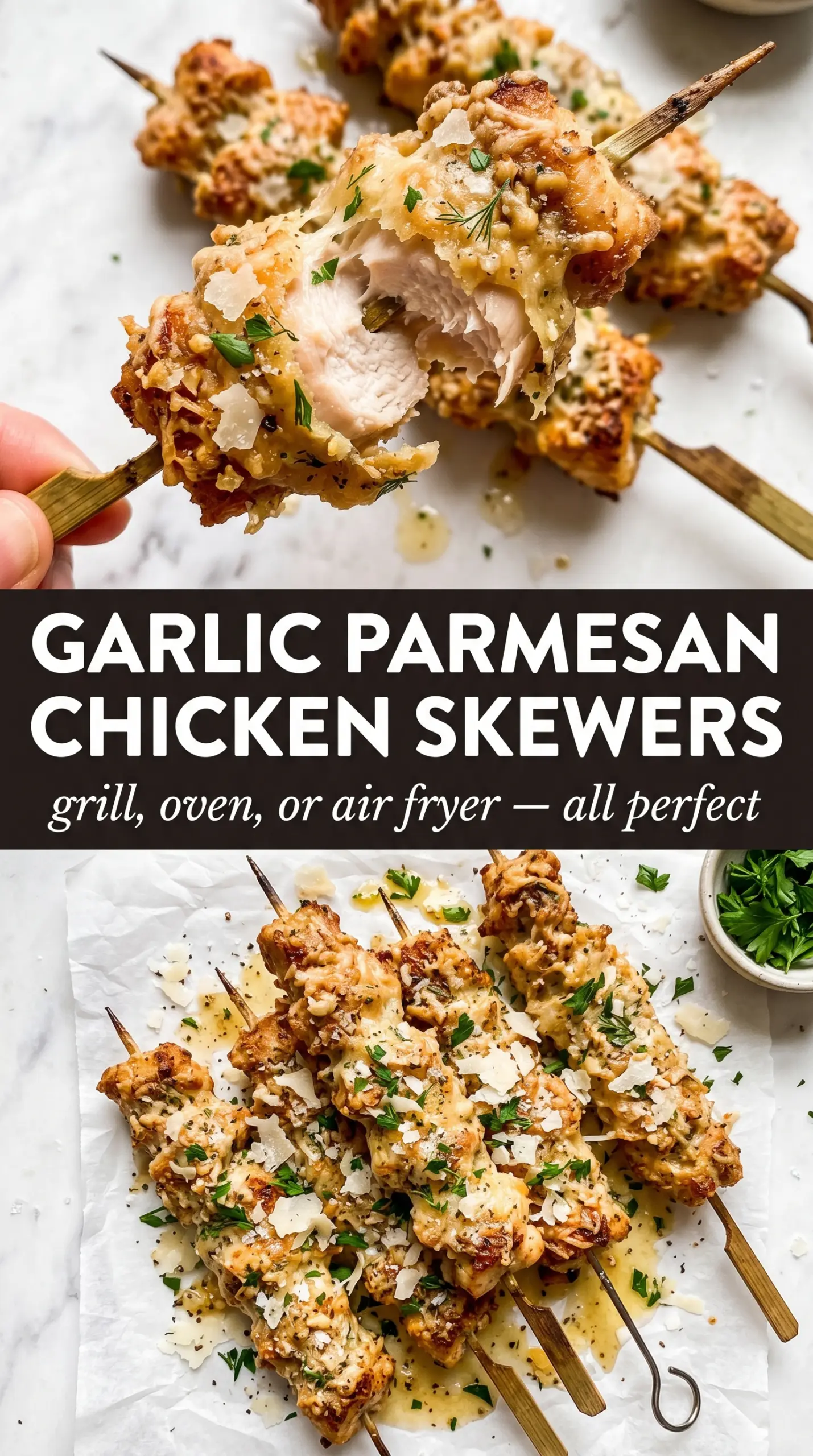
Golden-grilled chicken skewers with a garlicky Parmesan crust earn their place fast because they hit that sweet spot between weeknight easy and cookout-worthy. The edges get a little charred, the cheese melts into the marinade just enough to cling to the chicken, and the finished skewers stay juicy instead of drying out over the flames.
What makes this version work is the balance in the marinade. Olive oil carries the garlic and herbs, lemon juice sharpens everything, and a little Parmesan in the mix helps the coating set into a savory crust once it meets the heat. The chicken only needs a short marinating time, which keeps the acid from making it mushy while still giving the seasoning time to sink in.
Below, I’m walking through the small details that matter here: how to keep the garlic from burning, why the chicken size matters, and what to do if you want to swap in an oven or air fryer instead of the grill.
The chicken picked up the garlic Parmesan coating beautifully, and the skewers came off the grill juicy with those caramelized edges I was hoping for. The lemon at the end made the whole thing pop.
Save these garlic Parmesan chicken skewers for the next grill night when you want juicy chicken, caramelized edges, and an easy lemon-butter finish.
The Marinade Needs Time, But Not Too Much
The biggest mistake with chicken skewers is treating marinade time like a bonus instead of part of the recipe. With lemon juice in the mix, thirty minutes is the sweet spot: enough time for the garlic, herbs, and Parmesan to coat the chicken well, but not so long that the acid starts changing the texture in a weird, tight way. If you’ve ever grilled chicken that tasted seasoned on the outside but flat inside, this is the fix.
Cutting the chicken into even 1.5-inch cubes matters more than most people think. Smaller pieces dry out before they get those deep grill marks, and larger ones brown before the center cooks through. You want pieces that sit close together on the skewer without being squeezed so tightly that heat can’t move around them.
- Parmesan — Freshly grated Parmesan melts into the marinade better than the shelf-stable stuff and gives you those little toasted bits on the grill. It’s worth using the good block cheese here.
- Olive oil — This coats the chicken and helps the garlic and herbs stick. A standard extra-virgin olive oil is fine; there’s no need to use your nicest bottle.
- Lemon juice — It brightens the garlic and keeps the skewers from tasting heavy. Don’t add extra unless you’re shortening the marinating time, or the chicken can start to firm up too much.
- Butter — The melted butter drizzle at the end adds shine and carries the Parmesan flavor. This isn’t the place to skip the finishing fat if you want that restaurant-style finish.
What Each Ingredient Is Actually Doing in This Recipe
- Primary ingredient (the star) — Quality matters most. Choose the best you can find.
- Cooking medium (oil, butter, or broth) — This carries flavors and prevents dryness.
- Seasonings (salt, pepper, spices, herbs) — Layer flavors so nothing overpowers. Build depth gradually.
- Aromatics (garlic, onion, herbs) — Cook with fat to bloom flavors. Become the foundation.
- Supporting ingredients — Complement the main ingredient without overpowering it.
- Sauce or liquid (if applicable) — Brings flavors together. Balance richness with acid.
- Acid (lemon, vinegar, wine, or other) — Brightens and prevents flat-tasting results.
- Final finish (garnish, glaze, or sauce) — Prevents one-dimensional taste and adds visual appeal.
Getting the Char Without Burning the Garlic
Mix the Marinade Until It Looks Emulsified
Whisk the olive oil, garlic, Parmesan, lemon juice, herbs, salt, and pepper until the mixture looks a little thick and coated instead of separated and slick. That helps the seasoning cling to the chicken instead of sliding to the bottom of the bowl. If the garlic sinks right away, keep whisking for another few seconds before adding the chicken.
Thread the Skewers With a Little Space
Use soaked wooden skewers or metal skewers and thread the chicken pieces with tiny gaps between them. Those gaps help heat reach the sides of the chicken and let the edges brown instead of steam. If the pieces are packed tightly together, the centers cook, but the outside never gets that deep grilled finish.
Grill Over Medium-High Heat, Not a Roaring Fire
Oil the grates and lay the skewers on a medium-high grill, then let them sit long enough to mark before you turn them. If you chase them around too early, the chicken tears and the Parmesan coating stays behind on the grates. Watch for deep golden edges and light char, then pull them once the thickest piece hits 165°F in the center.
Finish While the Skewers Are Still Hot
Drizzle the melted butter over the skewers the moment they come off the grill, then scatter the remaining Parmesan on top. The heat from the chicken helps the cheese melt just enough to stick instead of falling off. Finish with parsley and lemon wedges so each bite gets a little fresh lift after the rich coating.
How to Adapt These Skewers for the Oven, Air Fryer, or a Dairy-Free Plate
Oven-Broiled for No-Grill Nights
Set the skewers on a foil-lined sheet pan and broil them close to the heat source, turning once halfway through. You won’t get the same open-flame smokiness, but you will get those browned Parmesan bits and a fast cook time. Watch them closely, because the difference between deeply browned and burned is small under a broiler.
Air Fryer Skewers
Cook the chicken on skewers in a single layer at high heat, flipping once partway through. The air fryer gives you a slightly less smoky flavor, but it does a good job of setting the Parmesan coating and keeping the chicken juicy. Don’t overcrowd the basket or the pieces will steam and lose their edges.
Dairy-Free Version
Skip the Parmesan in the marinade and finish with a dairy-free butter or extra olive oil plus a spoonful of nutritional yeast for a savory note. You’ll lose the classic cheesy crust, but the garlic, lemon, and herbs still make the skewers bright and satisfying. This version leans more herb-forward and less rich.
Storage and Reheating
- Refrigerator: Store leftovers in an airtight container for up to 3 days. The coating softens a little, but the chicken stays tender.
- Freezer: Freeze the cooked chicken off the skewers for up to 2 months. The texture is best if you freeze the chicken pieces in a single layer first, then move them to a bag.
- Reheating: Reheat in a 325°F oven until warmed through, or use a skillet over low heat with a splash of water. High heat dries out the chicken fast and turns the Parmesan coating bitter.
Questions I Get Asked About This Recipe

Garlic Parmesan Chicken Skewers
Ingredients
Equipment
Method
- Whisk olive oil, minced garlic, 1/4 cup Parmesan, lemon juice, dried Italian seasoning, dried basil, salt, and cracked black pepper in a bowl until evenly combined.
- Add chicken breast cubes and toss to coat thoroughly, then marinate for 30 minutes at room temperature or in the refrigerator while you prep skewers.
- Soak wooden skewers in water for 30 minutes so they won’t scorch on the grill.
- Thread the marinated chicken onto the soaked skewers, leaving a little space between pieces for even grilling.
- Preheat the grill to medium-high heat and oil the grates to prevent sticking.
- Grill skewers for 4-6 minutes per side, until deeply golden with visible char marks and the thickest piece reaches 165°F.
- Remove the skewers from the grill and drizzle melted butter over the hot chicken.
- Scatter the remaining Parmesan over the skewers so it melts and forms a lightly crisp, herb-speckled crust at the edges.
- Garnish with fresh parsley and serve with lemon wedges.