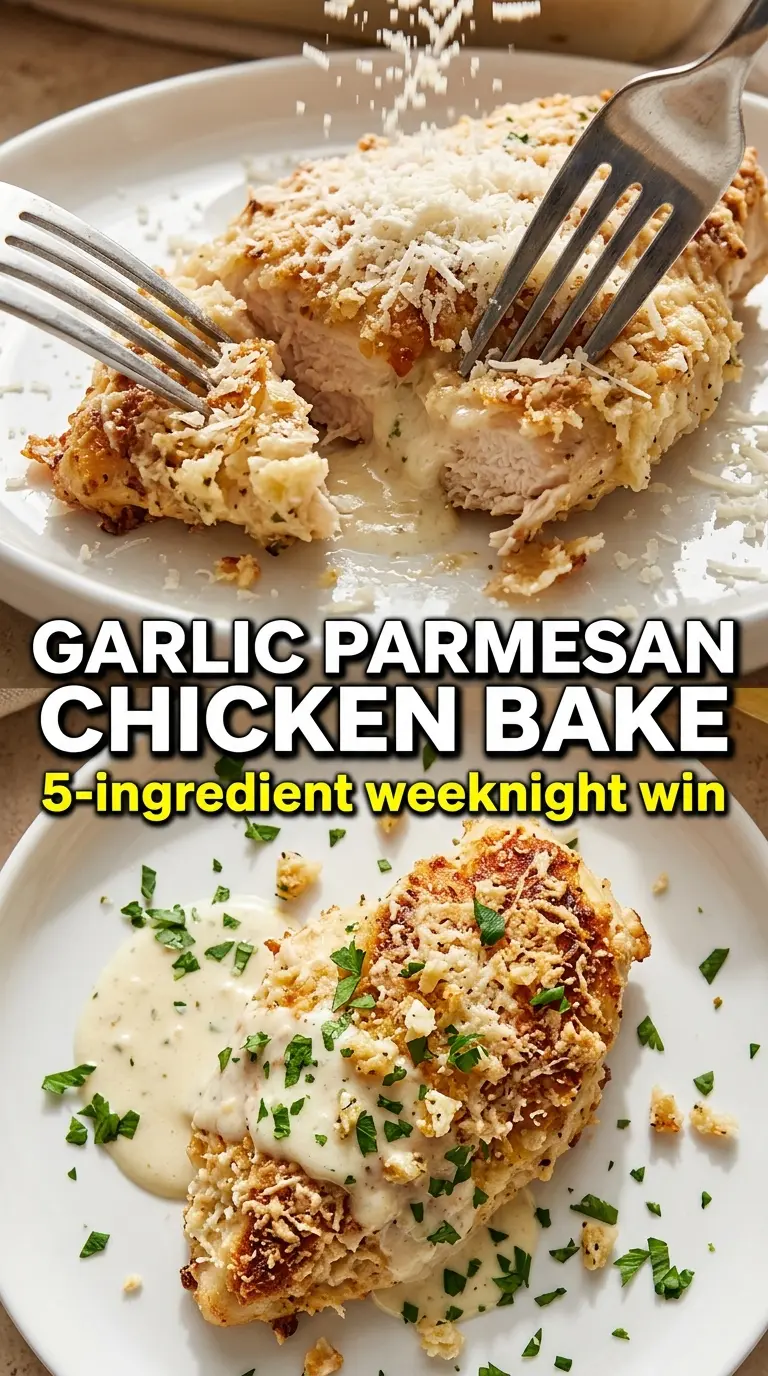
Chicken breasts come out of the oven juicy under a crackled Parmesan crust that turns deeply golden at the edges and stays savory all the way through. The topping bakes into a thin, crisp shell instead of sliding off, and the garlic butter soaks just enough into the chicken to keep every bite flavorful without turning greasy.
What makes this version work is the balance between moisture and texture. The melted butter carries the garlic across the surface, while the panko helps the cheese bake up with some lift instead of becoming a dense, sandy layer. Freshly grated Parmesan matters here because it melts and browns in a way the shelf-stable stuff never quite does.
Below, I’ve included the small details that keep the coating attached, the chicken tender, and the crust browned in the right amount of time. There’s also a storage note for leftovers and a few variations if you want to change the seasoning or skip the breadcrumbs.
The crust browned evenly and stayed on the chicken instead of falling off in the pan, and the garlic butter kept the breasts moist all the way through. Even the leftovers reheated without drying out.
Love the crispy Parmesan crust on this Garlic Parmesan Chicken Bake? Save it for the nights when you want juicy chicken, golden cheese, and almost no cleanup.
The Part Most Chicken Bakes Get Wrong: The Topping Needs Pressure
A baked chicken topping only turns into that crusty, browned lid when it’s pressed on firmly enough to cling before it hits the oven. If it sits loosely on top, the cheese melts, the crumbs wander, and the whole thing slides into the pan before it has a chance to crisp. Pressing it onto the buttered chicken gives the coating a head start and helps the Parmesan toast instead of steam.
The other thing that matters is spacing. Crowding the chicken in a dish traps moisture, which softens the crust from below. A 9×13 dish gives the pieces enough room so the heat can move around them and the top can brown instead of going pale in the center.
What Each Ingredient Is Actually Doing in This Bake
- Chicken breasts — Boneless, skinless breasts keep this fast and lean, but they do need even thickness. If one side is much thicker, lightly pound it so the chicken finishes at the same time and the crust doesn’t overbrown while you wait for the center to cook.
- Butter — This is the glue and the flavor base. It helps the garlic spread evenly and gives the topping enough fat to toast. Olive oil can work in a pinch, but the crust won’t taste as rich or brown as evenly.
- Fresh garlic — Fresh minced garlic gives the crust its sharp, savory bite. Garlic powder alone tastes flatter here, though it’s still useful as part of the chicken seasoning. Don’t swap in jarred garlic paste if it’s watery; extra moisture makes the topping looser.
- Freshly grated Parmesan — This is the ingredient that makes the crust crackled and fragrant. Pre-grated Parmesan often has anti-caking agents that keep it from melting and browning as nicely. If you need a shortcut, choose the best finely grated Parmesan you can find, but grate it yourself if you want the best crust.
- Panko breadcrumbs — Panko keeps the top light and crisp instead of heavy. Regular breadcrumbs work, but they make the coating denser. If you want this gluten-free, use a gluten-free panko-style crumb and keep the amount the same.
- Italian seasoning, parsley, and smoked paprika — These seasonings round out the cheese so the crust tastes seasoned all the way through, not just salty. The paprika won’t make it smoky in a bold way; it mainly adds color and a little warmth.
How to Build the Crust Without Losing the Chicken Juices
Season the Chicken First
Start by seasoning the chicken directly with salt, pepper, and garlic powder before anything else touches the pan. That layer does the work inside the meat, while the topping handles the outside. If you skip this step, the crust can taste seasoned but the chicken underneath tastes plain. Put the breasts in the baking dish in a single layer so they bake evenly.
Make the Garlic Butter Base
Stir the minced garlic into the melted butter and brush it generously over each breast. You want a wet, even surface, not puddles in the bottom of the dish. If the butter is too hot, the garlic can taste harsh, so let it cool just enough that it’s warm and fluid. That keeps the garlic flavor round and sweet instead of sharp.
Press on the Parmesan Mixture
Mix the Parmesan, panko, Italian seasoning, parsley, and smoked paprika together, then press it firmly onto the buttered chicken. Don’t sprinkle it from a height and hope for the best; use your hand or the back of a spoon to pack it on. The pressure helps the crust stay put and makes the top bake into one solid layer. Any loose crumbs in the pan can toast, but they won’t give you that even shell on the chicken.
Bake Until the Top Is Deep Gold
Bake at 400°F until the crust is deeply golden and the chicken reaches 165°F in the thickest part. The top should look bronzed and a little rough, with browned cheese peeking through the crumbs. If the crust darkens too quickly before the chicken is done, the breasts are probably on the thin side or your oven runs hot; tent loosely with foil for the last few minutes.
How to Adapt This Chicken Bake Without Losing the Crunch
Gluten-Free Parmesan Chicken Bake
Swap the panko for a gluten-free panko or fine gluten-free breadcrumb blend. The coating stays crisp, though it may brown a little faster, so start checking the chicken a few minutes early.
No Breadcrumbs, Just Cheese
Leave out the panko and use a little more Parmesan instead. The top will be thinner and more lacy, with a stronger cheese flavor and less crunch, but it still bakes into a nicely browned crust.
Dairy-Free Version
Use a dairy-free butter substitute and a Parmesan-style plant-based topping that melts well. The flavor will be less sharp and nutty than the original, but the garlic and seasoning still carry the dish if you choose a product that browns properly.
Make It with Chicken Cutlets
Use thin cutlets instead of full breasts if you want a faster bake. They’ll cook in less time and the crust will brown sooner, so check them early to avoid dry chicken.
Storage and Reheating
- Refrigerator: Store leftovers in an airtight container for up to 4 days. The crust softens a bit, but the flavor holds up well.
- Freezer: It freezes best after baking, though the topping will lose some crunch. Wrap portions tightly and freeze for up to 2 months.
- Reheating: Reheat in a 350°F oven or air fryer until warmed through. Microwaving will soften the crust and make the coating soggy, so use it only if texture doesn’t matter.
Questions I Get Asked About This Recipe
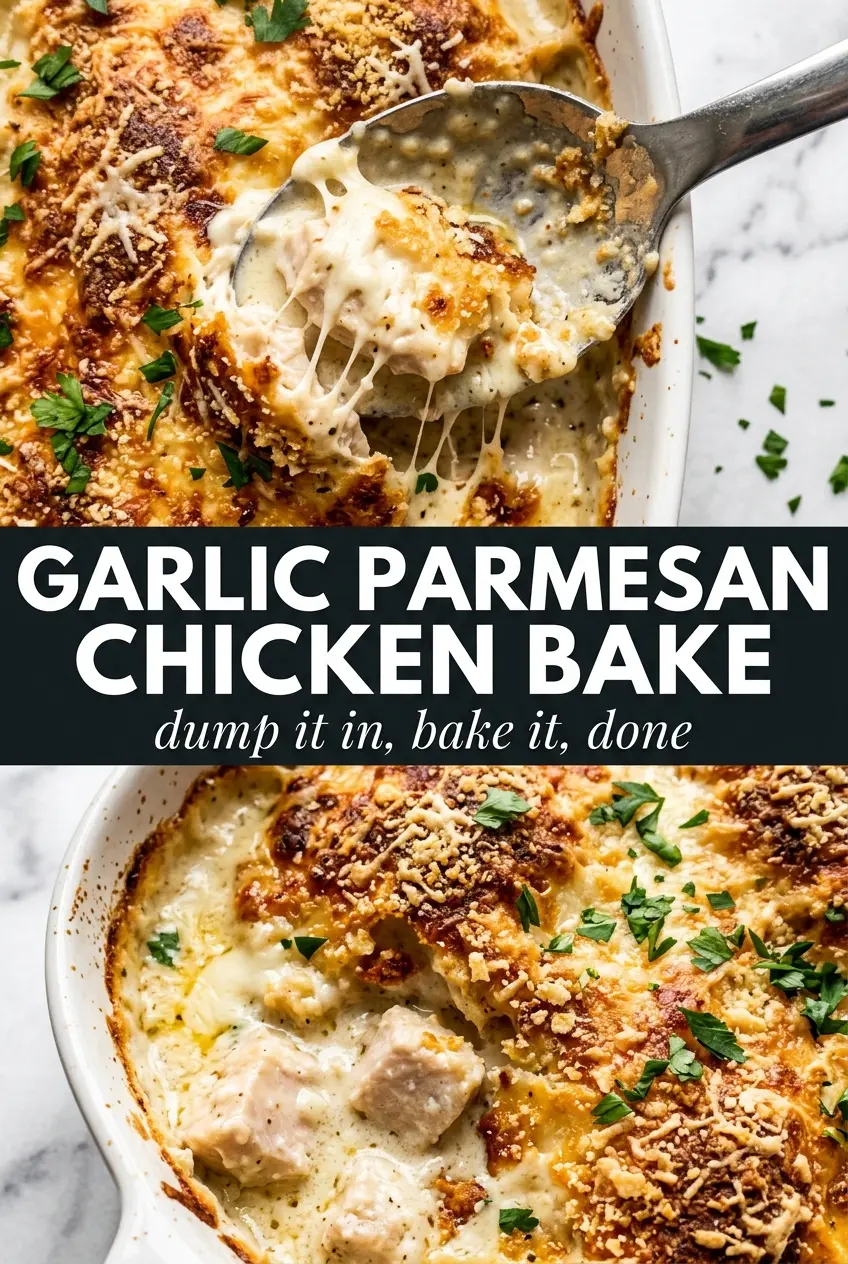
Garlic Parmesan Chicken Bake
Ingredients
Equipment
Method
- Preheat oven to 400°F and grease a 9x13 baking dish.
- Season chicken breasts with salt, pepper, and garlic powder to taste, then place them in the prepared dish.
- Mix melted butter with minced garlic, then brush generously over each chicken breast.
- Combine Parmesan, panko, Italian seasoning, dried parsley, and smoked paprika; press firmly over the buttered chicken to coat.
- Bake for 25-30 minutes at 400°F until the Parmesan crust is deeply golden and the internal temperature reaches 165°F, watching for browned, crackled spots on top.
- Garnish with fresh parsley and serve with lemon wedges.