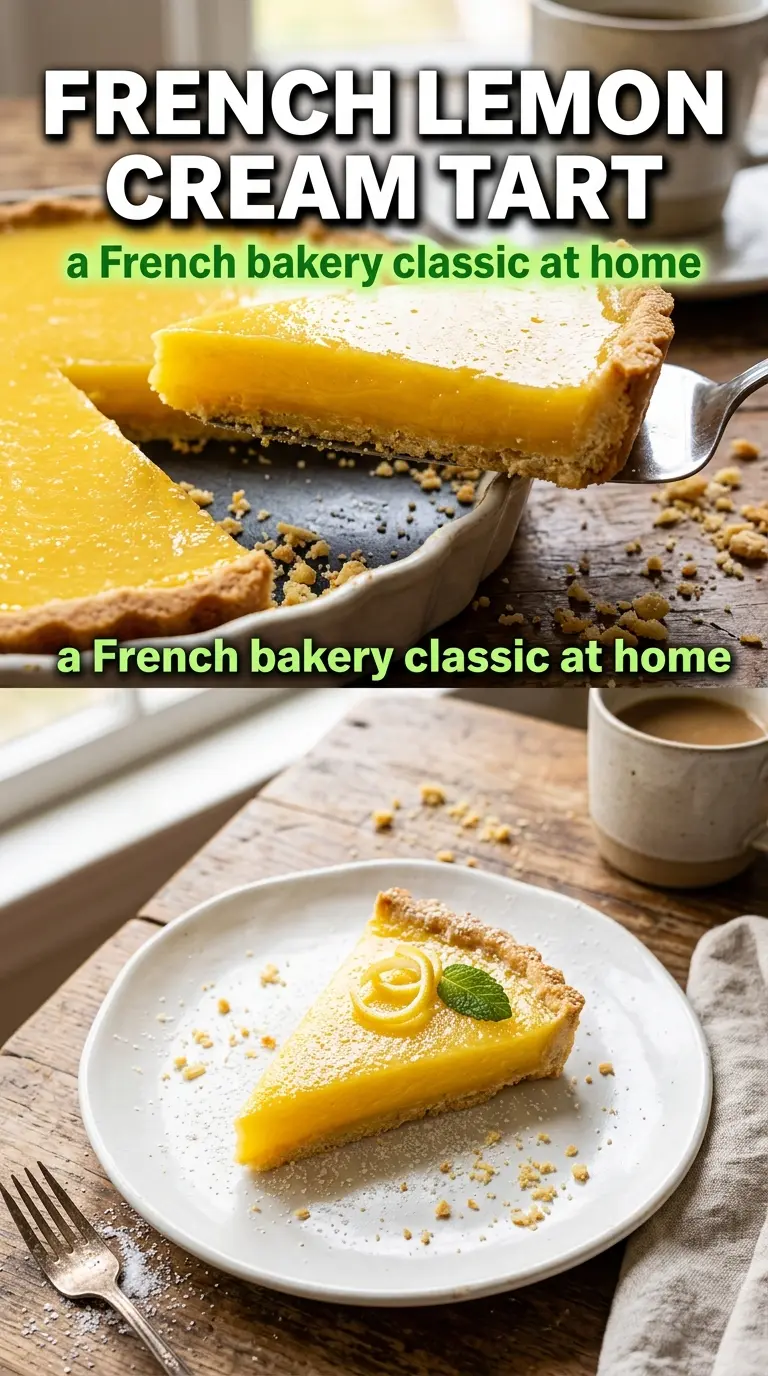
French lemon cream tart lands somewhere between a classic lemon curd tart and a pastry-shop dessert, with a filling that sets up silky and polished instead of loose or eggy. The tart shell stays tender and sandy, the lemon cream slices cleanly, and the crackling bruleed sugar on top adds the kind of finish that makes each bite taste brighter than the last.
What makes this version work is the balance between the cooked custard and the cold butter whisked in at the end. The eggs thicken the lemon mixture just enough to hold a shape, while the butter smooths out the edges and gives the filling that glossy, pale yellow look. The shell uses powdered sugar instead of granulated sugar, which keeps the pâte sucrée delicate rather than crunchy.
Below, I’ve included the little details that matter most: how to keep the cream from going grainy, why straining the filling pays off, and what to do if you don’t have a torch for the sugar topping. Those are the things that separate a decent lemon tart from one that looks straight out of a bakery window.
The filling set up smooth and sliceable, and the bruleed sugar gave it that crackly top I usually only get at a bakery. I loved that the tart shell stayed crisp even after chilling overnight.
Love that crackly bruleed top and silky lemon cream? Save this French lemon cream tart for the next time you want a bakery-style dessert that slices cleanly.
The Trick to Keeping the Lemon Cream Silky, Not Scrambled
Most lemon tart fillings go wrong because the heat jumps too high and the eggs seize before the custard has a chance to thicken evenly. This tart depends on steady, medium heat and constant stirring. You want the mixture to coat the back of a spoon, not bubble hard like a sauce you’ve walked away from.
Straining matters here. It catches any bits of cooked egg and knocks out the zest before the butter goes in, which is what gives you that smooth, glossy finish instead of a slightly rough custard. If the filling looks a little loose when you pull it off the heat, that’s normal; it firms up in the fridge.
What Each Ingredient Is Doing in the Shell and Filling
- Powdered sugar — This keeps the pâte sucrée tender and short. Granulated sugar would give you a crisper, less delicate shell, which isn’t wrong, but it changes the texture in a way that reads more cookie-like than pastry-like.
- Cold butter — Cold butter is what gives both the shell and the filling their structure and richness. In the tart dough, it creates that sandy, melt-in-your-mouth crumb; in the cream, it turns the lemon custard glossy and smooth.
- Fresh lemon juice and zest — Juice brings the sharpness, zest brings the perfume. Bottled juice can work in a pinch, but it tastes flatter and loses the bright top note that makes this tart taste alive.
- Egg yolk in the shell — The yolk enriches the dough and helps it hold together without getting tough. It also gives the crust a more golden color once baked.
- Whole eggs in the filling — The eggs are the thickener here. There isn’t a clean substitute if you want the same sliceable lemon cream, because this dessert depends on an egg-based custard set.
Building the Tart So the Shell Stays Crisp Under the Cream
Making the Dough
Pulse the flour, powdered sugar, salt, and butter until the mixture looks like damp sand with a few larger bits left behind. Those bits matter; they keep the shell from turning dense. Add the egg yolk and cold water just until the dough comes together. If you work it until perfectly smooth, the crust bakes up tougher than you want.
Blind Baking for a Clean Edge
Press the dough into the tart pan and chill it before baking. That rest keeps the sides from slumping. Bake until the shell is pale gold at the edges and matte across the bottom. If the bottom still looks glossy, it isn’t ready for filling, and the cream can soften it later.
Cooking the Lemon Cream
Whisk the eggs, sugar, lemon juice, and zest in the saucepan over medium heat, stirring without stopping. The first sign it’s ready is thickness around the spoon and slow ribbons when you lift the whisk. Pull it off the heat before it starts to bubble aggressively. High heat is what causes curdled bits, not patience.
Finishing and Chilling
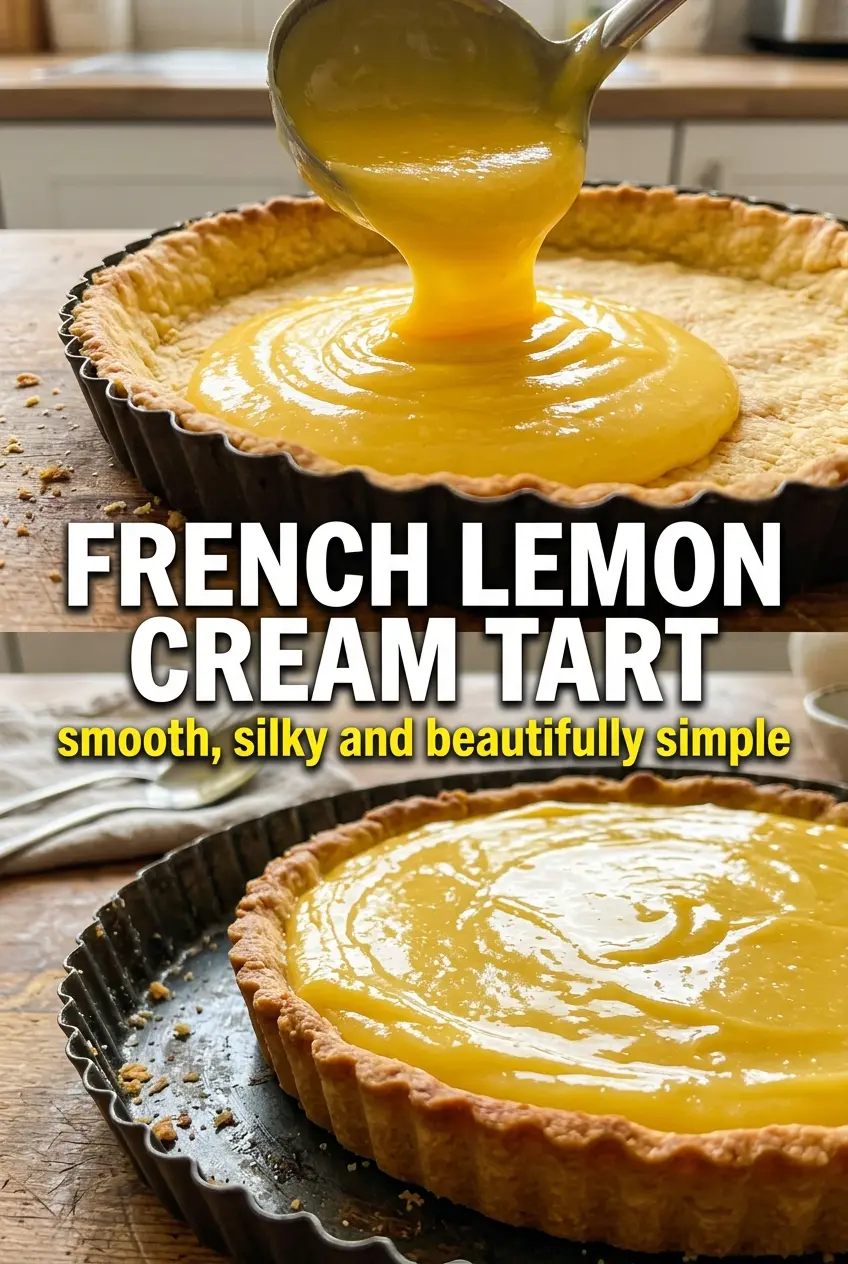
Strain the cream, whisk in the butter cube by cube, then pour it into the cooled shell. Smooth the top and chill until it feels set when you nudge the pan. If you slice too soon, the filling will ooze. Give it the full rest so the knife comes out with a clean edge.
Three Ways to Make This Tart Fit Your Table
Make it dairy-free
Use a good plant-based butter for both the shell and the filling. The tart will still set and taste bright, but the butter flavor in the custard will be a little less round, so keep the lemon zest generous.
Gluten-free crust swap
Use a 1:1 gluten-free baking flour blend in place of the all-purpose flour. The shell will be a touch more fragile when you press it into the pan, so chill it well before blind baking and let it cool completely before filling.
Skip the torch
If you don’t have a kitchen torch, serve the tart plain or dust it lightly with powdered sugar. The brulee adds a crackly top and a hint of caramel, but the filling is strong enough to stand on its own.
Make it a day ahead
Bake and chill the tart fully the day before serving, then add the sugar and torch it right before it goes to the table. That keeps the top crisp, which is the part that fades first if it sits too long.
Storage and Reheating
- Refrigerator: Keep covered for up to 3 days. The filling stays smooth, but the bruleed top softens after the first day.
- Freezer: Not a great freezer tart. The custard can take on a grainy texture once thawed, so I don’t recommend freezing it.
- Reheating: Don’t reheat the finished tart. Serve it chilled or at cool room temperature, and torch the sugar only right before serving so you keep that crackly top.
Answers to the Questions Worth Asking
French Lemon Cream Tart
Ingredients
Equipment
Method
- Pulse all-purpose flour, powdered sugar, and salt, then add cold butter cubes and pulse until crumbly.
- Add the egg yolk and cold water and pulse just until the dough comes together.
- Press the dough into a 9-inch tart pan, then chill for 30 minutes.
- Blind bake at 375°F for 18-20 minutes until golden, then cool.
- Whisk large eggs, granulated sugar, fresh lemon juice, and lemon zest in a saucepan over medium heat.
- Cook, stirring constantly, until thick enough to coat the back of a spoon, about 8-10 minutes.
- Remove from the heat and strain through a fine sieve.
- Whisk in cold butter cubes one at a time until smooth and glossy.
- Pour into the cooled tart shell and smooth the top.
- Refrigerate for 3 hours until set.
- Right before serving, sprinkle 2 tablespoons granulated sugar over the surface.
- Brûlée with a kitchen torch until amber and crackled.
- Finish with lemon zest curls for garnish.