Pasta salad gets a lot better when it eats like an actual antipasto platter. This version is loaded with salami, pepperoni, provolone, mozzarella, olives, artichokes, and peppers, so every forkful has something briny, creamy, salty, and fresh in it. The dressing doesn’t just coat the pasta; it settles into the folds of the rotini and pulls the whole bowl together after a good chill.
The key is balance. Rinsed pasta keeps the salad from turning gummy, and the mix of cured meat, sharp cheese, and marinated vegetables gives you big flavor without needing a complicated dressing. I like using both cubed provolone and small mozzarella balls because they give you two different textures — one firmer and one softer — which makes the salad feel fuller and more interesting.
Below, I’ve included the little details that matter most, from the pasta shape that holds the dressing best to what to add if you’re making it ahead for a crowd. If antipasto is your favorite part of the spread, this bowl gives you all of it in one dish.
The pasta stayed perfectly coated after chilling, and the mix of salami, pepperoni, and pepperoncini gave it that true deli-style bite. I added a splash more dressing before serving and it was gone in minutes.
Save this antipasto pasta salad for potlucks, cookouts, and make-ahead lunches when you want a deli-style side that tastes even better after chilling.
Why This Antipasto Pasta Salad Stays Bold After Chilling
The biggest mistake with pasta salad is treating the dressing like an afterthought. Pasta absorbs a lot as it cools, and a dry bowl by the time it hits the table usually means the noodles were underdressed or never given time to soak up flavor. This recipe fixes that by using a sturdy shape, plenty of mix-ins with their own seasoning, and a rest in the refrigerator so everything comes together instead of sitting on the surface.
Rotini matters here because the spirals catch dressing in every groove. The marinated artichokes, pepperoncini, olives, and roasted red peppers bring built-in acidity and salt, which keeps the salad from tasting flat even after a few hours in the fridge. If your pasta salad usually tastes best right after tossing and then fades fast, this one holds up because the ingredients are doing more than just filling the bowl.
- Cold-rinsed pasta — Stops the cooking immediately and keeps the salad from clumping. Hot pasta will melt the cheese and turn the dressing greasy before it has a chance to cling properly.
- Marinated vegetables — The oil and vinegar on the artichokes and peppers carry flavor into the whole salad. If you use plain vegetables instead, the salad needs more dressing and more salt.
- Two cheeses — Provolone gives you a firmer bite, while mozzarella adds softness. That contrast makes the salad feel like antipasto instead of just pasta with add-ins.
The Ingredients That Build the Antipasto Flavor
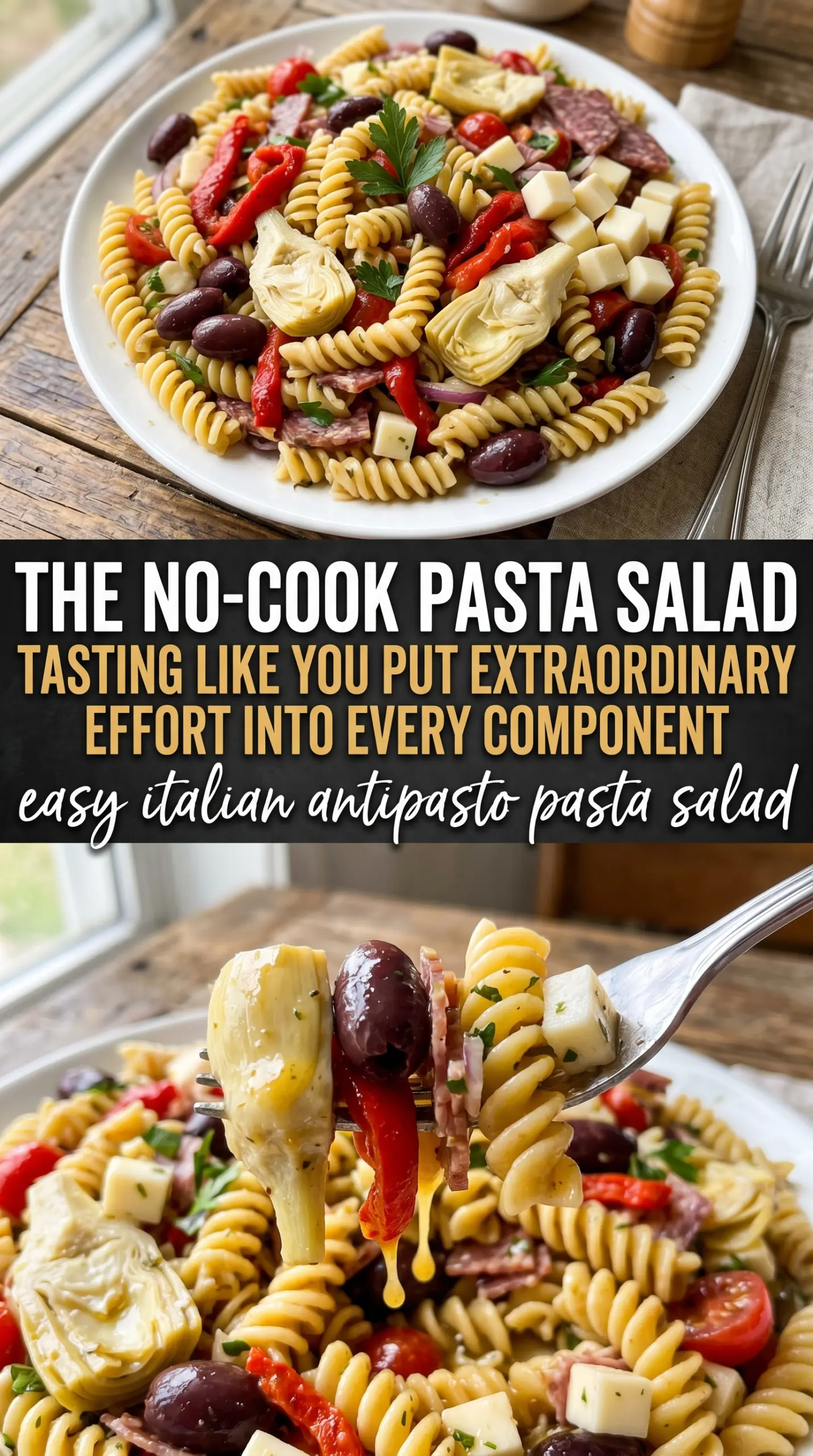
The meat and cheese do the heavy lifting, so this is one of those salads where quality matters. A good salami and pepperoni will give you deeper seasoning than a bland deli pack, but you don’t need anything fancy. What matters more is cutting everything into similar bite-size pieces so one forkful doesn’t end up all pasta and another all cheese.
Italian dressing can be store-bought here without apology. The marinated vegetables already bring extra oil, vinegar, and seasoning, so a solid bottled dressing works well and keeps the recipe fast. If your dressing is thick, whisk it before adding it to the bowl so it distributes evenly instead of pooling at the bottom.
- Salami and pepperoni — These bring the cured, savory backbone that makes the salad taste like antipasto. Slice or cube them small enough to get into the pasta, not just sit on top.
- Provolone and mozzarella — Provolone holds its shape for a clean bite, and fresh mozzarella gives pockets of creaminess. If you swap both for only one cheese, the texture gets less interesting.
- Peperoncini and olives — These are the brightness and bite. If you’re worried about salt, rinse the olives lightly, but keep the pepperoncini brine in the salad because that tang is part of the point.
- Italian dressing — A good bottled version saves time and does the job. Use a little extra before serving if the pasta has soaked up more than you expected.
How to Layer the Salad So It Tastes Better After Two Hours
Cooking the Pasta Just Past Tender
Boil the rotini until it’s just tender, not mushy. Pasta salad gets another chance to soften as it chills, so pulling it at the right moment matters more here than it would in a hot pasta dish. Drain it well, then rinse with cold water until it’s cool to the touch. If you skip the rinse, the residual heat keeps cooking the pasta and can make the dressing disappear into a sticky coating.
Building the Bowl in the Right Order
Start with the cooled pasta, then fold in the meats, cheese, vegetables, olives, and pepperoncini. Tossing the dressing in after the mix-ins keeps the cheese from breaking apart and lets the smaller ingredients distribute evenly. The bowl should look heavily loaded before the dressing goes in; that’s what gives you a real antipasto feel instead of a plain pasta salad with a few toppings.
Letting the Dressing Settle In
Once everything is coated, cover the bowl and chill it for at least two hours. That rest gives the pasta time to absorb seasoning and lets the flavors from the olives, peppers, and dressing blend together. Before serving, toss again and check the texture. If it looks a little dry, add another splash of dressing and stir until the noodles glisten again.
Make It Vegetarian Without Losing the Antipasto Feel
Skip the salami and pepperoni and add extra artichokes, roasted red peppers, olives, and a handful of diced provolone. You’ll lose the smoky cured-meat note, but the salad still reads as antipasto because the briny vegetables and cheese carry the same bold, snacky character.
Gluten-Free Pasta Salad
Use a sturdy gluten-free rotini that holds its shape after chilling. Gluten-free pasta can get soft fast, so cook it just to al dente and rinse it well. If the brand you buy tends to break apart, let the salad chill a little longer before tossing again so the noodles firm up.
Lighter Dressing Finish
If you want a less heavy bowl, start with three-quarters of the dressing and add the rest right before serving. The salad will taste brighter and less oily, though it won’t have quite the same rich coating on day one. This is the better route if you know the salad will sit out for a while on a buffet.
Storage and Reheating
- Refrigerator: Keeps for 3 to 4 days in a sealed container. The pasta will absorb more dressing as it sits, so expect it to taste a little less glossy by day two.
- Freezer: I don’t recommend freezing this salad. The cheese changes texture, the tomatoes and mozzarella turn watery, and the pasta gets soft after thawing.
- Reheating: Don’t reheat it. Serve it cold or let it sit at room temperature for 15 to 20 minutes before serving. If it seems dry after chilling, stir in a splash of dressing instead of adding heat.
Questions I Get Asked About This Recipe
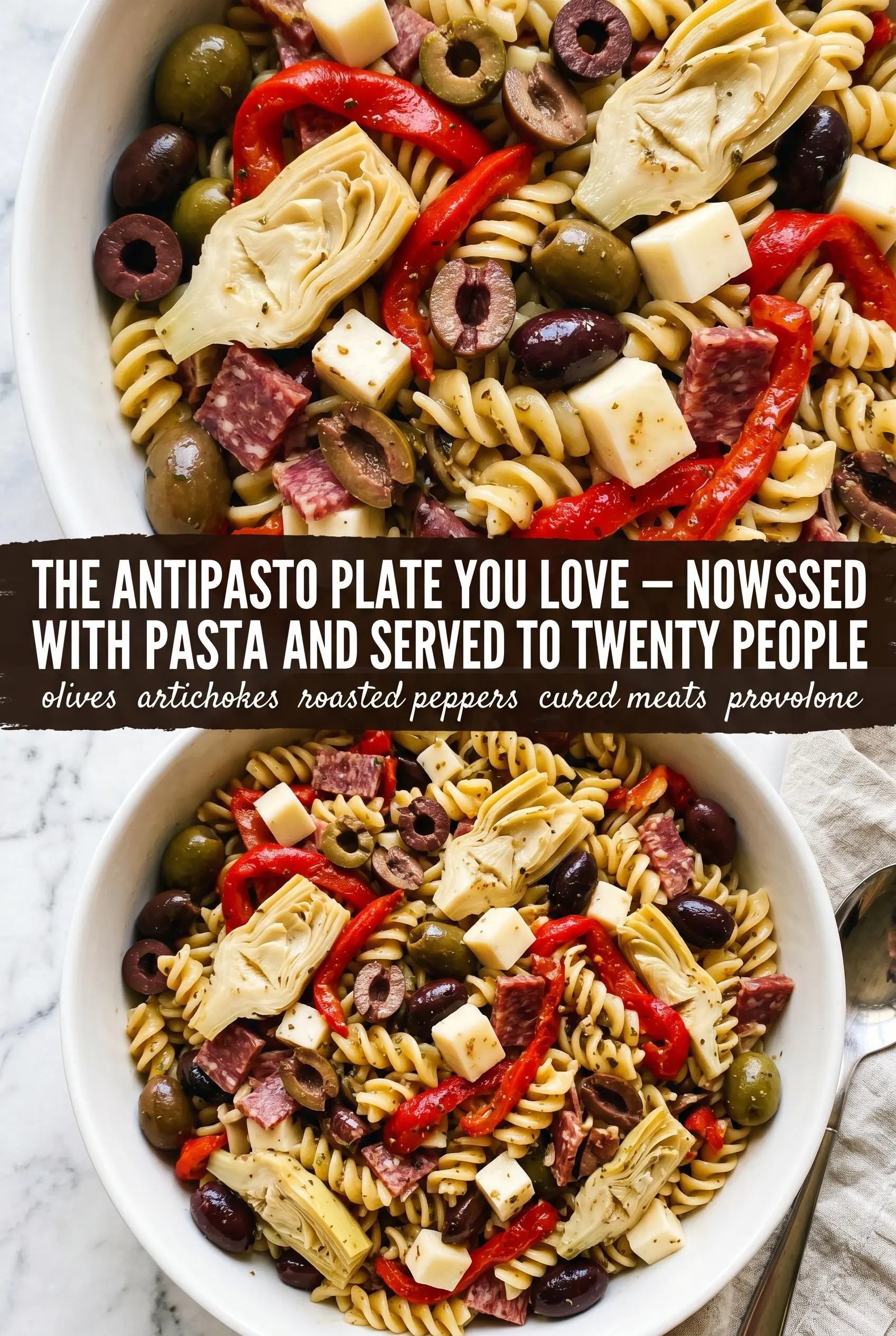
Easy Italian Antipasto Pasta Salad
Ingredients
Method
- Bring a pot of water to a boil and cook the rotini pasta according to package directions until al dente; drain and immediately rinse with cold water to stop the cooking.
- In a large bowl, combine the pasta with the salami, pepperoni, provolone, mozzarella balls, cherry tomatoes, artichoke hearts, roasted red peppers, Kalamata olives, and pepperoncini.
- Pour in the Italian dressing and sprinkle over the Parmesan and Italian seasoning, then toss until everything is evenly coated and glossy.
- Cover and refrigerate for at least 2 hours so the flavors meld and the salad tastes cohesive.
- Just before serving, toss again and add more dressing if needed to loosen the mix and refresh the coating.