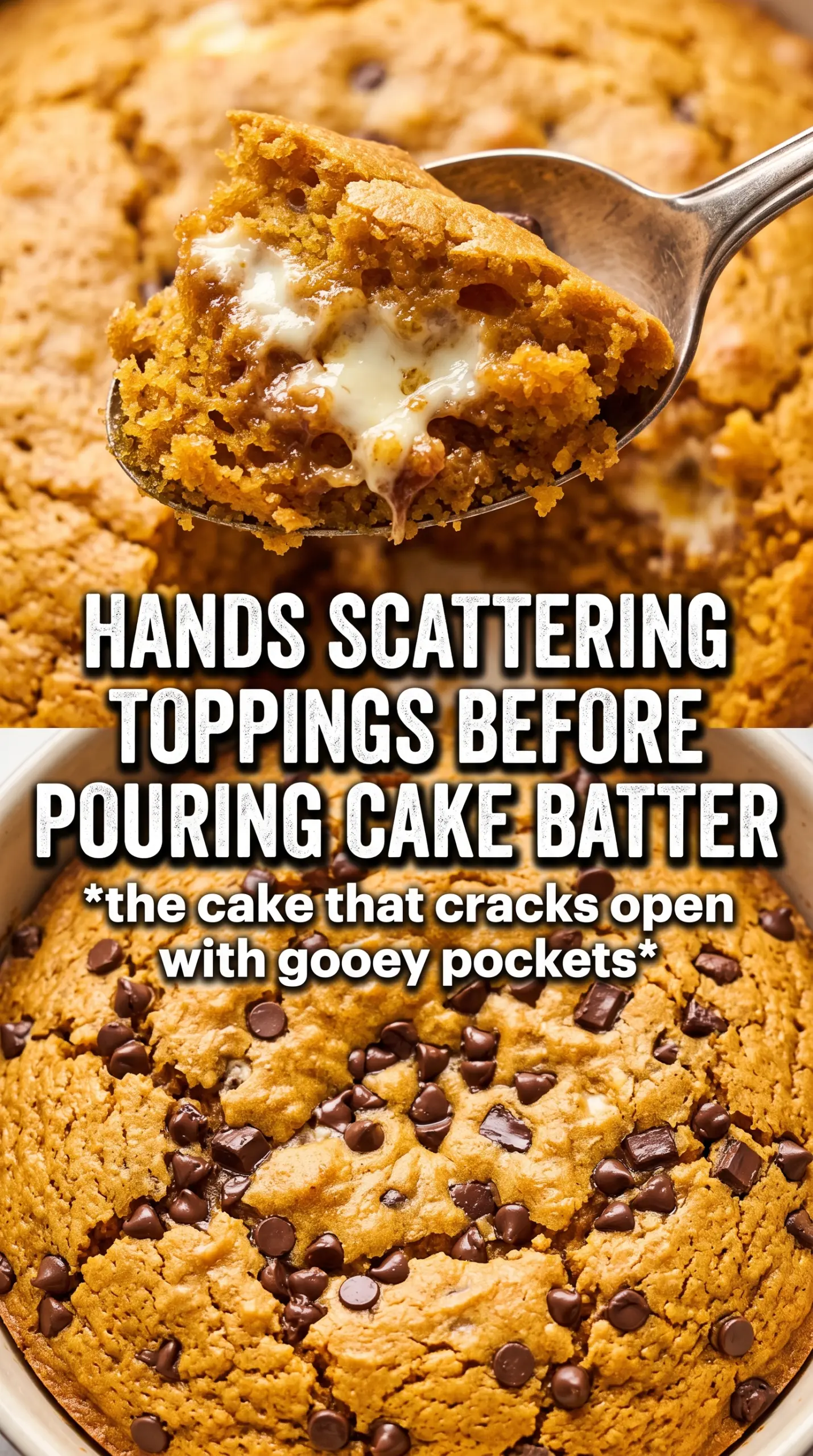
Earthquake Pumpkin Cake bakes up with a crackled top, creamy pockets of cheesecake, and ribbons of caramel that settle into every split and swirl. The finished cake looks messy in the best way. That broken surface is the whole point, because it means the cream cheese layer sank through the pumpkin cake batter and left those rich, marbled pockets behind.
This version works because the cake mix base stays sturdy enough to hold the cream cheese mixture without disappearing into it. Pumpkin puree adds moisture and a soft autumn-spiced flavor, while the boxed mix keeps the batter dependable and quick. The cream cheese layer is kept thick and spooned on top in blobs instead of stirred through, which lets it sink and create that earthquake effect as the cake bakes.
Below, I’ll show you how to keep the cream cheese layer smooth, why the cake looks cracked when it comes out of the oven, and the one cooling step that keeps the slices neat instead of gooey.
The cream cheese stayed in those perfect pockets instead of disappearing, and the caramel on top gave every bite that gooey finish. I chilled it overnight and the slices came out clean the next day.
Save this Earthquake Pumpkin Cake for the crackly pumpkin top, cream cheese pockets, and caramel swirls that bake into every slice.
The Crackled Top Is Supposed to Happen
The biggest mistake with earthquake cake is thinking the cracked surface means something went wrong. It doesn’t. The cream cheese layer melts, sinks, and pushes through the pumpkin batter as the cake bakes, and those breaks on top are what create the signature look. If the surface stays perfectly smooth, the batter was probably spread too thickly or the cream cheese mixture was too loose to move.
Use a 9×13 pan and spread the pumpkin batter in an even layer before adding the cream cheese. Thick batter gives the topping something to settle into, and that helps the swirls stay distinct instead of blending into one heavy layer. Pull the cake when the center is set but still a little soft; overbaking dries out the edges before the middle has a chance to finish.
What Each Layer Is Doing in This Cake
- Yellow cake mix — This gives you the structure and lift without having to measure flour, leavening, or sugar separately. A plain yellow mix works best because it lets the pumpkin spice and cream cheese stand out.
- Pumpkin puree — This adds moisture and that deep pumpkin color, but it also softens the crumb, so don’t swap in pumpkin pie filling. Pie filling brings extra sugar and spices that throw off the balance.
- Cream cheese — Full-fat cream cheese gives you the thick, tangy layer that sinks into ribbons instead of disappearing. It needs to be softened all the way so it beats smooth; cold cream cheese leaves little lumps that don’t melt evenly.
- Caramel sauce — The caramel adds a sticky, buttery finish that settles into the cracks. Use a pourable sauce, not thick caramel candy, or it won’t drizzle and bake into the top the same way.
- Pumpkin pie spice — This is the easiest way to get warm spice across the whole cake without building a custom blend. If yours is old and dull, the cake will taste flat, so check the jar before you start.
Building the Swirl Without Losing the Layers
Mix the Pumpkin Batter First
Beat the cake mix, pumpkin puree, eggs, oil, water, and pumpkin pie spice until the batter looks smooth and thick. It should spread easily but still hold its shape in the pan. If it looks thin, the cream cheese layer can sink too far and disappear into the base. Spread it into a greased 9×13 pan all the way to the corners so the cake bakes evenly.
Whip the Cream Cheese Until It Sits on Top
Beat the softened cream cheese, eggs, powdered sugar, and vanilla until the mixture is completely smooth and glossy. Spoon it over the pumpkin batter in large dollops instead of pouring it all in one place. That thicker layer is what creates the earthquake effect; if you spread it flat or stir it in, you’ll lose the cracks and swirls.
Finish With the Caramel and Bake Through
Drizzle the caramel over the cream cheese blobs before the pan goes into the oven. As the cake bakes, the topping will sink and split, which is exactly what you want to see. Bake until the center is set and no longer jiggles when you gently nudge the pan. Let it cool completely before slicing, or the cream cheese layer will smear instead of holding those clean pockets.
Make It Nutty With Chopped Pecans
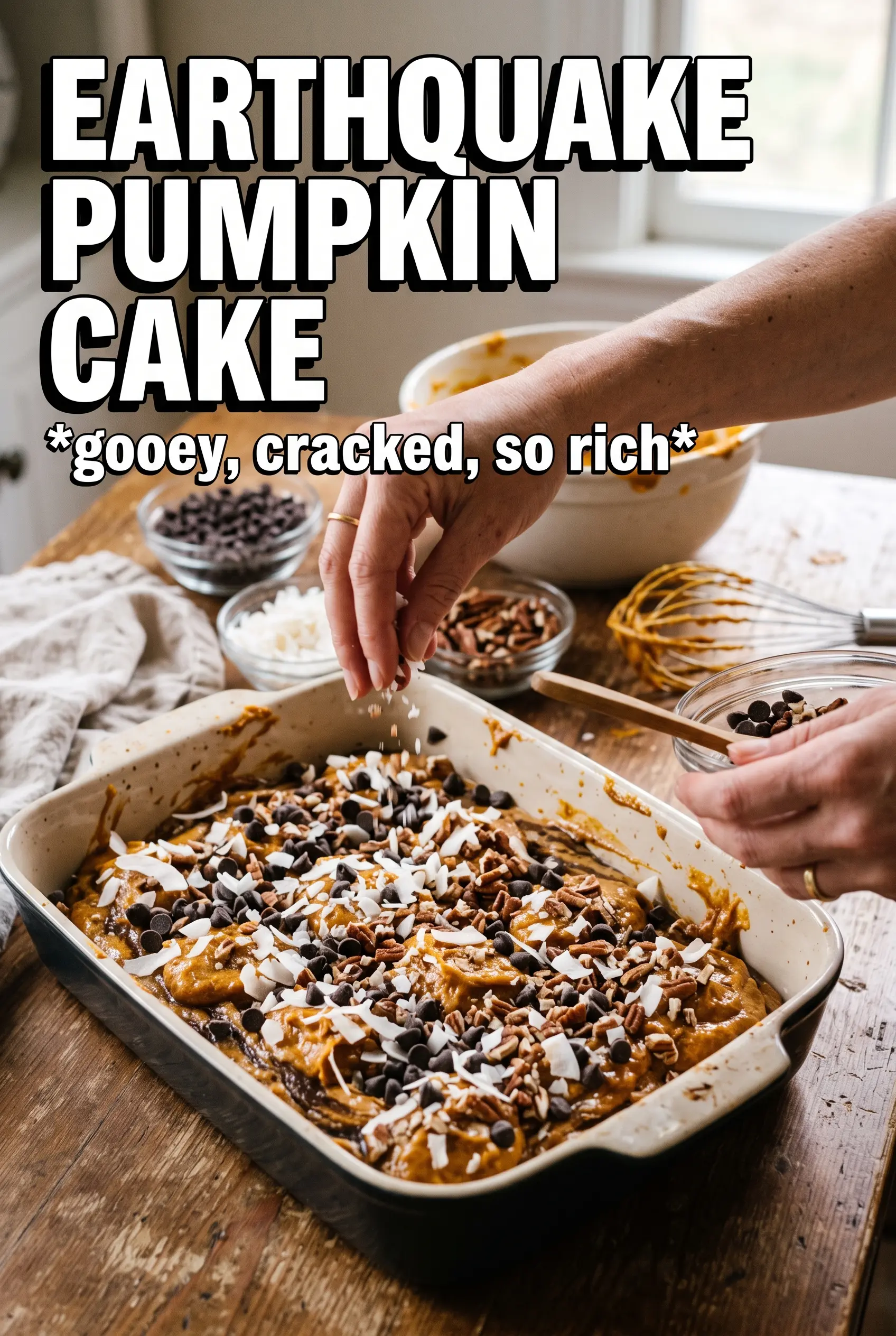
Sprinkle chopped pecans over the caramel before baking if you want a little crunch on top. They toast as the cake bakes and add contrast to the soft filling, but they also make slicing a little messier.
Gluten-Free With a 1:1 Cake Mix
Use a gluten-free yellow cake mix in the same amount and keep everything else the same. The texture will be a touch more delicate, so let it cool fully before cutting, or the slices can break apart.
Dairy-Free Version
Use dairy-free cream cheese and a dairy-free caramel sauce. The cake will still bake into the same crackled pattern, but the topping may set a little softer, so chill the finished cake before serving if you want cleaner squares.
Storage and Reheating
- Refrigerator: Store covered for up to 5 days. The cream cheese layer sets up more firmly after chilling, which makes the slices cleaner.
- Freezer: Freeze individual slices wrapped tightly for up to 2 months. The texture holds up well, though the caramel loses a little shine after thawing.
- Reheating: Warm a slice in the microwave for 10 to 15 seconds if you want it slightly soft. Don’t overheat it or the cream cheese layer can turn greasy and the cake dries out fast.
Answers to the Questions Worth Asking
Earthquake Pumpkin Cake
Ingredients
Equipment
Method
- Preheat oven to 350F, and grease a 9x13 pan with nonstick spray or grease.
- Beat yellow cake mix, pumpkin puree, eggs, vegetable oil, water, and pumpkin pie spice until smooth, then spread batter evenly in the prepared pan.
- Beat cream cheese, eggs, powdered sugar, and vanilla until smooth.
- Drop large spoonfuls of the cream cheese mixture over the cake batter without mixing in, leaving visible blobs on top.
- Drizzle caramel sauce over the cream cheese blobs.
- Bake at 350F for 45-50 minutes, until the cake is cracked and the cream cheese has sunk to form the earthquake swirl pattern.
- Cool completely before cutting so the cracked slices hold their shape.