Deviled egg potato salad lands right in the sweet spot between two classics: the comfort of a creamy potato salad and the punchy, savory bite of deviled eggs. The result is rich without feeling heavy, with tender potatoes, chopped eggs, and a dressing that tastes familiar in the best way but still stands out on the table. It’s the kind of side dish that gets scraped from the bowl before the main course is finished.
What makes this version work is the balance. Yellow mustard brings that old-school deviled egg tang, Dijon adds a little depth, and a splash of vinegar keeps the dressing from going flat. Sweet pickle relish gives it the soft sweetness you expect from a good deviled egg filling, while the potatoes hold everything together without turning gluey. Chilling matters here, too — the salad needs time for the dressing to settle into the potatoes and for the flavor to round out.
Below, I’ll walk through the one place people usually go wrong with potato salad, how to keep the eggs from disappearing into the dressing, and a few simple ways to adapt it for different tables.
The dressing had that classic deviled egg tang, and the potatoes held their shape even after chilling overnight. I added a little extra paprika on top and it tasted like the best parts of two picnic salads in one bowl.
Save this deviled egg potato salad for picnics, potlucks, and the moments when creamy potato salad needs a little extra mustard and paprika.
The Trick to Keeping It Creamy Without Turning It Heavy
The biggest mistake in a potato salad like this is drowning the potatoes in dressing while they’re still warm and fragile. They’ll soak up too much, get soft around the edges, and lose that clean, distinct bite that makes potato salad worth eating. Let the potatoes cool until they’re just barely warm or fully cool before folding in the dressing. That gives you a salad that tastes seasoned all the way through without collapsing into mash.
The second thing that matters is texture contrast. The eggs should stay chopped, not minced into paste, so you get little pockets of rich yolk and white in every scoop. Celery and green onion keep the bowl from tasting one-note. If your salad ever comes out bland, it usually needs more salt than you think and a little more vinegar than you were expecting.
What the Mustards, Relish, and Eggs Are Doing Here

- Yellow mustard — This is the base note that makes the salad taste like deviled eggs instead of just potato salad. It brings sharpness and that familiar color, and there isn’t a true substitute that gives the same classic flavor. If you only have Dijon, use it, but the salad will taste more grown-up and less like the deviled-egg version.
- Dijon mustard — Dijon adds a little backbone and depth so the dressing doesn’t taste flat. You don’t need a fancy brand, but choose one with a clean, punchy mustard flavor. If you skip it, the salad still works, but the dressing loses some complexity.
- Sweet pickle relish — This softens the tang and gives the dressing that deviled egg filling vibe. Drain off any excess liquid if your relish is especially wet, or the dressing can loosen too much. Finely chopped pickles can work in a pinch, but you’ll lose some of the sweet edge.
- Hard-boiled eggs — Chop them instead of smashing them so they stay visible in the bowl. The whites add body and the yolks help thicken the dressing naturally as you fold everything together. Overmixing here is what turns a good potato salad into a pale, muddy one.
- Potatoes — A waxy or all-purpose potato holds its shape best, which is what you want. If all you have are russets, boil them gently and handle them carefully, because they break down faster. The cubes should be tender at the center but not falling apart when drained.
Building the Salad So It Holds Together After Chilling
Cooking the Potatoes Just to Tender
Boil the potatoes until a knife slips in with little resistance, then drain them right away. If they cook past that point, they start to shed their edges and the finished salad turns mushy after chilling. Give them time to cool before mixing, because hot potatoes can break the dressing and make the mayonnaise taste greasy. You want tender cubes that still look like potatoes when they hit the bowl.
Mixing the Dressing Until It Tastes Sharp
Stir the mayonnaise, mustards, relish, vinegar, sugar, paprika, salt, and pepper together before adding anything else. This is where the salad gets its personality, and the dressing should taste a little bold on its own because the potatoes will mellow it out. If it tastes flat in the bowl, it’ll taste flatter after chilling. The vinegar should be noticeable without making the dressing sour.
Folding Instead of Stirring Hard
Add the dressing to the potato mixture and fold gently with a spatula. Hard stirring breaks the potatoes and smears the eggs, which is how you end up with a dense salad instead of a chunky one. Stop as soon as everything is coated. A few streaks disappear after chilling, and that’s better than overworking the bowl now.
Letting the Flavor Set in the Fridge
Refrigerate the salad for at least 2 hours before serving, and longer if you can. The potatoes absorb the seasoning as they chill, and the texture tightens up in the best way. If you serve it right away, it’ll taste sharper and looser than it should. A final sprinkle of paprika right before serving gives it that deviled egg finish.
Make It More Tangy
Add another teaspoon or two of vinegar and a little more mustard if you want the salad to lean harder into deviled egg flavor. This makes it sharper and brighter, which works especially well with richer meals. Go slowly, because too much acid can overpower the potatoes.
Dairy-Free Without Losing the Creamy Texture
This recipe is already naturally dairy-free as written, so the main thing is choosing a mayonnaise you like the taste of. A sturdier mayo gives the dressing better body and holds up well after chilling. If you use a lighter mayo, expect a looser salad.
Swap in Dill Pickle Relish for a Brighter Bite
Dill relish gives the salad a sharper, less sweet finish and pushes it away from the classic deviled egg profile. It’s a good choice if you want the mustard and vinegar to stand out more. Just know the result will taste tangier and less nostalgic.
Make It Ahead for a Crowd
This salad actually benefits from being made a few hours ahead, and it holds well overnight. If you’re serving it the next day, reserve a little paprika for the top and give the bowl a gentle stir before plating. The texture stays best when you keep it chilled and covered.
Storage and Reheating
- Refrigerator: Store covered for up to 3 days. The potatoes soften a little more each day, but the flavor gets better after the first chill.
- Freezer: Don’t freeze this salad. The mayonnaise and potatoes both change texture in a bad way once thawed.
- Reheating: Serve it cold straight from the fridge. If it sits out, keep it to about 2 hours for food safety, and don’t try to warm it — heat breaks the dressing and turns the potatoes chalky.
Answers to the Questions Worth Asking
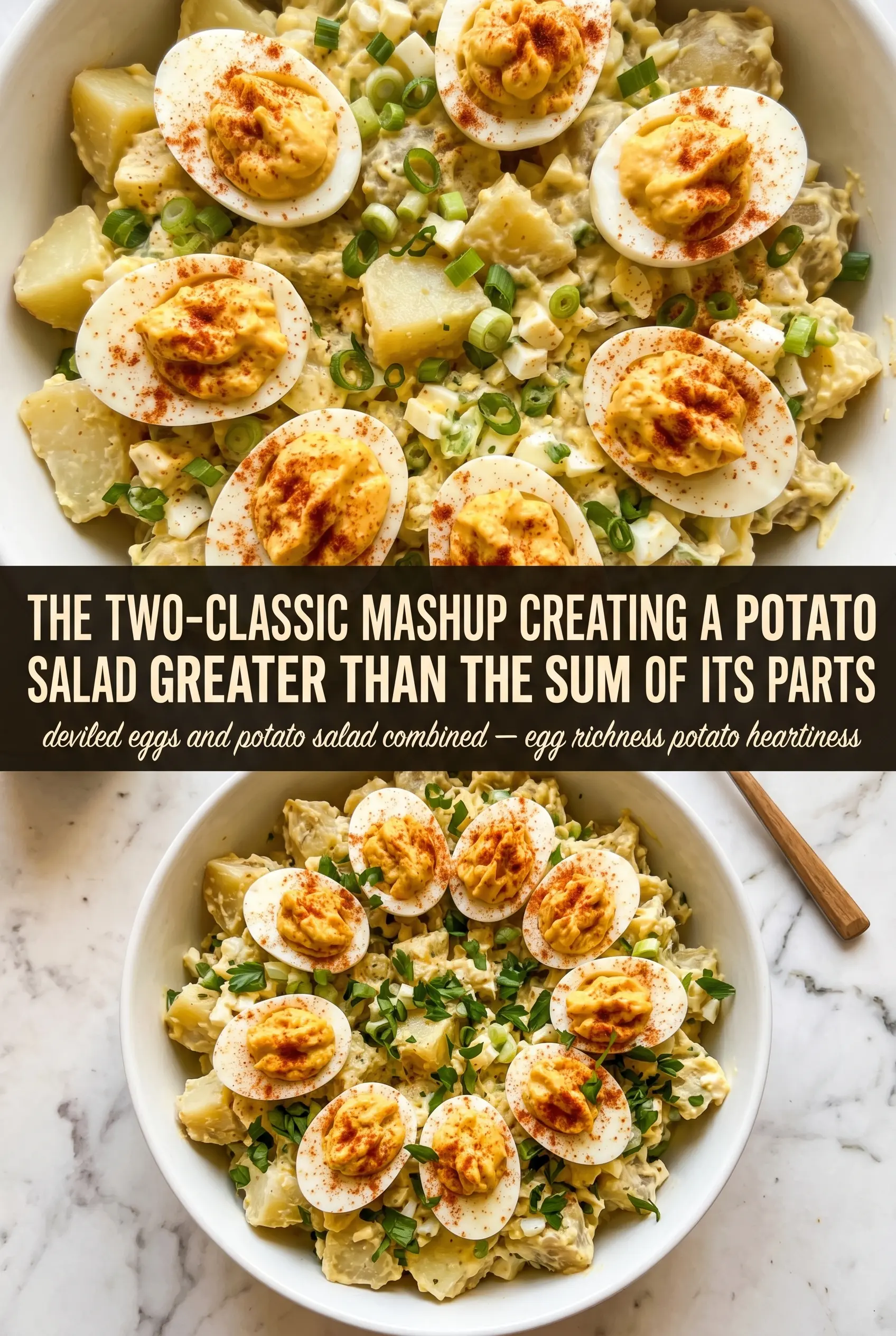
Deviled Egg Potato Salad
Ingredients
Equipment
Method
- Bring a pot of water to a boil, then cook the cubed potatoes for 12 to 15 minutes until tender. Drain the potatoes and cool them until no longer steaming.
- In a large bowl, combine cooled potatoes, chopped hard-boiled eggs, diced celery, and sliced green onions. Toss gently to distribute the eggs and vegetables evenly.
- In a separate bowl, whisk mayonnaise, yellow mustard, Dijon mustard, sweet pickle relish, white vinegar, sugar, paprika, salt, and pepper until smooth. The dressing should look creamy and evenly speckled with paprika.
- Pour the dressing over the potato mixture and fold gently until every piece is coated. Scrape the bottom of the bowl so no dry potato remains.
- Cover and refrigerate for at least 2 hours to let the flavors meld. Chill until cold and set slightly, so the salad holds its shape.
- Before serving, garnish with extra paprika for a fresh, classic deviled-egg look. Serve chilled and spoon into a serving bowl.