Sticky, glossy teriyaki chicken is one of those slow cooker dinners that earns its place in the regular rotation because it finishes with the kind of texture you actually want: tender shreds coated in a dark, spoon-clinging glaze. The chicken soaks up the sauce while it cooks, then gets a second pass with a cornstarch slurry so the final bowl tastes built, not just simmered.
Chicken thighs matter here. They stay juicy through a long cook and shred cleanly without turning stringy, which is exactly what you want once the sauce has reduced into that rich amber finish. The balance of soy sauce, brown sugar, honey, rice vinegar, garlic, ginger, and sesame oil gives you the classic sweet-salty teriyaki base, but the slow cooker keeps the flavors mellow instead of sharp.
Below, I’ll show you how to avoid a thin, watery sauce and how to get that glossy finish without overcooking the chicken. There’s also a few useful swaps if you need to work with what’s already in the pantry.
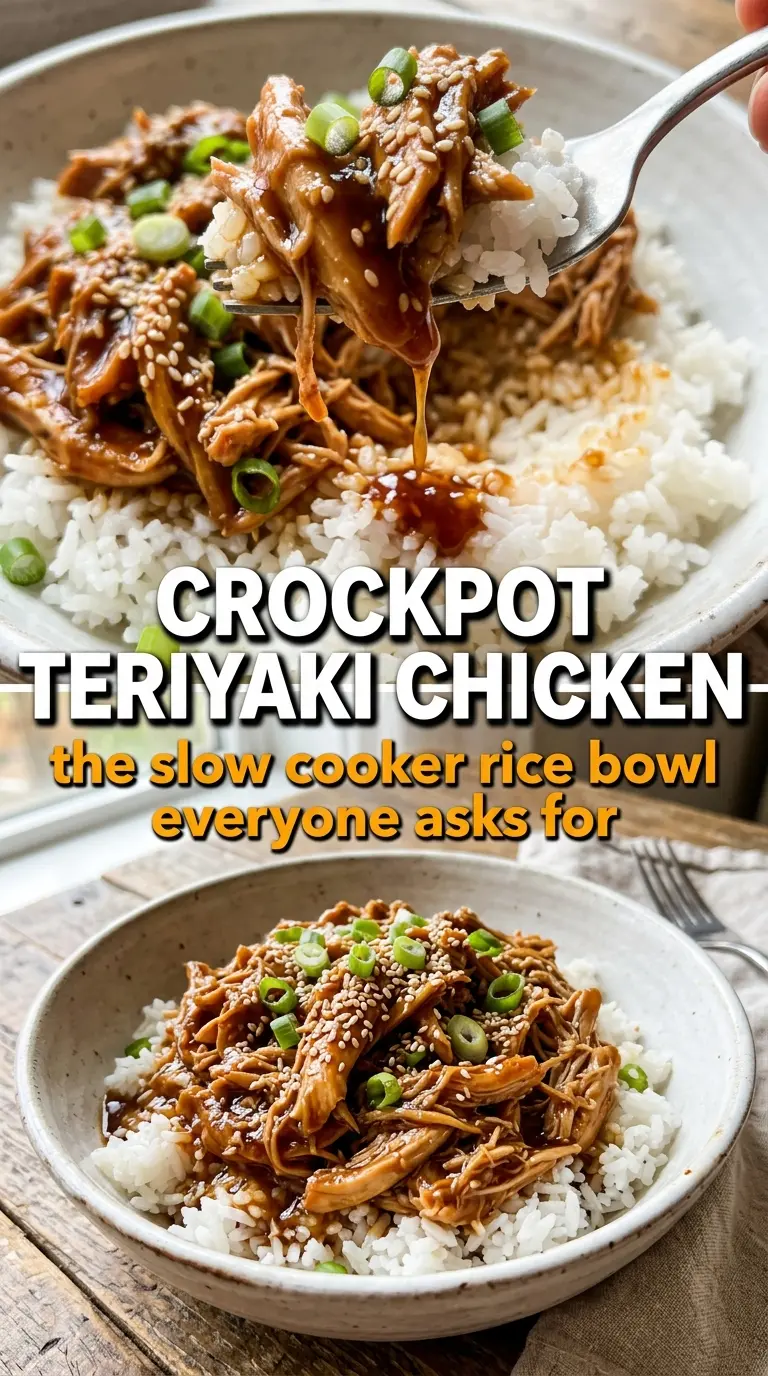
The sauce thickened up perfectly after the last 20 minutes, and the chicken shredded into those soft little pieces that soaked up every bit of the glaze. I served it over rice with broccoli, and my husband asked me to put it on the meal plan again.
Save this crockpot teriyaki chicken for the nights when you want glossy, takeout-style chicken without standing over the stove.
The Fix for Watery Teriyaki in the Slow Cooker
The biggest mistake with crockpot teriyaki chicken is treating the sauce like it should finish thick on its own. It won’t. A slow cooker traps moisture, so even a good sauce can end up loose and a little flat unless you plan for the finishing step. That’s why this version uses a cornstarch slurry after the chicken is shredded instead of trying to thicken everything from the start.
Shredding the chicken before the sauce reduction does two things: it gives you more surface area for the glaze to cling to, and it lets the sauce thicken faster once the lid comes off. If you skip that step, the sauce has less contact with the chicken and you end up with a bowl that tastes more like broth than teriyaki. The uncovered high-heat finish is the part that turns the liquid into something glossy and spoonable.
- Chicken thighs — Thighs stay tender during a long cook and shred into juicy strands. Chicken breasts can work, but they dry out more easily and won’t give you the same plush texture.
- Soy sauce — This is the backbone of the dish, so use a brand you actually like the taste of. Low-sodium soy sauce works well if you want more control over the salt level.
- Brown sugar and honey — The brown sugar brings depth, while the honey gives the sauce that sticky finish you expect from teriyaki. You need both for a glaze that tastes rounded instead of one-note sweet.
- Sesame oil — This is not just another cooking oil. It adds the nutty aroma that makes the sauce taste like teriyaki instead of generic sweet soy.
- Rice vinegar — A little acidity keeps the sauce from tasting heavy. If you need a substitute, use apple cider vinegar in the same amount, but the finish will be slightly less clean.
- Cornstarch slurry — Mix it with cold water before adding it in. If the cornstarch goes straight into the hot sauce, it clumps and leaves you with a grainy finish instead of a smooth glaze.
What Each Ingredient Is Actually Doing in This Recipe
- Primary ingredient (the star) — Quality matters most. Choose the best you can find.
- Cooking medium (oil, butter, or broth) — This carries flavors and prevents dryness.
- Seasonings (salt, pepper, spices, herbs) — Layer flavors so nothing overpowers. Build depth gradually.
- Aromatics (garlic, onion, herbs) — Cook with fat to bloom flavors. Become the foundation.
- Supporting ingredients — Complement the main ingredient without overpowering it.
- Sauce or liquid (if applicable) — Brings flavors together. Balance richness with acid.
- Acid (lemon, vinegar, wine, or other) — Brightens and prevents flat-tasting results.
- Final finish (garnish, glaze, or sauce) — Prevents one-dimensional taste and adds visual appeal.
Let the Slow Cooker Do the Tenderizing, Then Finish the Sauce Hard
Building the Teriyaki Base
Whisk the soy sauce, brown sugar, honey, rice vinegar, sesame oil, garlic, ginger, and red pepper flakes until the sugar starts to dissolve. That quick whisk matters because the sugar and honey need to spread evenly before they hit the chicken, or you’ll get pockets of overly sweet sauce. Pour it over the thighs and move on; the slow cooker will do the heavy lifting. If the garlic looks clumpy, it’ll still cook down, but a quick stir keeps the seasoning balanced from the start.
Cooking Until the Chicken Shreds Easily
Cook on LOW for 6 to 7 hours or HIGH for 3 to 4 hours until the chicken pulls apart with almost no resistance. If it still feels tight in the center, it needs more time. This is one of those recipes where “done” means the fibers separate cleanly, not just that the center is no longer pink. Chicken thighs can handle the longer cook without drying out, which is why they work so well here.
Shredding and Glazing
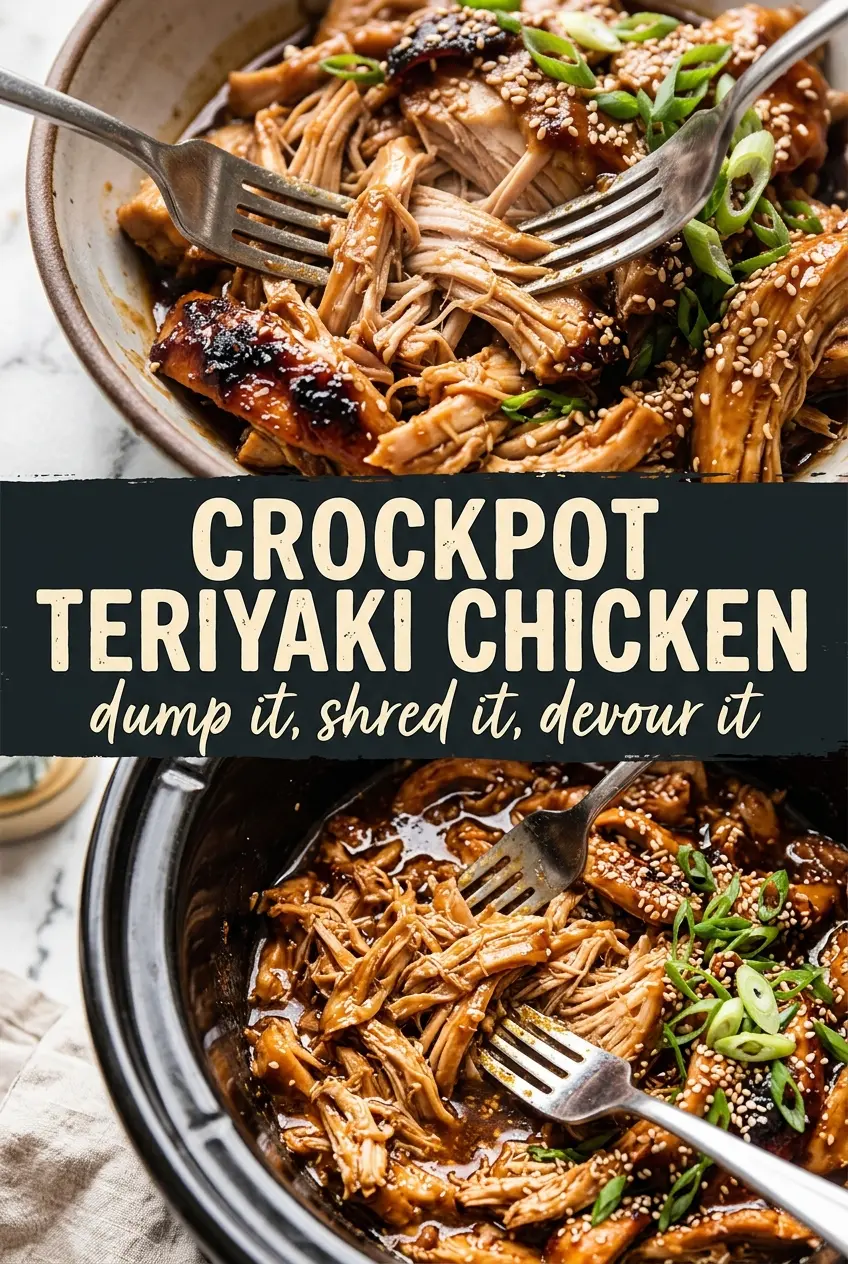
Take the chicken out and shred it with two forks while it’s still hot. Return it to the slow cooker, stir in the cornstarch slurry, and cook uncovered on HIGH for 20 to 30 minutes. The sauce should go from thin and glossy to thicker and lacquer-like, clinging to the chicken instead of pooling underneath it. If it still looks loose, give it another 5 to 10 minutes uncovered; the lid stays off because trapped steam will undo the texture you’re trying to build.
Ways to Adjust the Bowl Without Losing the Teriyaki Feel
Gluten-Free Version
Swap the regular soy sauce for gluten-free tamari in the same amount. Tamari keeps the sauce dark and savory, so you won’t lose the depth that makes the glaze taste finished. Check that your cornstarch is certified gluten-free if that matters for your kitchen.
A Less Sweet Teriyaki
Cut the brown sugar to 1/4 cup and keep the honey the same. You’ll still get the sticky finish, but the sauce will lean more savory and a little less glossy-sweet. If you reduce both sweeteners too much, the sauce starts tasting thin and sharp instead of balanced.
Using Chicken Breasts Instead
Boneless skinless chicken breasts can replace the thighs, but shorten the cook time and check early. Breasts dry out if they go too long, especially once shredded, so pull them as soon as they’re tender enough to fall apart. The sauce will still work, but the finished texture will be a little leaner and less rich.
Storage and Reheating
- Refrigerator: Store in an airtight container for up to 4 days. The sauce will thicken more as it chills, which actually helps it cling to the chicken.
- Freezer: It freezes well for up to 2 months. Cool it completely first, then portion it into freezer-safe containers so it thaws evenly.
- Reheating: Reheat gently on the stove or in the microwave with a splash of water to loosen the glaze. The common mistake is blasting it on high until the sauce tightens into a sticky paste and the chicken turns dry.
Questions I Get Asked About This Recipe
Crockpot Teriyaki Chicken
Ingredients
Equipment
Method
- Place the boneless skinless chicken thighs into the slow cooker and spread them into an even layer so they cook uniformly.
- Whisk soy sauce, brown sugar, honey, rice vinegar, sesame oil, garlic, ginger, and red pepper flakes until the sugar dissolves, then pour the sauce over the chicken.
- Cover and cook on LOW for 6-7 hours or HIGH for 3-4 hours until the chicken is fall-apart tender.
- Remove the chicken, shred it with two forks, then return the shredded chicken to the slow cooker.
- Stir the cornstarch mixed with water into the sauce, then cook on HIGH uncovered for 20-30 minutes until the sauce thickens to a glazy consistency with a dark amber sheen.
- Serve the chicken over steamed rice and top with sesame seeds, green onions, and steamed broccoli.