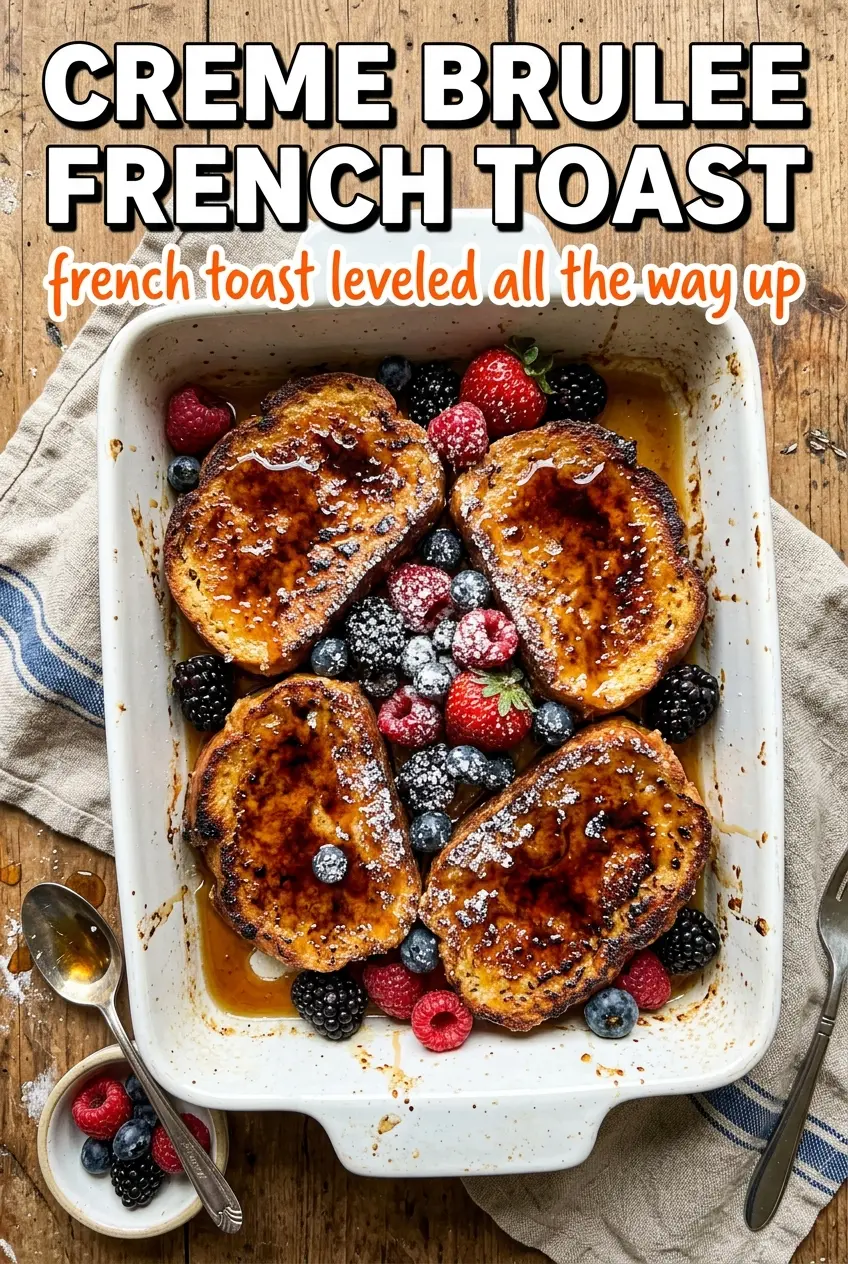
Crème brûlée French toast brings the best parts of a custard-soaked breakfast and a crackly sugar-topped dessert onto the same plate. The bread stays soft and rich in the middle, but the top turns glassy and brittle, so every bite gives you that contrast of silky custard and shattering caramel. It feels special without needing a long ingredient list or a fussy technique.
The trick is starting with thick bread that can hold the custard without falling apart, then cooking it long enough for the center to set before the sugar goes on. Brioche and challah both work because they’re sturdy, eggy, and a little plush, which keeps the finished slices tender instead of soggy. The sugar topping matters too: a mix of granulated sugar and brown sugar melts into a deeper, more balanced crust than plain white sugar alone.
Below, you’ll find the small details that make the difference between a limp slice and one that crackles when your fork hits it. I also included a few variations and the one reheating note worth knowing if you’re planning ahead.
The custard soaked in without making the bread fall apart, and the sugar top turned into an actual crackly shell under the broiler. I used brioche and it came out rich but not heavy.
Save this crème brûlée French toast for the morning when you want a crackly sugar top and custardy brioche with almost no effort.
The Reason the Sugar Top Works Instead of Melting Away
The topping has to go on after the French toast is cooked, not before. If you add sugar too early, it dissolves into the custard and disappears into the pan, which leaves you with sweet French toast but none of the crackling crust that makes this dish stand out. A quick pass under the broiler or a shot from a culinary torch gives you control over the caramelization without overcooking the bread underneath.
That second layer of sugar also works because the toast is already set and golden when it happens. You’re not trying to cook the egg mixture at this point. You’re just melting the sugars until they bubble, darken slightly, and harden as they cool. Stop as soon as the surface turns amber and glassy, because a few extra seconds can push it from crisp to bitter.
What the Bread, Dairy, and Sugar Are Really Doing Here
- Brioche or challah — This is the backbone of the recipe. Thick slices hold the custard without collapsing, and their egg-rich crumb gives you a soft center after cooking. Regular sandwich bread can work in a pinch, but it gets flimsy faster and won’t give you the same plush texture.
- Heavy cream and whole milk — The cream adds body and richness, while the milk keeps the custard loose enough to soak into the bread evenly. Using all milk makes the toast leaner and less luxurious; using all cream can feel heavy and can make the coating harder to cook through.
- Eggs — They set the custard around the bread and give the slices structure in the pan. Whisk them fully so there aren’t streaks of egg white, which can leave uneven patches on the finished toast.
- Granulated sugar and brown sugar — This mix gives the top a deeper caramel note than plain sugar alone. Brown sugar melts fast, so keep the layer thin; too much and it can turn sticky instead of crisp.
The 10 Minutes That Turn Custard Bread Into Crème Brûlée French Toast
Whisking the Custard Until It Looks Smooth
Combine the eggs, cream, milk, vanilla, cinnamon, and nutmeg in a shallow dish and whisk until the mixture looks even and slightly foamy. You want the spices distributed through the custard, not sitting in clumps on the bottom. A wide dish matters here because it lets the bread soak evenly without breaking the slices. If the custard looks streaky, keep whisking; uneven mixing leads to uneven flavor and patches of cooked egg.
Soaking Without Waterlogging the Bread
Dip each slice long enough to coat both sides well, but don’t leave it in the custard until it starts to fall apart. Brioche and challah absorb quickly, so a brief soak is enough to get that custardy center without ending up with a heavy, soggy slice. If the bread is very fresh, it may need a few extra seconds; if it’s a day old, it will hold together better and cook with cleaner edges.
Cooking to a Golden, Set Center
Melt the butter in a large skillet over medium-high heat and lay in the soaked bread without crowding the pan. Cook until the outside is deep golden and the center feels custardy but not wet when pressed gently with a spatula, about 2 to 3 minutes per side. If the heat is too high, the outside will brown before the inside sets; if it’s too low, the bread will dry out before it ever develops that rich color. Work in batches and add a little more butter as needed.
Brûléeing the Top at the Table
Mix the sugar and brown sugar, then spoon a thin layer over each piece of hot French toast. Use a culinary torch or place the toast under a broiler just until the sugar melts, bubbles, and turns amber. Watch it closely, because the line between caramelized and burnt is short. Let it sit for a moment so the crust hardens before serving, then finish with maple syrup, powdered sugar, and berries.
How to Change This Dish Without Losing the Crackle
Dairy-Free Version With Coconut Milk
Swap the cream and milk for full-fat coconut milk and an unsweetened dairy-free milk. The custard will taste a little more coconut-forward and slightly less rich, but it still sets beautifully if you keep the bread thick and the heat moderate. Use a neutral dairy-free butter or oil for the skillet so the topping stays the main flavor.
Gluten-Free Bread That Actually Holds Up
Choose a sturdy gluten-free brioche-style loaf if you can find one, and let it sit out a bit so the slices dry slightly before soaking. Gluten-free bread can get fragile fast, so shorten the dip and cook it a touch longer over medium heat to help the center set. Soft sandwich-style gluten-free bread usually falls apart here.
Make-Ahead for a Crowd
Cook the French toast ahead, then hold it on a wire rack in a low oven so the bottoms don’t steam soft. Brûlée the sugar topping right before serving. If you caramelize too early, the crust absorbs moisture and loses that sharp crack when you cut into it.
Storage and Reheating
- Refrigerator: Store the cooked French toast without the sugar topping for up to 3 days. The bread softens a little, but it still reheats well.
- Freezer: Freeze the cooked slices in a single layer, then transfer to a bag for up to 2 months. Freeze before adding the brûlée topping; sugar crust doesn’t hold its texture well after thawing.
- Reheating: Warm in a 350°F oven until hot through, or use a skillet over low heat for the best texture. Don’t microwave if you want the edges to stay crisp, because it makes the custard turn rubbery and the bread collapse.
Questions I Get Asked About This Recipe
Crème Brûlée French Toast
Ingredients
Equipment
Method
- Whisk together eggs, heavy cream, whole milk, vanilla extract, cinnamon, and nutmeg in a shallow dish until smooth.
- Melt butter in a large skillet over medium-high heat until it foams lightly.
- Dip bread slices into the egg mixture, coating both sides well, and let excess drip back into the dish.
- Cook the bread in batches for 2-3 minutes per side until golden and custard-like inside.
- Arrange cooked French toast on serving plates.
- Mix together sugar and brown sugar.
- Sprinkle the sugar mixture over each toast and finish with butter, then caramelize using a culinary torch or a broiler until the surface crackles.
- Serve immediately with maple syrup, powdered sugar, and fresh berries.