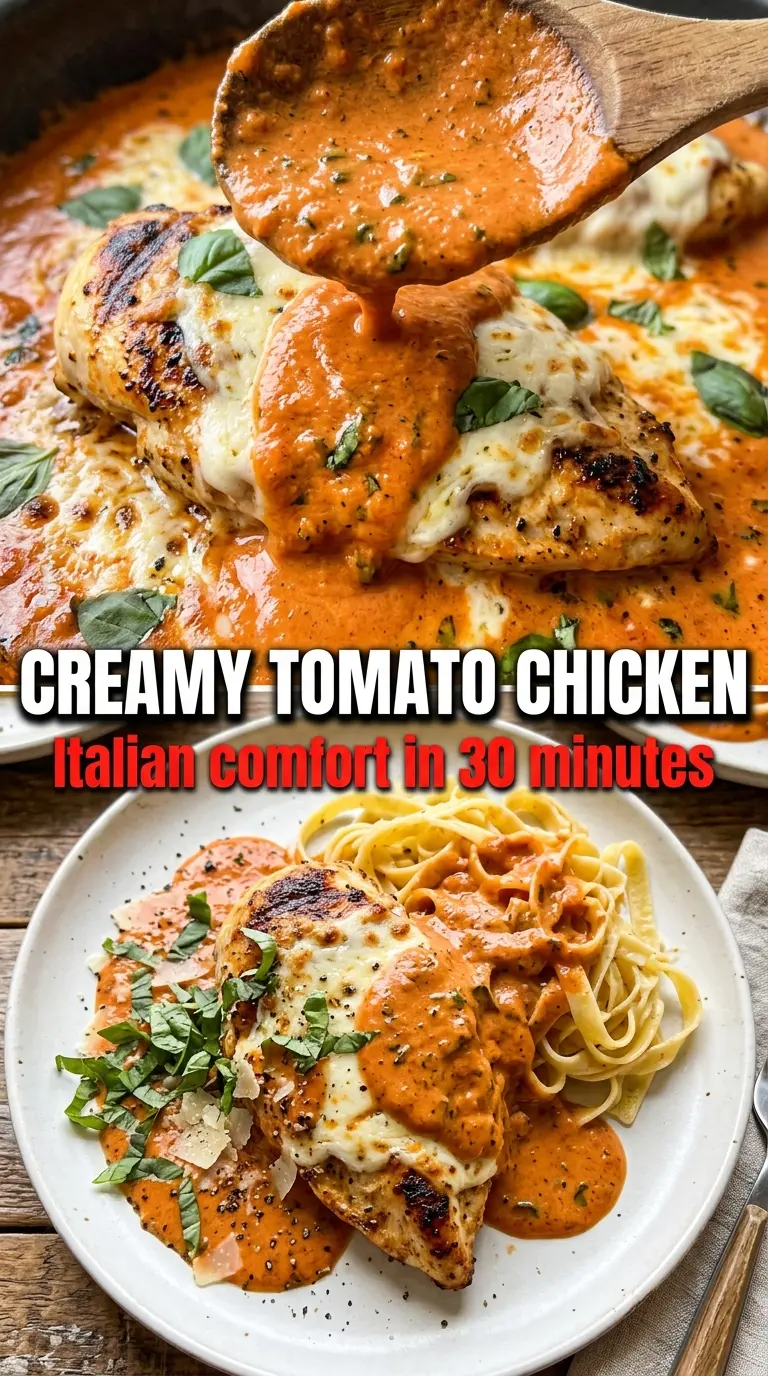
Golden seared chicken breasts in a silky tomato cream sauce earn a permanent spot in the weeknight rotation because they hit that rare middle ground: rich without feeling heavy, fast without tasting rushed. The sauce turns a deep rosy pink, clings to the chicken, and still keeps enough tomato brightness to cut through the cream.
The trick is building layers in the same skillet. The chicken leaves behind browned bits, the garlic gets just a short bloom, and the wine or broth loosens everything before the tomatoes go in. That little bit of acid matters; it keeps the cream from tasting flat and gives the sauce a clean finish instead of a one-note, heavy coating.
Below, I’ll walk through the sear, the sauce, and the small finishing step that makes the whole pan look glossy and restaurant-worthy. There’s also a few smart swaps and storage notes if you want to turn this into tomorrow’s dinner too.
The sauce thickened up into that perfect rosy color and coated the chicken instead of running all over the plate. I used broth instead of wine and it still tasted like something from a good Italian restaurant.
Save this creamy tomato chicken for the nights when you want a silky tomato cream sauce with almost no cleanup.
The Sear Is What Keeps the Sauce from Going Flat
The chicken needs a deep golden crust before it ever meets the sauce. That browning does two jobs at once: it gives the pan the fond that becomes flavor, and it keeps the chicken from tasting boiled once it simmers in the sauce. If you crowd the pan or move the chicken too soon, it steams and the sauce loses depth.
Boneless skinless breasts cook quickly, but they dry out just as fast. I cook them over medium-high heat until the surface is deeply colored and the center reaches 165°F, then pull them out before starting the sauce. They finish gently at the end, which keeps them juicy and gives the sauce time to thicken without overcooking the meat.
What Each Ingredient Is Actually Doing in This Pan
- Chicken breasts — These stay neat and slice cleanly for serving. If yours are very thick, pound them to an even thickness so they cook at the same pace and don’t dry out on the edges before the middle is done.
- Dry white wine or chicken broth — Wine gives the sauce a little lift and sharpness, but broth works well if that’s what you have. The important part is deglazing the pan; that liquid lifts the browned bits so they end up in the sauce instead of sticking to the skillet.
- Crushed tomatoes — These give body and a more rustic texture than tomato sauce would. They simmer down into something that can hold cream without turning watery.
- Heavy cream — This softens the tomato and creates that pink, silky finish. Use heavy cream, not half-and-half, or the sauce can look thin and break more easily once the cheese goes in.
- Parmesan — This adds salt, sharpness, and extra thickness. Grate it finely so it melts into the sauce instead of clumping at the bottom of the pan.
- Butter — A small swirl at the end gives the sauce a glossy finish and rounds out the edges. Add it off the heat or over low heat so it melts in smoothly instead of separating.
Building the Sauce Without Curdling the Cream
Getting the Chicken Out at the Right Moment
Season the chicken well before it hits the pan, then sear it until the outside is golden and the center is just cooked through. Don’t leave it in longer than needed; once it reaches 165°F, move it to a plate. That keeps the chicken tender and gives you room to build the sauce without worrying about overcooked meat.
Using the Same Pan for the Base
Keep the skillet as-is after the chicken comes out. Add the garlic and let it cook just until fragrant, about 30 seconds, then deglaze with the wine or broth. If the garlic browns too far, the sauce picks up a bitter edge, so the pan should smell savory and sweet, not sharp.
Letting the Tomatoes and Cream Meet Slowly
Add the crushed tomatoes and seasoning, then let the sauce simmer until it starts to look a little thicker and more cohesive. Stir in the cream after the heat is at a steady simmer, not a hard boil. That slower pace is what keeps the sauce smooth instead of grainy, and the color should turn that soft, rose-pink shade before you add the Parmesan.
Finishing for Shine and Balance
Once the cheese has melted and the sauce has thickened, swirl in the butter. It sounds small, but this is the step that makes the sauce look glossy and taste rounded instead of just creamy. Return the chicken to the pan and spoon the sauce over the top so it picks up some of that color before serving.
How to Adapt This for a Creamier, Lighter, or Dairy-Free Pan Sauce
Use Chicken Thighs Instead of Breasts
Thighs bring a little more richness and stay juicier if they hang in the sauce a few extra minutes. They need a slightly longer sear, but they’re more forgiving if you’re worried about dry chicken.
Make It Dairy-Free
Use full-fat coconut cream in place of the heavy cream and skip the Parmesan, then season a little more aggressively with salt and Italian seasoning. The sauce will be a touch sweeter and less sharp, but it still turns silky and coats the chicken well.
Keep It Gluten-Free
The sauce itself is naturally gluten-free, so the only thing to check is the broth if you use it instead of wine. Serve it over gluten-free pasta, mashed potatoes, or roasted vegetables and it still feels complete.
Turn Up the Heat a Little
The red pepper flakes give a gentle background warmth, but you can double them if you want the sauce to land with more edge. That keeps the tomato cream balanced instead of sweet, especially if you’re serving it over plain pasta or gnocchi.
Storage and Reheating
- Refrigerator: Store leftovers in an airtight container for up to 3 days. The sauce will thicken as it chills.
- Freezer: It freezes, but the cream can change texture a little after thawing. If you freeze it, cool it completely first and reheat gently.
- Reheating: Warm it slowly in a covered skillet over low heat with a splash of broth or water. High heat is the fastest way to split the sauce and dry out the chicken.
Answers to the Questions Worth Asking

Creamy Tomato Chicken
Ingredients
Equipment
Method
- Pat chicken breasts dry, then season all over with salt, pepper, garlic powder, and Italian seasoning to taste. Heat olive oil in a wide skillet over medium-high heat until shimmering.
- Add chicken in a single layer and sear 5-6 minutes per side until golden and a thermometer reads 165°F. Remove chicken to a plate.
- Add minced garlic to the same pan and cook for about 30 seconds until fragrant, not browned. Deglaze with dry white wine or chicken broth, scraping up the browned bits.
- Stir in crushed tomatoes and Italian seasoning, then bring to a simmer. Simmer for 5 minutes to thicken slightly.
- Stir in heavy cream, grated Parmesan, and red pepper flakes, then keep at a simmer. Simmer 4-5 minutes until the sauce is thick and rose-colored.
- Swirl in butter until fully melted and the sauce looks glossy. Return chicken to the skillet and spoon sauce over each breast.
- Garnish with fresh basil and serve immediately over pasta or gnocchi.