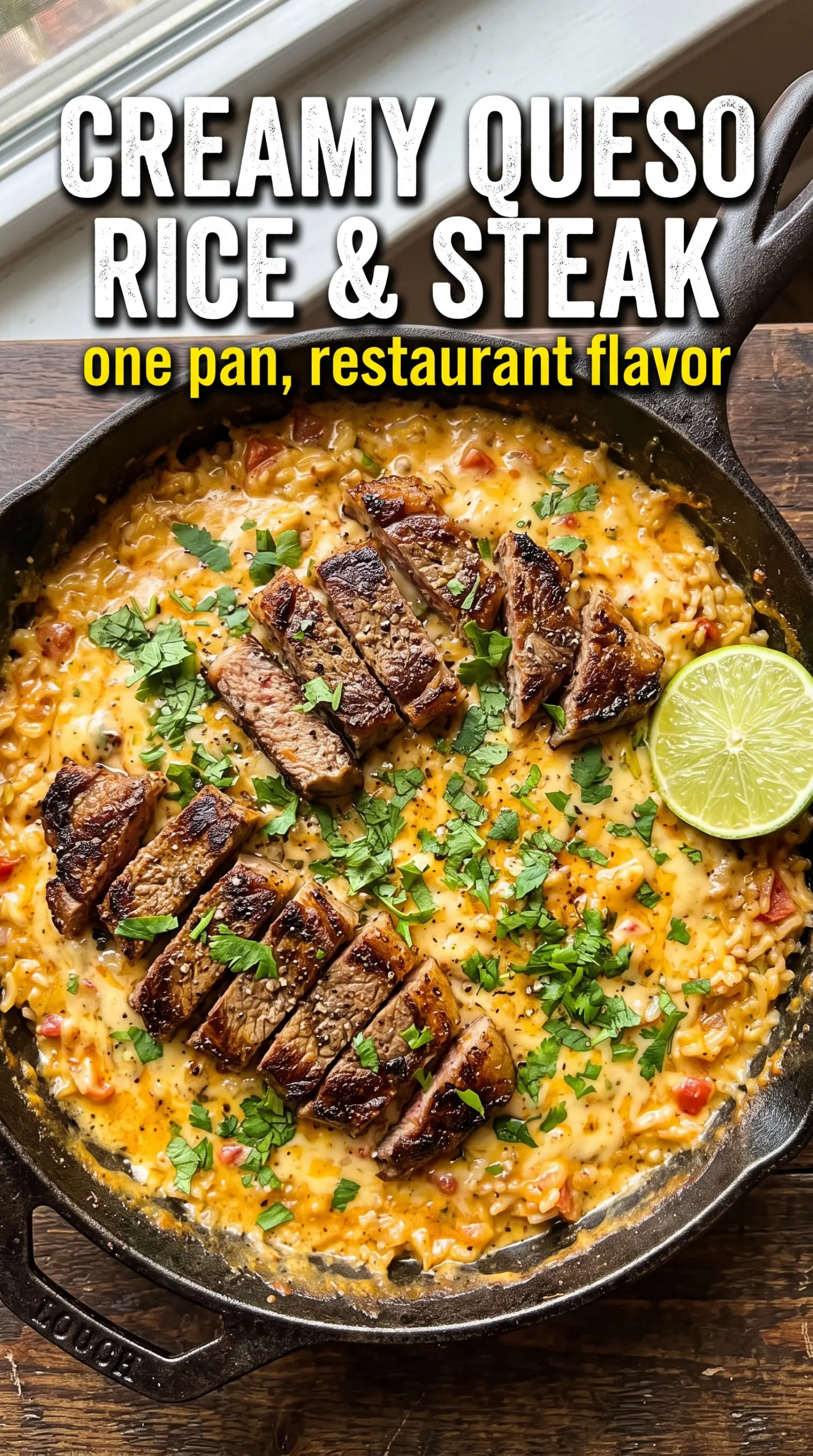
Velvety queso rice and seared steak strips hit that sweet spot between comfort food and a bowl that still feels bold enough for dinner. The rice turns creamy instead of heavy, with little pops of tomato, green chile, and onion running through every bite, and the steak gives it the kind of savory edge that keeps you going back for one more forkful.
What makes this version work is timing. The rice gets toasted before the broth goes in, which gives it a little more structure and keeps it from turning mushy under all that cheese. The queso is stirred in off the heat so the dairy melts into the rice instead of tightening up or going grainy, and the steak is sliced thin against the grain after a proper rest so it stays tender instead of chewy.
Below, I’ve broken down the one part that matters most for keeping the rice creamy without wrecking the texture, plus the small ingredient choices that make a big difference when you want a Tex-Mex steak bowl that eats like a full meal.
The rice stayed creamy even after I topped it with the steak, and the jalapeño and lime kept it from tasting too rich. I was worried the cheese would get clumpy, but it melted right into the rice.
Creamy queso rice with steak strips is the kind of bowl you’ll want to keep on hand for fast, filling dinners with melty cheese and a proper seared finish.
The Step That Keeps Queso Rice Creamy Instead of Gluey
The biggest mistake in a dish like this is rushing the rice after the liquid goes in. Once the broth and Rotel hit the pan, the rice needs steady heat and a covered simmer so the grains can cook evenly before the cheese shows up. If the lid is lifted over and over, the steam escapes and the bottom can dry out before the center is tender.
The second mistake is stirring the cheese in while the pan is still roaring hot. That’s how you get a stringy, greasy mess instead of a smooth queso coating. Pull the pan off the burner before adding the Velveeta, cheddar, and sour cream, then stir until the rice turns glossy and loose enough to spoon, not stiff enough to stand in a mound.
- Toast the rice first — Those two minutes in the pan give the grains a slightly nutty edge and help them hold their shape under the cheese sauce.
- Use undrained Rotel — The tomato-chile liquid counts toward the cooking liquid and brings the right amount of acidity and moisture.
- Finish off the heat — Dairy melts more smoothly when the pan isn’t simmering hard, which keeps the queso silky.
- Rest the steak before slicing — Those five minutes matter. Cut too soon and the juices run onto the cutting board instead of staying in the meat.
What Each Ingredient Is Doing in This Tex-Mex Steak Bowl
- Flank or skirt steak — Both cuts have great beefy flavor and take well to a fast sear. Skirt is a little looser in texture, while flank slices neatly if you cut it thin against the grain.
- Long-grain white rice — This is the best choice here because it stays fluffy enough to carry the cheese without collapsing. Short-grain rice gets too sticky for this bowl.
- Velveeta — This is the ingredient that makes the sauce smooth and dependable. If you swap it out for all natural cheese, the rice can still work, but you’ll lose some of that creamy, spoonable finish.
- Shredded cheddar — Use it for sharper flavor, not for structure. Freshly shredded melts better than pre-shredded, which often has anti-caking starch that can make the sauce feel a little grainy.
- Sour cream — It adds tang and softens the richness of the cheese. Stir it in at the end so it blends without curdling.
- Rotel — The tomatoes and green chiles bring heat, brightness, and just enough acidity to keep the bowl from tasting flat.
Building the Rice Before the Steak Hits the Pan
Softening the Onion and Garlic
Start with the onion in warm olive oil and cook it until it turns translucent and smells sweet, not browned. Garlic goes in next and only needs about a minute; if it darkens, it turns bitter and that bitterness will sit under the cheese. This first layer sets the tone for the whole bowl.
Toasting and Simmering the Rice
Stir the rice into the aromatics and let it toast until the edges look slightly glossy. That small step helps the grains stay separate enough to absorb the broth without turning pasty. Once the broth and Rotel are in, bring it to a real boil before lowering the heat, then cover tightly and let it simmer undisturbed until the liquid is absorbed and the rice is tender.
Turning the Pan Into Queso
When the rice is done, take the pan off the heat before adding the cheeses and sour cream. Stir slowly from the bottom of the pan so the heat spreads through the whole mixture, and stop as soon as it looks creamy and cohesive. If it seems loose at first, give it a minute; the sauce thickens as the cheese melts and the rice finishes absorbing the moisture.
Searing and Slicing the Steak
Get the cast iron skillet hot before the steak goes in. You want an immediate sizzle and a dark crust within minutes, not a slow gray cook. Rest the meat before slicing, then cut it thinly against the grain so each strip stays tender and easy to eat over the rice.
How to Adapt This for Different Nights and Different Eaters
Make It Gluten-Free
This dish is naturally close already, but check the broth and the cheese labels to be sure they’re certified gluten-free. The texture and flavor stay the same, so this is one of the easiest adjustments to make without changing the bowl at all.
Swap in Chicken Instead of Steak
Thin chicken cutlets or thigh strips work well if you want a lighter version. Cook them fully before serving, then slice and pile them over the queso rice just like the steak; you’ll lose some of the beefy sear, but the creamy base carries the bowl beautifully.
Make It Lighter Without Losing the Creamy Texture
Use a little less cheese and add an extra spoonful of sour cream or plain Greek yogurt at the end for tang. The bowl won’t be as rich, but it will still taste creamy and feel cohesive instead of dry.
Turn It Into a Dairy-Free Bowl
Use a dairy-free melting cheese and a plain unsweetened dairy-free sour cream, but expect a looser sauce and a slightly less stretchy finish. The rice still picks up the Rotel, onion, and spice, so the bowl stays satisfying even if the queso texture changes.
Storage and Reheating
- Refrigerator: Store the rice and steak in separate airtight containers for up to 3 days. The rice will thicken as it sits.
- Freezer: The steak freezes well, but the queso rice gets a little grainy after thawing. If you must freeze it, portion it tightly and expect a softer, less creamy texture.
- Reheating: Reheat the rice gently with a splash of broth or milk over low heat, stirring often. Warm the steak separately so it doesn’t overcook; the most common mistake is blasting everything in the microwave until the meat turns tough and the cheese breaks.
Answers to the Questions Worth Asking

Creamy Queso Rice with Steak Strips
Ingredients
Equipment
Method
- Season the steak with salt, pepper, cumin, smoked paprika, and garlic powder; let rest at room temperature for 15 minutes.
- Heat olive oil in a large saucepan over medium heat and sauté the diced onion for 3 minutes until softened.
- Add the minced garlic and cook for 1 minute, stirring, until fragrant.
- Stir in the uncooked long-grain white rice and toast for 2 minutes, until lightly fragrant.
- Stir in the chicken broth and Rotel (including the liquid) and bring the mixture to a boil.
- Reduce heat to low, cover, and simmer for 18-20 minutes until the rice is tender and the liquid is absorbed.
- Turn off the heat and stir in the cubed Velveeta, shredded cheddar, and sour cream until melted and creamy, using a slow folding motion to keep the rice fluffy.
- Heat a cast iron skillet over high heat until very hot, then sear the steak for 3-4 minutes per side for medium-rare.
- Rest the steak for 5 minutes, then slice thin against the grain into strips.
- Spoon the creamy queso rice into bowls and top with the steak strips, then finish with sliced jalapeño, cilantro, and lime wedges.