Tender rotini coated in a thick, tangy dressing is what makes creamy pasta salad worth repeating. The pasta should hold onto the dressing in every curve and crease, with crisp bits of celery and bell pepper giving each bite a little crunch and the cheddar adding just enough richness to round it out. When it’s done right, it tastes even better after a rest in the fridge because the dressing settles into the noodles instead of sliding off them.
The trick is cooking the pasta just a touch past al dente and cooling it completely before the dressing goes on. That keeps the salad from tightening up into a dry, clumpy bowl later. The dressing itself needs more acidity than a lot of pasta salads get, which is why the apple cider vinegar and mustard matter so much here. They cut through the mayonnaise and keep the whole dish from tasting heavy.
Below you’ll find the little details that keep this salad creamy instead of gummy, plus a few smart swaps if you’re making it for a crowd or prepping it ahead.
The dressing soaked in after an hour in the fridge and the pasta stayed creamy instead of dry. I added a little extra mayo before serving like you said, and the texture was spot on.
Save this creamy pasta salad for potlucks, cookouts, and any time you need a chilled side that gets better after a rest.
The Reason Pasta Salad Turns Bland Before It Chills
Most creamy pasta salads lose their way because the dressing gets built for the first bite, not the second. Freshly tossed pasta tastes coated, but after an hour in the fridge the noodles absorb a surprising amount of the dressing and the salad can turn flat, dry, or one-note. That’s why this version leans a little bolder on the vinegar, mustard, salt, and pepper than you might expect.
Another common mistake is rinsing the pasta and then not draining it well enough. Water left clinging to the noodles thins the dressing and dulls the seasoning. You want the pasta cooled completely, but not wet enough to dilute everything you just whisked together.
What Each Ingredient Is Actually Doing In This Salad
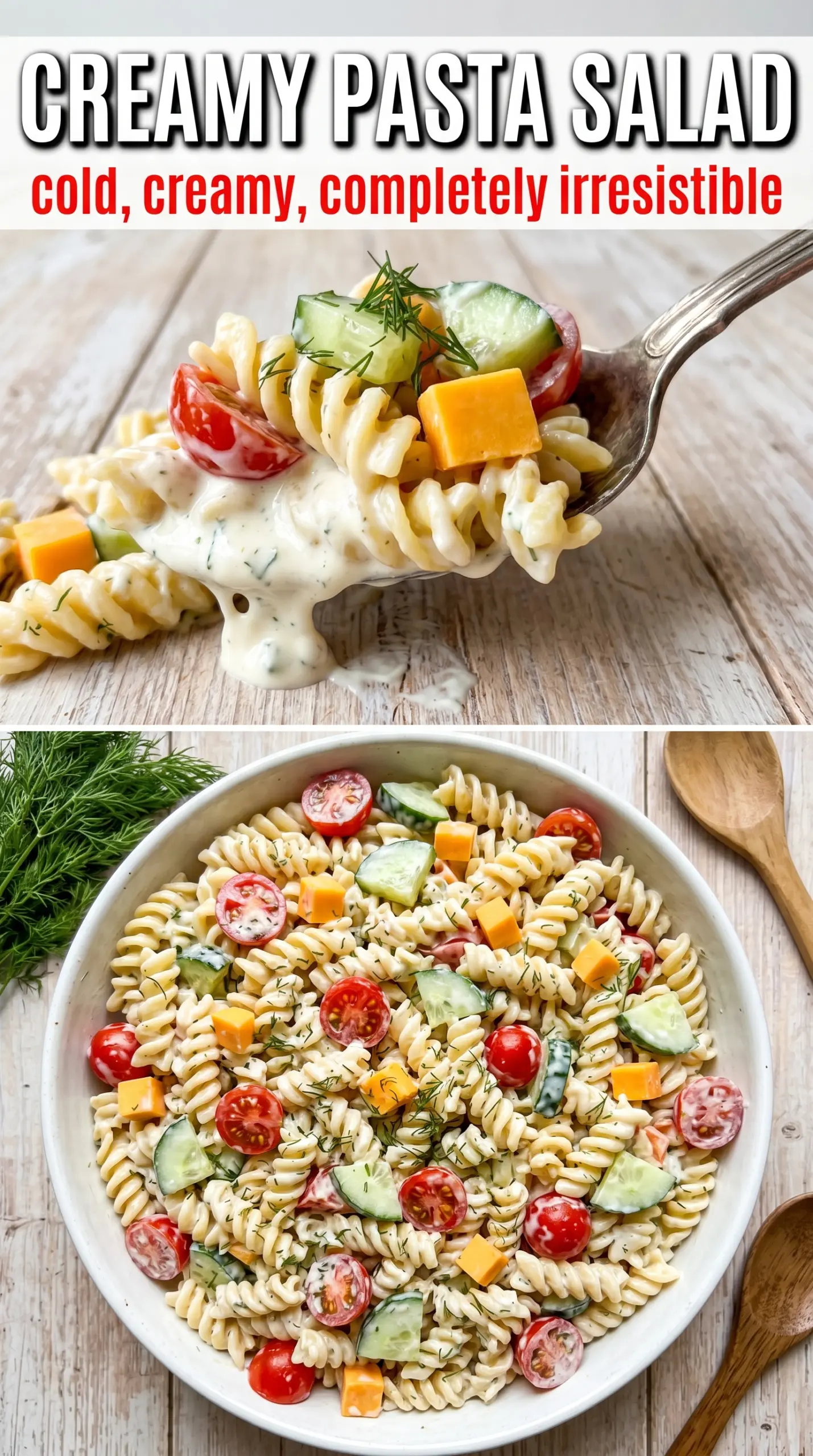
- Rotini or elbow macaroni — These shapes hold the dressing in their ridges and curves better than long pasta. Rotini gives a little more texture; elbows lean classic and nostalgic. Any short pasta with enough surface area will work, but delicate shapes won’t hold up as well after chilling.
- Mayonnaise and sour cream — Mayo brings body and cling, while sour cream adds tang so the dressing doesn’t taste heavy. If you swap all the sour cream for mayo, the salad gets richer but flatter. If you need a lighter version, plain Greek yogurt works, but it will taste sharper and a little less silky.
- Apple cider vinegar and yellow mustard — These are the brightness and backbone of the dressing. They keep the creamy base from tasting dull after chilling. White vinegar can work in a pinch, but apple cider vinegar gives a softer bite that fits the salad better.
- Bell peppers, celery, red onion, and olives — These add crunch, salt, and color, and they keep every bite from feeling soft and uniform. Dice them small so they distribute through the pasta instead of falling to the bottom of the bowl.
- Cheddar cheese — Use a sharp cheddar if you can. It gives the salad a savory edge that stands up to the dressing. Pre-shredded is fine, but freshly shredded melts into the salad less and tastes cleaner.
How To Keep The Dressing Clinging After The Chill
Cooking The Pasta A Touch Past Al Dente
Boil the pasta in well-salted water and cook it just past al dente, not mushy. You want it tender enough to eat cold after chilling, because refrigerated pasta firms up more than you expect. Drain it well, then rinse under cold water until it’s completely cooled. If you leave any heat in the pasta, it keeps cooking and can go soft before the salad ever hits the table.
Whisking A Dressing With Enough Bite
Whisk the mayonnaise, sour cream, vinegar, mustard, sugar, garlic powder, onion powder, salt, and pepper until the dressing looks smooth and glossy. The sugar doesn’t make it sweet; it rounds out the vinegar and mustard so the salad tastes balanced instead of sharp. If the dressing tastes perfect before it meets the pasta, it’s probably going to taste bland after chilling, so don’t be shy with the seasoning here.
Tossing, Chilling, And Refreshing Before Serving
Fold the cooled pasta, vegetables, olives, and cheddar together first, then pour the dressing over and toss until every piece looks coated. Refrigerate it for at least an hour so the flavors settle in. Right before serving, stir it and check the texture; if it looks dry, add a spoonful or two of mayonnaise to bring back the creaminess. That extra hit of dressing is what keeps leftovers from eating like cold pasta instead of pasta salad.
How To Adapt This For A Cookout, A Crowd, Or No Mayo
Make It Ahead For A Party
This salad holds up well when made a few hours ahead, but it should be refreshed before serving. Mix everything except a couple tablespoons of the dressing, then stir that in after chilling if the pasta has absorbed more than expected. The result is a creamier, more polished salad on the table instead of one that looks dry from sitting.
Dairy-Free Version
Use a good dairy-free mayonnaise and swap the sour cream for unsweetened dairy-free yogurt or more mayo plus a little extra vinegar. Skip the cheddar or use a plant-based shredded cheese if you like, but know the flavor will be a little less savory. The texture still works because the dressing is doing the heavy lifting.
Gluten-Free Pasta Salad
Use a sturdy gluten-free rotini and cook it carefully, because gluten-free pasta can go from tender to fragile fast. Rinse it well and toss it gently so it doesn’t break apart. The dressing and mix-ins stay the same, but you’ll want to chill it less aggressively and stir once before serving to keep the noodles intact.
Add Protein Without Changing The Texture
Diced ham, chopped rotisserie chicken, or hard-boiled eggs all fit well here. Keep the pieces small so they blend into the salad instead of taking over each bite. If you add protein, the salad becomes a fuller lunch without losing the creamy, side-dish feel.
Storage and Reheating
- Refrigerator: Store covered for up to 4 days. The pasta will keep absorbing dressing, so expect it to thicken a bit by day two.
- Freezer: Don’t freeze this one. Mayonnaise and sour cream separate after thawing, and the vegetables lose their crispness.
- Reheating: This salad is meant to be served cold. If it has tightened up in the fridge, stir in a little mayonnaise before serving instead of warming it, which would break the creamy texture.
Questions I Get Asked About This Recipe
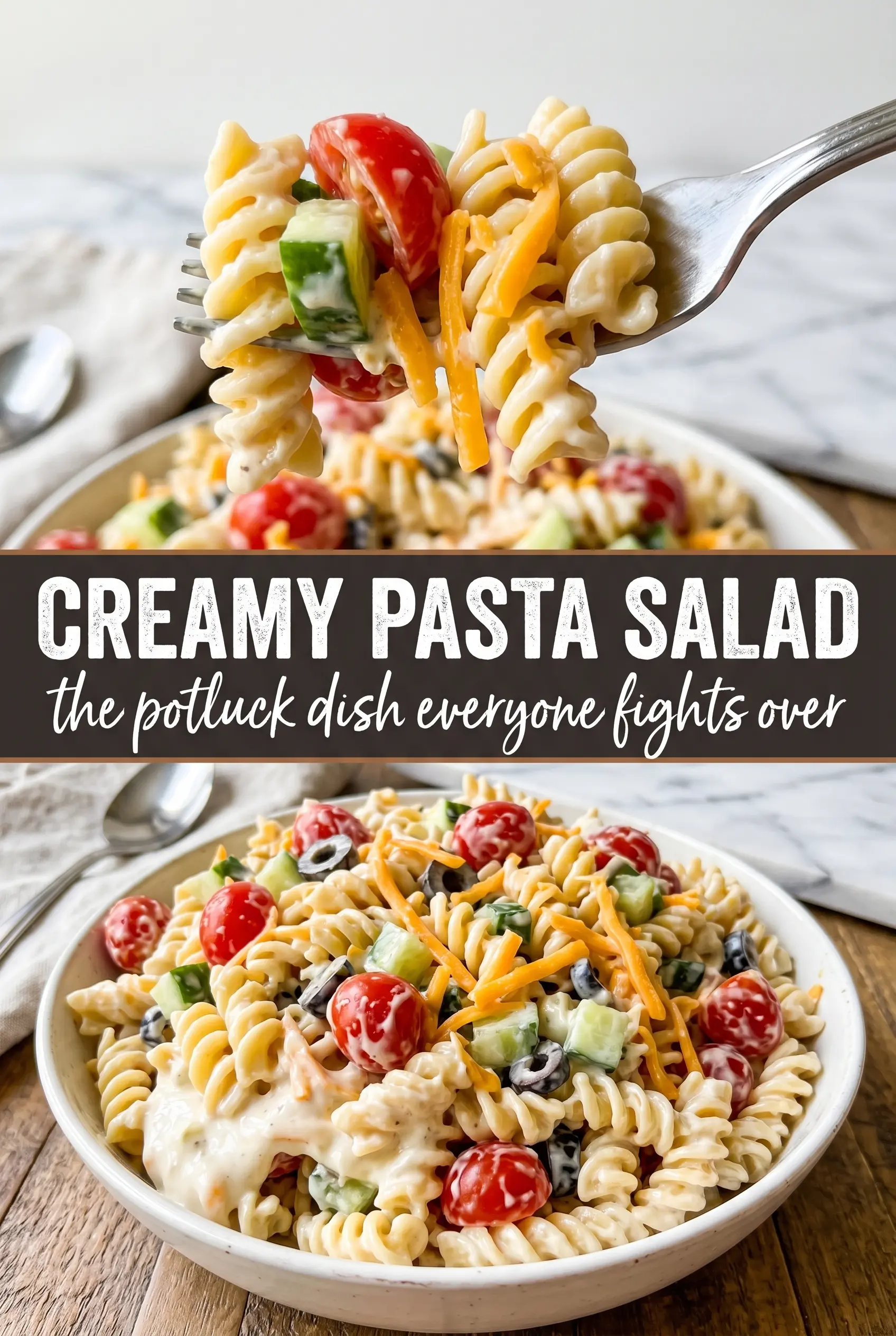
Creamy Pasta Salad
Ingredients
Equipment
Method
- Bring a large pot of well-salted water to a boil, then cook the rotini (or elbow macaroni) until just past al dente, about 10 minutes. Drain and rinse with cold water until completely cooled, then spread out to cool.
- Whisk the mayonnaise, sour cream, apple cider vinegar, yellow mustard, granulated sugar, garlic powder, onion powder, and salt and pepper until smooth. Stop when the dressing looks fully combined and glossy.
- In a large bowl, combine the cooled pasta, red bell pepper, green bell pepper, black olives, red onion, celery, and shredded cheddar. Toss gently so the add-ins are evenly distributed.
- Pour the dressing over the pasta mixture and toss until everything is evenly coated. Scrape the bottom and sides of the bowl so no dry pasta remains.
- Refrigerate for at least 1 hour so the pasta absorbs the dressing, then stir before serving. If it seems too dry, stir in 2 to 3 tablespoons extra mayonnaise until creamy.
- Dust with paprika just before serving for a bright, lightly speckled top. Serve cold for best texture.