Cold, creamy potato salad gets a sharper edge here, and that little bite of horseradish changes everything. The dressing stays rich and spoonable, but it doesn’t taste flat or heavy, which is exactly why this version keeps finding its way next to grilled meats, roast beef, and summer sandwiches.
The trick is balance. Red potatoes hold their shape better than starchy varieties, so you get tender cubes instead of a bowl of mash. Sour cream and mayonnaise make the dressing plush, while Dijon and vinegar keep it awake. The horseradish doesn’t need to overwhelm the bowl; it just needs to leave a clean, lingering heat at the back of the bite.
Below you’ll find the few details that matter most: how to keep the potatoes from turning watery, how long the salad needs to chill, and a couple of smart swaps if you want to lean milder or sharper.
The dressing clung to the potatoes after chilling, and the horseradish gave it a clean little kick without overpowering everything else. I served it with steak and there wasn’t a spoonful left.
Save this creamy horseradish potato salad for steak night, cookouts, and any meal that needs a chilled side with a tangy little kick.
The Reason This Salad Stays Creamy Instead of Sloppy
Potato salad goes wrong fast when the potatoes are too soft or the dressing goes on while everything is steaming hot. Red potatoes earn their place here because they hold their shape after boiling, which means the bowl stays defined instead of turning pasty. The other big fix is patience: let the potatoes cool until they’re just warm or fully chilled before mixing in the dressing. Hot potatoes soak up the sauce unevenly and can make the mayonnaise look greasy.
Horseradish also behaves better when it’s balanced with acid and dairy instead of dumped in by itself. Sour cream softens the heat, Dijon sharpens it, and white wine vinegar keeps the whole salad from tasting heavy after a few bites. That combination gives you a creamy salad that still wakes up the palate.
What Each Ingredient Is Actually Doing Here
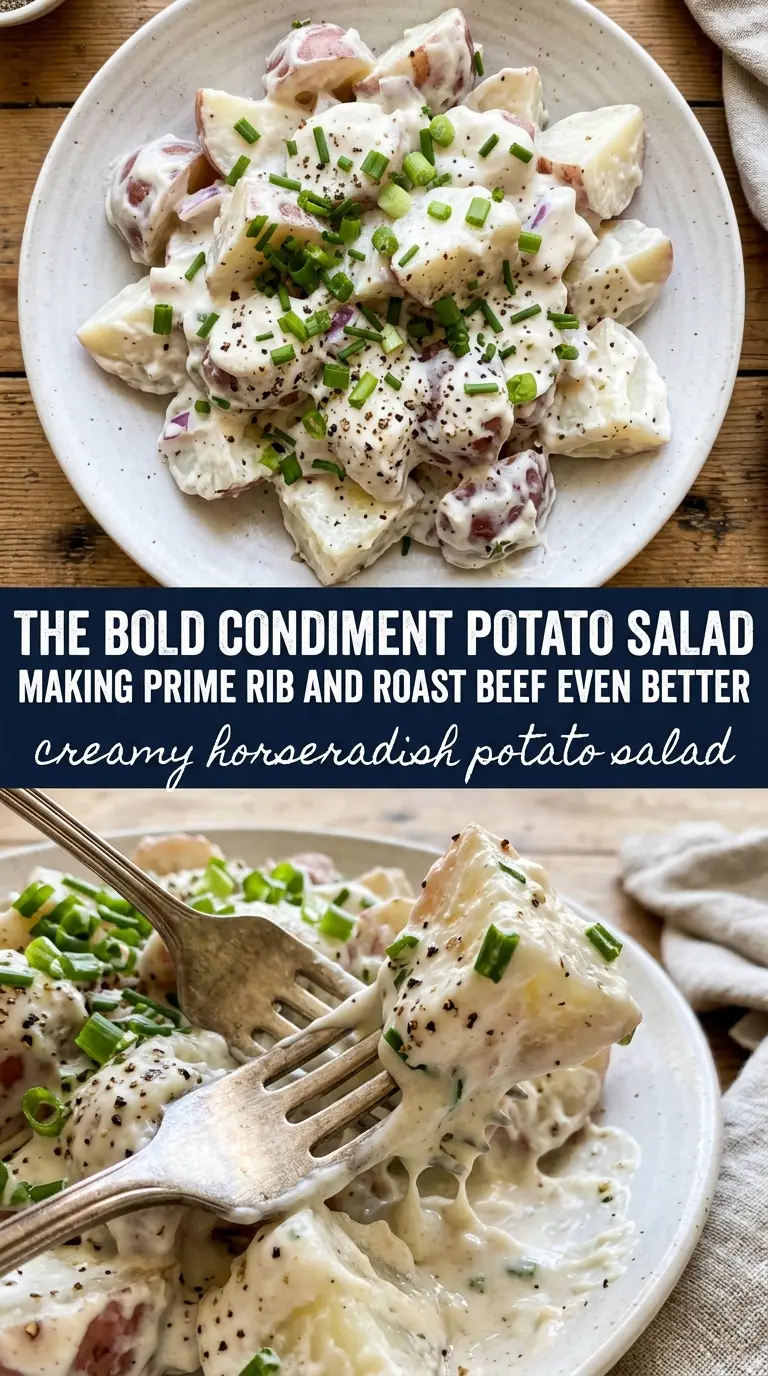
- Red potatoes — These stay firm enough to toss without collapsing. If you swap in Yukon golds, you’ll get a softer, silkier texture; if you use russets, the salad turns fluffier and more fragile.
- Sour cream — This gives the dressing body and a cool tang that supports the horseradish. Full-fat sour cream holds up best; lighter versions can taste thin after chilling.
- Mayonnaise — Mayo carries the dressing and helps it cling to each potato cube. Don’t replace all of it with sour cream unless you want a looser, sharper salad.
- Prepared horseradish — This is the ingredient that gives the salad its edge. Freshly grated horseradish is hotter and cleaner, but prepared horseradish is the easier, more consistent choice here; drain off any excess liquid before measuring if it looks wet.
- Dijon mustard and white wine vinegar — Dijon adds depth, and vinegar keeps the dressing bright after chilling. If you only have yellow mustard, the salad will still work, but it will taste flatter and less polished.
- Chives and parsley — These keep the salad tasting fresh instead of one-note. Chives bring oniony bite; parsley adds clean green flavor and breaks up the richness.
Getting the Potatoes and Dressing to Meet at the Right Time
Boiling Until Tender, Not Mushy
Start the potatoes in salted water and cook them until a knife slides in easily but the cubes still hold a sharp edge. If they’re falling apart in the pot, they’ll break down the second you stir in the dressing. Drain them well, then spread them out for a few minutes so surface moisture can evaporate instead of ending up in the bowl.
Mixing the Dressing First
Stir the sour cream, mayonnaise, horseradish, Dijon, vinegar, salt, and pepper together before the potatoes go in. That gives you an even dressing instead of pockets of sharp horseradish or bland mayonnaise. Taste it now; once it chills, the horseradish will mellow a little, so the dressing should taste a touch stronger than you want the finished salad to be.
Chilling for the Final Texture
Toss the potatoes with the dressing and herbs, then refrigerate the salad for at least 2 hours. That rest time is where the flavor settles and the dressing thickens around the potatoes. If you serve it too soon, it tastes loose and the horseradish seems louder than it really is.
Three Ways to Adjust the Heat and Richness
Milder Potato Salad for Sensitive Palates
Cut the horseradish back to 1 tablespoon and add an extra spoonful of sour cream. You’ll keep the tangy backbone, but the heat will sit in the background instead of landing with a sharp bite.
A Brighter, More Relish-Like Version
Add a tablespoon more vinegar and a little extra parsley. The salad will taste sharper and fresher, which works well if you’re serving it with rich smoked meats or a heavy roast.
Dairy-Free Version
Use a good dairy-free sour cream and swap the mayonnaise for an egg-based or plant-based mayo you already trust. The texture will still be creamy, but the flavor is a little less rounded, so don’t skip the Dijon and vinegar.
Make-Ahead for a Crowd
Boil the potatoes and mix the dressing up to a day ahead, then combine them a few hours before serving. That keeps the herbs brighter and prevents the potatoes from soaking up too much dressing overnight.
Storage and Reheating
- Refrigerator: Store covered for up to 4 days. The dressing will thicken as it chills, and the horseradish will mellow a bit.
- Freezer: Don’t freeze this salad. The dairy dressing breaks and the potatoes turn watery when thawed.
- Reheating: This salad is meant to be served cold. If it sits too long in the fridge, let it rest at room temperature for 10 to 15 minutes so the dressing loosens slightly before serving.
Questions I Get Asked About This Recipe
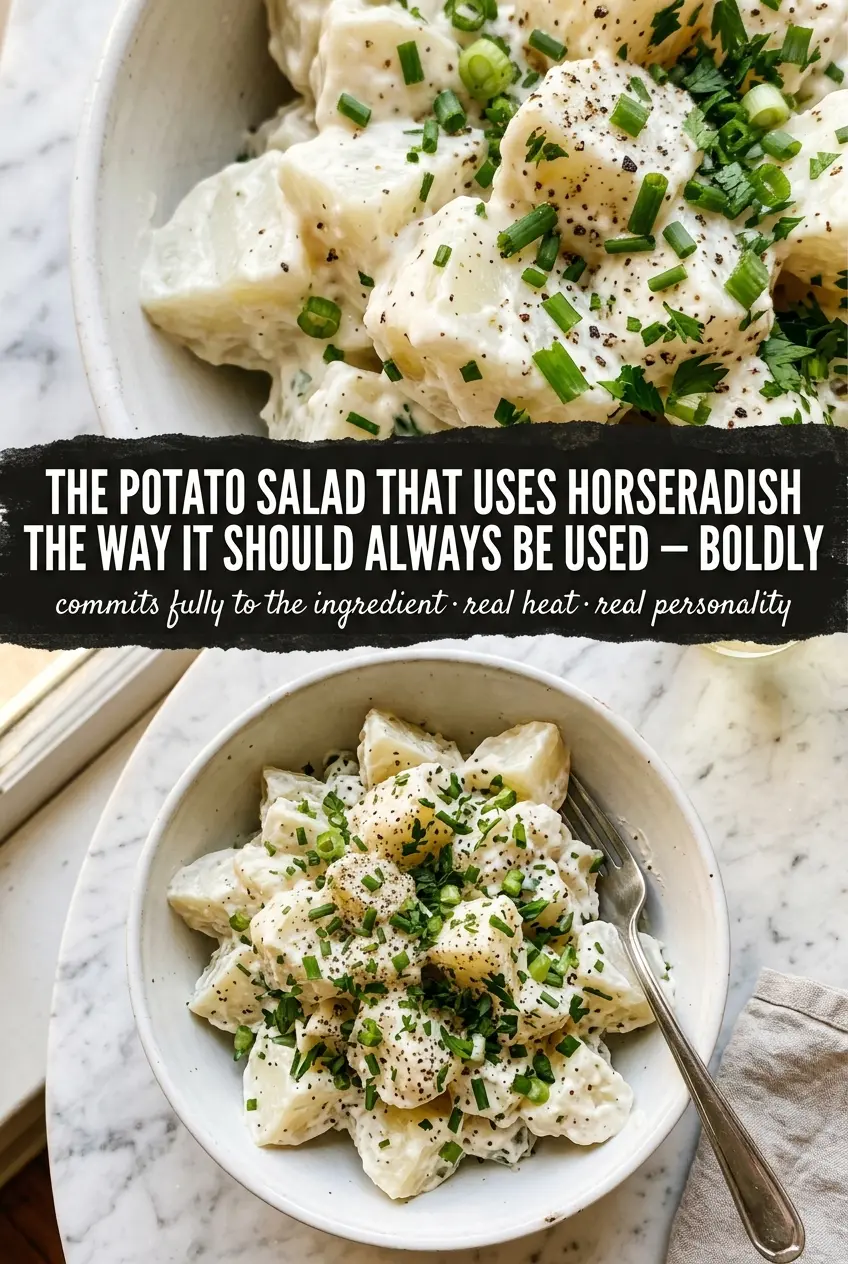
Creamy Horseradish Potato Salad
Ingredients
Equipment
Method
- Bring a pot of water to a boil in a Dutch oven and cook the cubed red potatoes until tender, about 15–20 minutes. Visual cue: a knife slides in easily with little resistance.
- Drain the potatoes and spread them on a sheet pan to cool until warm or room temperature, about 10 minutes. Visual cue: steam reduces and the cubes look dry on the surface.
- In a mixing bowl, combine sour cream, mayonnaise, prepared horseradish, Dijon mustard, and white wine vinegar. Whisk until smooth and thick, 1–2 minutes.
- Season the dressing with salt and pepper to taste. Visual cue: the mixture looks evenly speckled and tastes balanced.
- Combine the cooled potatoes with chopped chives and chopped parsley in a large bowl. Visual cue: herbs are distributed throughout the potatoes.
- Pour the dressing over the potato mixture and toss well until every cube is coated. Visual cue: creamy white clings to the potatoes with a light sheen.
- Refrigerate the salad for 2 hours to chill and let flavors meld. Visual cue: it firms up slightly and looks more uniform and creamy.