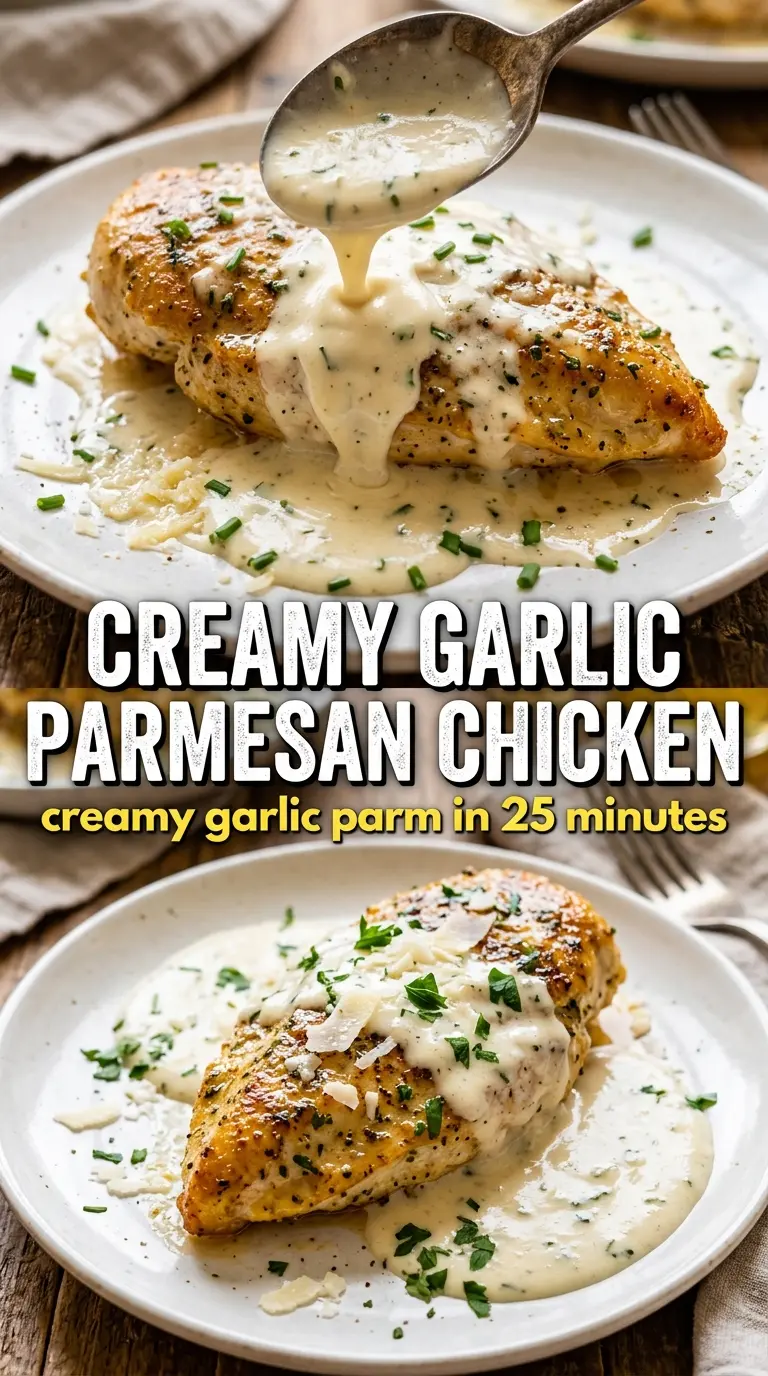
Golden seared chicken breasts in a garlic Parmesan cream sauce are the kind of skillet dinner that disappears fast and still feels like something you actually cooked, not just assembled. The chicken stays juicy because it gets pulled from the pan before the sauce is built, then tucked back in at the end to soak up all that glossy, savory richness.
The biggest difference with this version is the order. The chicken sears first, the garlic blooms in the butter for just long enough to smell sweet and nutty, and the wine or broth lifts the browned bits off the pan so the sauce starts with depth instead of tasting flat. Freshly grated Parmesan matters here because it melts into the cream instead of turning grainy the way pre-shredded cheese often does.
Below, I’ll show you the small cues that keep the sauce smooth and the chicken tender. There’s also a simple way to adjust the dish if you want to skip the wine or turn it into a gluten-free dinner without losing the part everyone comes back for: that spoon-coating sauce.
The sauce thickened up exactly like you said and coated the chicken without getting gluey. I used broth instead of wine and it still tasted rich, and the whole skillet was scraped clean.
Like this creamy garlic Parmesan chicken? Save it to Pinterest for the nights when you want a skillet sauce that clings to every bite.
The Chicken Must Come Out Before the Sauce Goes In
The mistake that ruins a lot of creamy chicken skillet recipes is trying to build the sauce with the chicken still in the pan. The meat keeps releasing steam, the pan temperature drops, and the sauce never gets the chance to reduce into that glossy finish. Pulling the chicken out after searing gives you room to work and keeps the sauce from turning thin.
That browned fond left behind in the skillet is not a problem to scrub away. It’s the flavor base. When you deglaze with wine or broth, those stuck-on bits dissolve into the sauce and give it a deeper, more cooked-from-scratch taste than plain cream alone can manage.
The sauce also needs a gentle simmer, not a hard boil. High heat makes cream separate faster, and Parmesan can go from silky to gritty in a hurry if the pan is raging.
What Each Ingredient Is Actually Doing in This Skillet
- Chicken breasts — Boneless, skinless breasts give you a clean canvas for the sauce and sear well if you dry them first. If one side is much thicker, pound it lightly so the whole piece cooks evenly and you don’t end up with a dry edge before the center reaches temperature.
- Garlic — Fresh minced garlic is worth using here because it’s one of the main flavors, not just background aroma. Jarred garlic works in a pinch, but it tends to taste flatter and can go bitter faster in the pan.
- Heavy cream — This is what gives the sauce its body and that velvety coat. Half-and-half can work, but the sauce will be thinner and less stable, especially after you add the cheese.
- Freshly grated Parmesan — This is the ingredient that turns the sauce from plain cream into something savory and clingy. Pre-grated Parmesan often has anti-caking starches that can make the sauce sandy instead of smooth.
- Dry white wine or chicken broth — Wine adds brightness and depth, while broth keeps the flavor round and family-friendly. If you skip the wine, use broth and let it simmer a little longer so the sauce still tastes developed.
- Italian seasoning and smoked paprika — Italian seasoning supports the Parmesan and garlic, while the paprika gives the chicken a deeper color and a quiet smoky note. The paprika is subtle, but it helps the sear taste more intentional.
Building the Sauce So It Stays Silky
Seasoning and Searing the Chicken
Season the chicken generously on both sides before it ever touches the skillet. You want the surface dry and well coated so it picks up a deep golden crust instead of steaming in its own moisture. Heat the olive oil until it shimmers, then add the chicken and leave it alone long enough for the crust to form; if you keep moving it, you’ll lose the sear. The chicken is done when the center reaches 165°F and the outside has a bronzed, crisp edge.
Pulling Flavor From the Pan
Once the chicken comes out, add the butter and garlic to the same pan and keep the heat moderate. Garlic only needs about a minute to become fragrant; if it starts browning hard, it will taste sharp instead of mellow. Pour in the wine or broth and scrape the bottom of the pan with a wooden spoon so all those browned bits dissolve into the liquid. That’s where the sauce gets its backbone.
Reducing the Cream and Cheese
Stir in the cream, broth, Parmesan, and Italian seasoning, then lower the heat and let the sauce simmer gently. It should thicken enough to coat a spoon in 4 to 5 minutes, with small bubbles around the edges but no rolling boil. If the sauce looks thin at first, let it reduce; if it looks grainy, the heat was too high and the cheese seized, so pull it off the burner and whisk in a splash of cream.
Bringing the Chicken Back Home
Return the chicken to the skillet and spoon the sauce over the top so every breast gets covered. Let it sit in the sauce for a couple of minutes so the flavors settle and the chicken warms through without overcooking. Finish with thyme and parsley right before serving so the herbs stay bright against the rich sauce.
Three Ways to Bend This Recipe Without Breaking It
Skip the Wine and Use Broth Only
Use chicken broth in place of the wine and let it simmer for an extra minute before adding the cream. You lose a little brightness, but the sauce stays rich and family-friendly, and it still picks up plenty of flavor from the pan.
Make It Gluten-Free Without Changing the Texture
This recipe is naturally gluten-free as written, as long as your broth is certified gluten-free. The sauce thickens from reduction and cheese, not flour, so you don’t need any extra starch to get that glossy finish.
Turn It Into a Thigh Recipe
Boneless skinless thighs work well if you want a juicier cut with a little more richness. They may need a few extra minutes in the pan, but they hold up beautifully in the sauce and are more forgiving if you’re not slicing into them the second they come off the heat.
Dairy-Free Is a Different Dish
You can swap in unsweetened coconut cream and a dairy-free Parmesan-style cheese, but the result will taste different and a little sweeter. It still works as a creamy skillet dinner, just with a softer, less sharp finish than the original.
Storage and Reheating
- Refrigerator: Store leftovers in an airtight container for up to 3 days. The sauce will thicken as it chills.
- Freezer: Not my first choice. Cream sauces can separate after freezing, and the texture won’t come back as smoothly.
- Reheating: Warm it slowly in a covered skillet over low heat with a splash of broth or cream. High heat is what makes the sauce break and the chicken turn dry.
Answers to the Questions Worth Asking

Creamy Garlic Parmesan Chicken
Ingredients
Equipment
Method
- Season the chicken breasts generously on both sides with salt, pepper, garlic powder, and smoked paprika. This helps create a flavorful golden crust during searing.
- Heat the olive oil in a large cast iron skillet over medium-high heat. Sear the chicken for 5-6 minutes per side until golden and the internal temperature reaches 165°F, then remove to a plate.
- Add the butter and minced garlic to the same skillet and cook for 1 minute until fragrant. Scrape up any browned bits to deepen flavor.
- Deglaze with the white wine and cook for 2 minutes. Keep simmering until the liquid reduces slightly.
- Stir in the heavy cream, chicken broth, Parmesan cheese, and Italian seasoning. Simmer for 4-5 minutes until the sauce is thick and glossy.
- Return the chicken breasts to the skillet and spoon the sauce over each breast. Coat them thoroughly so every bite has creamy Parmesan sauce.
- Garnish with fresh thyme and parsley and serve. Scatter herbs on top while the sauce is hot for best aroma.