Tiny orzo pasta gives coleslaw a new kind of body here: still crisp at the edges, but creamy enough to hold onto the tangy dressing and every bit of shredded cabbage. The result lands somewhere between pasta salad and slaw, which is exactly why it disappears fast at potlucks and cookouts. It eats cold, packs well, and doesn’t turn soggy the way heavier pasta salads sometimes do.
The key is balancing the dressing so it coats without drowning the pasta. Mayonnaise gives it richness, sour cream sharpens it, and apple cider vinegar keeps the whole bowl awake. A short chill time softens the cabbage just enough while the orzo absorbs flavor, but you still want enough structure left for that clean bite. Rinsing the pasta after cooking matters here too; it cools the orzo quickly and keeps the dressing from turning greasy.
Below, I’ve included the small details that make this salad work better than the usual bowl of mixed-up leftovers — including the exact chilling window that gives you the best texture.
The dressing coated every piece without getting heavy, and after an hour in the fridge the cabbage was tender but still had a little crunch. I brought it to a picnic and the bowl was scraped clean.
Save this coleslaw orzo salad for the next picnic, cookout, or easy make-ahead side with creamy tang and plenty of crunch.
The Trick Is Letting the Cabbage Soften Without Losing Its Bite
Coleslaw gets mushy when it sits too long in a heavy dressing, but orzo changes the game because it gives the bowl structure and helps hold everything together. The balance here is timing: mix it, chill it long enough for the cabbage to relax, then stop before the vegetables collapse. That hour in the fridge is not just waiting time. It’s when the pasta picks up the dressing and the slaw goes from scattered to cohesive.
If your salad tastes flat after chilling, it usually needs salt more than anything else. Cold food hides seasoning, and the vinegar softens once it sits with the pasta and cabbage. Taste after the chill, not before, because that’s when you’ll know whether the dressing needs one more pinch of salt or a splash more vinegar to wake it back up.
Why These Ingredients Work Better Together Than On Their Own

- Orzo — This is the backbone of the salad. It cooks fast, cools quickly, and gives you a pasta shape small enough to mingle with shredded cabbage instead of fighting it. Any small pasta will work in a pinch, but orzo gives the most slaw-like bite.
- Coleslaw mix — Pre-shredded cabbage and carrots save time and keep the texture consistent. Freshly shredded cabbage works too, but the bagged mix is handy here because the thinner cuts soften at the same rate as the pasta absorbs dressing.
- Mayonnaise and sour cream — Mayo brings the creamy base, while sour cream keeps it from feeling heavy. If you skip the sour cream, the dressing can taste one-note; if you skip the mayo, it loses body and won’t cling as well to the orzo.
- Apple cider vinegar — This is what keeps the salad from tasting like plain creamy pasta. White vinegar will work, but apple cider vinegar gives a rounder tang that plays better with cabbage.
- Celery seed — Don’t leave this out. It adds that classic slaw flavor that makes the salad taste intentional instead of like pasta and coleslaw mixed in the same bowl.
Building the Bowl So It Stays Creamy, Not Gluey
Cooking the Orzo Just Past Tender
Cook the orzo according to the package directions until it’s tender but still has a little firmness in the center. Overcooked orzo turns sticky fast, and once it sits in dressing, that softness only gets worse. Drain it well, then rinse with cold water until it stops steaming. That rinse matters because hot pasta will loosen the dressing and make the whole salad heavy.
Whisking the Dressing Until It Tastes Bright
Mix the mayonnaise, sour cream, vinegar, sugar, celery seed, salt, and pepper until the dressing looks smooth and pale. It should taste a little sharper than you want the finished salad to taste, because the pasta and cabbage will pull some of that edge down. If it tastes flat now, it’ll taste flatter after chilling, so season it with confidence before anything goes into the bowl.
Tossing and Chilling for the Right Texture
Combine the cooled orzo, coleslaw mix, and green onions in a large bowl, then pour the dressing over the top and toss until every piece is coated. Use a roomy bowl so you can fold instead of mash; that keeps the cabbage from breaking down too soon. Chill for at least an hour, then toss again before serving. If the salad looks a little dry after resting, a spoonful of mayo or a splash of vinegar brings it back fast.
Make It Lighter With Greek Yogurt
Swap half of the sour cream for plain Greek yogurt if you want a tangier, lighter salad. The dressing will be a little sharper and less rich, but it still coats well and holds up in the fridge. I wouldn’t replace all of the mayo here, because you need some fat in the dressing to keep it creamy after chilling.
Turn It Dairy-Free
Use a dairy-free mayonnaise and replace the sour cream with a plain unsweetened dairy-free yogurt or more mayo plus a little extra vinegar. The texture will still be creamy, though the tang may be cleaner and less rounded than the original. Check seasoning after chilling, because dairy-free versions often need a touch more salt to taste balanced.
Add Protein for a Main-Dish Salad
Fold in chopped rotisserie chicken, diced ham, or chilled shrimp after the dressing goes in. The salad becomes more filling without changing the base method, but you’ll want to season a little more assertively because protein dulls the dressing slightly. This works best if the add-in is already cold so it doesn’t warm the salad before serving.
Use a Gluten-Free Pasta
A small gluten-free pasta shape can replace the orzo if needed, but cook it just to tender and rinse it well so it doesn’t get gummy. Some gluten-free pastas soften faster after dressing, so this version is best served the same day. The flavor stays the same; the texture just needs a gentler hand.
Storage and Reheating
- Refrigerator: Keeps for 3 to 4 days in a covered container. The cabbage softens more each day, but the flavor holds up well.
- Freezer: I don’t recommend freezing it. The mayonnaise-based dressing and cabbage both change texture in a bad way once thawed.
- Reheating: Serve this cold. If it’s been in the fridge overnight, let it sit out for 10 to 15 minutes, then toss again. If it looks dry, add a spoonful of mayo or a splash of vinegar instead of warming it.
Questions I Get Asked About This Recipe
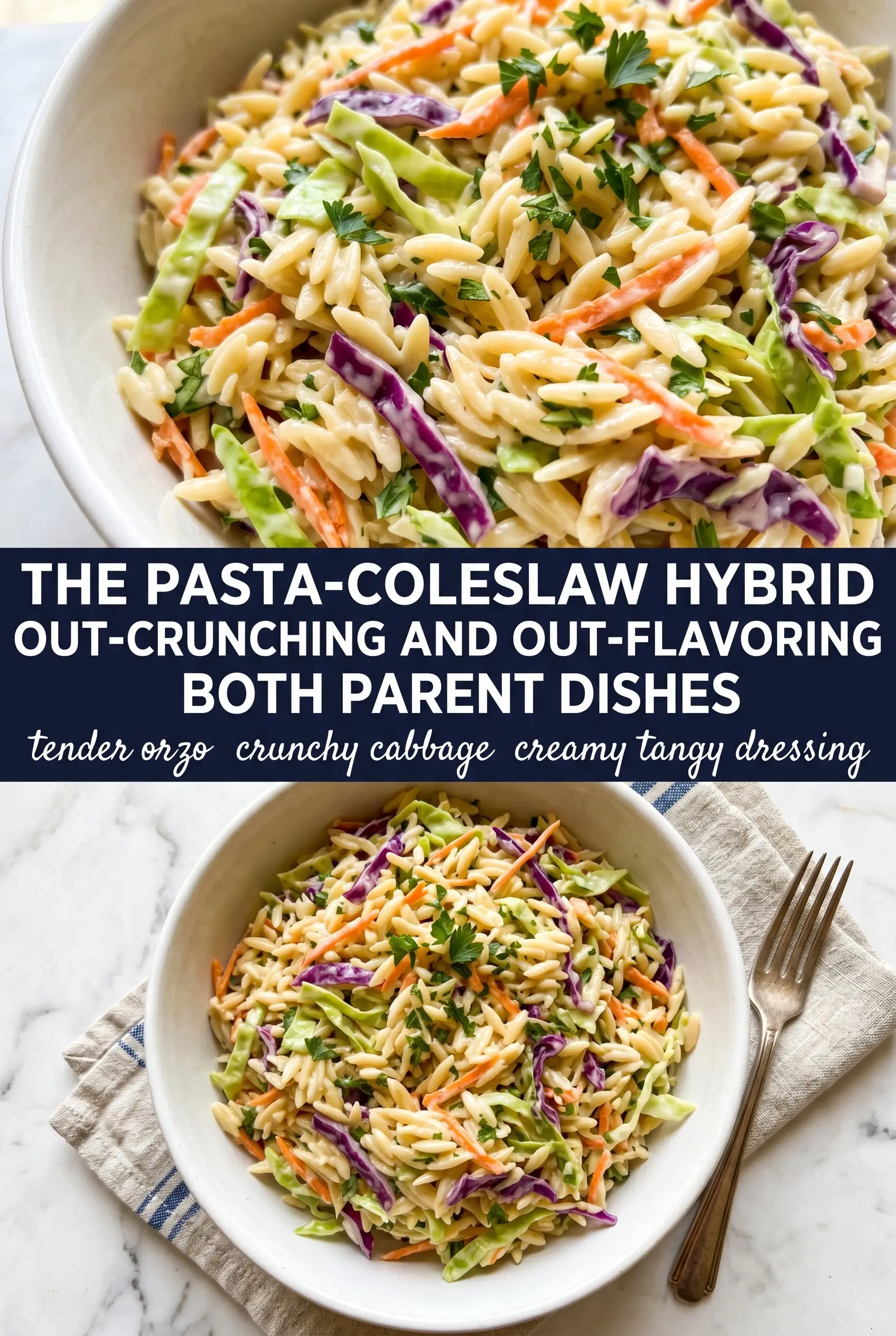
Coleslaw Orzo Salad
Ingredients
Equipment
Method
- Cook orzo pasta according to package directions until tender. Drain and rinse with cold water to stop the cooking and cool the pasta.
- Whisk mayonnaise and sour cream together until smooth. Whisk in apple cider vinegar, sugar, celery seed, salt, and pepper until the dressing is evenly combined.
- In a large bowl, combine orzo pasta, coleslaw mix, and sliced green onions. Pour dressing over the salad and toss until well coated so everything is lightly covered.
- Refrigerate the salad for at least 1 hour to let the cabbage soften slightly. Keep it covered so the orzo stays moist and the flavors meld.
- Toss again before serving and adjust seasoning with more salt and pepper if needed. Serve cold, after the second toss helps redistribute the dressing.