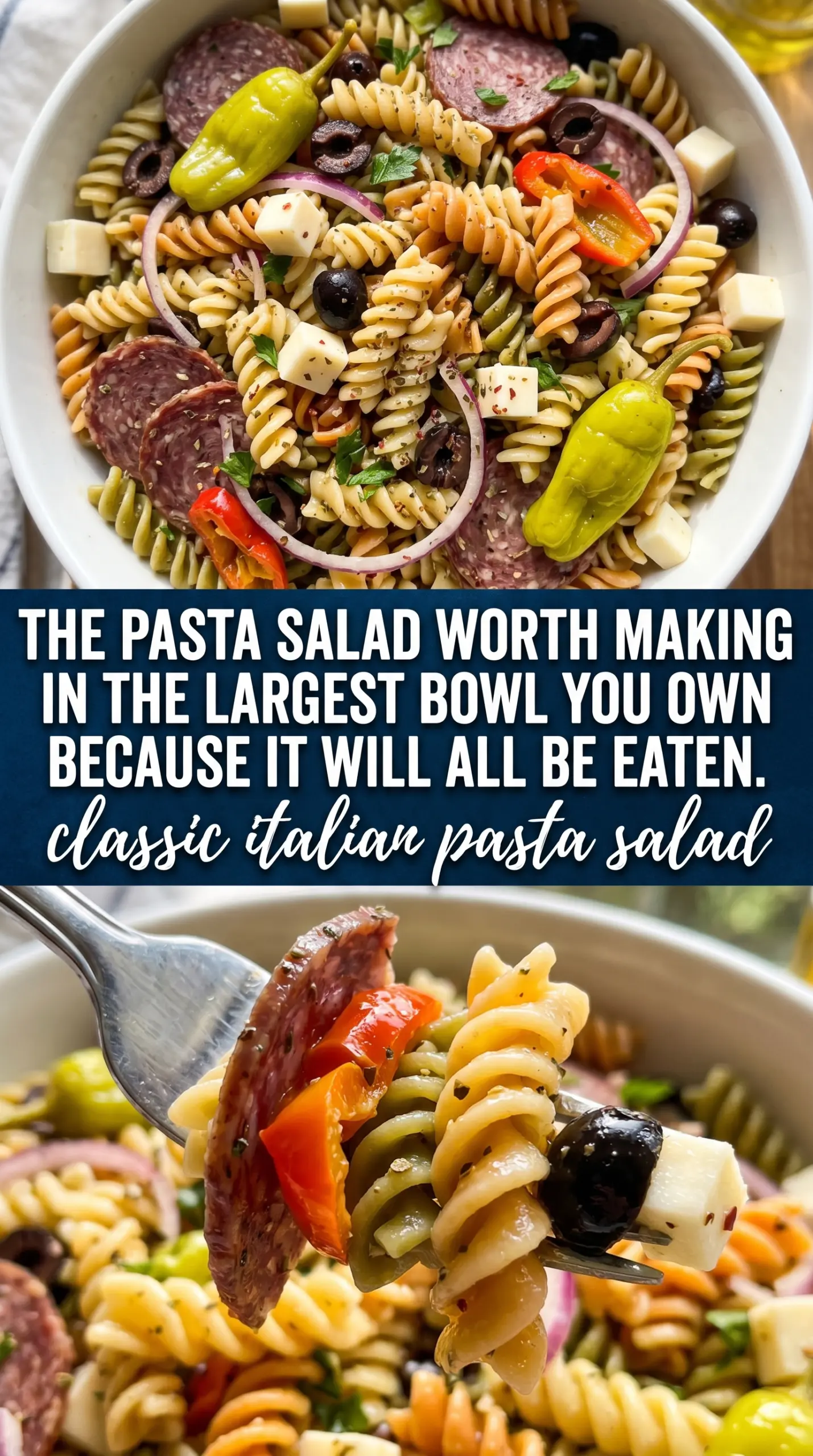
Classic Italian pasta salad earns its place at the table because it stays bold, chilled, and satisfying even after it sits. The tri-color rotini catches the dressing in every spiral, the pepperoni brings a salty edge, and the mozzarella softens everything without turning heavy. It’s the kind of side dish that gets scooped up fast at cookouts, potlucks, and weeknight dinners when you want something cold with enough punch to stand on its own.
The difference here is in the balance. Rinsing the pasta stops the cooking fast and keeps the salad from turning gummy, but the real payoff comes after the chill time when the pasta drinks in the Italian dressing and the seasoning settles into the vegetables. A little Parmesan and Italian seasoning deepen the flavor so it tastes layered, not just tossed together. If you’ve ever had pasta salad that felt flat or dry, this version fixes both problems.
Below, I’ve included the timing that matters most, the ingredient swaps that still keep the salad on track, and the one reheating-style note that matters for a dish served cold: how to refresh it before it hits the table.
I let it chill overnight, and the dressing soaked into the pasta without making it soggy. The pepperoni and mozzarella held up perfectly, and it tasted even better after the second toss before serving.
Save this classic Italian pasta salad for the potluck bowls and summer cookouts that need a cold, tangy side with pepperoni, mozzarella, and plenty of color.
The Chill Time That Keeps the Pasta Salad From Going Flat
Most pasta salad problems start after the bowl is already mixed. If the pasta goes in warm, it keeps absorbing dressing too fast and turns soft on the outside before the center is seasoned. Rinsing it cold stops that carryover cooking, and the long chill gives the rotini time to pick up flavor without losing its shape.
This is also why the salad tastes better after it rests. The dressing loosens the pepperoni fat just enough to coat the pasta, and the vegetables give up a little moisture that blends into the bowl instead of pooling at the bottom. If your first toss looks a little tight, that’s normal. The second toss after chilling is where the salad finishes coming together.
- Tri-color rotini — The spirals hold onto the dressing better than straight pasta. Any short pasta with ridges works, but rotini gives you the best texture and the most even coating.
- Italian dressing — Bottled dressing works here because it already has the oil, acid, and seasoning balanced. Homemade dressing can work too, but it needs enough salt and vinegar to stand up to the pasta and cheese.
- Pepperoni — This is what gives the salad its salty, savory backbone. Halving the slices helps them spread through the bowl instead of clumping.
- Mozzarella — Use a firm block or whole-milk mozzarella cut into cubes. Fresh mozzarella is wetter and can soften the salad too much as it sits.
- Parmesan — A little goes a long way here. It sharpens the dressing and helps the whole bowl taste less one-note.
What Each Ingredient Is Actually Doing in Classic Italian Pasta Salad
- Fresh vegetables (vibrant, crisp, quality) — Start with fresh, brightly colored vegetables. Wilted vegetables make everything taste tired.
- Acid (vinegar, lemon juice, or lime) — The acid prevents oxidation and prevents flat taste. It’s essential for brightness.
- Oil (quality matters for flavor) — Good olive oil adds freshness. Cheap oil makes the salad taste flat.
- Salt (enhances all other flavors) — Proper seasoning makes vegetables taste more like themselves. Don’t undersalt.
- Fresh herbs (tender ones added last) — Fresh herbs add complexity and brightness. Add them right before serving.
- Protein or hearty elements (if using) — These should complement without overwhelming the vegetables. Keep the salad light.
- Dressing applied just before serving — Don’t dress early or the vegetables release liquid and wilt. Timing is everything.
- Taste and adjust (check for balance) — The salad should taste bright and assertive. Add more acid or salt if needed.
Building the Bowl So Every Bite Tastes Like Italian Dressing
Cooking and Cooling the Pasta
Cook the rotini just until tender, then drain it and rinse it under cold water until it feels cool to the touch. That rinse matters because you want the pasta to stop cooking immediately and keep a little bite. If you skip it, the salad turns softer than it should and the dressing can’t cling as cleanly. Shake off as much water as you can so the dressing doesn’t get diluted.
Mixing the Heartier Ingredients First
Combine the pasta with the pepperoni, mozzarella, tomatoes, bell pepper, olives, and red onion in a large bowl before adding the dressing. This gives you a chance to see whether the mix looks balanced before the seasoning goes in. If the bowl is cramped, the dressing won’t coat evenly and the heavier ingredients settle at the bottom. Use a bowl that gives you room to toss without smashing the cheese.
Seasoning and Chilling for the Best Flavor
Add the Italian dressing, Parmesan, and Italian seasoning, then toss until every piece is lightly coated. Taste it before chilling and season with salt and pepper only if it needs it, because the pepperoni, cheese, and dressing already bring a lot of salt. Refrigerate for at least 3 hours, and overnight is even better if you want the flavors to fully settle in. Toss it again before serving and add a splash more dressing if the pasta looks dry.
How to Adjust It Without Losing the Classic Italian Pasta Salad Feel
Make it vegetarian
Leave out the pepperoni and add chopped salami-style olives, extra tomatoes, or cubes of provolone if you still want a stronger savory note. The salad becomes a little lighter and less smoky, but the dressing and Parmesan keep it firmly in the Italian-American lane.
Make it gluten-free
Use your favorite gluten-free rotini and cook it just to tender, since GF pasta can go from firm to mushy fast. Rinse it well and toss gently so the noodles don’t break apart while they cool.
Swap the mozzarella for provolone
Provolone gives the salad a sharper, more deli-style finish and holds its shape just as well. It’s a good move if you want a little more bite without changing the overall structure.
Storage and Reheating
- Refrigerator: Keep covered for up to 4 days. The pasta absorbs more dressing as it sits, so the texture gets a little softer over time.
- Freezer: Don’t freeze this one. The pasta turns soft and the vegetables lose their crunch once thawed.
- Reheating: This salad is meant to be served cold. If it has been in the fridge overnight, let it sit out for 15 to 20 minutes and toss in a splash of dressing before serving so the pasta tastes lively again.
Answers to the Questions Worth Asking
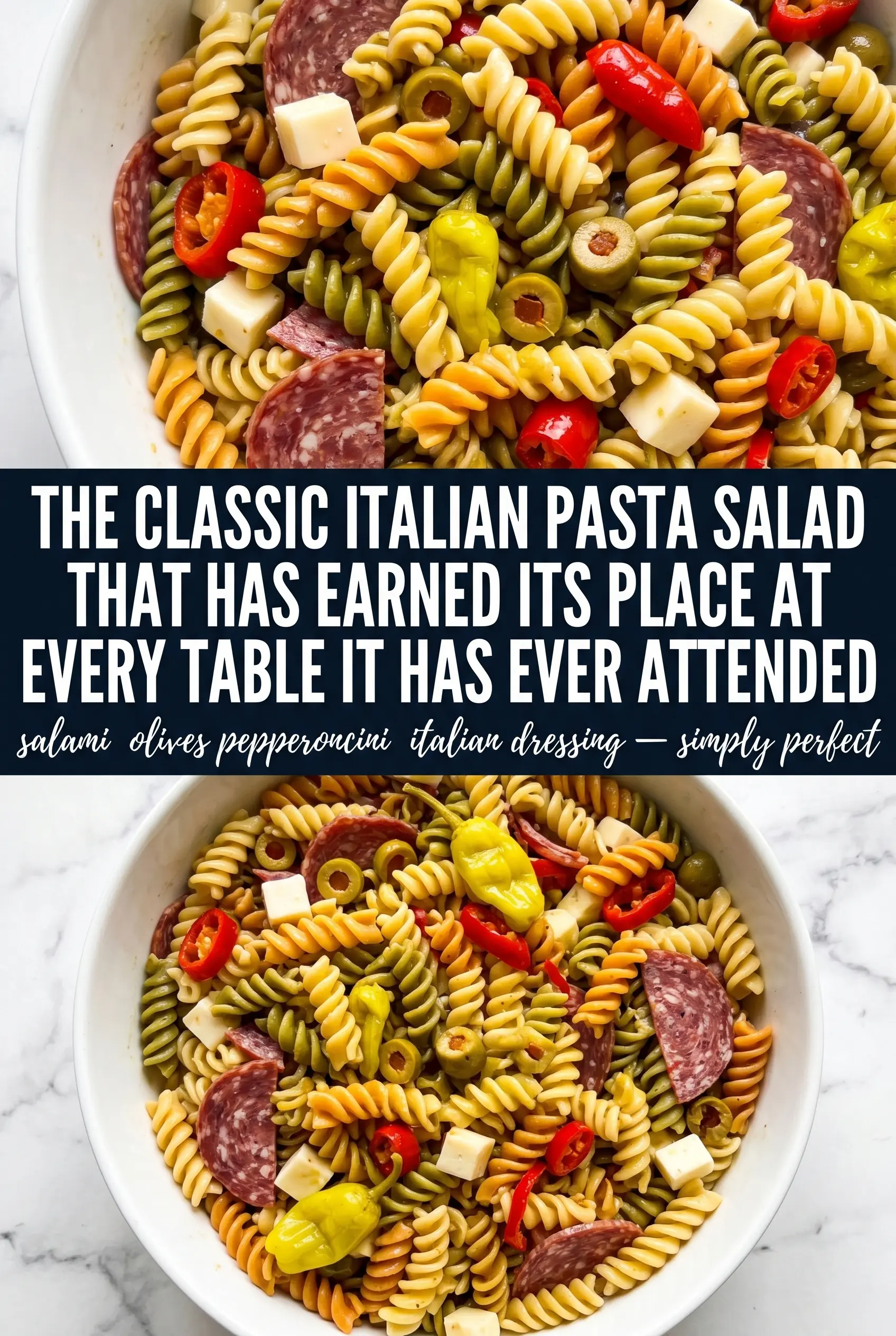
Classic Italian Pasta Salad
Ingredients
Method
- Cook tri-color rotini pasta according to package directions until tender. Drain and rinse with cold water to stop cooking (cool, not hot).
- In a large bowl, combine the cooled tri-color rotini pasta, halved pepperoni slices, cubed mozzarella cheese, halved cherry tomatoes, diced green bell pepper, sliced black olives, and diced red onion.
- Add Italian dressing, grated Parmesan cheese, and Italian seasoning, then toss until everything is evenly coated (even red, white, and green coverage).
- Season with salt and pepper to taste, tossing once more to distribute (no dry spots visible).
- Refrigerate for at least 3 hours or overnight, tossing occasionally so the pasta absorbs the dressing (keep cold, around 40°F/4°C).
- Just before serving, toss again and add more Italian dressing if needed to loosen and recoat (glossy, evenly dressed look).