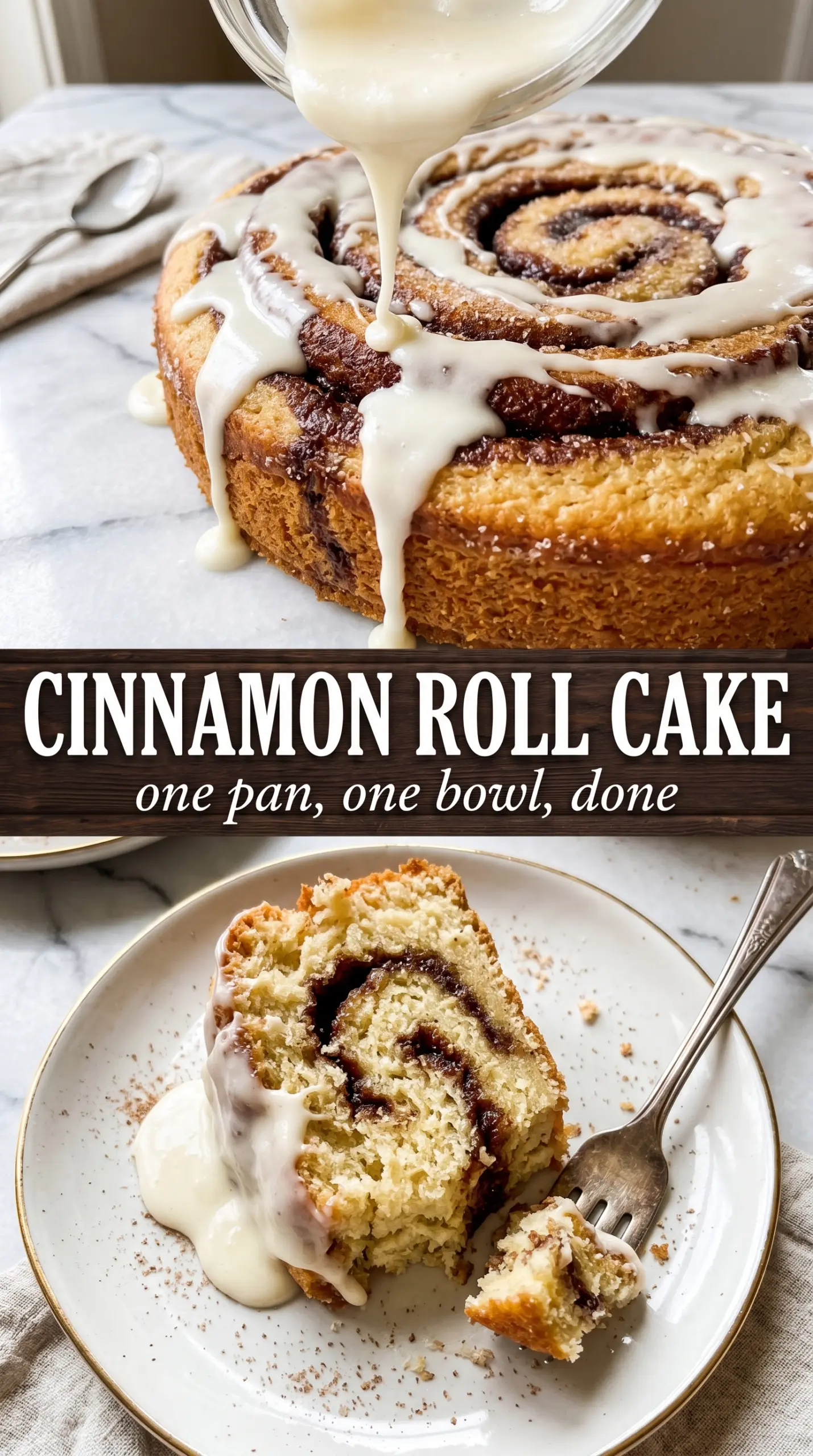
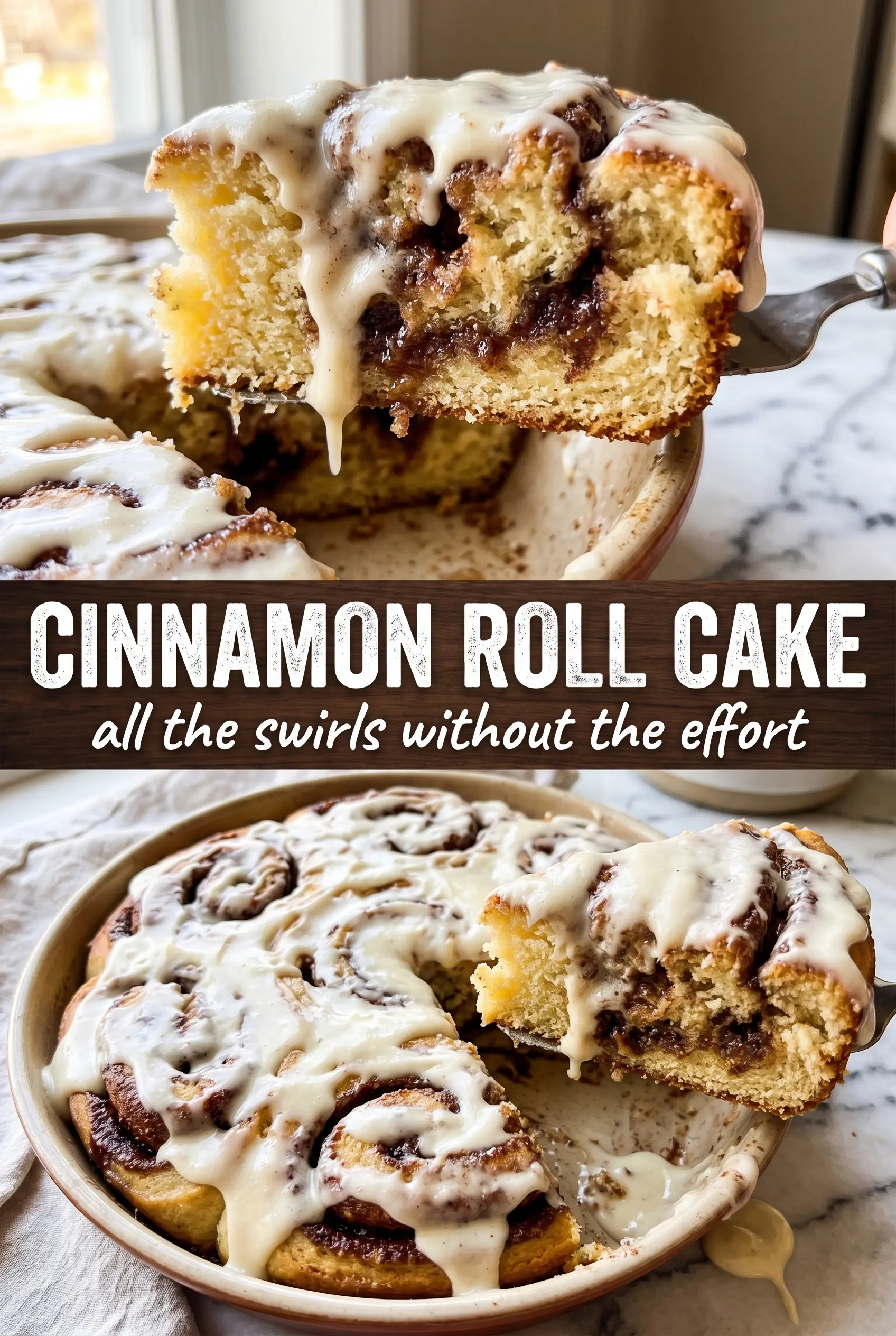
Golden, tender cinnamon roll cake gives you all the best parts of a bakery-style roll without the time, the shaping, or the fuss of yeast dough. The crumb stays soft and cakey, but the ribboned cinnamon-brown sugar swirl melts down into the batter and bakes into sticky pockets that taste like the center of a cinnamon roll. Warm cream cheese glaze finishes the whole pan with that classic sweet tang, and it sinks into the swirls instead of sitting on top like icing.
The trick here is using a batter that spreads easily, then layering on a thick cinnamon butter mixture so it can marbelize through the cake instead of disappearing. Melted butter in the cake batter keeps the crumb rich and tender, while softened butter in the swirl gives you those deep cinnamon ribbons that bake up defined and dramatic. Pour the glaze over the cake while it’s still warm and it will seep into every crack and corner.
Below, I’ll walk through the little details that keep the swirl from blending away and show you how to get the glaze thickness just right. There’s also a few easy ways to adapt it if you want to change the dairy or bake it ahead.
The swirl baked up in thick ribbons instead of disappearing into the cake, and the glaze soaked in just enough to make the top gooey without turning it soggy. I served it warm for brunch and there wasn’t a crumb left.
Like this cinnamon roll cake? Save it to Pinterest for a shortcut brunch cake with thick cinnamon swirls and warm cream cheese glaze.
The swirl is thick for a reason
The mistake people make with cinnamon roll cake is thinning the swirl so much that it melts straight into the batter. That sounds harmless, but it leaves you with cinnamon-flavored cake instead of those bold, sticky ribbons that make this dessert-breakfast hybrid worth baking. The cinnamon butter needs to be soft enough to drop by spoonful, but stiff enough to hold its shape in the oven for the first part of baking.
If your swirl disappears, it usually means the filling was too warm or the batter was too loose. Cold eggs and milk aren’t necessary here, but the butter for the swirl should be softened, not melted. That little bit of structure gives you distinct pockets of brown sugar flavor instead of a uniform tan cake.
- All-purpose flour — This gives the cake enough structure to support the heavy swirl and glaze without turning dense. Cake flour will make it a little softer, but it can get fragile under all that topping.
- Whole milk — The fat helps keep the crumb tender and gives the batter enough body. You can use 2% in a pinch, but the cake won’t taste as plush.
- Softened butter for the swirl — This is what keeps the cinnamon mixture from sinking into the batter. If you use melted butter here, the sugar loosens too much and the swirl blurs out.
- Cream cheese — Full-fat cream cheese gives the glaze that tangy finish that cuts through the sweetness. Reduced-fat cream cheese works, but the glaze can turn a little thinner and less rich.
What Each Ingredient Is Actually Doing in This Recipe
- Primary ingredient (the star) — Quality matters most. Choose the best you can find.
- Cooking medium (oil, butter, or broth) — This carries flavors and prevents dryness.
- Seasonings (salt, pepper, spices, herbs) — Layer flavors so nothing overpowers. Build depth gradually.
- Aromatics (garlic, onion, herbs) — Cook with fat to bloom flavors. Become the foundation.
- Supporting ingredients — Complement the main ingredient without overpowering it.
- Sauce or liquid (if applicable) — Brings flavors together. Balance richness with acid.
- Acid (lemon, vinegar, wine, or other) — Brightens and prevents flat-tasting results.
- Final finish (garnish, glaze, or sauce) — Prevents one-dimensional taste and adds visual appeal.
Building the batter, swirl, and glaze in the right order
Mix the cake just until it comes together
Whisk the dry ingredients first so the baking powder is evenly distributed, then stir in the milk, eggs, vanilla, and melted butter only until no dry streaks remain. The batter should look thick but spreadable, not fluffy. If you beat it hard or too long, the cake can bake up tight instead of tender.
Drop the cinnamon filling in thick spoonfuls
Beat the cinnamon swirl ingredients until they’re combined and fluffy, then spoon it over the batter in uneven dollops. Don’t try to spread it into a full layer; that’s what makes the swirl blend too much. Drag a knife through the pan in broad figure-eights, stopping before everything turns muddy.
Bake until the center springs back
The top should be golden and set, and a toothpick inserted in the center should come out clean or with a few moist crumbs. If the middle still looks glossy, give it a few more minutes. Underbaking here leaves the glaze sitting on a raw layer, which makes the whole cake feel heavy.
Glaze it while the cake is warm
Beat the cream cheese glaze until smooth and pour it over the cake as soon as it comes out of the oven. Warm cake pulls the glaze into the swirls, which is exactly what you want. If the glaze seems too thick to spread, add a teaspoon of milk at a time until it ribbons easily.
How to adapt cinnamon roll cake without losing the best part
Make it dairy-free
Use a neutral plant-based milk, a dairy-free butter substitute, and a dairy-free cream cheese for the glaze. The cake will still bake up soft, but the glaze may taste a little less tangy than the original. Let the glaze cool for a minute before pouring so it doesn’t separate.
Reduce the sweetness a notch
Cut the powdered sugar in the glaze by about 1/2 cup and keep the cream cheese full-fat. That gives you a glaze that still coats the cake but lets the cinnamon swirl taste deeper and less candy-like.
Add a coffee cake edge
Sprinkle a little coarse sugar over the top before baking if you want a faint crunch and more bakery-style finish. It won’t change the crumb, but it adds a crisp top that plays nicely with the soft glaze.
Storage and Reheating
- Refrigerator: Store covered for up to 4 days. The glaze firms up in the fridge, but the cake stays moist.
- Freezer: Freeze individual slices tightly wrapped for up to 2 months. Thaw in the refrigerator so the glaze doesn’t weep.
- Reheating: Warm slices in the microwave for 15 to 20 seconds. Too much heat makes the glaze separate and the cake dry at the edges.
Questions I Get Asked About This Recipe
Cinnamon Roll Cake
Ingredients
Equipment
Method
- Preheat oven to 350°F and grease a 9x13 baking dish so the batter releases cleanly.
- Whisk together flour, granulated sugar, baking powder, and salt until evenly mixed.
- Stir in whole milk, eggs, vanilla extract, and melted butter just until combined, keeping the batter thick.
- Spread the batter into the prepared dish in an even layer.
- Beat softened butter, brown sugar, and cinnamon until fluffy for a spreadable swirl paste.
- Drop spoonfuls of the cinnamon mixture over the batter.
- Use a knife to swirl the cinnamon mixture into the batter to create marbled streaks throughout.
- Bake for 30-35 minutes at 350°F until a toothpick comes out clean and the top is golden.
- While cake is still warm, beat cream cheese, powdered sugar, milk, and vanilla extract until smooth.
- Pour the glaze over the warm cake so it pools into every swirl and crevice.
- Let the glaze soak in for 5 minutes before serving warm.