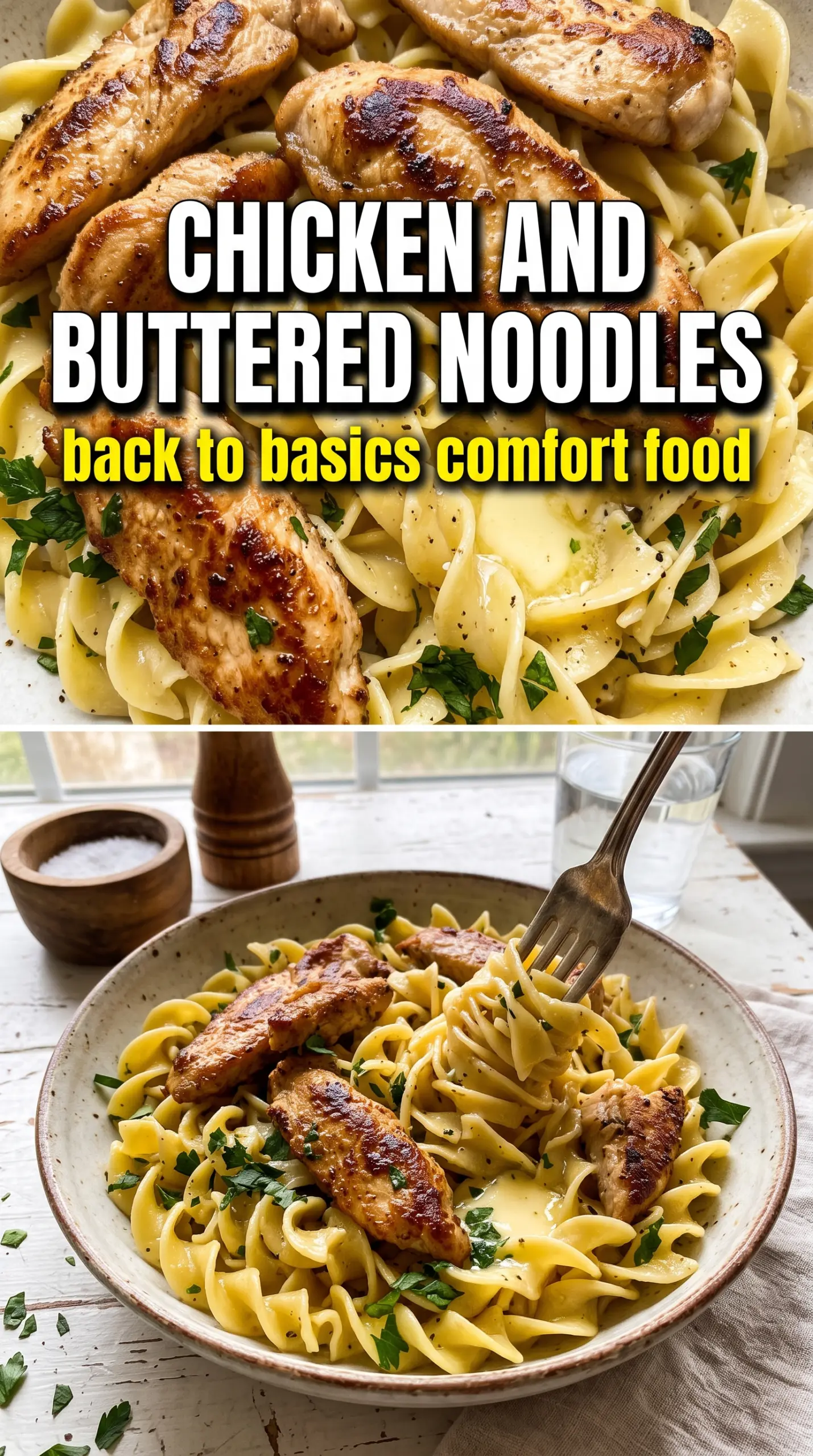
Silky buttered noodles and golden chicken belong together in the same pan. The noodles pick up every bit of garlic, butter, and Parmesan, while the chicken stays juicy enough to slice cleanly and drape over the top. What you get is simple comfort food that still feels finished, not like two separate things on one plate.
The trick is using the skillet from the chicken for the sauce instead of starting over. Those browned bits at the bottom give the buttered noodles more depth than plain melted butter ever could. A splash of pasta water helps the noodles turn glossy and clingy instead of greasy, and a short rest before slicing keeps the chicken from losing its juices all over the cutting board.
Below you’ll find the small details that make this dinner work on a weeknight: how to keep the noodles coated, when to add the Parmesan, and what to change if you want a little heat, extra richness, or a lighter version.
The noodles came out glossy instead of greasy, and the garlic butter clung to every strand. My husband kept going back for seconds and said the chicken stayed surprisingly juicy.
Save these chicken with buttered noodles for the nights when you want glossy garlic butter noodles, juicy chicken, and almost no cleanup.
The Trick to Keeping Buttered Noodles Glossy Instead of Greasy
The difference between silky noodles and a slick, oily bowl comes down to heat and moisture. Butter alone coats, but it doesn’t bind well once the noodles cool down a little. That reserved pasta water is the glue here, and it works because the starch helps the butter cling instead of separating.
Don’t drain the noodles and leave them sitting for long before tossing them in. Warm noodles absorb the garlic butter better, and the sauce stays looser while you stir. If the pan looks dry, add a spoonful of pasta water at a time until the noodles look lacquered and move as one instead of clumping.
- Egg noodles — Their soft, tender bite fits this dish better than a firm pasta shape. If you swap in spaghetti or fettuccine, use a little extra pasta water because those shapes need more help coating evenly.
- Butter — This is the base of the sauce, so use one you like the taste of. Salted butter works fine, but if that’s what you use, ease up on the final seasoning until you’ve tasted the finished noodles.
- Parmesan — Grated Parmesan adds salinity and a little body. Freshly grated melts more smoothly than the shelf-stable kind, which can turn sandy in a butter sauce.
- Chicken breasts — Slicing them thin after resting keeps the texture tender and gives you more surface area for the noodles and cheese. Chicken thighs work too if you want a richer result; just cook them until they’re fully done and browned at the edges.
- Pasta water — This is what keeps the sauce from feeling heavy. If you forget to save it, warm water will work in a pinch, but the noodles won’t cling as well.
What Each Ingredient Is Actually Doing in This Recipe
- Primary ingredient (the star) — Quality matters most. Choose the best you can find.
- Cooking medium (oil, butter, or broth) — This carries flavors and prevents dryness.
- Seasonings (salt, pepper, spices, herbs) — Layer flavors so nothing overpowers. Build depth gradually.
- Aromatics (garlic, onion, herbs) — Cook with fat to bloom flavors. Become the foundation.
- Supporting ingredients — Complement the main ingredient without overpowering it.
- Sauce or liquid (if applicable) — Brings flavors together. Balance richness with acid.
- Acid (lemon, vinegar, wine, or other) — Brightens and prevents flat-tasting results.
- Final finish (garnish, glaze, or sauce) — Prevents one-dimensional taste and adds visual appeal.
How to Build the Sauce in the Same Pan as the Chicken
Searing the Chicken Hard Enough
Season the chicken well before it hits the pan, then let it cook over medium-high heat until the outside turns deeply golden and it releases without sticking. If you move it too early, you’ll tear the crust and leave flavor in the pan. The goal is 165°F in the center, but the bigger cue is a firm surface and clear juices when you cut into the thickest part after resting.
Turning Butter, Garlic, and Pasta Water Into a Sauce
Drop the heat to medium before the garlic goes in, because garlic burns fast and burned garlic tastes sharp instead of warm and savory. Stir it just until fragrant, then add the noodles and toss right away so the butter coats every strand before it has a chance to pool. When the noodles look a little sticky or the pan starts to look dry, add pasta water in small splashes and keep tossing until the sauce turns glossy.
Finishing So Nothing Tastes Flat
Add the parsley at the end so it stays bright, not dull and swampy. Season after the Parmesan goes in, because the cheese brings salt of its own and you can easily overshoot if you season too early. Slice the chicken after it rests, then pile it over the noodles and shower the top with more Parmesan while everything is still hot enough to melt it slightly.
How to Adapt This for a Few Different Kitchens
Make It Dairy-Free
Use a good dairy-free butter and skip the Parmesan or replace it with a dairy-free hard cheese alternative. The sauce will still coat the noodles, but it won’t have quite the same savory depth, so taste carefully and lean on the garlic and parsley to keep it lively.
Use Chicken Thighs for More Richness
Boneless thighs give you a juicier, more forgiving result and a little extra flavor in the pan drippings. They may need a couple more minutes to cook through, but the final dish tastes deeper and holds up well if it sits for a few minutes before serving.
Make It Gluten-Free
Swap in your favorite gluten-free egg noodle or short pasta. Keep an eye on the cooking time and save a little pasta water, because gluten-free pasta can go from firm to fragile quickly and still needs starchier water to help the sauce cling.
Add Heat Without Changing the Dish
A bigger pinch of red pepper flakes gives the butter a gentle kick without overpowering the noodles. If you want actual heat, add a little cracked black pepper at the end too; pepper added early can taste muddy after the butter and cheese go in.
Storage and Reheating
- Refrigerator: Store leftovers for up to 3 days. The noodles will tighten up as they chill, and the chicken stays best if it’s sliced after cooling.
- Freezer: The chicken freezes better than the noodles. If you plan ahead, freeze the sliced chicken separately and cook fresh noodles for the best texture.
- Reheating: Warm gently in a skillet over low heat with a splash of water or broth. Microwave reheating works, but stop and stir often so the butter doesn’t separate and the noodles don’t dry out.
Questions I Get Asked About This Recipe
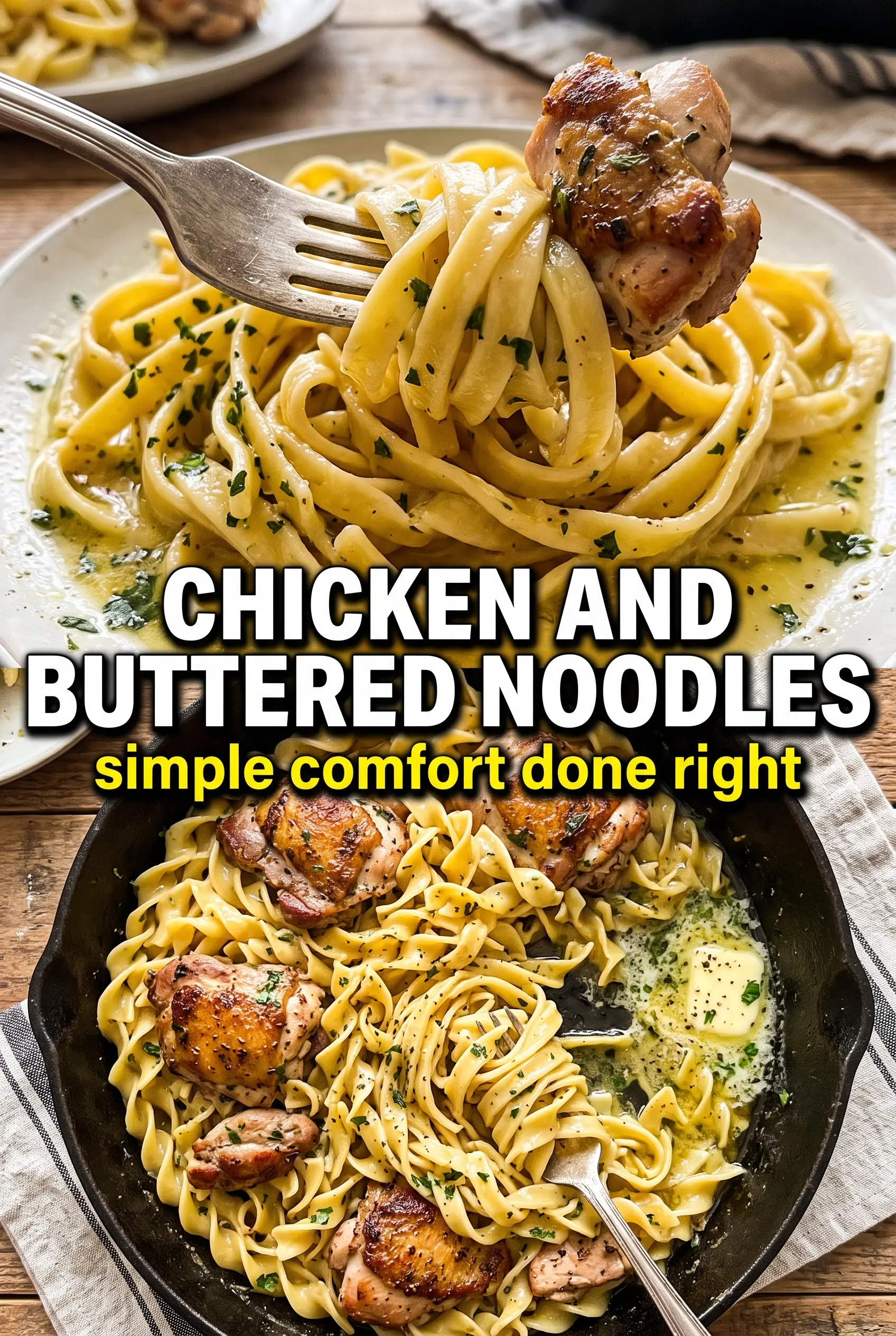
Chicken with Buttered Noodles
Ingredients
Equipment
Method
- Season the chicken breasts with salt, pepper, garlic powder, and Italian seasoning. Heat olive oil in a cast iron skillet over medium-high heat and sear until golden, 5-6 minutes per side, until the internal temperature reaches 165°F, then rest and slice.
- Melt the butter in the same skillet over medium heat. Add the minced garlic and red pepper flakes and cook 1-2 minutes until fragrant.
- Add the cooked egg noodles to the garlic butter and toss to coat. Add reserved pasta water as needed to loosen the sauce into a silky coating.
- Season with salt and pepper, then stir in the chopped fresh parsley. Divide the noodles among plates, top with sliced chicken, scatter Parmesan generously over the top, and serve immediately.