Penne, marinara, crispy chicken, and a thick blanket of melted mozzarella turn into the kind of baked pasta people go back to for a second scoop before they’ve finished the first plate. The chicken stays crunchy on the outside because it gets browned before it ever touches the sauce, and the pasta bakes just long enough to absorb the tomato without turning soft.
The trick is keeping the chicken separate until the very end of the build. If you toss breaded chicken straight into sauce, it gives up that crisp coating fast. Here, the pasta and marinara go into the baking dish first, then the chicken sits on top so the oven can melt the cheese without steaming the breading into submission.
Below, I’m walking through the part that matters most: how to keep the chicken golden, how to avoid a dry pasta bake, and which shortcuts still give you a proper chicken Parmesan result.
The chicken stayed crisp on top even after baking, and the pasta underneath soaked up the marinara without getting mushy. I added fresh basil at the end and it tasted like a proper chicken parm dinner in casserole form.
Love the crisp chicken and bubbling mozzarella in this Chicken Parmesan Pasta? Save it to Pinterest for the nights when you want baked pasta with a true chicken parm crunch.
The Reason the Chicken Stays Crisp Instead of Going Soggy
The biggest mistake in chicken parm pasta is treating the breaded chicken like it belongs in the sauce from the start. It doesn’t. The coating needs direct heat to set, brown, and dry out just enough to hold onto its crunch; once it’s buried under marinara, that coating starts softening fast. That’s why the chicken gets fried first and only meets the sauce during the final bake.
The second detail that matters is the pasta texture. Cook it to just shy of tender so it can finish in the oven without collapsing. If it starts out fully soft, the bake turns heavy and a little pasty once the cheese melts on top.
What Each Ingredient Is Doing in This Chicken Parmesan Pasta
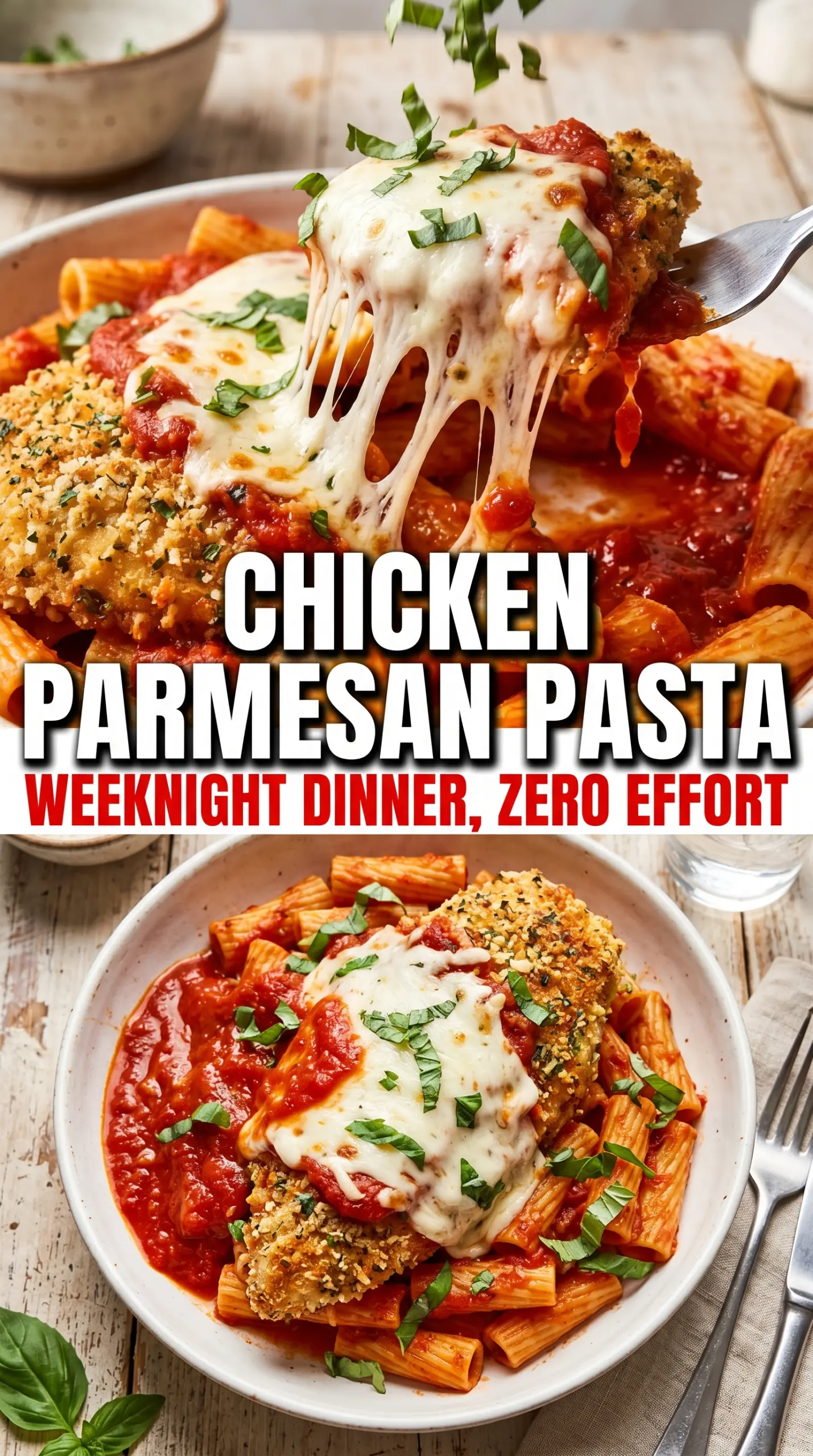
- Chicken breasts — Cutting them into bite-sized pieces gives you more crispy surface area, which matters here because the crunch is part of the dish, not just a topping.
- Italian breadcrumbs — These bring seasoning and a finer crust than plain crumbs. If you only have plain breadcrumbs, add extra Italian seasoning and a pinch of garlic powder.
- Parmesan — Some goes into the breading for a sharper, nuttier crust, and some goes on top so the finished bake gets that salty, browned edge. Pre-grated is fine for the coating, but freshly grated melts better as a topper.
- Marinara sauce — Use a sauce you’d actually eat on its own. A thin, bland sauce gets lost under the cheese, while a well-seasoned one carries the whole casserole.
- Mozzarella — Shredded low-moisture mozzarella is the right choice because it melts smoothly without dumping extra water into the dish. Fresh mozzarella tastes great, but it can make the pasta bake loose and watery.
- Penne — The ridges hold onto the sauce, and the tube shape keeps the bake from feeling flat. Any sturdy short pasta works, but penne gives the most classic chicken parm pasta bite.
Building the Crunch Before the Bake
Dredging for a Coating That Actually Sticks
Start by coating the chicken in flour, then egg, then the breadcrumb-Parmesan mixture. The flour gives the egg something to cling to, and the egg is what locks the crumbs on. If you skip the flour, the breading can slide off in the pan and leave you with patchy chicken. Press the crumbs on gently so the pieces look fully coated before they hit the oil.
Pan-Frying Until the Crust Turns Deep Gold
Use medium-high heat and give the chicken space in the pan. If the oil is crowded or too cool, the breading steams instead of crisping. You’re looking for a crust that’s deeply golden and a chicken center that’s cooked through, not pale and soft. Drain the pieces on paper towels so the extra oil doesn’t pool underneath the cheese later.
Layering the Pasta So It Bakes, Not Boils
Toss the cooked penne with marinara before it goes into the baking dish, then spread it into an even layer. The sauce should coat every piece without drowning the pasta. If the mixture looks dry before baking, add a splash more sauce; the oven needs enough moisture to finish the pasta without drying out the edges.
Finishing Under the Cheese
Arrange the chicken on top, then cover everything with mozzarella and Parmesan. Bake just until the cheese melts and starts to spot with gold. If you leave it in too long, the chicken coating loses its crunch and the pasta can tighten up. Fresh basil goes on after baking, when the heat can’t bruise it into dullness.
How to Adapt Chicken Parmesan Pasta Without Losing the Point
Gluten-Free Version
Swap the flour for a gluten-free all-purpose blend and use gluten-free breadcrumbs. The texture stays close to the original as long as you still do the flour-egg-crumb sequence, which is what keeps the coating attached.
Dairy-Free Version
Use a dairy-free mozzarella-style shred and skip the Parmesan in both the coating and topping. The dish still works, but you’ll lose some of the salty depth that Parmesan adds, so choose a marinara with solid seasoning.
Shortcut With Rotisserie Chicken
If you want to skip breading and frying, use chopped rotisserie chicken and fold it into the sauced pasta before baking. You’ll lose the crisp chicken parm crust, but you’ll get a much faster weeknight version with the same cheesy, saucy comfort.
Extra Saucy Baked Pasta
Add another 1/2 cup marinara if you like a looser bake. This helps if your sauce is thick or your pasta was cooked a little more than planned. The top still browns, but the center stays silkier and less dense.
Storage and Reheating
- Refrigerator: Store leftovers in an airtight container for up to 4 days. The chicken coating softens, but the flavor stays good.
- Freezer: It freezes well for up to 2 months if you cool it completely first. Wrap portions tightly so the cheese doesn’t pick up freezer burn.
- Reheating: Reheat covered in a 350°F oven until hot, then uncover for a few minutes to bring the top back to life. The common mistake is blasting it in the microwave, which turns the chicken rubbery and the pasta gummy.
Answers to the Questions Worth Asking
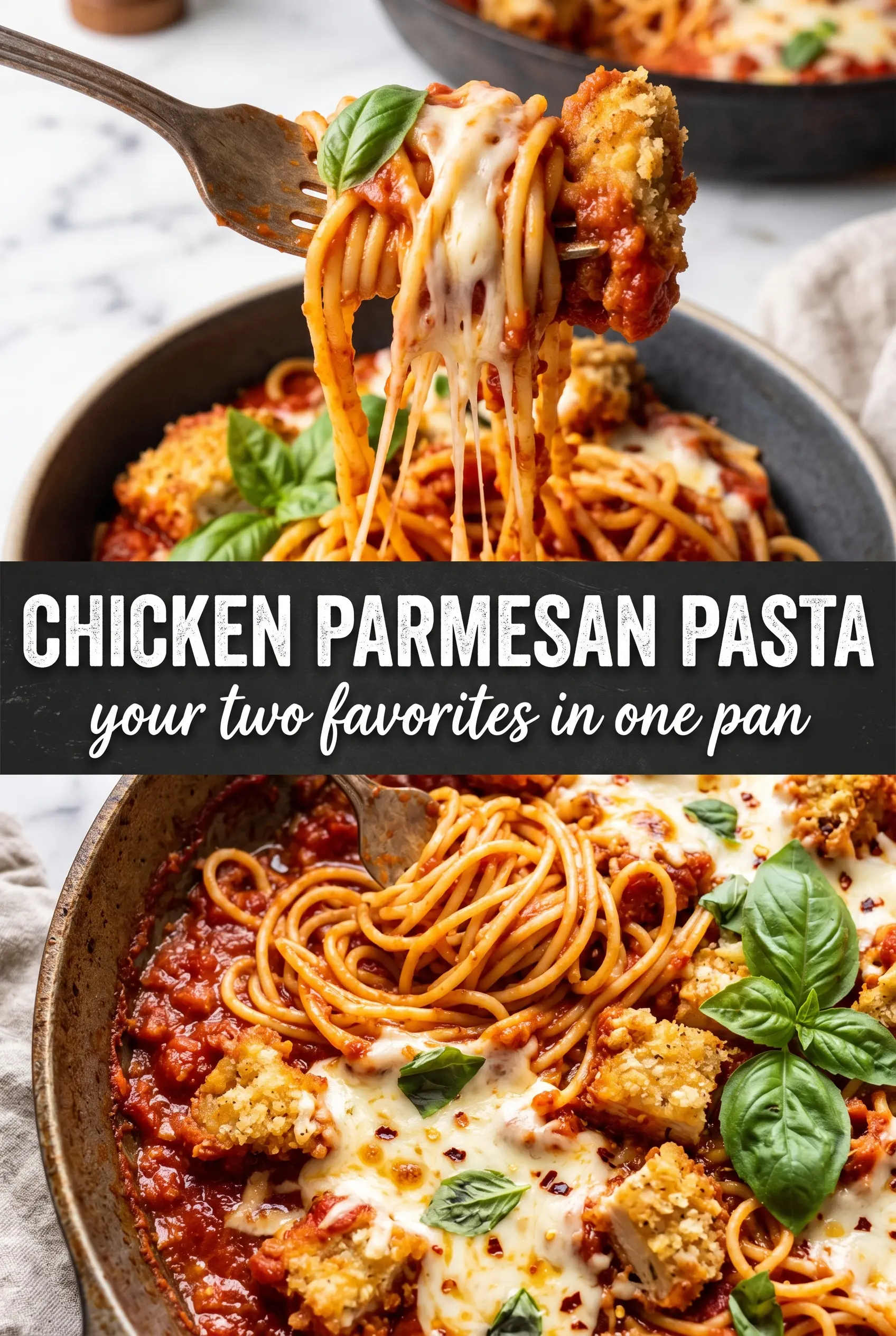
Chicken Parmesan Pasta
Ingredients
Equipment
Method
- Dredge the chicken pieces in the all-purpose flour, then dip in the beaten eggs.
- Coat the egged chicken in the Italian breadcrumbs mixed with the 1/2 cup Parmesan cheese.
- Pan-fry the breaded chicken in olive oil over medium-high heat for 3-4 minutes per side until golden and cooked through, then drain on paper towels.
- Toss the cooked penne with the marinara sauce and pour it into a greased 9x13 baking dish.
- Arrange the crispy chicken pieces over the pasta.
- Top with the shredded mozzarella cheese and Parmesan cheese.
- Bake at 375°F for 20-22 minutes until the cheese is melted and golden, then garnish with fresh basil.