Golden-seared chicken breasts tucked into a silky cream sauce with spinach and Parmesan are the kind of dinner that disappears fast once the pan hits the table. The chicken stays juicy because it gets a hard sear first, then finishes gently in the sauce instead of drying out in the oven. The sauce clings to every bite without feeling heavy, and the lemon at the end keeps the whole dish bright instead of flat.
What makes this version work is the balance: a quick white wine deglaze for depth, enough broth to keep the cream from turning thick and gluey, and Parmesan added after the simmer so it melts in smoothly. The spinach goes in at the end on purpose. Any earlier and it loses that fresh green color and turns limp before the sauce is ready.
Below, I’ve laid out the part that matters most if you want restaurant-style results at home: how to keep the sauce silky, what to do if it looks too thin, and the few ingredient swaps that won’t wreck the texture.
The sauce thickened up beautifully and stayed silky even after I added the spinach. I usually struggle with cream sauces breaking, but this one came together fast and my husband asked for seconds before I’d even plated mine.
Save this Chicken Florentine for the nights when you want a silky spinach cream sauce and golden chicken without a long ingredient list.
The Seared Chicken Is What Keeps This Dish from Feeling Bland
A lot of Chicken Florentine recipes rush straight into the sauce and end up with pale chicken that tastes like it was boiled in cream. The sear changes everything. You want a deep golden crust on both sides before the chicken ever goes into the sauce, because that browned surface gives the dish its savory backbone.
Don’t crowd the pan. If the chicken is too close together, it steams and the crust never forms. If your breasts are thick on one end and thin on the other, pound them to an even thickness first so the thinner side doesn’t dry out while the thicker side catches up.
- Chicken breasts — Boneless, skinless breasts work best here because they slice and serve neatly under the sauce. If yours are very large, cut them in half horizontally or pound them to even thickness for more reliable cooking.
- Dry white wine — This pulls the browned bits off the skillet and gives the sauce a clean, restaurant-style edge. Use something dry and drinkable, not sweet; if you don’t cook with wine, substitute extra chicken broth plus a teaspoon of lemon juice.
- Heavy cream — This is what gives the sauce its body and keeps it from curdling once the lemon and Parmesan go in. Half-and-half can work in a pinch, but the sauce will be thinner and a little less stable.
- Parmesan — Grate it fresh if you can. Pre-shredded cheese often contains anti-caking agents that can leave the sauce grainy instead of smooth.
- Fresh spinach — Baby spinach wilts in seconds and blends into the sauce without stringiness. Frozen spinach will make the sauce watery unless you squeeze it very dry first.
What Each Ingredient Is Actually Doing in This Recipe

- Primary ingredient (the star) — Quality matters most. Choose the best you can find.
- Cooking medium (oil, butter, or broth) — This carries flavors and prevents dryness.
- Seasonings (salt, pepper, spices, herbs) — Layer flavors so nothing overpowers. Build depth gradually.
- Aromatics (garlic, onion, herbs) — Cook with fat to bloom flavors. Become the foundation.
- Supporting ingredients — Complement the main ingredient without overpowering it.
- Sauce or liquid (if applicable) — Brings flavors together. Balance richness with acid.
- Acid (lemon, vinegar, wine, or other) — Brightens and prevents flat-tasting results.
- Final finish (garnish, glaze, or sauce) — Prevents one-dimensional taste and adds visual appeal.
Build the Sauce in the Same Pan So Every Bit of Flavor Stays Put
Searing the Chicken
Season the chicken generously before it hits the pan. The oil should shimmer, not smoke heavily, and the chicken should sizzle the second it lands. Leave it alone long enough to form a crust that releases on its own; if it sticks, it’s not ready to flip yet. Cook until the thickest part reaches 165°F, then move it out of the pan so the sauce has room to come together.
Deglazing and Reducing
Add the garlic for only about 30 seconds, just until it smells fragrant. Then pour in the wine and scrape the bottom of the skillet hard enough to lift every browned spot. That fond is where the best flavor lives. Let the wine reduce before adding the cream, or the sauce can taste sharp instead of rounded.
Bringing the Sauce Together
Stir in the cream and broth and let the mixture simmer gently until it starts to coat the back of a spoon. Keep the heat moderate. High heat can make the cream separate, especially once the Parmesan goes in. Add the cheese off the hardest boil, then finish with lemon juice and zest so the sauce tastes bright instead of heavy.
Wilting the Spinach and Returning the Chicken
The spinach only needs a minute or two. Stir it through until the leaves collapse but still look green. Return the chicken to the skillet and spoon sauce over the top so it reheats gently without drying out. If the sauce seems a little loose at this point, give it another minute on low; it will thicken as it sits.
What to Change When You Need a Different Version of Chicken Florentine
Dairy-Free Version
Use full-fat canned coconut milk in place of the cream and skip the Parmesan, then add a little extra salt and lemon to balance it. The sauce won’t taste classic in the Italian-American sense, but it will still be silky and spoonable. Keep the heat low, because coconut milk can separate if it boils hard.
Gluten-Free Serving Option
The chicken florentine itself is naturally gluten-free as written, so the only thing to watch is what you serve under it. Spoon it over rice, mashed potatoes, or gluten-free pasta. If you thicken the sauce too aggressively, it can start to feel pasty, so stop reducing once it lightly coats the spoon.
Using Chicken Thighs Instead
Boneless thighs give you a richer, juicier result and are a little harder to overcook. They need a few extra minutes in the skillet, and the sauce may pick up a deeper savory flavor from the darker meat. Trim excess fat first so the sauce doesn’t turn greasy.
Make-Ahead and Leftovers
This dish keeps well for meal prep because the sauce protects the chicken from drying out. Store leftovers in an airtight container in the refrigerator for up to 3 days. Reheat gently on the stove over low heat with a splash of broth or cream; the biggest mistake is blasting it in the microwave, which can make the sauce separate and the chicken turn rubbery.
Answers to the Questions Worth Asking
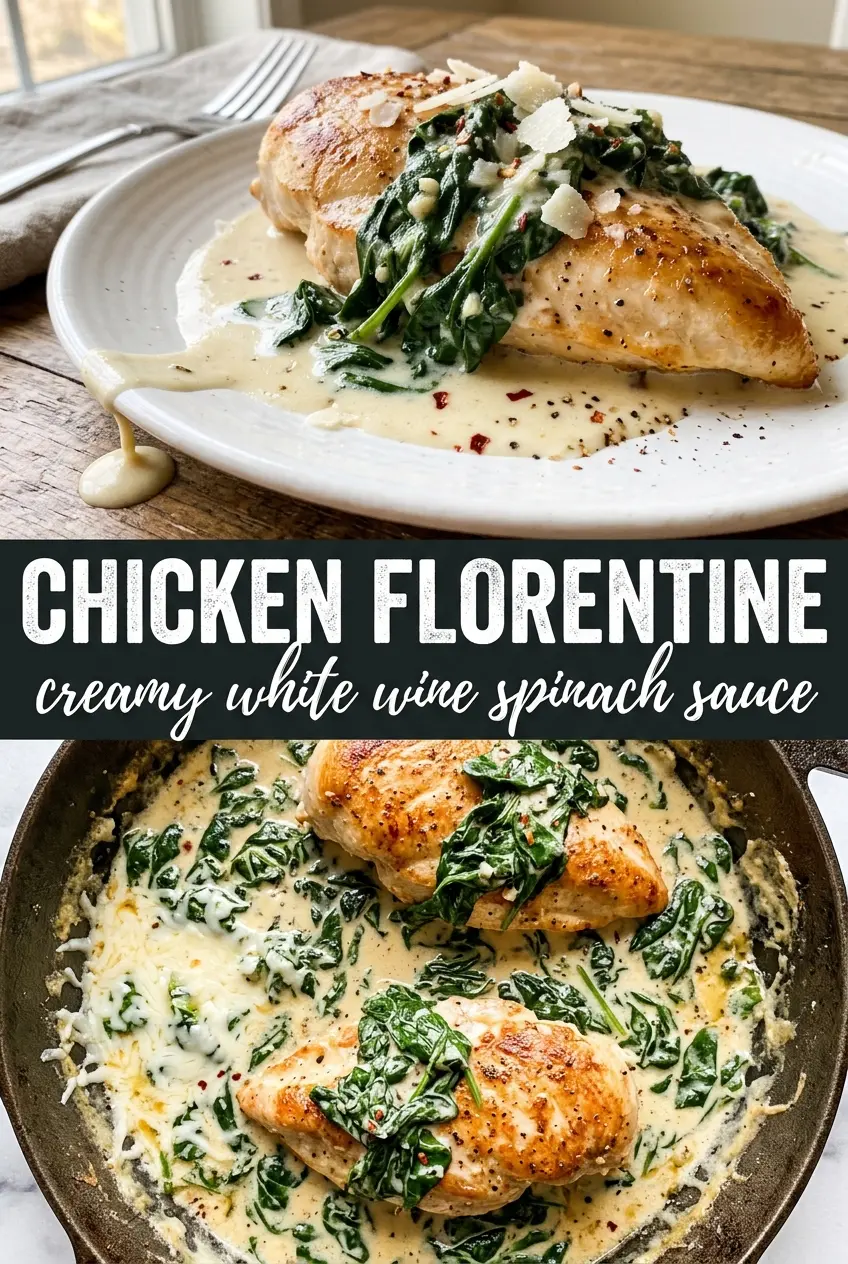
Chicken Florentine
Ingredients
Equipment
Method
- Season chicken breasts generously on both sides with salt, pepper, garlic powder, and Italian seasoning.
- Heat olive oil in a large skillet over medium-high heat, then sear chicken for 5-6 minutes per side until golden and cooked through to 165°F; remove and set aside.
- In the same pan, cook minced garlic for 30 seconds until fragrant.
- Pour in the dry white wine, scraping up browned bits, then simmer for 2 minutes.
- Add heavy cream and chicken broth, then simmer for 4-5 minutes until slightly thickened.
- Stir in Parmesan, lemon juice, and lemon zest until the sauce looks smooth and pale.
- Add baby spinach and stir until wilted.
- Return the chicken breasts to the pan and spoon the sauce over each breast.
- Garnish with fresh parsley and lemon, then serve over pasta or rice.