Chicken burrito casserole is the kind of bake that disappears fast because it hits all the right notes at once: saucy, cheesy, hearty, and just sturdy enough to hold onto a forkful without collapsing into a mess. The top turns golden and bubbling, the rice soaks up the enchilada sauce, and the tortillas underneath soften into something close to the best part of a burrito bowl and a baked pasta all at once.
What makes this version work is the balance. The chicken is already cooked, so the oven is there to meld everything together instead of drying it out. The black beans and corn bring texture, the Rotel adds enough acidity and heat to keep the casserole from tasting flat, and the tortilla layers keep it from turning into plain rice-and-chicken filling. I also like the cheese split between layers and the top, because it gives you coverage all the way through instead of one thick lid that just sits there.
Below you’ll find the small details that keep the casserole from getting soggy, the easiest swaps that still keep the burrito feel, and the trick I use when I want to stretch it for a bigger crowd without losing the texture.
The tortillas softened just enough without turning mushy, and the cheesy top came out golden with the filling still spoonable. I used leftover rotisserie chicken and it tasted like I’d put in way more effort than I did.
Chicken burrito casserole layers up the way a burrito bowl never can — cheesy, saucy, and ready for a bubbly golden top.
The Tortillas Need to Sit Under the Filling, Not Just on Top
The biggest mistake with a burrito casserole is treating the tortillas like garnish. If they only cover the top, the filling slides around and you lose that layered burrito texture that makes the dish feel complete. Putting torn tortilla pieces under the chicken mixture gives the sauce something to cling to, and the bottom layer softens just enough in the oven to hold everything together.
Using cooked rice matters here, too. Uncooked rice won’t have time to absorb enough liquid, and extra liquid meant to compensate usually leads to a loose casserole instead of distinct, scoopable layers. You want the mixture saucy before it goes into the pan, but not soupy. It should mound on a spoon and settle slightly when you spread it.
What Each Shortcut Ingredient Is Actually Doing Here
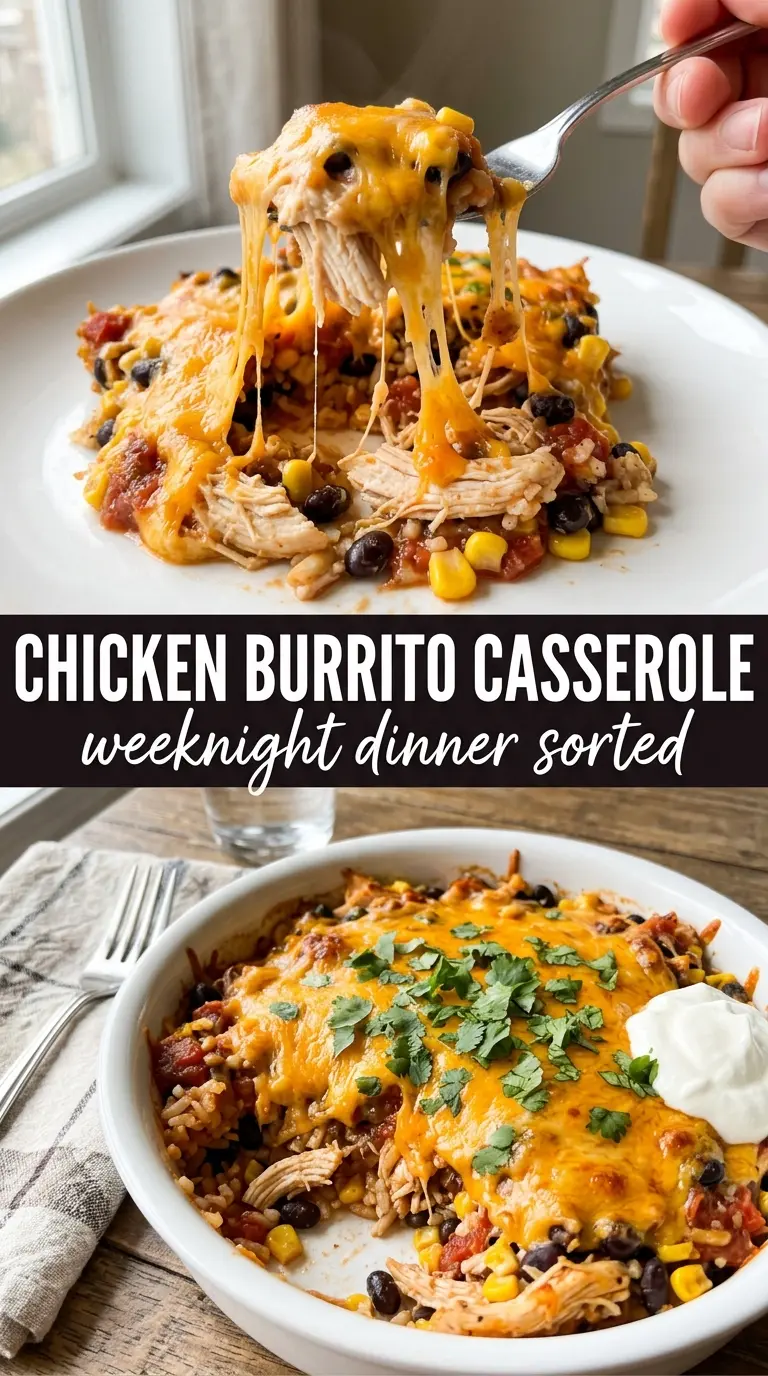
- Shredded chicken — Rotisserie chicken is the easiest win here because it stays juicy after baking. If you cook chicken just for this, season it lightly and don’t overcook it, or the casserole will taste dry even with all the sauce.
- Cooked white rice — Plain white rice gives the casserole structure without competing with the enchilada sauce. Brown rice works, but it brings a firmer bite and a nuttier flavor that changes the whole dish.
- Rotel and enchilada sauce — These are the backbone of the sauce. The enchilada sauce gives depth, while the tomatoes and green chiles add brightness and enough moisture to carry the rice and beans through baking.
- Mexican cheese blend — Pre-shredded cheese melts fine here, though a block you shred yourself will melt smoother and turn a little silkier on top. Don’t use a hard cheese with low melt unless you want a drier finish.
- Flour tortillas — Flour tortillas soften into tender layers and hold the casserole together better than corn tortillas in this style of bake. If you need gluten-free, use certified gluten-free corn tortillas and expect a looser, more rustic texture.
Building the Bake So the Cheese Stays Bubbling, Not Greasy
Mix the filling until every grain is coated
Combine the chicken, rice, beans, corn, enchilada sauce, Rotel, and taco seasoning in a large bowl until the rice looks evenly stained and the beans are distributed throughout. Dry pockets are what make a casserole taste disconnected, and they also create patches that bake up bland. If the mixture looks tight, add a splash more enchilada sauce instead of water so you keep the flavor where it belongs.
Layer for structure, not just convenience
Spread half the torn tortillas across the greased dish, then add half the filling and a layer of cheese. Repeat with the remaining tortillas and filling, then finish with the last cheese. This order keeps the bottom from turning into a mushy slab and gives you those distinct scoopable layers when you cut into it.
Bake until the edges bubble first
The casserole is done when the cheese is melted and the edges are actively bubbling, with the top turning spotty gold. If the center still looks a little soft when the sides are ready, that’s normal; the rest time finishes the job. Pulling it too early leaves you with a casserole that cuts like soup.
Let it rest before serving
Give it 5 minutes on the counter before you scoop. That short rest lets the sauce settle back into the rice and tortillas instead of running across the plate. If you skip it, the first serving usually falls apart no matter how carefully you built the layers.
How to Adapt This for Smaller Dinners, More Heat, or a Lighter Plate
Make it gluten-free with corn tortillas
Swap in certified gluten-free corn tortillas and tear them the same way. The flavor stays close, but the texture gets a little softer and more layered, almost like a tamale casserole. Corn tortillas also absorb sauce faster, so don’t let the filling sit too long before baking.
Use leftover turkey instead of chicken
Leftover turkey works in the same amount, and it’s a good way to use up holiday extras without forcing a whole new recipe. Turkey is a little leaner than chicken, so keep the sauce generous and don’t overbake or it can turn stringy at the edges.
Turn up the heat without changing the base
Add diced jalapeños, hot Rotel, or a little chipotle powder to the filling if you want more kick. The key is to raise the heat in layers, not with one heavy-handed addition, so the casserole stays balanced and doesn’t overpower the cheese.
Make it lighter with extra vegetables
You can fold in diced bell pepper, zucchini, or spinach to stretch the filling without losing the casserole feel. Keep the total add-ins modest, though, or the pan starts to release too much moisture and the layers get soft instead of cohesive.
Storage and Reheating
- Refrigerator: Store covered for up to 4 days. The rice will keep absorbing sauce, so the casserole gets a little firmer after chilling.
- Freezer: It freezes well. Cool completely, wrap tightly, and freeze in portions or as a whole baked casserole for up to 2 months.
- Reheating: Reheat covered in a 350°F oven until hot in the center, or microwave single portions with a damp paper towel on top. If it seems dry, add a spoonful of salsa or enchilada sauce before reheating instead of blasting it longer and drying out the cheese.
Questions I Get Asked About This Recipe
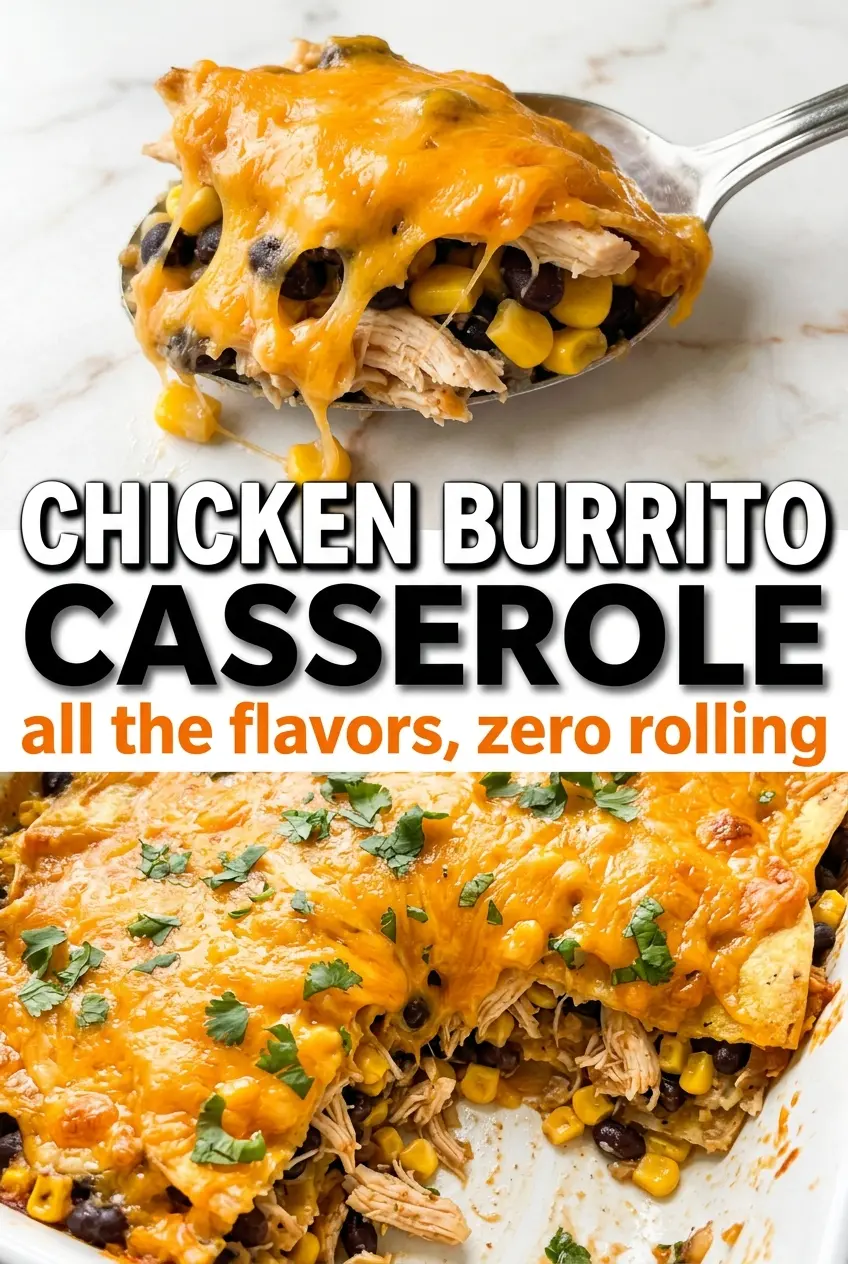
Chicken Burrito Casserole
Ingredients
Equipment
Method
- Preheat oven to 375°F and grease a 9x13 baking dish. Make sure the dish is evenly coated so the layers release cleanly.
- In a large bowl, combine shredded chicken, cooked white rice, black beans, corn, red enchilada sauce, Rotel, and taco seasoning, then mix well. Stir until the seasoning is evenly distributed throughout the mixture.
- Layer half the torn tortilla pieces on the bottom of the prepared dish. Press lightly so the pieces form an even base.
- Spread half the chicken mixture over the tortilla layer. Cover the tortillas as evenly as possible for consistent bites.
- Sprinkle with 1 cup cheese over the chicken mixture. The top should look speckled and ready to melt.
- Add remaining tortilla pieces, then spread the remaining chicken mixture on top. Keep the surface fairly level so the cheese crust browns uniformly.
- Top with remaining 1.5 cups cheese. Cover the entire casserole for a golden melted cheese crust.
- Bake at 375°F for 30-35 minutes until cheese is melted, golden, and bubbling at the edges. Look for active bubbling around the perimeter.
- Let the casserole rest 5 minutes before serving. This helps the layers set so it slices and scoops cleanly.
- Serve topped with sour cream, fresh cilantro, and jalapeño slices. Finish each portion so the toppings contrast creamy, green, and spicy.