Golden chicken, blistered peppers, and tender zucchini make this skillet dinner feel like the kind of meal you can count on when the fridge is leaning toward random. The chicken sears first, which gives the pan the flavor base you need, and the vegetables cook in those browned bits so nothing tastes flat or boiled. By the time the butter and broth come together, you’ve got a light garlic-herb sauce that clings to every piece instead of pooling at the bottom.
The trick here is heat. A hot skillet gives the chicken color fast and lets the vegetables char at the edges before they turn soft. That quick blast of heat also keeps the zucchini from going mushy, which is the main thing that can drag a dish like this down. I like to finish with lemon because the acidity wakes up the whole pan and keeps the butter from feeling heavy.
Below, I’m walking through the sear, the vegetable cook, and the short sauce finish so you can get the timing right without overthinking it. There’s also a note on the best skillet size and a few smart swaps if you need to adjust for what’s in your kitchen.
The chicken stayed juicy and the peppers got those caramelized edges without turning soft. I loved that the sauce was just enough to coat everything, and the lemon at the end pulled it all together.
Save this chicken and vegetables skillet for the nights when you want golden seared chicken, charred vegetables, and a fast one-pan dinner.
The One Pan Trick That Keeps the Vegetables Charred, Not Soggy
The vegetables need space and heat, not a crowded pan. If you add everything at once, the chicken and vegetables start steaming each other, and you lose the deep golden edges that make this skillet worth making. Cook the chicken first, pull it out, then let the peppers, zucchini, and onion hit the hot surface directly so they can blister before they soften.
Using a large cast iron skillet helps, but the real advantage is letting the pan stay hot between stages. The browned bits left from the chicken are part of the sauce, so don’t scrub them out. When the broth goes in, it loosens those bits just enough to coat the vegetables and bring the chicken back into the pan without making everything watery.
What Each Ingredient Is Actually Doing in This Skillet
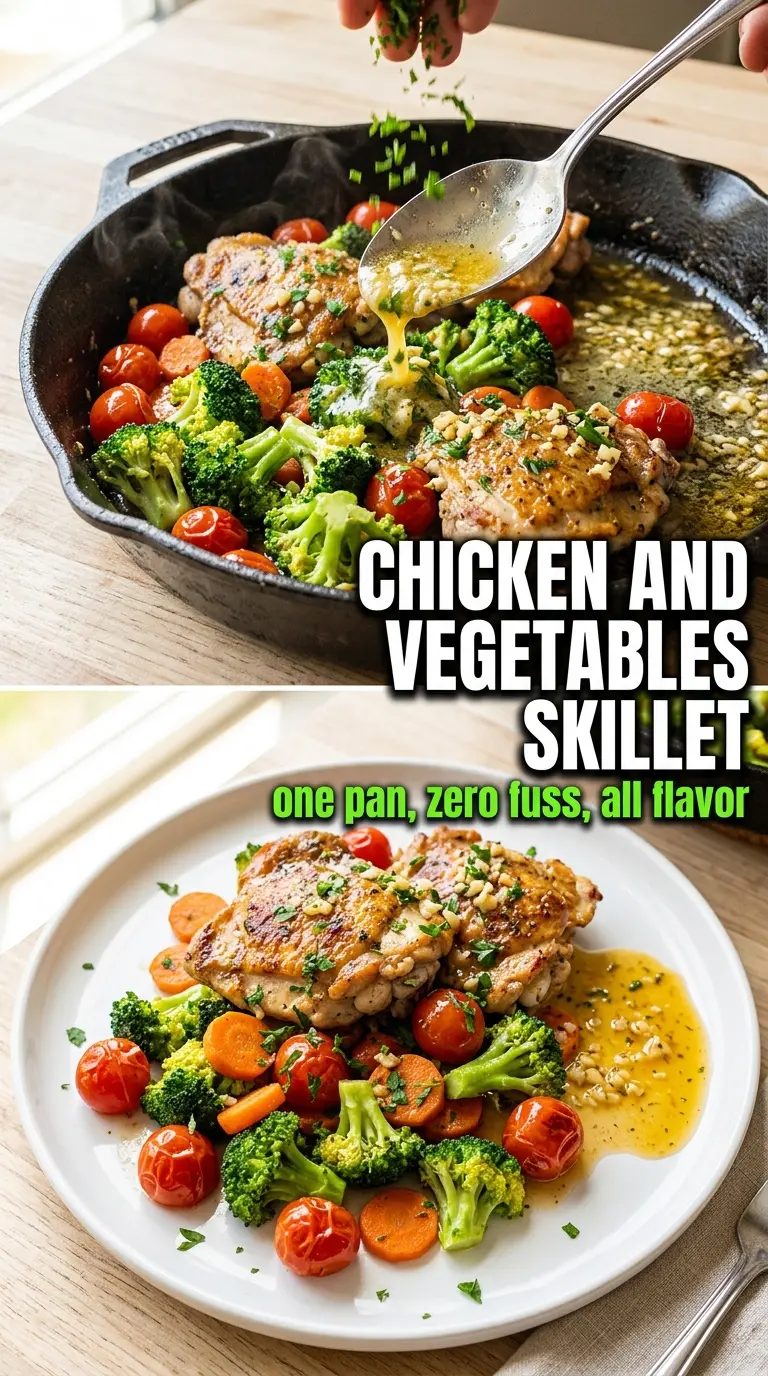
- Chicken breasts — Cutting them into strips gives you more surface area, which means faster browning and less risk of dry centers. Thighs can work here too, but they’ll cook a little longer and bring a richer, juicier result.
- Olive oil — This is the high-heat starter fat that helps the chicken sear before the butter goes in at the end. Use a decent olive oil, but save the expensive bottle for finishing dishes where its flavor matters more.
- Bell peppers, zucchini, and red onion — This trio gives you color, sweetness, and a little bite. The onion should go in wedges so it holds shape and chars instead of disappearing into the sauce.
- Chicken broth — Just a small splash is enough to deglaze the pan and pull up the flavor left behind by the chicken. Stock works too, but broth tends to keep the finished skillet lighter and less salty.
- Butter — It softens the edges of the broth and helps the sauce cling to the chicken and vegetables. Add it after the heat comes down a bit so it melts into a glossy finish instead of separating.
- Lemon wedges and parsley — Don’t skip these if you want the dish to taste finished. The lemon cuts through the butter and the parsley gives the skillet a fresh top note right before serving.
Build the Sear Before the Sauce Ever Hits the Pan
Season the chicken while the pan heats
Toss the chicken strips with Italian seasoning, smoked paprika, salt, and pepper so every piece is coated before it touches the skillet. This keeps the seasoning even and helps the spices toast on the surface instead of blooming into the broth later. Get the pan hot enough that the oil shimmers, because lukewarm oil is the fastest way to pale, rubbery chicken.
Let the chicken sit long enough to color
Add the chicken in a single layer and leave it alone for 4 to 5 minutes. If you move it too early, it sticks and tears instead of forming that golden crust. You’re looking for cooked-through pieces with browned edges and an internal temperature of 165°F, then pull them out so they don’t overcook while the vegetables are finishing.
Char the vegetables in the same skillet
Use the same pan without wiping it out. The peppers, zucchini, and onion need direct contact with the hot surface to pick up color, and the leftover chicken fond helps season them as they cook. Keep the heat high and stir only enough to prevent scorching; if the pan gets crowded, the vegetables will steam before they char.
Finish with broth and butter
Add the garlic for just 1 minute so it turns fragrant, not bitter, then pour in the broth and scrape up the browned bits. Once the liquid is in, the pan should sound calmer and smell savory instead of sharp. Return the chicken, add the butter, and toss until everything looks lightly glazed; if the sauce seems thin, give it another minute off to the side of the heat rather than boiling it hard.
How to Adapt This Chicken and Vegetables Skillet Without Losing the Good Parts
Swap in chicken thighs for a richer skillet
Boneless skinless thighs give you a juicier bite and forgive a little extra cook time. They’ll brown beautifully, but they may need another minute or two in the pan before you pull them, especially if the strips are thick.
Make it dairy-free without losing the glossy finish
Use olive oil instead of butter at the end, or finish with a little extra broth and a squeeze of lemon for brightness. You’ll lose some of the roundness butter adds, but the skillet will still coat nicely and taste clean and fresh.
Make it lower-carb by changing the vegetable mix
Keep the chicken and seasoning the same, then swap the zucchini for mushrooms or broccoli florets if that fits your meal plan better. Mushrooms bring a deeper savory flavor, while broccoli gives you more bite and needs a few extra minutes to soften.
Use what you have in place of Italian seasoning
A mix of dried oregano, basil, and thyme works just fine if that’s what’s in the cabinet. The skillet will taste a little less blended and a little more individual in its herbs, but the garlic and paprika still hold the dish together.
Storage and Reheating
- Refrigerator: Store leftovers in an airtight container for up to 4 days. The vegetables will soften a bit, but the flavor holds up well.
- Freezer: It freezes okay, though the zucchini gets softer after thawing. For the best texture, freeze the chicken and sauce portion if you know you’ll want to serve it with fresh vegetables later.
- Reheating: Warm it in a skillet over medium-low heat with a splash of broth or water. The common mistake is blasting it in the microwave until the chicken tightens up and the vegetables turn watery.
Questions I Get Asked About This Recipe
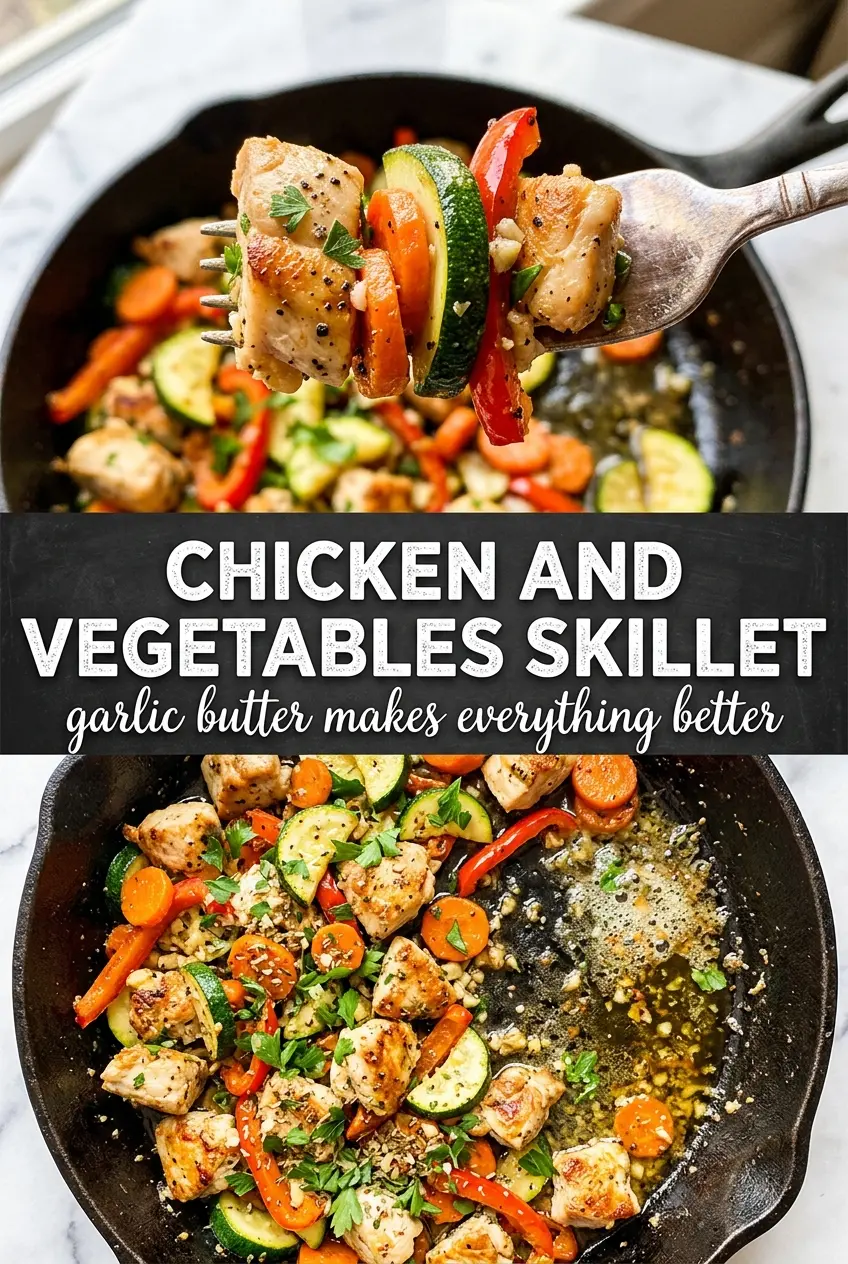
Chicken and Vegetables Skillet
Ingredients
Equipment
Method
- Season the chicken strips with Italian seasoning, smoked paprika, salt, and pepper.
- Heat olive oil in a large cast iron skillet over high heat and sear the chicken for 4-5 minutes until golden and cooked through to 165°F; remove to a plate.
- Add bell peppers, zucchini, and red onion to the same pan and cook over high heat for 5-6 minutes until blistered and slightly charred.
- Add garlic and cook for 1 minute, then pour in chicken broth and deglaze, scraping up browned bits.
- Return the chicken to the pan, add butter, and toss everything until coated and glossy.
- Garnish with fresh parsley and serve with lemon wedges.