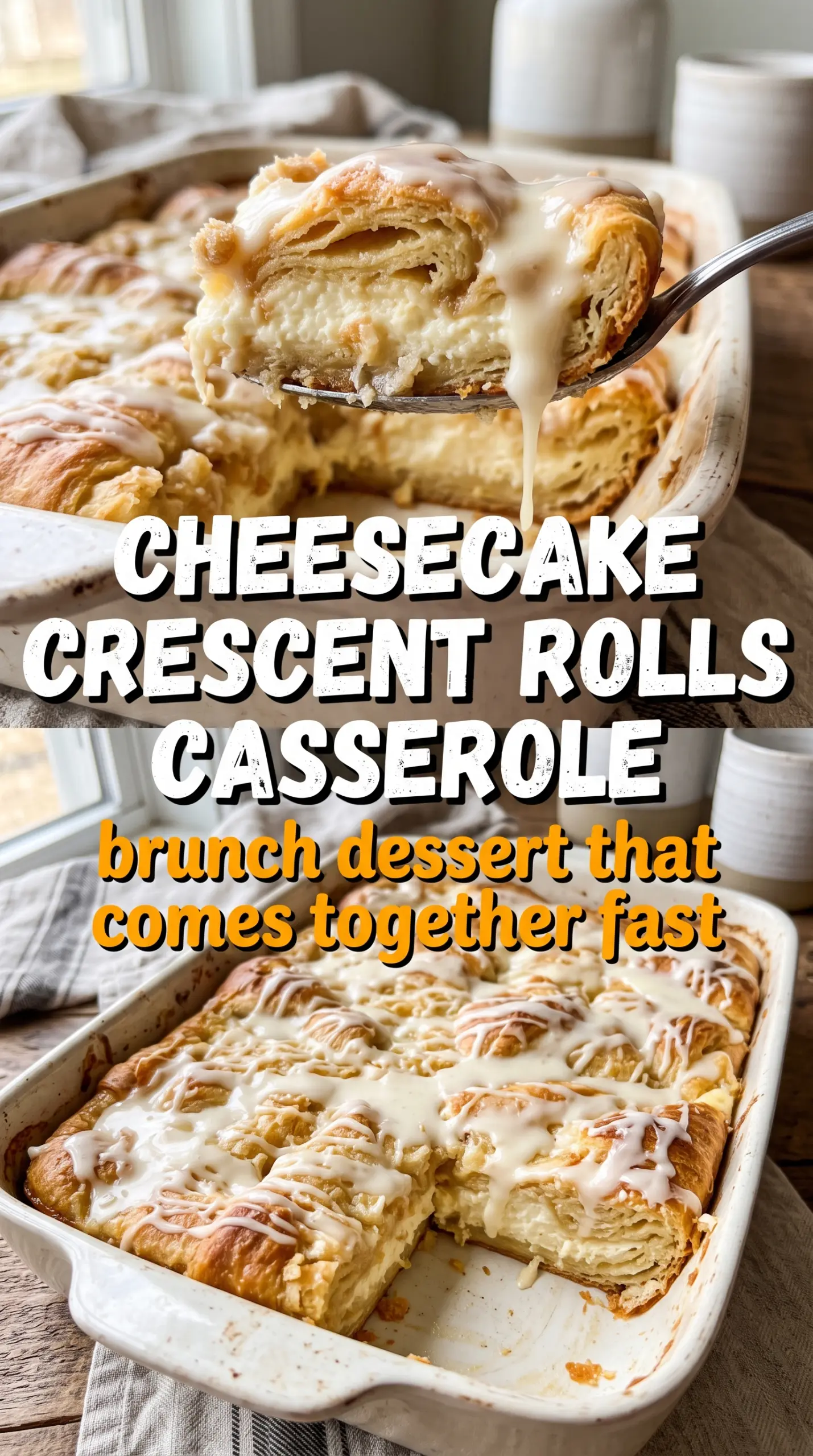
Golden, flaky crescent dough baked around a smooth cheesecake layer is the kind of breakfast casserole that disappears fast. The top turns crisp and caramelized, the center stays creamy, and every square comes out with that sweet cinnamon-sugar finish that tastes like something far more fussy than it is.
This version works because the cream cheese filling is kept simple and beaten until completely smooth before it goes into the dish. That matters. If the cream cheese is even a little cold, you get stubborn little lumps that never melt out in the oven. The butter on top also does more than add richness; it helps the cinnamon sugar melt into the pastry instead of sitting in a dry layer on top.
Below, I’ve included the small details that keep the layers clean, the topping evenly browned, and the filling set enough to slice into neat squares after a short rest.
The cream cheese layer baked up smooth and the cinnamon sugar on top turned into this crackly crust. I cut it after 15 minutes and it held together better than I expected.
Save this Cheesecake Crescent Rolls Casserole for a flaky, creamy breakfast bake with a cinnamon sugar crust.
The Step That Keeps the Cheesecake Layer Smooth Instead of Lumpy
The filling only has three jobs here: turn creamy, stay spreadable, and bake into a layer that slices cleanly. The biggest mistake is using cream cheese that still feels firm in the center. It needs to be soft enough to beat without resistance, or the sugar won’t dissolve and the filling will bake up grainy.
The crescent dough also matters more than it looks like it should. Press the seams together well on both layers so the filling doesn’t leak through and the top doesn’t split into a patchwork of dry strips. If the seams are loose, the cream cheese can bubble up in odd places and the top won’t brown evenly.
- Cream cheese — Full-fat cream cheese gives the filling its thick, tangy base. Neufchâtel works in a pinch, but the texture is a little softer and less rich.
- Crescent roll dough — Refrigerated dough is what gives this casserole its quick flaky crust. Don’t swap in puff pastry unless you want a taller, more delicate top that bakes differently and needs more time to set.
- Butter — The melted butter soaks into the top layer and helps the cinnamon sugar melt into a glossy crust. Use real butter here; margarine won’t brown the same way.
- Cinnamon sugar topping — This is what turns the top from plain pastry into something closer to sopapilla cheesecake. The ratio is simple, but don’t skimp, or you lose that crackly finish.
What Each Ingredient Is Actually Doing in This Recipe
- Primary ingredient (the star) — Quality matters most. Choose the best you can find.
- Cooking medium (oil, butter, or broth) — This carries flavors and prevents dryness.
- Seasonings (salt, pepper, spices, herbs) — Layer flavors so nothing overpowers. Build depth gradually.
- Aromatics (garlic, onion, herbs) — Cook with fat to bloom flavors. Become the foundation.
- Supporting ingredients — Complement the main ingredient without overpowering it.
- Sauce or liquid (if applicable) — Brings flavors together. Balance richness with acid.
- Acid (lemon, vinegar, wine, or other) — Brightens and prevents flat-tasting results.
- Final finish (garnish, glaze, or sauce) — Prevents one-dimensional taste and adds visual appeal.
Building the Layers So the Center Bakes Set and Clean
Pressing the Bottom Crust
Lay the first sheet of crescent dough into the greased pan and press the seams together before you do anything else. Work it all the way to the corners so the filling doesn’t sneak under the dough and glue itself to the pan. If the dough tears, pinch it back together; small gaps usually seal in the oven, but big holes leave weak spots.
Whipping the Filling
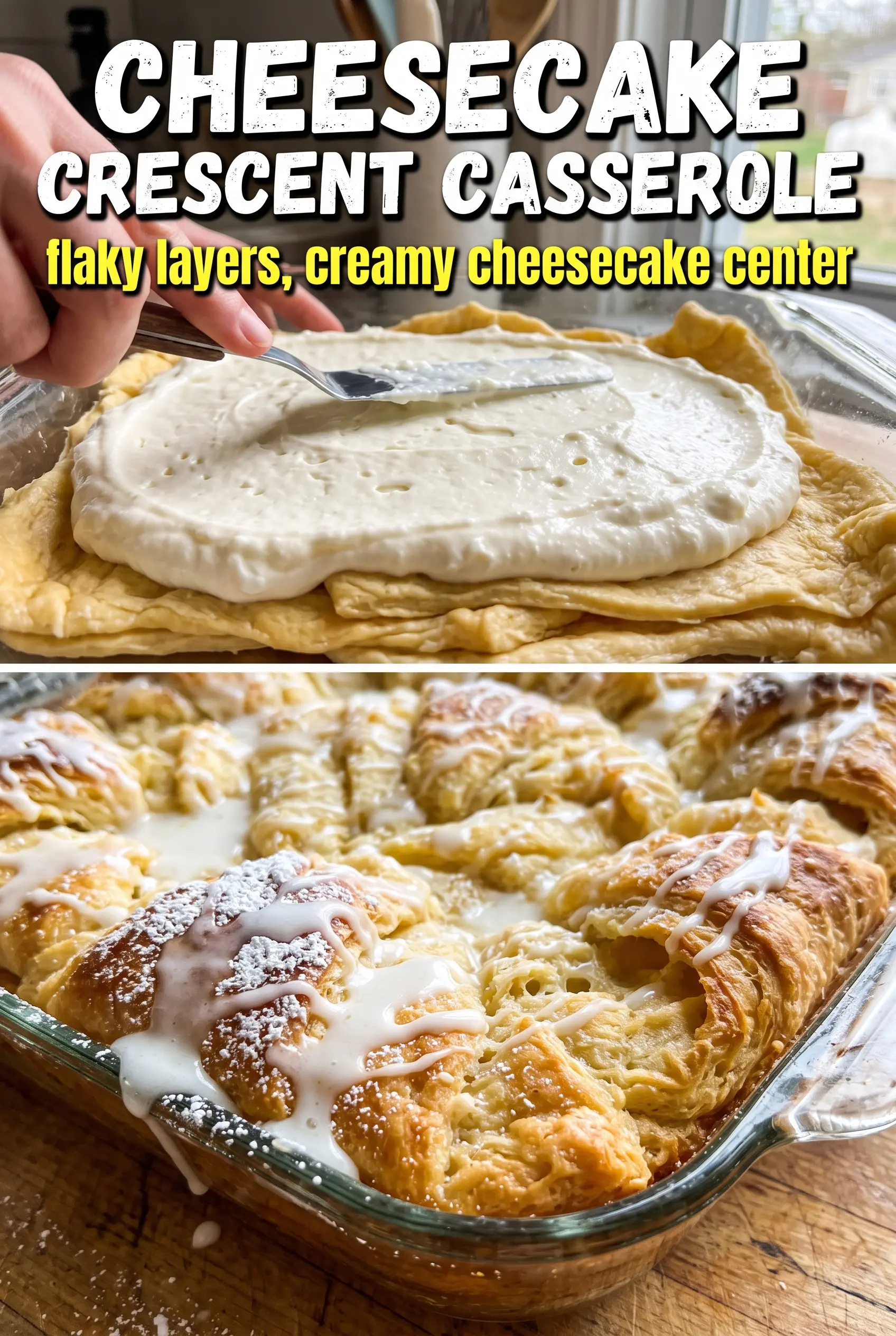
Beat the cream cheese, sugar, and vanilla until it looks silky and no sugar granules feel gritty when you rub a little between your fingers. That smoothness is what gives you a clean cheesecake layer. Spread it edge to edge in an even layer, because thick spots stay soft longer and make cutting messy.
Finishing the Top
Set the second layer of dough over the filling and press the seams together the same way you did on the bottom. Pour the melted butter evenly over the surface, then scatter the cinnamon sugar across every corner so no dry patches are left behind. Bake until the top is deeply golden and the center no longer looks loose when you tap the pan; if the middle still sloshes, give it a few more minutes before pulling it out.
Make It More Dessert-Like
Add an extra tablespoon of sugar to the filling and a light dusting of powdered sugar after baking. That pushes it closer to a true cheesecake bar, with a sweeter finish and a softer contrast between the top and the center.
Dairy-Free Version
Use a sturdy dairy-free cream cheese that lists baking as a use case, plus a plant-based butter substitute for the topping. The filling won’t be quite as rich, but it will still set into neat squares if you let it cool before cutting.
Gluten-Free Swap
Use gluten-free crescent-style dough if you can find one that rolls and seals cleanly. The texture is usually a little more tender and less flaky, but the filling and topping work the same way.
Storage and Reheating
- Refrigerator: Store covered for up to 4 days. The top softens a little in the fridge, but the filling stays sliceable.
- Freezer: Freeze individual squares tightly wrapped for up to 2 months. Thaw in the refrigerator before reheating; freezing the whole casserole tends to make the pastry soggy.
- Reheating: Warm squares in a 300°F oven for about 8 to 10 minutes. The microwave works in a pinch, but it softens the crust and can make the filling weep.
Questions I Get Asked About This Recipe
Cheesecake Crescent Rolls Casserole
Ingredients
Equipment
Method
- Preheat the oven to 350°F and grease a 9x13 baking dish.
- Unroll one can of crescent roll dough and press it into the bottom of the prepared dish, pressing seams together to seal.
- Beat cream cheese, 1 cup sugar, and vanilla extract until completely smooth, then spread evenly over the dough layer.
- Unroll the second can of crescent roll dough and lay it over the cream cheese filling, pressing seams together.
- Pour the melted butter evenly over the top so it coats the surface.
- Mix 1/2 cup sugar and cinnamon together and sprinkle generously over the butter for a caramelizing crust.
- Bake for 28-32 minutes at 350°F until the top is deep golden and the filling is set.
- Cool for 15 minutes before cutting into squares so the filling holds its shape.