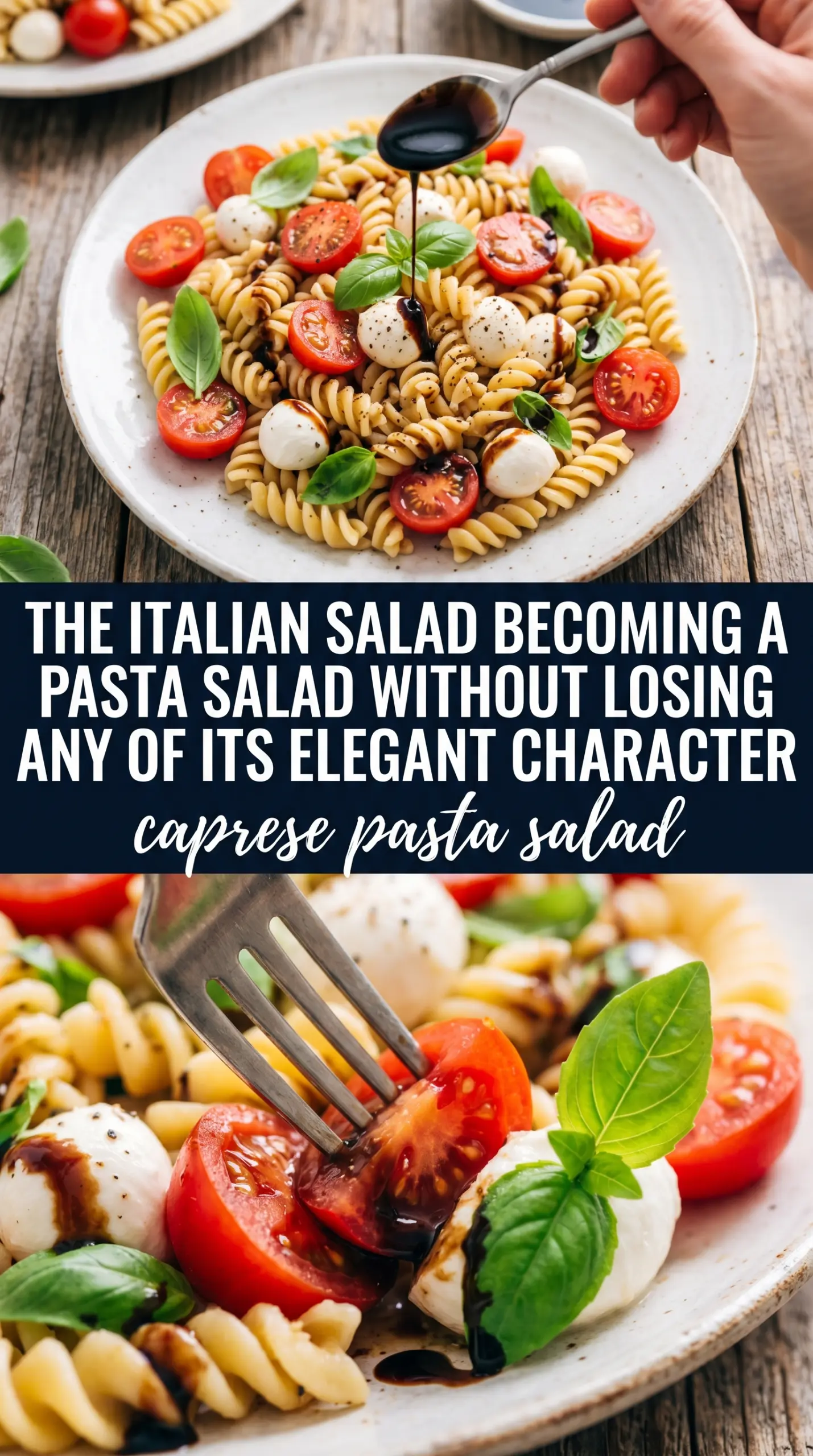
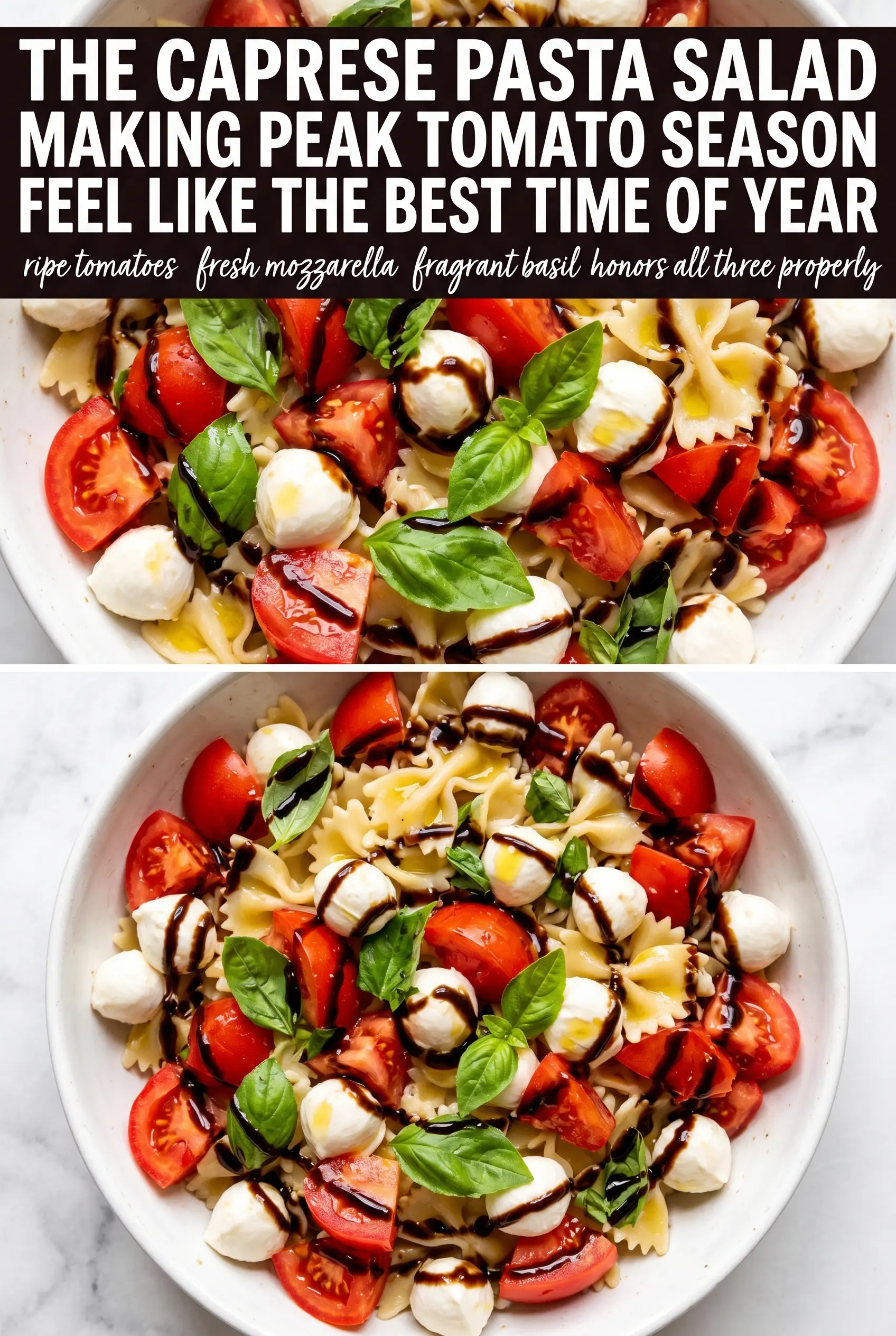
Caprese pasta salad lands in that sweet spot between bright and substantial. You get the snap of cherry tomatoes, creamy mozzarella, and basil that stays fragrant instead of disappearing into the bowl, all carried by pasta that makes it dinner-friendly or picnic-ready without losing the clean Caprese feel. The balsamic pulls everything together without making the salad heavy.
The part that makes this version work is restraint. The pasta gets rinsed cold so it stops cooking and holds its shape, and the dressing is kept simple enough that the tomatoes and basil still taste like themselves. A short chill matters here, because the vinegar and garlic need time to settle into the pasta instead of sitting on the surface.
Below you’ll find the small details that keep the basil from bruising, the best pasta shapes for catching the dressing, and the one finishing move that makes the whole bowl taste a little more polished.
The balsamic dressing soaked in after an hour and the pasta stayed perfectly tender without turning mushy. The basil stayed fresh, and I liked how the mozzarella held its shape instead of melting into the salad.
Save this Caprese Pasta Salad for the next potluck or warm-weather dinner when you want something fresh, colorful, and make-ahead friendly.
The Secret to Keeping Caprese Pasta Salad Fresh Instead of Watery
The mistake that ruins most pasta salads like this is treating the tomatoes and cheese like they can sit in dressing forever. Cherry tomatoes give off juice, and if the pasta goes in warm, the whole bowl turns soft and slippery instead of crisp and lively. Cold pasta and a brief chill keep the texture where it should be.
Fresh mozzarella also matters more than people think. Ciliegine holds its shape better than shredded mozzarella, which melts into the dressing and disappears. Basil should be torn, not chopped; a rough tear keeps the edges from bruising as badly, so the herb stays bright instead of turning dark in the bowl.
- Rotini or farfalle — Both shapes grab the balsamic dressing in their curves and folds. Long pasta looks pretty for a minute, but it doesn’t hold the salad together as well.
- Cherry tomatoes — These bring sweetness and enough juice to season the salad without flooding it. Larger tomatoes can work, but seed them first or the bowl turns watery.
- Fresh mozzarella balls — Use the real fresh stuff here. Pre-shredded mozzarella won’t give you the same creamy bites or clean Caprese look.
- Fresh basil — Add it at the end if you want the green to stay vibrant. If you toss it too early, it darkens and loses that fresh aroma.
What Each Ingredient Is Actually Doing in Caprese Pasta Salad
- Fresh vegetables (vibrant, crisp, quality) — Start with fresh, brightly colored vegetables. Wilted vegetables make everything taste tired.
- Acid (vinegar, lemon juice, or lime) — The acid prevents oxidation and prevents flat taste. It’s essential for brightness.
- Oil (quality matters for flavor) — Good olive oil adds freshness. Cheap oil makes the salad taste flat.
- Salt (enhances all other flavors) — Proper seasoning makes vegetables taste more like themselves. Don’t undersalt.
- Fresh herbs (tender ones added last) — Fresh herbs add complexity and brightness. Add them right before serving.
- Protein or hearty elements (if using) — These should complement without overwhelming the vegetables. Keep the salad light.
- Dressing applied just before serving — Don’t dress early or the vegetables release liquid and wilt. Timing is everything.
- Taste and adjust (check for balance) — The salad should taste bright and assertive. Add more acid or salt if needed.
Building the Bowl So Every Bite Tastes Balanced
Cook the pasta until just tender, then drain it and rinse under cold water until it’s no longer warm. That stops the cooking immediately and keeps the pasta from soaking up too much dressing too fast. If the pasta is hot, it will absorb the vinaigrette unevenly and soften the tomatoes before you ever get to the table.
Whisking the Dressing
Mix the olive oil, balsamic vinegar, minced garlic, salt, and pepper until the dressing looks glossy and unified. The garlic needs a little time in the acid to mellow, so don’t skip the rest time after whisking if you want a smoother bite. If the balsamic tastes harsh on its own, that edge softens once it hits the pasta and tomatoes.
Tossing Without Bruising
Add the pasta, tomatoes, mozzarella, and basil to a large bowl, then pour the dressing over the top and toss gently. Use a lifting motion instead of stirring hard, because vigorous mixing will split the mozzarella and crush the basil. The goal is every piece lightly coated, not drenched.
The Chill That Pulls It Together
Refrigerate the salad for at least an hour before serving. That’s when the flavor starts to settle into the pasta and the balsamic stops tasting separate from everything else. Right before serving, give it one more gentle toss and drizzle with balsamic glaze for a sweeter, thicker finish.
How to Adapt This for Different Tables and Diets
Gluten-Free Pasta Swap
Use a sturdy gluten-free rotini or farfalle made from rice, corn, or chickpeas. Cook it just shy of done, because gluten-free pasta can go from firm to mushy fast once it chills in dressing.
Dairy-Free Version
Skip the mozzarella and add diced avocado right before serving, or use a plant-based mozzarella that holds its shape. You lose the classic Caprese creaminess, but the salad still keeps its bright tomato-basil-balsamic balance.
Add Protein Without Muddying the Flavor
Grilled chicken, salami, or white beans all fit here. Keep the add-in simple and well-seasoned so it doesn’t bulldoze the basil and balsamic.
Storage and Reheating
- Refrigerator: Store covered for up to 3 days. The basil will darken a little and the pasta will absorb more dressing as it sits.
- Freezer: Don’t freeze this salad. The tomatoes, mozzarella, and basil all lose their texture after thawing.
- Reheating: Serve it cold or let it sit at room temperature for 15 to 20 minutes. Heating this salad makes the mozzarella soft and the basil wilted, which changes the whole dish.
Questions I Get Asked About This Recipe
Caprese Pasta Salad
Ingredients
Method
- Cook pasta according to package directions, then drain and rinse under cold water to stop the cooking.
- Whisk olive oil, balsamic vinegar, minced garlic, salt, and pepper until well combined and glossy.
- Combine the cooled pasta, halved cherry tomatoes, mozzarella balls, and torn basil in a large bowl.
- Pour the vinaigrette over the salad and toss gently until the pasta looks evenly coated.
- Refrigerate for at least 1 hour so the flavors meld and the mozzarella stays cool and springy.
- Drizzle with balsamic glaze right before serving for a glossy finishing touch.