Butter pecan ice cream earns its place in the rotation because it hits every note at once: creamy custard, deep browned-butter flavor, and pecans that stay crunchy instead of turning soft and sandy. The best versions taste rich before they even melt, with a caramel-colored base that clings to the spoon and pecans that bring a salty snap in every bite.
The part that makes this version work is the way the pecans are toasted in butter first, then cooled completely before they go into the churn. That step pulls out their nuttiness and keeps the flavor from tasting flat. The custard base is cooked just enough to thicken and give the ice cream body, but not so hard that the yolks scramble or the dairy takes on a cooked-egg edge.
Below, I’m walking through the small details that matter most: how to keep the custard smooth, when to add the pecans so they stay crisp, and what to do if you want a version that’s a little lighter, a little richer, or easier to make ahead.
The custard came out silky and the pecans stayed crunchy after freezing overnight. Toasting them in butter first made the whole batch taste like a fancy scoop shop.
Save this butter pecan ice cream for the nights when you want a custard-style scoop with buttery pecans in every bite.
The Reason Butter Pecan Ice Cream Stays Creamy Instead of Icy
The difference between smooth butter pecan ice cream and a batch that freezes hard starts with the custard. Egg yolks and brown sugar give this base enough richness and structure to stay scoopable, but only if you cook it gently and stop at the right point. Push it too far and the yolks seize; pull it too early and the ice cream tastes thin and freezes with ice crystals.
The other common problem is watery nuts. Pecans that go into the churn warm from the skillet will soften the whole base and dull the flavor. Cooling them completely on a parchment-lined sheet keeps the butter coating set on the outside, which helps the nuts keep their texture after freezing.
- Brown sugar — This gives the base its caramel note and helps with softness in the freezer. White sugar works in a pinch, but you’ll lose some of the deeper toffee flavor that makes butter pecan taste like butter pecan.
- Egg yolks — They thicken the custard and keep it lush. There isn’t a real substitute here if you want classic custard ice cream; without them, the texture shifts toward a lighter Philadelphia-style base.
- Pecans — Use fresh pecan halves, not old chopped nuts from the back of the pantry. Whole halves toast more evenly and stay pleasantly substantial in the finished ice cream.
- Butter — This coats the pecans and brings out their nuttiness. Salted butter can work if that’s what you have, but reduce the added salt a little so the nuts don’t taste harsh.
What Each Ingredient Is Actually Doing in This Ice Cream

- Base ingredient (cream, milk, or custard) — This provides the foundation and richness. Quality matters.
- Sweetener (sugar, honey, or condensed milk) — This sweetens and prevents ice crystals. The ratio is critical.
- Flavor element (vanilla, fruit, chocolate, or other) — This defines the ice cream personality. Use quality ingredients.
- Egg yolks (if making custard base) — These create richness and silky texture. Optional but elevates ice cream.
- Churning (if using ice cream maker) — This incorporates air and prevents ice crystals. Critical for smooth texture.
- Freezing temperature and time — Proper freezing prevents rock-hard texture. Store at 0°F or below.
- Mix-ins (chocolate, cookies, fruit, or swirls) — These add texture and prevent one-dimensional flavor. Add near end of churning.
- Serving temperature (slightly soft, not rock hard) — This provides creamy mouthfeel. Remove from freezer 5 minutes before serving.
Cooking the Custard and Adding the Pecans at the Right Moment
Toasting the Pecans in Butter
Melt the butter in a skillet over medium heat, then add the pecans and salt. Stir them often until they smell fragrant and the edges take on a deeper golden color, usually 4 to 5 minutes. If the nuts look done before they smell toasted, keep them moving for another minute; the aroma tells you more than the color does. Spread them out on parchment right away so the butter coating stops cooking and the nuts don’t drift into bitter territory.
Heating the Dairy Base
Warm the cream, milk, and brown sugar together until the sugar dissolves and the mixture is steaming. Don’t rush this with high heat, because dairy scorches fast and scorched cream carries that flavor all the way into the finished ice cream. You’re looking for steam and a smooth mixture, not a boil. If you see bubbles around the edge, pull it back and whisk before moving on.
Tempering the Yolks Without Scrambling Them
Whisk the yolks until they’re smooth and a little lighter in color, then drizzle in the hot dairy slowly while whisking constantly. That gradual addition raises the temperature of the eggs without cooking them into bits. If you dump the hot liquid in all at once, you’ll get sweet scrambled eggs instead of custard. Once everything is combined, return it to the pan and stir over low to medium-low heat until it reaches 175°F and coats the back of a spoon.
Chilling, Churning, and Folding in the Pecans
Strain the custard, stir in the vanilla, and chill it completely before churning. This matters more than people think: a cold base churns faster, freezes more smoothly, and traps less air in the wrong places. Add the cooled pecans during the last few minutes of churning so they distribute evenly without getting smashed. If the machine stops too early, the nuts sink; if they go in too soon, they lose their crunch.
How to Adapt This for a Different Pantry or a Different Craving
Dairy-Free Version
Use full-fat coconut milk in place of the milk and cream, but expect a faint coconut note and a slightly softer freeze. The custard will still need egg yolks for body, and the pecans should be toasted in a neutral dairy-free butter or coconut oil if needed. It won’t taste exactly like the original, but it keeps the same rich, nutty feel.
Extra Buttery, Deeper-Caramel Flavor
Brown the butter before tossing in the pecans if you want a more pronounced toasted flavor. Let it go just until the milk solids turn amber and smell nutty, then add the pecans and salt. That swap adds depth, but it also asks you to watch the pan closely because browned butter can go from fragrant to burnt fast.
No-Ice-Cream-Maker Shortcut
You can freeze the churned base in a shallow pan and stir it every 30 to 40 minutes until set, then fold in the pecans during one of the early stirrings. The texture won’t be quite as airy or polished, but it still sets up nicely if the base is fully chilled first. A warm base is the fastest way to get grainy ice cream here.
Storage and Reheating
- Refrigerator: Store the custard base before churning for up to 24 hours if needed. Once churned, ice cream belongs in the freezer, not the fridge, or it will melt into a grainy puddle.
- Freezer: Freeze in an airtight container for up to 2 weeks for the best texture. After that, it’s still safe, but the pecans can lose crunch and the surface may pick up freezer flavor.
- Serving: Let it sit at room temperature for 5 to 10 minutes before scooping. If you try to force it straight from the freezer, the custard base can feel rock-hard and the pecans won’t cut cleanly.
Questions I Get Asked About This Recipe
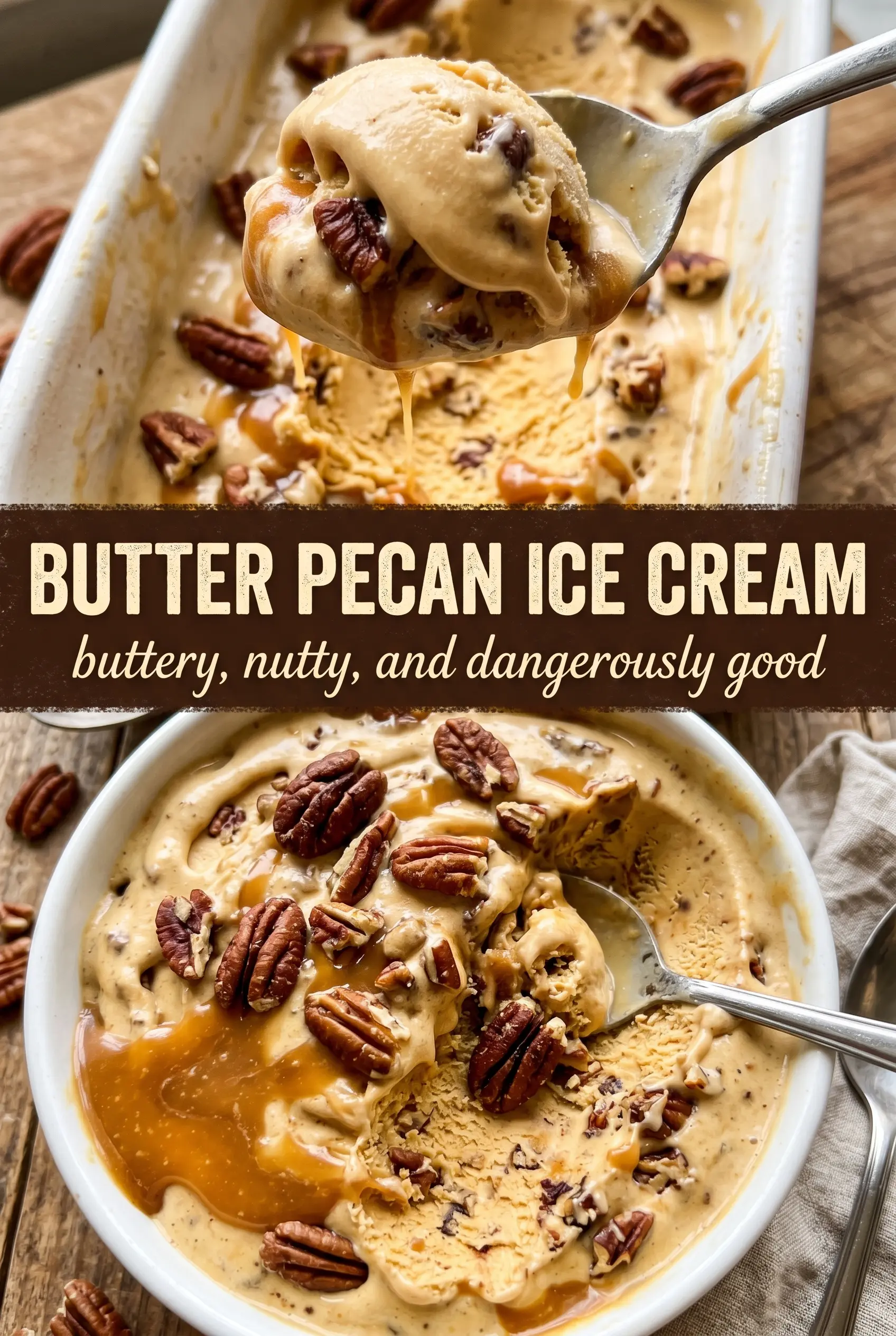
Butter Pecan Ice Cream
Ingredients
Equipment
Method
- Melt the unsalted butter with the salt in a skillet over medium heat, then add pecan halves and toast for 4-5 minutes until deeply golden and fragrant, stirring often. Transfer to a parchment-lined sheet and cool completely.
- Heat heavy cream, whole milk, and packed brown sugar in a saucepan over medium heat until the sugar dissolves and the mixture steams. Keep it hot but not boiling.
- Whisk the egg yolks until smooth, then slowly whisk them into the hot cream mixture. Return everything to the saucepan and cook to 175°F while stirring constantly until the custard thickens.
- Strain the custard, then stir in the vanilla extract and the remaining salt (1/4 tsp). Cool completely, then refrigerate at least 4 hours.
- Churn the chilled custard in an ice cream maker according to the manufacturer’s directions. Add the butter-toasted pecans in the last 5 minutes of churning.
- Transfer the churned ice cream to a freezer-safe container and freeze until firm.