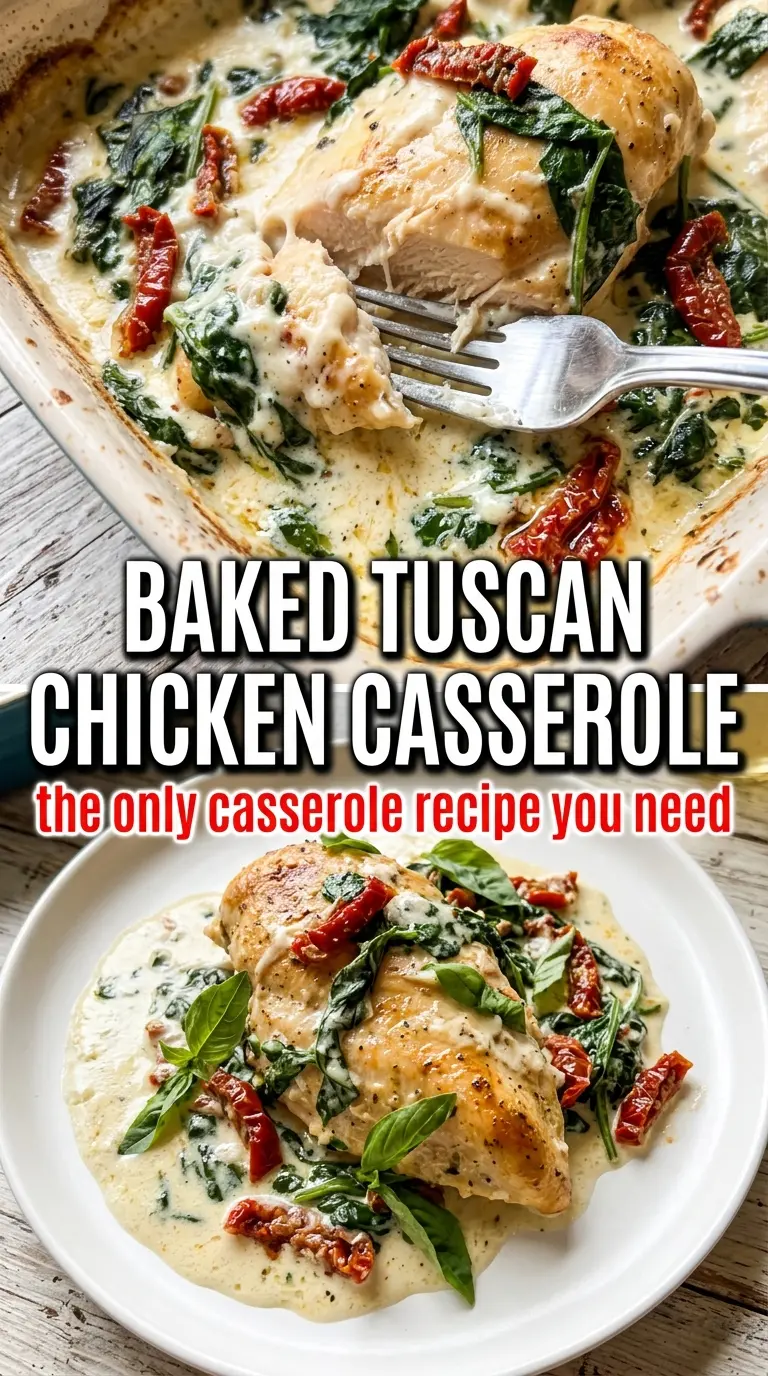
Baked Tuscan chicken casserole comes out with the kind of sauce that people keep spooning over everything else on the plate. The chicken stays juicy under a deeply browned skin, and the cream sauce turns silky instead of heavy, with sun-dried tomatoes, garlic, spinach, and Parmesan running through every bite. It’s the kind of one-dish dinner that looks like you spent all afternoon on it, even though most of the work is just getting a good sear and letting the oven finish the job.
The part that makes this version work is the order. The chicken gets color first, before any cream goes near the pan, and that browned fond becomes the base of the sauce. The sun-dried tomatoes bring concentrated sweetness, the broth loosens everything without thinning it out, and the Parmesan goes in off the heat of the stovetop stage so it melts into the cream instead of turning grainy.
Below, I’ve laid out the little details that matter most, including the trick to keeping the sauce smooth and what to do if you want to lighten it up without losing that rich, cozy finish.
The chicken skin stayed crisp on top and the sauce thickened up beautifully in the oven. I served it over pasta, and my husband went back for seconds before I’d even sat down.
Save this baked Tuscan chicken casserole for the nights when you want golden chicken, silky Parmesan cream sauce, and one pan on the table.
The sear is the difference between a casserole and a pan of pale chicken
With chicken thighs, the skin side does more than add flavor. It protects the meat, gives the casserole a better texture, and keeps the finished dish from tasting flat. If you skip the sear or crowd the pan, the thighs steam and the sauce starts with less depth because you’ve left all the good browned bits behind.
The other thing people miss is that the oven isn’t there to cook the chicken from raw in this recipe; it’s there to finish the meat gently after the skin is already golden and the sauce is built. That means the skillet or braiser needs enough surface area for the thighs to brown instead of overlap. When the skin releases easily from the pan, it’s ready to flip. If it sticks, give it another minute.
What the sun-dried tomatoes, cream, and Parmesan each bring to the pan
- Bone-in, skin-on chicken thighs — These stay juicy through the bake and give you the best texture on top. Boneless thighs will work, but they cook faster and won’t give you the same crisp skin or rich pan drippings.
- Sun-dried tomatoes in oil — They’re concentrated, tangy, and slightly sweet, which is what keeps the cream sauce from tasting one-note. Drain them well so the sauce doesn’t turn greasy, but don’t use the dry-packed kind unless you rehydrate them first.
- Heavy cream — This is what gives the sauce its body and keeps it from breaking in the oven. Half-and-half can work in a pinch, but the sauce will be thinner and a little more fragile.
- Parmesan — Use the finely grated kind for the smoothest melt. Pre-shredded cheese can clump because of the anti-caking agents, and that’s when the sauce gets grainy instead of glossy.
- Baby spinach — It wilts fast and disappears into the sauce without turning stringy. Add it at the end, after baking, so it stays bright and doesn’t overcook into the background.
Building the sauce so it stays silky in the oven
Seasoning and searing the chicken
Pat the thighs dry before you season them. Wet skin won’t brown well, and that’s the first place this dish loses momentum. Salt, pepper, garlic powder, Italian seasoning, and smoked paprika give the chicken enough seasoning that the sauce doesn’t have to do all the work. Sear skin-side down in hot oil until the skin is deep golden and the fat has rendered; that usually takes 6 to 7 minutes. If the pan is too cool, you’ll get greasy chicken instead of crisp chicken.
Making the pan sauce
After the chicken comes out, the pan should still have those dark brown bits on the bottom. Add the garlic and sun-dried tomatoes and stir just long enough for the garlic to smell sweet, not sharp. Pour in the broth and scrape up everything stuck to the pan, because that’s what gives the sauce its backbone. Then stir in the cream, Parmesan, Italian seasoning, and red pepper flakes. Keep the heat moderate. If the sauce boils hard, the cream can separate and the cheese can tighten up.
Finishing in the oven
Return the chicken skin-side up so the top stays above the sauce. Uncovered baking matters here because it lets the skin stay crisp while the sauce reduces around the edges. Bake until the chicken hits 165°F at the thickest part and the sauce looks slightly thickened, not soupy. Stir in the spinach after baking so it wilts from the heat of the sauce without overcooking.
Make it lighter without losing the creamy finish
You can swap in boneless skinless thighs and reduce the bake time, which trims some fat but also removes the crisp skin and a little of the roasted flavor. The sauce still works, but it will look more like a true skillet chicken bake than a casserole with a browned top.
Make it dairy-free without wrecking the texture
Use full-fat coconut cream in place of heavy cream and a dairy-free Parmesan-style substitute if you have one that melts well. The sauce will taste a little different, with a hint of coconut, but it still turns rich and spoonable if you keep the heat gentle.
Make it extra saucy for pasta or rice
Add another 1/2 cup of broth and a splash more cream before baking. That gives you enough sauce to toss with pasta or spoon over rice without drying out in the oven, but it also means the reduction takes a little longer.
Storage and Reheating
- Refrigerator: Store leftovers in an airtight container for up to 4 days. The sauce thickens as it chills, and the chicken skin softens, which is normal.
- Freezer: The casserole freezes, but the cream sauce can separate a bit after thawing. Freeze in portions for the best result, then reheat gently.
- Reheating: Warm covered in a 325°F oven until hot, or reheat on the stovetop over low heat with a splash of broth. High heat is what makes the cream sauce break and the chicken dry out.
Questions I Get Asked About This Recipe
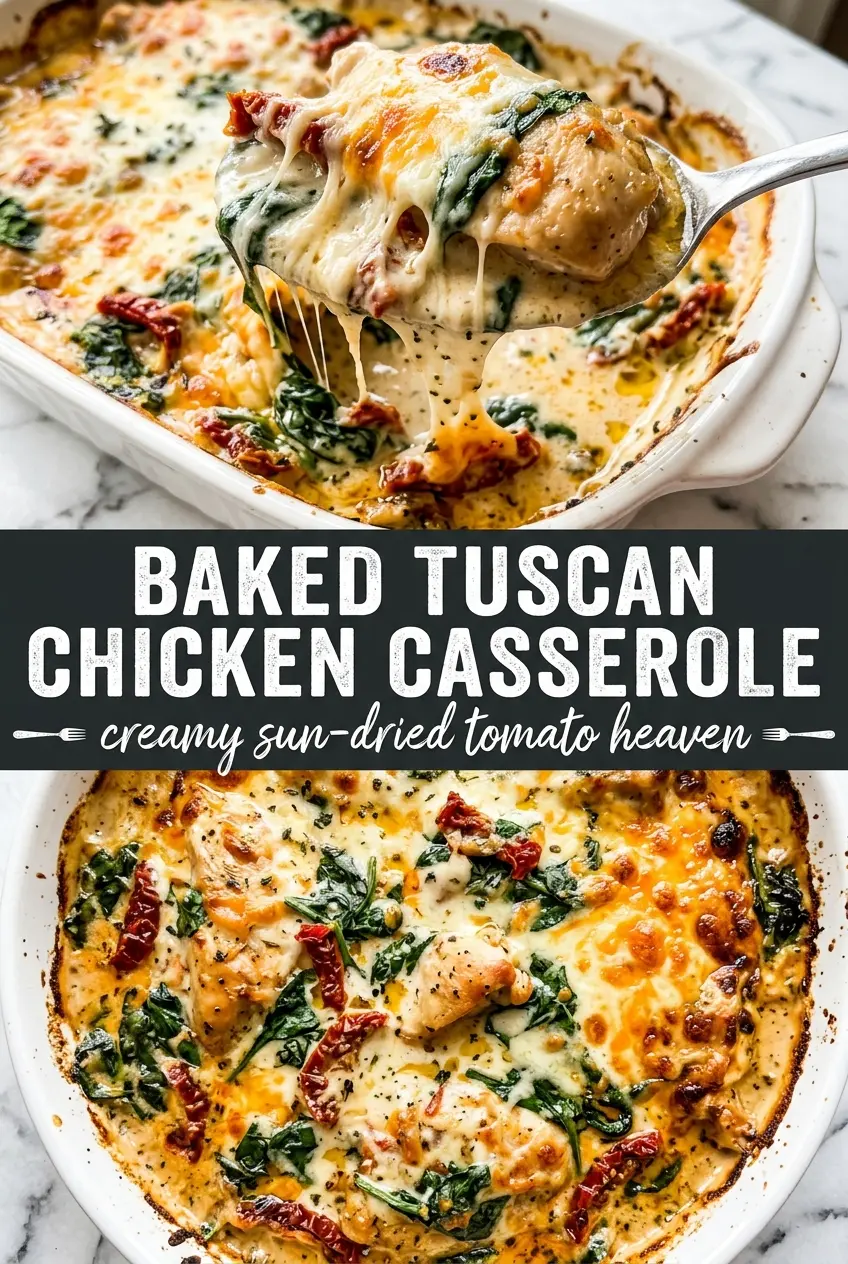
Baked Tuscan Chicken Casserole
Ingredients
Equipment
Method
- Preheat oven to 400°F. Season chicken thighs with salt, pepper, garlic powder, Italian seasoning, and smoked paprika.
- Heat olive oil in a large oven-safe skillet or braiser over medium-high heat until shimmering. Sear chicken skin-side down for 6-7 minutes until deeply golden.
- Flip chicken and sear for 3 more minutes until the other side is browned. Remove chicken from the pan.
- In the same pan, cook minced garlic and sliced sun-dried tomatoes for 1 minute. Stir to prevent browning.
- Pour in chicken broth and deglaze, scraping up browned bits. Bring to a gentle simmer for 1-2 minutes.
- Stir in heavy cream, Parmesan cheese, Italian seasoning, and red pepper flakes until smooth. Continue simmering just until the sauce thickens to a creamy consistency.
- Return chicken skin-side up to the pan and spoon some sauce over the top. Transfer to the oven and bake uncovered for 20-22 minutes until chicken reaches 165°F.
- Stir baby spinach into the hot sauce until wilted. Let it simmer in the sauce for 1 minute to fully incorporate.
- Garnish with fresh basil and serve. Spoon the creamy sauce over the chicken for a glossy finish.