Golden baked Greek lemon chicken is the kind of dinner that comes out of the oven smelling sharp, savory, and a little sun-bright from the lemons and oregano. The skin turns deeply browned and glossy, the pan juices reduce into a garlicky sauce, and the chicken stays juicy enough to slice or pull apart without drying out. It’s the sort of dish that tastes like you worked a lot harder than you did.
What makes this version dependable is the balance in the marinade and the way the pan is set up. Lemon juice brings the tang, olive oil carries the herbs, and a little smoked paprika deepens the color without making the dish taste smoky. Roasting the chicken skin-side up in broth keeps the bottom from scorching while the exposed skin crisps and the lemon slices soften into something jammy and sweet.
Below, I’ll show you how to keep the chicken from going flat on flavor, how to get those caramelized pan drippings you want for spooning over the top, and a few smart swaps if you need to work with what’s already in the kitchen.
The chicken came out with crisp, golden skin and the lemon slices turned almost candied in the pan juices. I basted halfway through like the recipe said, and the drippings were perfect spooned over rice.
Craving those caramelized lemon slices and glossy oregano pan drippings? Pin this baked Greek lemon chicken for an easy dinner that tastes far bigger than the effort it takes.
Why the Marinade Needs Time Before It Hits the Oven
The biggest mistake with lemon chicken is rushing straight from bowl to pan and expecting the acid to do all the work. Thirty minutes of marinating is enough to season the meat through the surface and start softening the chicken slightly without turning the texture mushy. Go much longer with a very acidic marinade and the outside can get chalky before the center even cooks.
The other key move is roasting at a high temperature. That heat gives the skin the color you want and helps the garlic and lemon slices caramelize instead of steaming. If the oven runs cool, the chicken gives off more moisture, the skin stays pale, and the pan juices never concentrate into the glossy sauce this dish is known for.
What Each Ingredient Is Actually Doing in This Dish

- Chicken pieces with skin and bone — Bone-in chicken stays juicier than boneless cuts and gives the roasting pan enough drippings to build flavor. A whole cut-up chicken is ideal, but thighs and drumsticks alone also work beautifully if that’s what you have.
- Fresh lemon juice and zest — The juice brings the bright, sharp flavor, while the zest adds the lemon aroma that holds up in the oven. Bottled lemon juice won’t give the same clean finish, and you’ll notice the difference in the final sauce.
- Olive oil — This carries the herbs across the chicken and helps the skin brown instead of drying out. Use a decent everyday olive oil here; you don’t need the fanciest bottle, but you do want one that tastes clean and not bitter.
- Dried oregano and thyme — Dried herbs are the right choice for the marinade because they bloom in the oil and cling to the chicken. Fresh oregano is best saved for garnish, where its color and scent stay vivid.
- Chicken broth — The broth keeps the pan from drying out and mixes with the lemon and fat to form those spoonable drippings. Water works in a pinch, but the sauce won’t taste as full.
- Smoked paprika — This is here for color and depth, not smoke. It gives the chicken a warmer, more roasted look without pulling the dish away from its Greek-style profile.
- Thin lemon slices — These soften in the oven and turn almost sweet at the edges. Slice them thin so they can caramelize instead of just sitting there and drying out.
Building the Pan So the Chicken Roasts, Not Steams
Mix the marinade until it looks slightly thick
Whisk the olive oil, lemon juice, zest, garlic, oregano, thyme, paprika, salt, and pepper until the mixture turns a little cloudy and emulsified. That thicker texture helps it cling to the chicken instead of sliding off the skin and pooling at the bottom of the dish. Coat every piece well, especially under the skin if you can loosen it gently, then let the chicken rest at least 30 minutes.
Arrange the chicken skin-side up
Set the chicken in a large roasting pan or baking dish with the skin facing up and leave a little space between pieces. Crowding traps steam, and steam is the enemy of crisp skin. Pour the broth around the chicken, not over the top, so the skin stays exposed while the lower part of the pan stays moist.
Roast until the skin is deeply golden
Bake at 425°F for 40 to 45 minutes, basting once halfway through with the pan juices. You’re looking for a deep golden color, some browned edges on the lemon slices, and an internal temperature of 165°F in the thickest part of the chicken. If the skin is coloring too fast, loosely tent the top with foil for the last few minutes rather than dropping the oven temperature.
Spoon the drippings over the chicken right before serving
Pull the pan from the oven and let the chicken sit for a few minutes so the juices settle. Then spoon the caramelized drippings over each piece and finish with fresh oregano. That last spoonful is where the dish turns from plain roasted chicken into something you’d want to serve with rice, potatoes, or warm bread.
Three Practical Ways to Adjust This Chicken Without Losing the Point
Use only thighs and drumsticks
This is the best move if you want extra-juicy meat and a little more forgiveness in the oven. Bone-in, skin-on thighs and drumsticks roast up beautifully and often need only a few extra minutes, but they won’t give you quite as dramatic a mix of white and dark meat as a whole cut-up chicken.
Make it dairy-free without changing a thing
This recipe is naturally dairy-free already, which is part of why it works so well for mixed households. The olive oil and broth do the richness work that butter or cream would usually handle, and nothing needs to be swapped out to keep the flavor intact.
Swap in boneless chicken if that’s what you bought
Boneless thighs or breasts will cook faster, so start checking early or they’ll dry out before the top browns. You’ll lose some of the pan drippings and the deeper roasted flavor that bones bring, but the lemon-garlic finish still comes through if you keep the baking time tight.
Add potatoes to make it a full pan dinner
Toss small potato chunks with a little olive oil, salt, and oregano, then tuck them around the chicken so they roast in the drippings. Cut them small enough to cook through in the same window as the chicken, or they’ll still be firm when the meat is done.
Storage and Reheating
- Refrigerator: Store leftovers in an airtight container for up to 4 days. The skin softens in the fridge, but the chicken stays flavorful.
- Freezer: Freeze the chicken and pan juices for up to 2 months. Let it cool completely first, and freeze it with a little of the sauce so the meat doesn’t dry out on thawing.
- Reheating: Reheat covered in a 350°F oven until hot, then uncover for a few minutes to re-crisp the skin. The common mistake is blasting it in the microwave, which turns the chicken rubbery and the lemon sauce flat.
Answers to the Questions Worth Asking
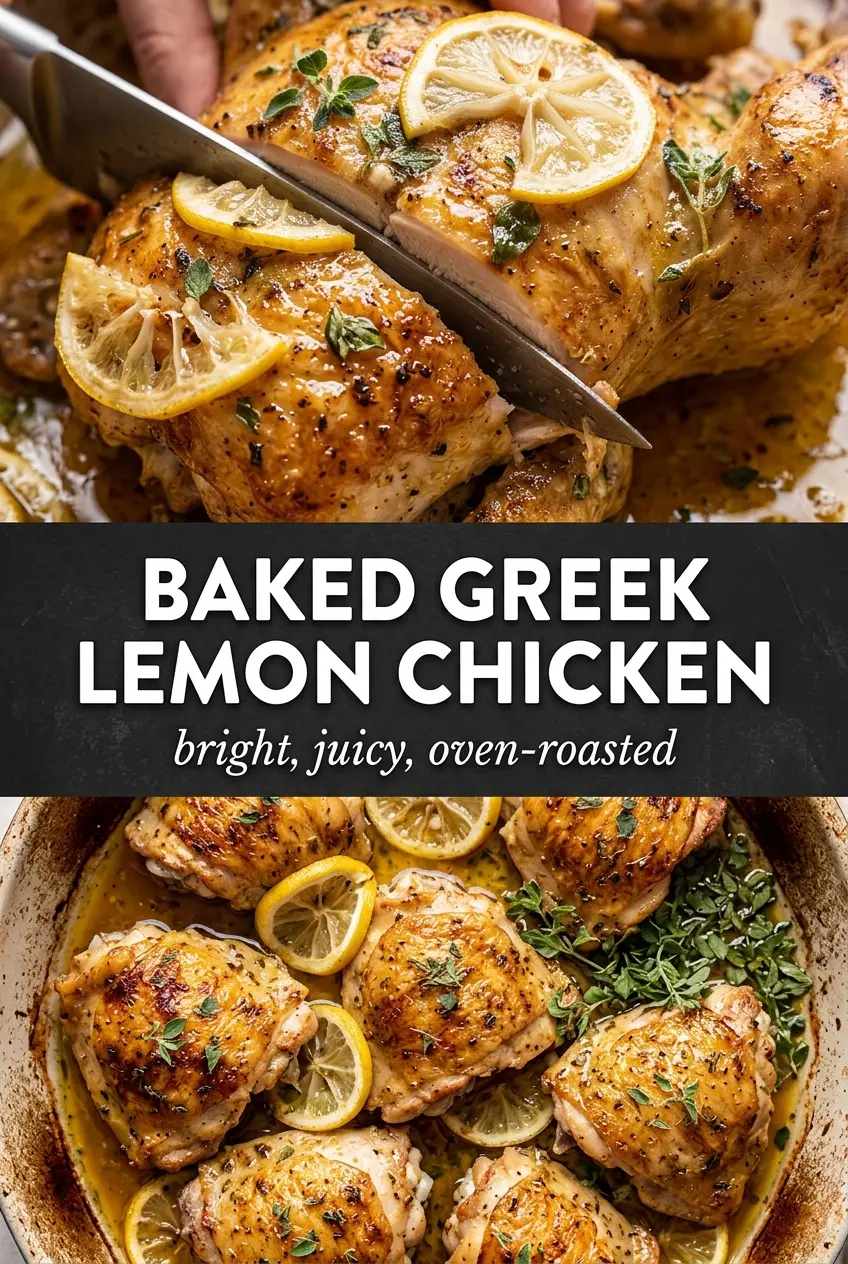
Baked Greek Lemon Chicken
Ingredients
Equipment
Method
- Whisk together olive oil, fresh lemon juice, lemon zest, garlic, dried oregano, dried thyme, smoked paprika, salt, and cracked black pepper until evenly combined. Add the chicken pieces and marinate for at least 30 minutes.
- Preheat oven to 425°F. Arrange the marinated chicken skin-side up in a large roasting pan or baking dish so the pieces have space for browning.
- Pour the chicken broth around the chicken. Tuck lemon slices around and under the pieces so they roast in the pan juices.
- Roast at 425°F for 40-45 minutes, basting with pan juices once halfway through. Continue until the skin is deeply golden and the internal temperature reaches 165°F.
- Spoon the caramelized pan drippings over the chicken right before serving to coat the roasted pieces. Garnish with fresh oregano.